Itchy welts in the morning, tiny dark spots on the sheets, or a bug the size of an apple seed on your mattress seam: if you’re searching for how to get rid of bed bug problems in your home, you’re not alone. In Los Angeles and Orange County, dense apartment living, busy airports and theme-park travel, shared laundry rooms and a steady flow of secondhand furniture give bed bugs plenty of ways to move from place to place. And because they live indoors, mild weather doesn’t slow them down.
The good news: bed bugs are beatable. This guide walks you through what to do in the first 48 hours, what a professional treatment involves, how California’s rental rules work and how to keep them from coming back.
How to Get Rid of Bed bugs
To get rid of bedbugs, confirm you actually have them, contain the spread by bagging fabrics and not moving rooms, wash and dry everything on high heat, vacuum and steam hiding spots, and encase your mattress and box spring. Then call a licensed professional, because established infestations usually need heat or targeted treatment plus follow-up visits to clear every life stage.
Key takeaways
- Don’t diagnose by bites alone. Look for live bugs, dark spots, blood spots, shed skins or eggs.
- Don’t use bug bombs or sleep in another room. Both can spread bed bugs.
- Heat is the common thread: hot laundry, high-heat dryer, steam and professional heat treatment.
- Most infestations need follow-up visits, not just one treatment.
- In California rentals, tenants and landlords both have responsibilities. Report in writing right away.
Why Are Bed Bugs So Common in LA and Orange County?
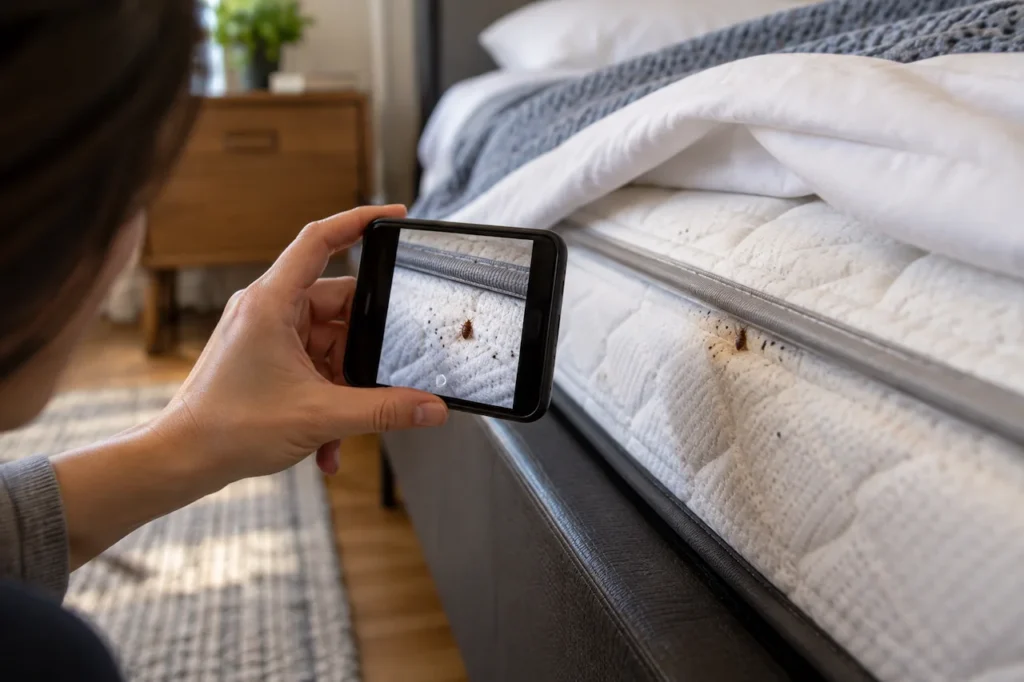
Bed bugs aren’t a sign of a dirty home. They’re hitchhikers that feed on blood, and they’re drawn to warmth and the carbon dioxide we breathe out. Several parts of life in Southern California make it easy for them to spread:
- Multi-unit housing. Bed bugs travel through wall voids, outlets, pipes and shared hallways, so one unit’s problem can become several.
- Travel and tourism. Hotels, rental cars, airports and theme-park trips can all bring bed bugs home in luggage.
- Secondhand furniture and clothing. Used couches, mattresses and thrift finds are a classic way to import them.
- Shared laundry rooms and storage. Items sit in common spaces where bugs can move between bags.
- Year-round indoor comfort. Indoor temperatures stay in their comfort zone every month, so there’s no “off season.”
Adults are about ¼ inch long, flat and reddish-brown. They don’t fly or jump, and they can survive for months without a meal, which is why an empty room doesn’t mean they’re gone.
How Do I Know It’s Bed Bugs?
Bites alone aren’t proof. Many bites look like mosquito, flea or spider bites, and some people don’t react at all. Before treating, look for evidence. See Mosquito Bites vs. Flea, Bed Bug and Spider Bites if you’re not sure.
Check for:
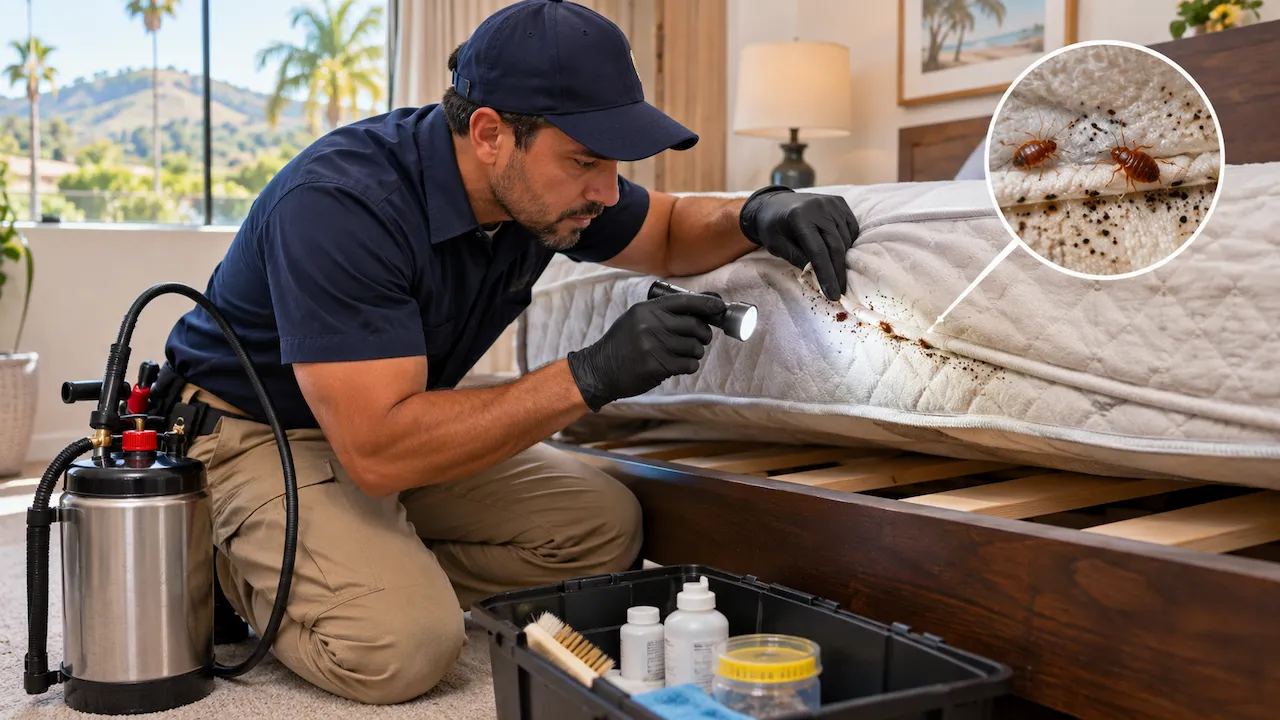
- Live bugs or shed skins in mattress seams, along the box spring edge, in the headboard and bed frame
- Small dark spots (fecal stains) or rust-colored blood spots on sheets and mattress tags
- Pale, rice-like eggs in tight crevices
- A faint sweet, musty smell with heavier infestations
Look beyond the bed: couch seams, nightstands, behind baseboards and wall hangings, inside electrical outlet covers and along curtain folds. Take clear photos and, if you can, tape one bug to an index card. This helps a technician identify it quickly.
What Should I Do in the First 48 Hours?
These steps won’t clear an established infestation, but they limit the spread and make professional treatment more effective.
1. Contain it
Strip the bed and seal bedding in plastic bags before carrying it anywhere. Don’t move items from the bedroom to other rooms. Pull the bed a few inches from the wall and keep covers off the floor.
2. Wash and dry on high heat
Wash fabrics in hot water (at least 120°F) and dry them on high heat for about 30 minutes. Dry-clean-only items can go through the dryer on high heat. Heat of about 122°F is lethal to bed bugs. Re-bag clean items in fresh plastic.
3. Vacuum, then seal the contents
Use a crevice tool on mattress seams, bed frame joints, baseboards and carpet edges. Seal and discard the vacuum contents outside right away.
4. Steam the hiding spots
A steamer that brings surfaces to roughly 160–180°F kills bed bugs on contact. Go slowly over seams and crevices, keep steam away from outlets and electronics, and vacuum up what you steam.
5. Encase the mattress and box spring
Use bed bug-rated encasements and keep them on for a year or longer. Add interceptor cups under the bed legs to catch bugs and show you whether activity is dropping.
6. Declutter the sleeping area
Store items in sealed plastic bins and keep clothing off the floor. Fewer hiding places make inspection and treatment simpler.
Don’t do these: set off bug bombs or foggers (they can push bugs deeper into walls), sleep on the couch or in another room, haul infested furniture through shared hallways without bagging it or toss your mattress before talking to a professional.
When and How Should I Use a Professional?
If you still find bugs after a week or two, if they’re in more than one room or if you live in an apartment or condo, bring in a licensed professional. Bed bugs hide in cracks, outlets and furniture where DIY products can’t reach, and eggs are easy to miss.
For a closer look at what to expect, read Do Exterminators Remove Bed Bugs Completely?
Common professional options
| Method | How it works | Good to know |
| Heat treatment | Raises the temperature of the space high enough to kill all life stages | Fast, no residue, needs careful prep and temperature monitoring. No lasting protection afterward |
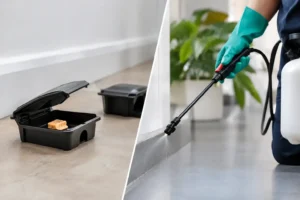
| Targeted chemical treatment | Applies registered products to hiding spots and travel paths | Can provide residual control. Usually needs follow-up, and some bugs resist certain products |
| Steam, vacuum and dust combination | Layers non-chemical and targeted methods | Reaches cracks and voids, but is labor-intensive |
| Combination approach | Heat plus targeted residual treatment | Covers each method’s weak spot |
UC IPM notes that providers of heat services in California must be licensed by the Structural Pest Control Board. Always ask for the company’s license information.
Questions to ask any bed bug company
- Are you licensed in California, and what method do you recommend for my situation and why?
- How many visits should I expect, and when will the follow-up inspection happen?
- What does the guarantee cover if bed bugs return?
- What do I need to do before treatment, and do I need to leave the home?
- Will you inspect adjacent units if I live in a multi-unit building?
- Is the price quoted in writing?
At Impressive Exterminating, a licensed technician inspects first, shows you where the bugs are hiding and recommends the right treatment. We explain the plan and price up front and apply treatments with care for the people and pets you love.
Learn more about our bed bug control service. For typical pricing in this area, see how much pest control costs in LA and Orange County.
What Are My Rights and Duties in a California Rental?
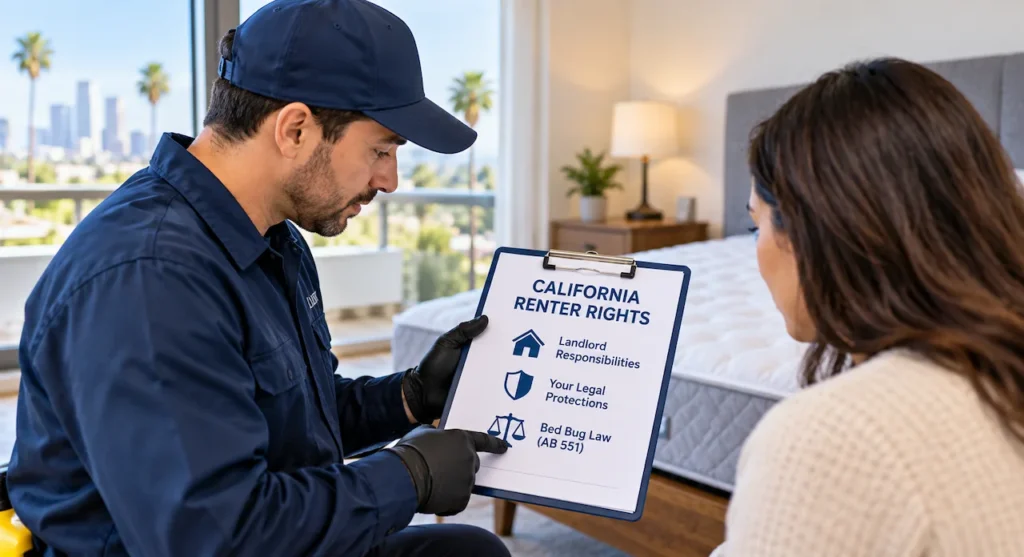
Many bed bug cases in LA and Orange County happen in apartments, condos and rentals. California has specific rules, set by AB 551 (Civil Code sections 1954.600–1954.605 and 1942.5). In general terms:
- Landlords must give new tenants written information about bed bugs, can’t show or rent a unit they know has bed bugs, and, once they have notice of a suspected infestation, must have a pest control operator inspect.
- If an infestation is confirmed, the landlord must notify the tenants of inspected units, in writing, within two business days of getting the operator’s findings. If bed bugs are found in a common area, all tenants must be notified.
- Tenants should report suspected bed bugs to the landlord in writing as soon as possible, cooperate with inspections and treatment, and avoid bringing in items they know are infested.
- Retaliation protections apply to tenants who report in line with the law.
This is a general summary, not legal advice. If you’re in a dispute, speak with a tenant attorney or local tenant rights group. For practical guidance, see Bed Bugs in Apartments: What LA and OC Renters Need to Know and Landlord Pest Responsibilities in California.
Own a rental or manage property? Treat the building, not just one unit, document inspections and findings, and follow the notice requirements. Regular inspections catch problems before they spread.
How Do I Prepare for Bed Bug Treatment?
Your technician will give you exact instructions. A typical checklist includes:
- Wash and dry bedding and clothing on high heat, then seal them in clean bags
- Clear clutter around beds, baseboards and furniture
- Don’t move items between rooms without bagging them
- Empty nightstands and open closets and drawers as directed
- Make plans for pets and anyone sensitive, as your technician advises
- Follow the re-entry timing you’re given
See Is Pest Control Safe for Babies, Kids and Pets? if you have a family at home.
How Long Does It Take to Get Rid of Bedbugs?
| When | What happens |
| Days 1–2 | Confirm, contain, launder, vacuum, steam and encase |
| Days 3–7 | Professional inspection and first treatment |
| Weeks 2–4 | Follow-up inspection and treatment as needed. Many infestations need more than one visit |
| Weeks 4–12 | Monitoring with interceptors until nothing is found |
Eggs hatch over days and adults can live for months without feeding, so it often takes weeks to confirm they’re gone. Seeing a bug or two after the first treatment doesn’t always mean it failed. Follow-up is built into the process. For more on how long results last, read How Long Does Pest Control Treatment Last?
Bed Bug Myths That Waste Time and Money
| Myth | Reality |
| “Bed bugs mean a dirty home” | They’re drawn to warmth and carbon dioxide, not dirt. Clean homes and hotels get them too |
| “Bug bombs will clear them out” | Foggers often scatter bugs and miss hiding spots |
| “Throw out the mattress” | Often unnecessary and can spread bugs. Encasements and professional treatment are usually better |
| “I’ll just sleep on the couch” | Bed bugs follow you and can spread to the new spot |
| “Rubbing alcohol or essential oils will do it” | They only affect what they touch and can be a fire hazard |
| “They only bite at night, so I’d see them” | They hide well and are small, so many people never see one |
| “One treatment will always do it” | Eggs and hidden bugs often mean you need follow-up |
How Do I Keep Bed Bugs From Coming Back?
- After travel, keep luggage off the bed and floor, and wash and dry travel clothes on high heat when you get home. Check hotel mattress seams and headboards on arrival.
- Inspect secondhand items before bringing furniture, mattresses or clothing inside.
- Be careful in shared laundry rooms. Carry clean laundry in sealed bags.
- Keep beds away from walls and clear of clutter, and keep mattress encasements on.
- Check interceptors regularly, and act quickly at the first sign.
- Schedule periodic inspections if you live in a multi-unit building or travel often. See general pest control.
What About the Bites?
Bed bug bites are itchy red welts, often in lines or clusters on skin that’s exposed during sleep. Wash with soap and water, avoid scratching and use an over-the-counter anti-itch cream or antihistamine if needed. Bed bugs aren’t known to spread disease, but scratching can lead to infection, and some people have stronger allergic reactions. See a doctor if bites look infected or you have a severe reaction.
Frequently Asked Questions
How do you get rid of bedbugs fast?
Contain and clean first: bag fabrics, wash and dry on high heat, vacuum and steam hiding spots, and encase the mattress. Then bring in a licensed professional for heat or targeted treatment. Speed matters, because early infestations are easier to clear.
Can I get rid of bedbugs myself?
Small, early infestations sometimes improve with hot laundry, vacuuming, steam and encasements. Established infestations usually need professional treatment and follow-up, because bugs and eggs hide in cracks and furniture.
How long does it take to get rid of bedbugs?
Often several weeks. Many infestations need follow-up visits, and monitoring continues until no activity is found.
What temperature kills bed bugs?
Dry heat of about 122°F is lethal. Steam should bring surfaces to roughly 160–180°F. For laundry, wash in hot water (at least 120°F) and dry on high heat for about 30 minutes.
Does heat treatment kill bed bug eggs?
Yes, when the whole space reaches and holds lethal temperatures. Heat doesn’t leave lasting protection, so prevention still matters.
Do I need to throw away my mattress?
Usually not. A bed bug-rated encasement and professional treatment are usually better. Throwing out a mattress can spread bugs if it isn’t bagged and handled carefully.
Who pays for bed bug treatment in a California rental?
It depends on the situation and the lease, and California law gives landlords specific duties once they have notice. Report in writing right away and keep copies. For general guidance, see Landlord Pest Responsibilities in California.
Can my landlord evict me for reporting bed bugs?
California law protects tenants who report suspected bed bugs from retaliation, as long as they follow the law’s requirements. This is general information, so consult a tenant attorney if you’re facing a dispute.
Can bed bugs spread through walls to other apartments?
Yes. They can travel through wall voids, outlets, pipes and shared hallways, which is why multi-unit buildings often need inspection of neighboring units.
Can I get bed bugs from a hotel or the airport?
Hotels are a common source, and bed bugs can hitch a ride in luggage and clothing. Keep luggage off beds and floors, and wash and dry travel clothes on high heat when you get home.
Do bed bugs live in clothes or cars?
They can hitch a ride on clothing and bags, and occasionally in vehicles, but they mostly live where people sleep. Tell your technician about other places you spend time.
Do I have to leave my home during treatment?
It depends on the method. Your technician will tell you whether you need to leave, for how long and when it’s safe to return.
How do I know the bed bugs are gone?
No new bites, fecal spots or live bugs, and empty interceptors across several weeks, confirmed by follow-up inspections.
Are bed bugs dangerous?
They aren’t known to spread disease, but bites itch, scratching can cause infection and the stress and lost sleep are real.
Do you serve my city?
We serve homes and businesses across Los Angeles County and Orange County, including Long Beach, Bellflower, Downey, Huntington Beach and Anaheim.
Conclusion
Learning how to get rid of bedbugs comes down to a few things done in the right order: confirm you have them, contain the spread, use heat on fabrics and hiding spots, encase the bed and bring in a licensed professional when the problem is established. Expect follow-up, not a one-visit miracle, and don’t let myths like bug bombs or tossing the mattress cost you time and money.
If you live in an LA or Orange County apartment or rental, remember that California law gives both tenants and landlords clear responsibilities, so report in writing and keep records. After treatment, protect yourself with encasements, careful travel habits and a quick response at the first sign.
If you’re dealing with bed bugs now, you don’t have to handle it alone. Impressive Exterminating offers a free inspection, a clear plan and price up front, and a guarantee that if pests come back, so do we.
Save $50 on your first pest control service with code SAVE50. See all special offers. Need help right away? See emergency pest control or same-day pest control.
Schedule a Free Bed Bug Inspection · Call (562) 246-9044
Related services: Bed Bug Control · General Pest Control · Cockroach Control
Related reading: Do Exterminators Remove Bed Bugs Completely? · Bed Bugs in Apartments: What LA and OC Renters Need to Know · Mosquito Bites vs. Flea, Bed Bug and Spider Bites · Landlord Pest Responsibilities in California