If you have recently scheduled pest control, you probably want to know how long your home will stay protected. Pest control treatment can provide protection for weeks to several months, depending on the pest, treatment method, product used, and conditions around your property. Some specialized treatments are designed to last much longer, while other services require repeated visits to control an infestation effectively.
For homeowners in Los Angeles County and Orange County, warm weather, irrigation, landscaping, and nearby properties can contribute to recurring pest activity throughout the year.
Understanding how long does pest control last helps you set realistic expectations, avoid unnecessary repeat treatments, and recognize when professional follow-up is needed.
How Long Does Pest Control Last?
There is no single expiration date for every pest control treatment. The following table provides general planning guidance rather than guaranteed treatment durations.
| Treatment Type | General Duration or Timeline | What Homeowners Should Know |
| General indoor pest treatment | Several weeks to a few months | Results depend on the product, application, and pest activity. |
| Exterior perimeter treatment | Weeks to a few months | Rain, irrigation, sunlight, and surface conditions can affect performance. |
| Ant control | Days to several weeks for noticeable population reduction; longer for established colonies | Baits and colony-targeting methods may take time to work. |
| Cockroach control | Several days to several weeks for substantial improvement | Heavy infestations may require follow-up treatments. |
| Bed bug treatment | Several weeks or longer to confirm control | Multiple visits may be necessary, depending on the treatment method and infestation. |
| Mosquito control | Often days to weeks for certain applications | New mosquitoes can emerge or enter from untreated areas. |
| Rodent control | Varies according to the infestation and exclusion work | Trapping, monitoring, and sealing entry points are often necessary. |
| Termite treatment | Potentially several years for certain professionally applied treatments | Longevity depends on the method, product, site conditions, and applicable warranty. |
These timelines are not interchangeable. Always ask your pest control provider which treatment was applied, how long it is expected to remain effective, and whether follow-up visits are recommended.
5 Factors That Affect How Long Pest Control Lasts
1. The Type of Pest
Different pests behave differently, so they require different control strategies.
Ants may return because a colony remains active or new ants find another route into your kitchen. Cockroaches can survive in hidden spaces, while bed bugs can remain concealed in furniture, cracks, and other areas that require careful inspection.
Rodent problems often persist when entry points remain open. Termites may require specialized treatment and ongoing inspections rather than routine household pest spraying.
For recurring ant activity, professional ant control services can help identify the source and determine the most appropriate treatment.
2. The Product and Application Method
Not every pest control product works the same way.
Some products kill pests on contact, while residual treatments are designed to remain effective on treated surfaces. Baits work differently by attracting target pests, and certain treatments target specific stages of a pest’s life cycle.
The location of an application also matters. A treatment applied to a protected crack may behave differently from one exposed to direct sunlight, rain, or frequent washing.
Ask your technician whether the treatment provides immediate control, residual protection, or both.
3. Weather and Environmental Conditions
Southern California’s climate can influence how long certain treatments remain effective.
Outdoor applications may be affected by:
- Rainfall and water runoff.
- Frequent lawn irrigation.
- Direct sunlight and high temperatures.
- Humidity and moisture.
- Landscaping changes and vegetation growth.
For example, an outdoor treatment may reduce mosquito activity around a patio, but standing water can support another generation of mosquitoes.
Our guide to professional versus DIY mosquito control explains why eliminating breeding sites is just as important as treating adult mosquitoes.
4. The Severity of the Infestation
A small, newly discovered pest problem is generally easier to manage than a long-established infestation.
If pests have spread into wall voids, attics, furniture, or multiple rooms, a single application may not reach every hiding place. Eggs may also survive certain initial treatments and hatch later.
This is why professional exterminators sometimes recommend follow-up inspections or additional treatments.
For example, professional bed bug control may involve more than one visit, depending on the infestation, treatment method, and signs of continued activity.
5. Conditions Around Your Property
Even an effective treatment cannot prevent every pest from entering your home indefinitely.
Unsealed gaps, leaking pipes, accessible food, clutter, overgrown vegetation, and neighboring infestations can all contribute to recurring activity.
Rodents, for instance, may return if openings around pipes, rooflines, vents, or garage doors remain accessible.
If you hear scratching in the attic or repeatedly find droppings, professional rodent control can help address the infestation while identifying conditions that allow rodents to enter.
How Long Does Pest Control Take to Work?
Treatment longevity and treatment speed are two different things.
Some treatments produce noticeable results relatively quickly. Others require several days or longer to reduce pest activity significantly.
Here is what you may experience after service:
During the first 24 hours: You may notice dead insects or occasional live pests. Follow your technician’s instructions and avoid disturbing treated areas.
During the next several days: Pest activity may begin to decline. Some pests may emerge from hiding places or encounter treated surfaces after the initial application.
Over the following one to two weeks: Certain infestations may show substantial improvement, although the timeline depends on the pest and treatment method.
After the recommended follow-up period: Your technician can assess whether the treatment is working as expected and whether additional service is necessary.
These are general expectations, not a guarantee that every infestation will follow the same timeline. Bed bugs, termites, and established cockroach infestations may require specialized treatment schedules.
Why Are You Still Seeing Bugs After Pest Control?
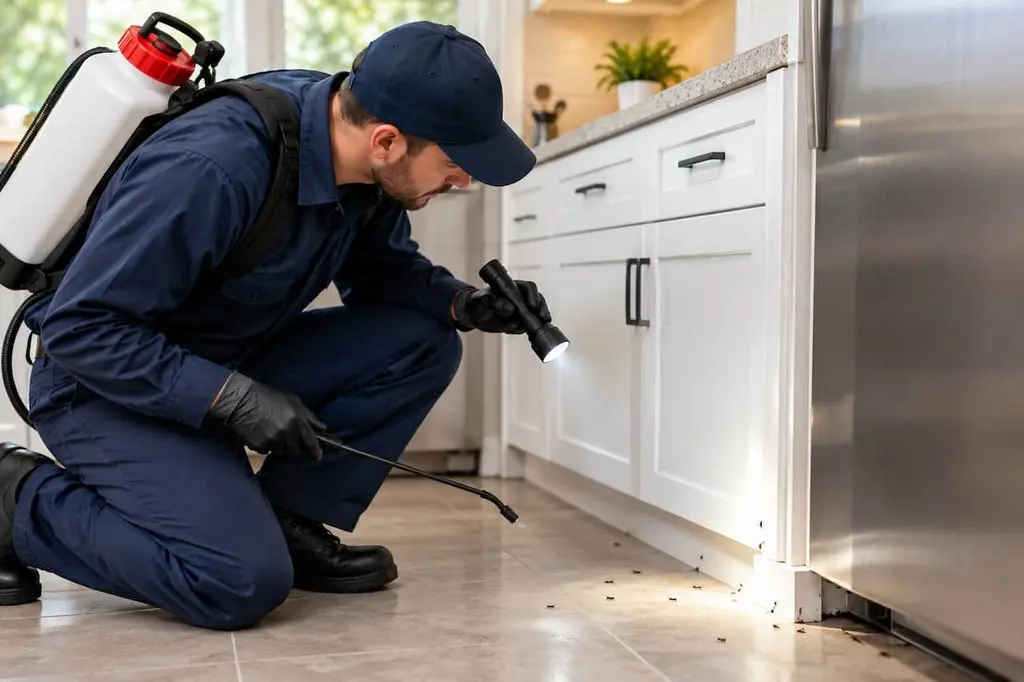
Seeing a bug after treatment can be frustrating, particularly when you expected immediate results.
However, one insect does not necessarily mean the treatment failed.
Possible explanations include:
- The treatment needs more time: Some products work gradually rather than killing every pest immediately.
- Pests are emerging from hiding: Insects concealed in cracks, wall voids, or behind appliances may encounter the treatment later.
- Eggs are hatching: Depending on the pest and treatment method, newly hatched insects may require additional control.
- New pests are entering: Gaps, nearby colonies, and neighboring properties can introduce fresh activity.
- The original source remains active: Treating visible pests without addressing nesting areas, entry points, or breeding conditions may produce only temporary relief.
What Should You Do If Pests Return?
First, record what you are seeing, where the pests appear, and how frequently you notice them.
Next, review the preparation and aftercare instructions provided by your pest control company. Avoid applying additional pesticides or combining products without professional guidance, as this can create unnecessary exposure risks or interfere with the treatment plan.
If activity is increasing, the same pests continue appearing, or the infestation shows little improvement within the expected timeframe, contact your provider for a reassessment.
How Often Should You Get Pest Control?
The ideal service frequency depends on the pest, the property, and your history of infestations.
Monthly service: May be appropriate for properties with recurring pest pressure or businesses requiring frequent monitoring.
Every two to three months: May suit some residential preventative maintenance programs, depending on the treatment and local conditions.
Seasonal service: Can help address specific problems that increase during warmer weather or after environmental changes.
Specialized treatment schedules: Bed bugs, termites, and substantial rodent infestations may require dedicated treatment plans, inspections, or follow-up visits rather than a standard maintenance schedule.
A reliable provider should recommend a schedule based on inspection findings instead of automatically treating every property at the same frequency.
For additional guidance, read our article on monthly exterminator service for homeowners.
How to Make Pest Control Treatment Last Longer
You can improve the results of professional pest control by addressing the conditions that attract pests.
Follow these practical steps:
- Seal entry points: Repair gaps around doors, windows, utility pipes, vents, and other openings.
- Remove accessible food: Store food in sealed containers, clean crumbs promptly, and keep garbage covered.
- Control moisture: Fix plumbing leaks, address drainage problems, and eliminate unnecessary standing water.
- Maintain your yard: Trim vegetation away from the house and keep outdoor areas free of debris.
- Follow treatment instructions: Do not wash, scrub, or disturb treated areas until your technician confirms what cleaning is appropriate.
- Monitor pest activity: Note recurring trails, droppings, nests, or other evidence so your technician can identify patterns.
- Schedule follow-up when needed: Additional treatment or preventative service may be necessary for persistent problems.
These measures support professional treatment but cannot guarantee that pests will never return.
When Should You Call a Professional Pest Control Company?
Consider scheduling an inspection if you notice any of the following:
- Pests continue appearing despite treatment.
- Ant trails repeatedly return to the same areas.
- Cockroaches appear frequently in kitchens or bathrooms.
- You find bed bugs or evidence of an established infestation.
- Rodent droppings or scratching noises suggest ongoing activity.
- You notice termite swarmers, discarded wings, or suspected termite damage.
- Outdoor mosquitoes remain a problem despite removing standing water.
For homeowners across Los Angeles County and Orange County, an inspection can help distinguish between a treatment that needs more time, a new pest entry, and an infestation requiring a different approach.
Impressive Exterminating Pest Control provides residential and commercial pest management, termite services, and customized prevention solutions. The company serves communities throughout Los Angeles County and Orange County, including Long Beach, Pasadena, Anaheim, Irvine, and surrounding areas.
Rather than guessing when your treatment will expire, ask for an assessment based on the pest involved, the treatment used, and the conditions around your home.
Need help with recurring pests? Contact Impressive Exterminating Pest Control to discuss your pest problem and determine which service is appropriate for your property.
Frequently Asked Questions
1. How long does pest control last in a house?
Many general pest treatments are intended to provide protection for several weeks to a few months. The actual duration depends on the pest, product, application method, environmental conditions, and whether new pests enter the property.
2. How long does exterminator spray last?
Some residual sprays remain effective for weeks or months under suitable conditions, but there is no universal duration. Outdoor exposure, cleaning, moisture, and the specific product can affect how long it works.
3. Is it normal to see bugs after pest control?
Yes, occasional pest sightings can occur after treatment. Some products work gradually, and insects may emerge from hiding places. However, increasing activity or persistent infestations should be reported to your pest control provider.
4. How long should I wait before calling the exterminator again?
Follow the timeline provided by your technician. For general insect treatments, reassessment may be appropriate if activity fails to decline within the expected period. For bed bugs, termites, and other specialized infestations, follow the specific inspection and treatment schedule.
5. Does rain wash away pest control treatment?
Rain can affect certain outdoor treatments, particularly when it occurs before the application has dried or settled as directed. Other products are formulated for particular environmental conditions. Ask your technician how weather affects your specific treatment.
6. How often should I spray my house for bugs?
There is no single schedule for every home. Some properties benefit from monthly or quarterly preventative service, while others need less frequent maintenance. Follow the product label and your professional’s recommendations rather than spraying repeatedly without identifying the pest.
7. Does pest control kill eggs?
Some treatments affect eggs, but others primarily target active pests. Effectiveness varies by species and treatment method. Because some eggs may survive, follow-up treatment is sometimes necessary.
8. Is professional pest control better than DIY treatment?
DIY methods can help with minor problems, especially when you can remove the source of the infestation. Professional service may be more appropriate for recurring activity, hidden infestations, termites, bed bugs, or rodents entering the structure. The best approach depends on the problem and the treatment required.
9. Can pests return after professional treatment?
Yes. Pests can return if new insects enter from outside, neighboring infestations remain active, entry points are open, or the original infestation requires additional treatment. Prevention, monitoring, and appropriate follow-up help reduce the likelihood of recurrence.
10. Does pest control last longer with regular maintenance?
Regular maintenance can help manage recurring pest pressure by identifying new activity and addressing conditions that attract pests. However, the frequency and type of service should match your property’s actual needs.
Protect Your Home With the Right Pest Control Plan
Knowing how long does pest control last helps you understand what to expect after treatment, but lasting results depend on more than the product alone. The pest involved, the severity of the infestation, environmental conditions, and preventative maintenance all play important roles.
If pests keep returning to your home, repeated spraying may not solve the underlying problem. A professional inspection can help identify the source, establish realistic expectations, and determine whether targeted treatment or ongoing maintenance is the better option.
Contact Impressive Exterminating Pest Control for a consultation and a pest management plan tailored to your Southern California property.