If you’re renting an apartment in Los Angeles or Orange County and you’ve just found bed bugs, here’s what you need to know right away: under California law, your landlord is almost always responsible for paying to treat the infestation and you have specific legal protections that prevent them from ignoring it, charging you unfairly, or retaliating against you for reporting it.
Apartment living comes with a bed bug risk that single-family homeowners don’t deal with in the same way. Shared walls, shared laundry rooms, and a steady stream of move-ins and move-outs mean bed bugs can travel between units without anyone realizing it until bites start showing up.
Los Angeles has consistently ranked among the most bed bug–affected metro areas in the country, which means this isn’t a rare problem for renters here — it’s a common one with a well-established legal process behind it.
This guide covers how bed bugs spread in apartment buildings, what your rights are as a California renter, and what actually gets rid of them for good.
Why Apartments Are More Bed-Bug-Prone Than Single-Family Homes
Bed bugs don’t jump or fly — they crawl, and they hitchhike. In a multi-unit building, that creates a few specific risk points homeowners don’t face:
- Shared walls and plumbing chases give bed bugs a direct path to travel from an infested unit into neighboring apartments.
- Shared laundry rooms can spread bed bugs through laundry carts, folding tables, and baskets left on the floor.
- High tenant turnover means infested furniture or luggage from a previous tenant — or a neighbor’s move — can introduce bed bugs without you ever bringing anything infested in yourself.
- Delayed reporting is common in apartment buildings, since tenants are sometimes embarrassed or unaware, which gives an infestation time to spread to multiple units before it’s addressed.
This is also why one of the most important facts for renters to understand is this: bed bugs are not a sign of a dirty home. Clutter can make them harder to find, but a spotless apartment can still get bed bugs from a neighboring unit, a piece of used furniture, or a visitor’s bag.
Your Rights as a California Renter: What the Law Actually Says
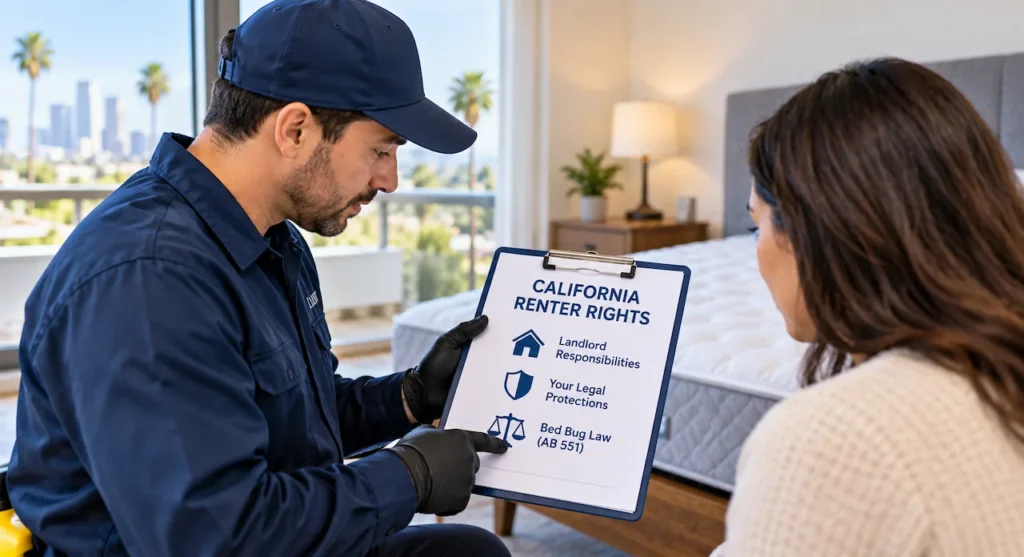
California has some of the most specific tenant protections in the country when it comes to bed bugs, built on two layers of law:
1. The Implied Warranty of Habitability (Civil Code § 1941.1)
California law requires every rental unit to be kept in a livable condition, and a bed bug infestation is treated as a habitability issue — not a housekeeping complaint. This means your landlord has a legal obligation to address it, regardless of whether a specific “bed bug law” applies.
2. California’s Bed Bug Law (Civil Code §§ 1954.600–1954.605, enacted under AB 551)
This law adds specific requirements on top of general habitability protections:
- Landlords must give every tenant written information about bed bugs — what they look like, how they spread, and how to report a suspected infestation — before move-in, and to existing tenants as soon as possible after the law applies to their unit.
- A landlord cannot knowingly rent out a unit with a current bed bug infestation to a new tenant.
- Once you report a suspected infestation in writing, your landlord is required to have the unit inspected by a licensed pest control company within a reasonable time — California health guidance points to about 7 days as a reasonable benchmark for bed bugs specifically.
- Landlords may enter your unit to inspect or treat for bed bugs, but only after following the legal notice requirements for entry.
3. Protection From Retaliation (Civil Code § 1942.5)
If you report bed bugs in good faith and you’re currently on rent, your landlord cannot legally evict you, raise your rent, or reduce your services for up to 180 days as a result. This protection exists specifically because retaliation and intimidation have historically discouraged tenants from reporting infestations.
Who Actually Pays for Bed Bug Treatment?
This is the question we hear most from renters, and the answer is more straightforward than most tenants expect: in the large majority of cases, the landlord pays. Under California’s habitability standard, a landlord cannot simply hand the bill to a tenant unless they can clearly show the tenant’s own negligence directly caused the infestation and even then, the landlord generally can’t walk away from their responsibility to treat it.
A lease clause that tries to make tenants automatically responsible for bed bug treatment is typically unenforceable under California public policy, regardless of what it says on paper.
What to Do the Moment You Suspect Bed Bugs
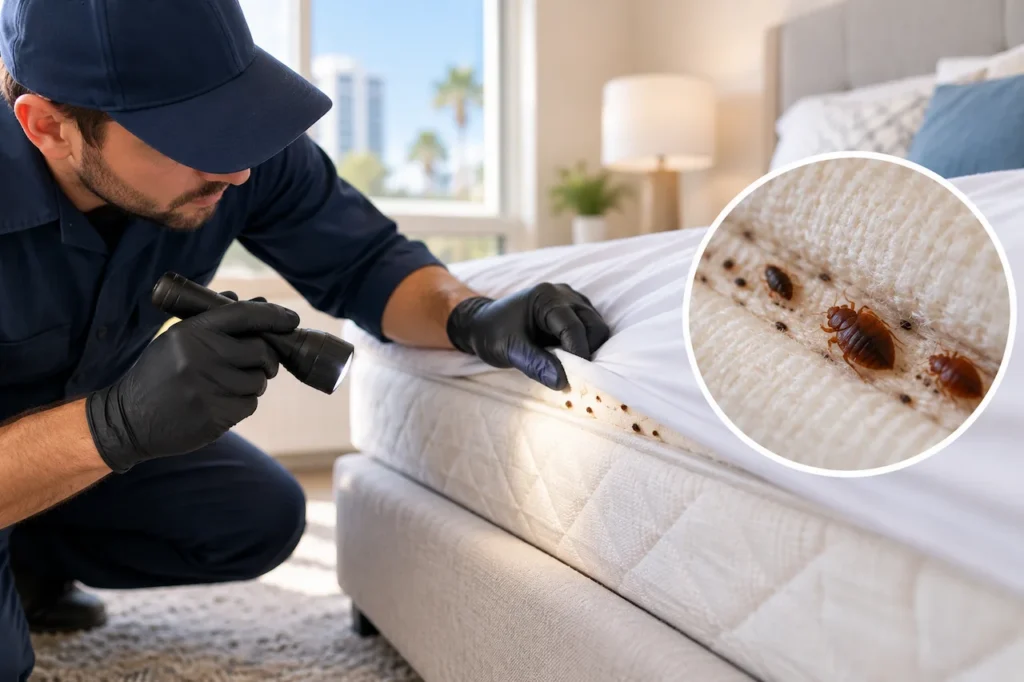
- Document what you see. Photograph bites, shed skins, dark spotting on mattress seams, or live bugs before you clean anything up.
- Report it in writing, not just verbally. An email or text to your property manager creates a clear timestamp and record, which matters if the response is slow.
- Don’t move infested furniture into storage or another unit. This is one of the most common ways an infestation spreads to a neighbor’s apartment.
- Avoid bug bombs and foggers. These don’t reach bed bugs hiding deep in mattress seams, baseboards, and furniture joints, and in an apartment setting they can actually push bed bugs into neighboring units instead of killing them.
- Follow up if your landlord doesn’t respond within a reasonable time. California law gives you options if they don’t act — including the right to request an inspection be scheduled, and in some cases to pursue repair-and-deduct remedies for serious, unaddressed habitability issues.
Why DIY Treatment Usually Fails in Apartments
Bed bugs are notoriously resistant to store-bought sprays, and in an apartment setting, an incomplete treatment doesn’t just fail — it can make the problem worse by scattering bed bugs into adjoining units.
Professional treatment matters here for a reason specific to multi-unit buildings: a thorough inspection needs to check neighboring walls and shared plumbing lines, not just your unit, to confirm the infestation has actually been contained rather than just pushed next door.
At Impressive Exterminating Pest Control, our bed bug control service uses targeted heat treatment that penetrates mattresses, furniture, and baseboards without the chemical residue of a spray-and-hope approach — and because we understand apartment-specific infestations, we know to evaluate adjoining units as part of a complete treatment plan, not just the unit where bites were reported.
Frequently Asked Questions
My lease says I have to pay for pest control. Is that legal?
Generally, no. Clauses that shift bed bug treatment costs onto tenants are typically unenforceable under California public policy unless the landlord can prove the infestation was directly caused by the tenant’s own negligence.
How long does my landlord have to respond after I report bed bugs?
There’s no single fixed number written into the statute for every case, but California public health guidance points to roughly 7 days as a reasonable window to begin treatment once a bed bug infestation is reported. If your landlord is dragging their feet well beyond that, it’s worth following up in writing and knowing your escalation options.
Can my landlord evict me for reporting bed bugs?
No. California law specifically protects tenants from retaliatory eviction, rent increases, or reduced services for up to 180 days after reporting a bed bug infestation in good faith, as long as you’re currently on rent.
I think bed bugs came from my neighbor’s apartment, not mine. Am I still responsible?
No — and this is still your landlord’s responsibility to address. Bed bugs traveling between units through shared walls or plumbing is exactly the scenario California’s habitability law is meant to cover, regardless of which unit the infestation originated in.
Can I withhold rent if my landlord won’t treat a confirmed infestation?
If a landlord fails to address a confirmed, reported infestation within a reasonable time, tenants may have options under California habitability law, including repair-and-deduct remedies in some circumstances. Because the legal process has specific requirements, it’s worth confirming the exact steps with a tenant rights resource or attorney before withholding rent on your own.
How can I tell if it’s actually bed bugs and not another bug, like a carpet beetle?
Bed bugs are flat, oval, and reddish-brown, about the size of an apple seed, and are typically found along mattress seams, headboard corners, and baseboards near the bed rather than scattered randomly around a room. If you’re not sure, a professional inspection is the fastest way to confirm before you spend money on the wrong treatment.
Will a heat treatment damage my furniture or electronics?
Professional heat treatment is calibrated to temperatures that kill bed bugs at every life stage without damaging most furniture, mattresses, or standard household items. Your technician will walk you through anything that needs to be removed beforehand.
Dealing With Bed Bugs in Your LA or OC Apartment? You’re Not Alone — And You Have Options
Whether you’re trying to get your landlord to act or you just need a confirmed inspection to back up your written report, Impressive Exterminating Pest Control offers bed bug inspections and heat treatment throughout Los Angeles County and Orange County, with technicians who understand how infestations move through apartment buildings — not just single units.
Schedule your bed bug inspection today »
- How to Safeguard Your Long Beach Home from Bed Bugs
- Common Pests in Long Beach and How to Eliminate Them
- Common Pests in California
This article is provided for general informational purposes and does not constitute legal advice. For guidance on your specific situation, consult a California tenant rights attorney or local tenant advocacy organization.