A termite problem can feel especially stressful when children, pets, tenants, or customers share the property. You need the colony addressed quickly, but you also want to avoid turning your home or business into a chemical-heavy job site. This eco safe termite treatment review explains what environmentally responsible termite control can realistically deliver, where its limits are, and how to choose a plan that protects the structure without cutting corners.
What “Eco Safe” Should Mean for Termite Control
The phrase eco safe is used often in pest control, and it can mean very different things. A responsible termite treatment is not simply one labeled green. It is a plan designed to use the least disruptive effective method for the termite species, the location of the activity, and the level of damage.
For a Southern California property, that often starts with a detailed inspection rather than an immediate recommendation for tent fumigation or broad chemical application. Drywood termites can live inside framing, attic wood, doors, and furniture without needing contact with soil. Subterranean termites travel from the ground into a structure and may require a different strategy entirely. Treating both problems the same way is neither efficient nor truly low impact.
An eco-conscious approach usually focuses on targeted treatment, accurate application, moisture correction, exclusion, monitoring, and prevention. The objective is to stop the active infestation while reducing unnecessary exposure and helping prevent the next one.
Eco Safe Termite Treatment Review: The Main Options
No single method is right for every infestation. The best choice depends on whether termites are localized or widespread, whether they are drywood or subterranean, how accessible the affected wood is, and whether the building has vulnerable occupants or operational constraints.
Localized treatments
When termite activity is limited to a known, accessible section of wood, a professional may recommend a localized treatment. This can include direct application into termite galleries, spot treatment of affected framing, or removal and replacement of severely damaged wood.
The advantage is precision. Instead of treating an entire structure, the technician addresses confirmed activity where it exists. This can mean less product used and less interruption for the property owner. The trade-off is that localized treatment may not be the right answer if inspection findings suggest hidden activity in several areas. A small visible swarm or a few damaged boards does not always reflect the full extent of an infestation.
Borate wood treatments
Borate-based products are often used on accessible bare wood, especially during construction, remodeling, or repair work. They can help protect wood from termites and certain wood-destroying organisms by creating a barrier termites cannot tolerate when they feed on treated material.
Borates can be a valuable part of a prevention-focused plan, particularly in attics, crawl spaces, and exposed framing. They are not a universal cure for termites already active deep inside finished walls or inaccessible structural components. Their effectiveness depends on proper preparation, coverage, and keeping treated wood protected from repeated moisture exposure.
Heat treatment
Heat is a non-chemical option commonly considered for drywood termites. The process raises the temperature inside the targeted area to a level that eliminates termites, including those hidden in wood. It can be an attractive option for homeowners who want to avoid conventional liquid treatments in a specific part of the structure.
Heat treatment has important practical limits. The area must be prepared carefully, temperatures must be monitored throughout the process, and technicians need to account for heat-sensitive belongings, electronics, plumbing, and construction details. Heat also does not leave a residual barrier behind. If conditions that attracted termites remain unchanged, future infestations are still possible.
Baiting and soil-focused treatment
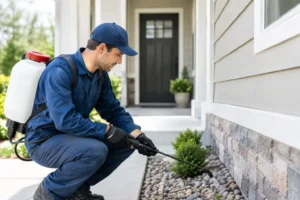
For subterranean termites, professional baiting systems and carefully targeted soil treatments can be effective options. Baits work by attracting foraging termites and delivering a slow-acting active ingredient that can affect the colony over time. This approach is often valued for its contained placement and ongoing monitoring.
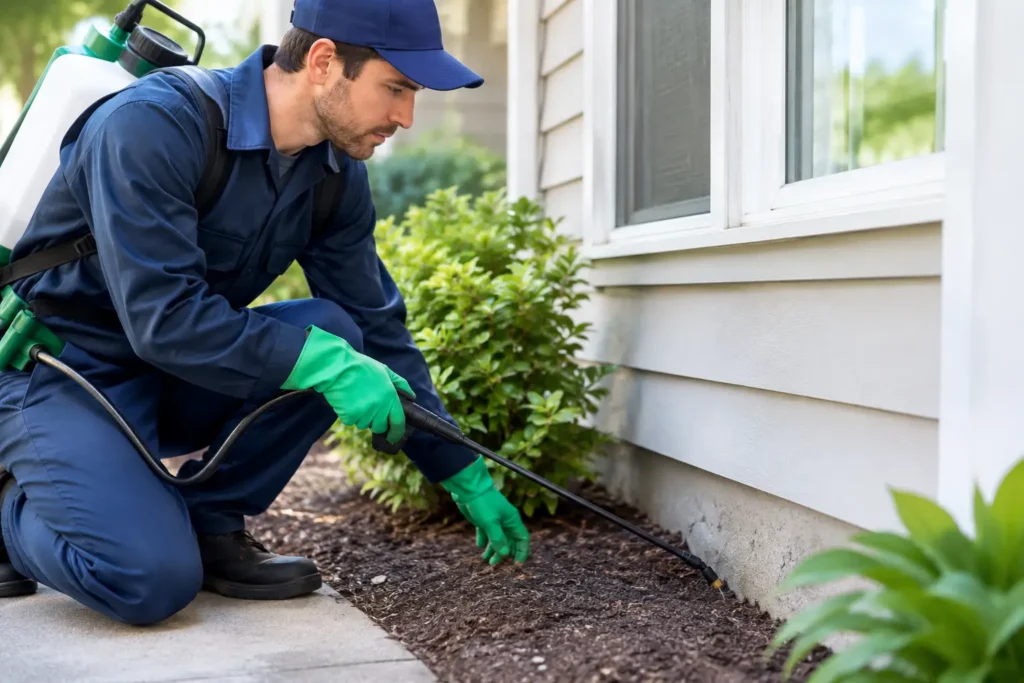
Baiting requires patience and follow-up. It is not always the fastest solution for a structure with extensive active damage or intense termite pressure. In those cases, a targeted soil treatment may be recommended to create more immediate protection around entry points. A qualified technician should explain why one method, or a combination of methods, fits the property.
Safety Is More Than the Product Label
A treatment can be professionally applied and still require common-sense precautions. The safest plan is one with clear instructions before, during, and after service. That includes knowing whether people or pets need to leave a treated area, how long to wait before reentry, what belongings need to be moved, and whether food-contact items require protection.
For rental homes, apartments, offices, restaurants, and retail spaces, communication matters just as much. Property managers need a service plan that minimizes disruption while giving occupants clear, accurate expectations. Vague promises that a treatment is completely harmless should be a warning sign. Every effective pest control method has use instructions, and following them is part of responsible service.
Ask the provider to explain the proposed method in plain language. You should understand the termite type they identified, where activity was found, what will be treated, why that method was selected, and what results and follow-up are expected.
When Fumigation May Still Be Necessary
Eco-friendly termite control does not mean refusing fumigation in every situation. Whole-structure fumigation can be the most dependable option for widespread drywood termite activity, especially when infestations are present in multiple inaccessible areas of a home or commercial building.
Fumigation is a major decision. It requires preparation, temporary vacancy, and careful coordination. But when it is justified by the inspection, it may prevent years of repeated spot treatments and ongoing damage. The responsible question is not whether one method sounds greener than another. The question is whether it can fully address the actual infestation and protect the property over the long term.
A trustworthy provider will not pressure you into fumigation without evidence. They also should not sell a small spot treatment as a guaranteed whole-home solution when the signs point to extensive hidden activity.
What a Reliable Termite Inspection Should Include
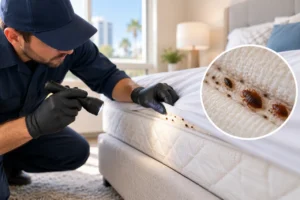
An effective termite plan begins with evidence, not assumptions. During an inspection, a trained professional should look for conditions such as discarded wings, frass from drywood termites, mud tubes from subterranean termites, damaged or hollow-sounding wood, moisture problems, and wood-to-soil contact.
They should also inspect areas that are easy to overlook: attic framing, eaves, garages, crawl spaces, utility penetrations, fence connections, window and door frames, and areas around plumbing leaks. In coastal and inland Los Angeles and Orange County communities, warm conditions can support termite activity for much of the year, making early detection especially valuable.
A written recommendation should separate active treatment from preventive work. For example, repairing moisture issues, sealing entry points, moving stored lumber away from the foundation, and scheduling periodic inspections may all help reduce future risk. Those steps do not replace treatment for an active colony, but they are essential to long-term protection.
Questions to Ask Before You Approve Treatment
Before choosing a termite company, ask whether the recommendation addresses drywood termites, subterranean termites, or both. Ask if activity is localized or widespread, what areas will be treated, and whether the price includes follow-up inspections or a warranty.
Also ask about the treatment’s limitations. A clear answer is a good sign. Termite control is not about making impossible promises. It is about identifying the problem accurately, applying the right solution safely, and monitoring the property so minor issues do not become expensive repairs.
Impressive Exterminating approaches termite service with that inspection-first mindset, helping property owners choose targeted, effective solutions based on the conditions found at the property.
The Bottom Line for Property Owners
The strongest eco-safe termite plan is not necessarily the one with the fewest steps or the lowest initial price. It is the one that uses the appropriate method, limits unnecessary treatment, protects the people using the building, and includes practical prevention after active termites are gone.
If you have seen wings, frass, mud tubes, or damaged wood, schedule an inspection before the evidence disappears or the damage spreads. A fast, informed response gives you more treatment options and a better chance to protect your property with minimal disruption.