A line of ants across the kitchen counter, a cockroach seen after dark, or fresh rodent droppings in the garage can make one question feel urgent: should you use bait or spray? Baiting versus spraying is not a simple choice between two products. The right method depends on the pest, where it is nesting, how active the infestation is, and who uses the property.
For homes, apartments, restaurants, offices, and rental properties across Los Angeles and Orange County, effective pest control starts with identifying the source of the problem. A fast knockdown may be necessary, but lasting relief usually requires treatment that reaches the pest where it lives and prevents the next infestation.
Baiting Versus Spraying: The Core Difference
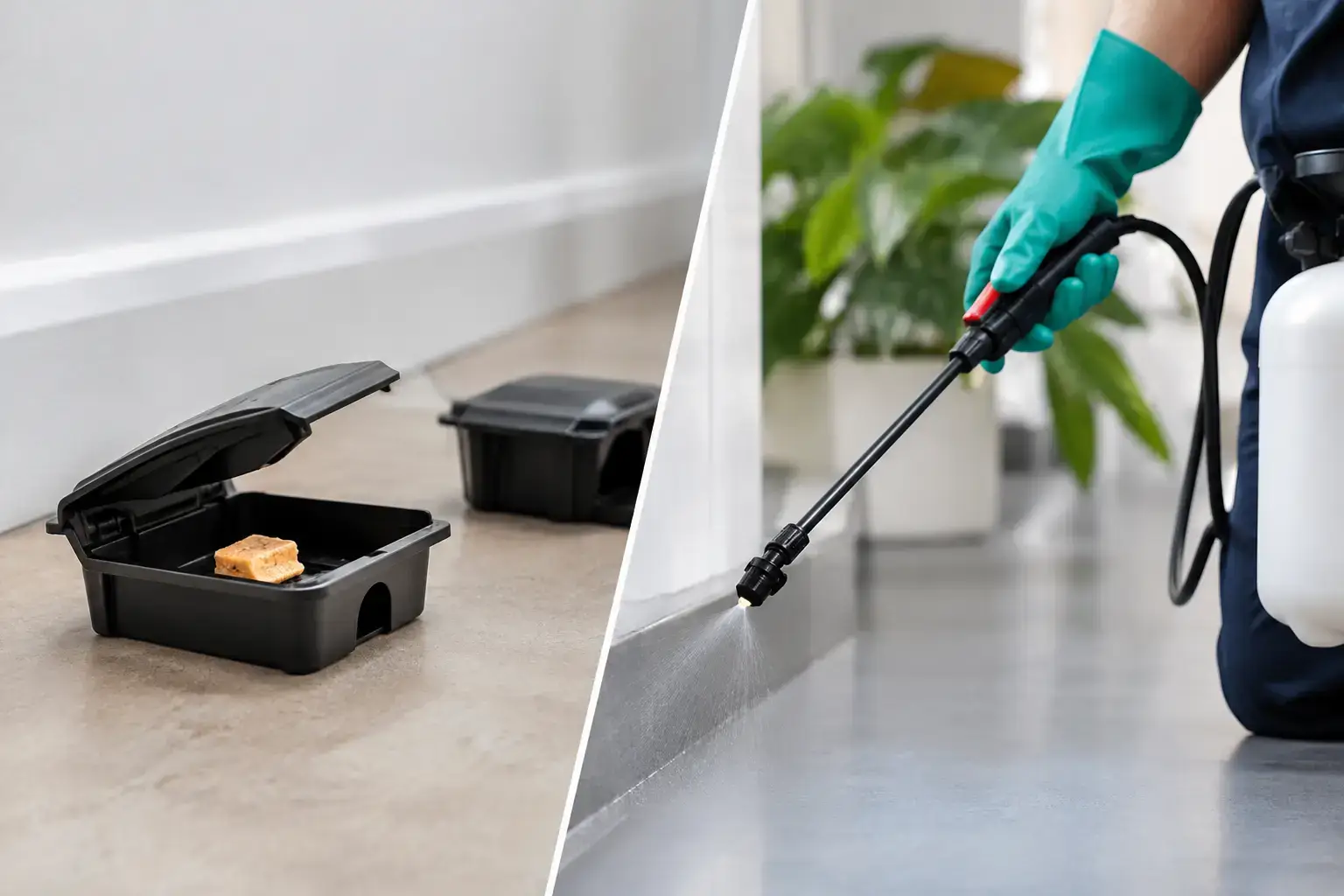
Baits are designed to be eaten or carried back to a nest, harborage, or colony. The active ingredient is often slow-acting on purpose. That delay gives ants, cockroaches, or rodents time to feed before they die. In some cases, especially with certain ant and cockroach species, bait can affect pests that never come into direct contact with the treatment.
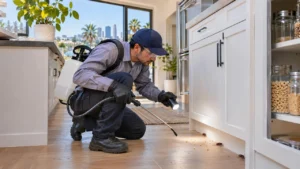
Sprays work differently. A professional may apply a targeted liquid treatment to cracks, crevices, entry points, exterior foundations, wall voids, or active pest pathways. Some products kill pests on contact, while others leave a residual barrier that controls pests crossing the treated area later.
Neither approach is automatically better. Baiting can provide deeper colony control but may require patience. Spraying can reduce visible activity quickly but may not eliminate a hidden nest or breeding site on its own. The strongest treatment plans often use one method first and another where it makes sense.
When Baiting Is the Better Choice
Baiting is especially useful when pests share food with other members of their colony or repeatedly travel between a food source and a hidden nesting area. It is a common option for ants, cockroaches, and rodents, although the bait, placement, and safety procedures differ significantly for each pest.
Ants: Reaching the Colony, Not Just the Trail
Spraying an ant trail may stop the ants you can see. But if the colony remains behind a wall, under a slab, in landscaping, or inside a nearby void, the trail can return. Properly selected ant bait allows foragers to bring material back to the colony.
This is why homeowners should not clean up every ant trail with harsh chemicals immediately before a bait treatment. Repellent cleaners and sprays can disrupt the foraging pattern or make bait less attractive. A technician may instead place bait where ants are actively traveling and adjust the product based on whether the species prefers sweet, protein, or grease-based food.
Cockroaches: Treating Hidden Harborage Areas
Cockroaches spend much of their time in tight, dark spaces near food, moisture, and warmth. Bait placed in strategic locations can reach roaches hiding behind appliances, beneath sinks, around plumbing penetrations, and inside cabinets.
Good sanitation still matters. Roaches are less likely to feed on bait when crumbs, grease, pet food, and exposed trash offer easier meals. In apartments and commercial kitchens, successful cockroach control may also require coordinating service between connected units or addressing sanitation and moisture issues that keep the infestation active.
Rodents: Controlled Placement Matters
Rodent bait can be effective, but it must be handled with care. Professional rodent bait is placed in secured, tamper-resistant stations where appropriate, not scattered around a property. This protects children, pets, and non-target animals while allowing technicians to monitor feeding activity.
Bait alone is rarely the entire answer for rats and mice. Rodents can enter through openings around pipes, vents, rooflines, doors, and utility lines. Exclusion work, sanitation improvements, and trapping may be needed to stop new rodents from replacing the ones removed.
When Spraying Is the Better Choice
Spraying is often the practical choice when pests are entering from outdoors, sheltering in known structural areas, or creating an immediate concern that calls for quick reduction in activity. Professional treatments are precise. They are not about coating every surface with chemicals.
Fast Control for Active Pest Sightings
When cockroaches, spiders, fleas, or other crawling pests are actively visible, a targeted spray can provide fast relief. Residual treatments can also protect common travel areas, such as baseboards, garage perimeters, cracks around doors, utility penetrations, and exterior foundations.
For wasps or other stinging insects, direct treatment may be necessary when a nest is located near an entryway, patio, play area, or customer-facing business entrance. These situations call for trained handling, particularly when a nest is elevated, concealed, or heavily active.
Exterior Perimeter Protection
In Southern California, exterior pest pressure can be persistent. Ants, spiders, earwigs, crickets, and other pests may move indoors when outdoor conditions change or food and water become available inside. A carefully applied exterior barrier can reduce that movement before pests reach the kitchen, bathroom, storage room, or workspace.
Exterior spraying works best alongside basic prevention. Sealing gaps, repairing screens, reducing moisture, managing vegetation against the structure, and keeping trash areas clean all limit the conditions pests use to gain access.
Why Spraying Alone Can Fall Short
A visible pest is not always the full infestation. Spraying a surface may kill insects that cross it, but it may not reach a nest in a wall void, a cockroach harborage under an appliance, or a rodent population in an attic. Overusing store-bought sprays can also drive certain pests deeper into hiding or spread them to new areas.
Ants are a clear example. A repellent spray may split some colonies into separate groups, making the issue seem worse before it improves. Cockroaches can avoid poorly placed treatments if food, water, and shelter remain readily available.
That does not make spraying ineffective. It means application and pest identification matter. A licensed professional knows when to use a non-repellent treatment, when bait is more appropriate, and when a combined approach will provide more dependable results.
Why Baiting Alone Can Fall Short
Bait is not instant. You may still see ants or roaches for several days while they feed and return to their nesting areas. In fact, a temporary increase in visible activity around bait can be normal. Removing the bait too soon can interrupt the process.
Bait can also fail when it is competing with better food sources, placed too far from active pest routes, or selected for the wrong species. An ant that wants protein may ignore a sweet bait. A cockroach population with easy access to grease, standing water, and overflowing trash may not feed enough for the bait to deliver results.
Rodent bait also needs regular monitoring. If a station is untouched, the rodents may be traveling elsewhere. If feeding is heavy, the technician needs to determine where the rodents are entering and whether exclusion or trapping should be added immediately.
The Best Answer Is Often an Integrated Plan
The most reliable pest control does not force every problem into a bait-or-spray decision. It combines inspection, identification, targeted treatment, and prevention. For an ant issue, that may mean baiting active trails while treating exterior entry points and sealing access gaps. For cockroaches, it may include gel bait in harborage areas, crack-and-crevice treatment, sanitation recommendations, and follow-up monitoring.
For rodents, a plan may include trapping indoors, secured bait stations outdoors where appropriate, sealing entry points, and removing food sources. Each step addresses a different part of the infestation, which is why one-time treatments sometimes provide only temporary relief.
Property managers and business owners benefit from this approach because it creates a documented, repeatable process. Instead of responding only when tenants or customers see pests, ongoing service can identify conditions that invite activity before the problem becomes disruptive.
Safety Comes Down to Placement and Professional Judgment
Many customers understandably worry about treatments around children, pets, tenants, food areas, and customers. The safest approach is not simply using less product. It is using the right product in the right place, at the right time, with clear instructions for the people on the property.
A professional pest inspection should account for the pest involved, the level of activity, sensitive areas, and conditions such as standing water, food handling, pet bowls, or accessible storage. Treatments should be targeted, and customers should receive practical preparation and follow-up guidance.
Impressive Exterminating builds customized plans around those details, whether the need is urgent pest relief or ongoing protection for a home or commercial property.
If pests are showing up repeatedly, do not rely on the fastest-looking option alone. A focused inspection can reveal whether baiting, spraying, exclusion, or a combination of services will give your property the lasting protection it needs.