A scratching sound above the ceiling at 2 a.m., droppings behind the refrigerator, or chewed food packaging can turn a small concern into a stressful problem quickly. The best rodent control tips focus on more than catching the mouse or rat you see. Lasting protection comes from removing what attracts rodents, blocking how they enter, and acting before damage or contamination spreads.
For homes, rental properties, restaurants, offices, and other commercial spaces across Los Angeles County and Orange County, a fast response matters. Rodents reproduce quickly, chew through materials, and can create sanitation concerns in places where families, tenants, employees, and customers should feel safe.
Start by Confirming You Have a Rodent Problem
Rodents are usually more active at night, so the first signs are often indirect. Fresh droppings are one of the clearest indicators. Mouse droppings are small and pointed, while rat droppings are larger and more blunt at the ends. You may also notice gnaw marks on food containers, wiring, cardboard, wood, or plastic.
Other signs include a musky odor in enclosed spaces, greasy rub marks along walls, shredded paper or insulation used for nesting, and scratching in walls, ceilings, attics, or crawl spaces. In a business, watch for damage around storage rooms, break areas, trash enclosures, and loading entrances.
Do not sweep or vacuum dry rodent droppings. That can stir contaminated particles into the air. Wear gloves, ventilate the area when possible, apply an appropriate disinfectant, let it sit as directed, and wipe the material up with disposable towels. Place the waste in a sealed bag before disposal.
Best Rodent Control Tips Begin Outside
Most indoor infestations start with a condition outside the building. A rat or mouse does not need a wide-open door. Mice can enter through gaps around the width of a pencil, and rats can use surprisingly small openings around pipes, vents, utility lines, roof edges, and garage doors.
Walk the exterior slowly, paying close attention to the foundation, siding transitions, plumbing penetrations, attic vents, and areas behind outdoor equipment. Look for gaps, loose screens, cracked vents, or weather stripping that no longer makes a tight seal. Seal small openings with durable materials suited to the location, such as metal mesh and proper exterior-grade sealant. Larger damaged areas may need repair rather than a quick patch.
Vegetation can also create an easy route to the structure. Trim branches that touch or hang near the roof, and keep dense shrubs from pressing against walls. In Southern California, roof rats are especially good climbers. Palm fronds, vines, utility lines, and overgrown trees can all give them access to upper levels of a property.
Make the Property Less Attractive
Rodents look for three things: food, water, and shelter. Removing all three is not always possible, but reducing access changes the property from an easy target to a difficult place to settle.
Keep trash in containers with tight-fitting lids, and clean spills around bins and outdoor eating areas. Do not leave pet food outside overnight. Bird seed, fallen fruit, compost, and open bags of lawn products can also feed rodents. If fruit trees are on the property, pick up fallen fruit regularly and harvest ripe fruit before it becomes a steady food source.
Inside, transfer pantry staples, dry pet food, and snacks into hard, sealed containers. Wipe counters, clean under appliances, and avoid leaving dishes or crumbs overnight. This is especially important in multi-unit housing and commercial kitchens, where one neglected storage area can affect neighboring spaces.
Use Traps Carefully and With a Plan
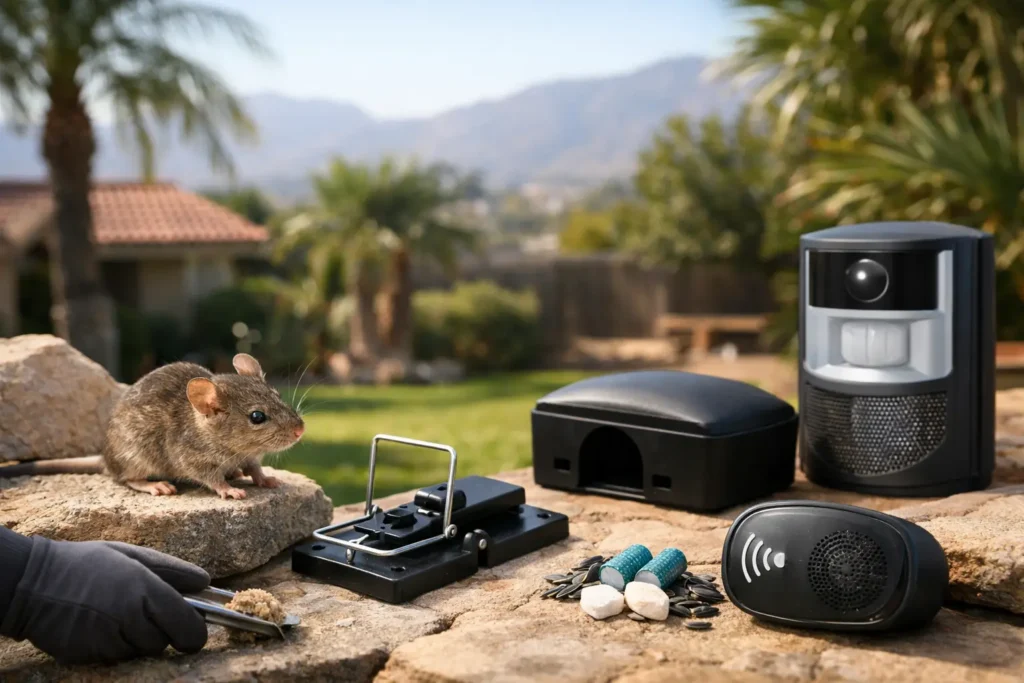
Trapping can be effective for an early or limited rodent issue, but placement matters more than simply setting out a trap. Rodents generally travel along walls and behind objects, not through the middle of an open room. Place traps perpendicular to walls, with the trigger end facing the wall, in areas where fresh activity is present.
For homes with children or pets, traps should be placed in protected locations or secured trap stations. Check them regularly. A forgotten trap can create odor problems and does not solve the entry point that allowed rodents inside in the first place.
Avoid relying on random repellent products, strong scents, or ultrasonic devices as your main strategy. Results are inconsistent, and they often delay the work that actually makes a difference: exclusion, sanitation, monitoring, and targeted removal. Poison should also be handled cautiously. Improper use can put pets, wildlife, children, and customers at risk, and a rodent that dies inside a wall can create a difficult odor issue.
Protect Attics, Garages, and Crawl Spaces
These quiet, lightly used areas are prime nesting locations. Attics offer warmth and insulation. Garages often contain cardboard, pet food, stored belongings, and gaps beneath doors. Crawl spaces may provide moisture and undisturbed shelter.
Inspect these areas for torn insulation, droppings, nesting material, chewed cables, or damaged ductwork. Reduce clutter where possible, especially piles of cardboard and fabric that provide nesting material. Store belongings in sealed plastic bins rather than boxes, and keep stored items raised off the floor when practical.
If rodents have contaminated insulation or heavily soiled an enclosed area, cleanup may require more than surface disinfecting. Damaged insulation can retain odor and attract additional rodents. A professional inspection can determine whether localized cleaning is enough or whether removal and replacement are warranted.
Do Not Ignore Chewed Wiring or Water Damage
Rodents constantly gnaw to wear down their teeth, and they may chew electrical wiring, appliance cords, water lines, and HVAC components. That makes an infestation more than an inconvenience. Exposed wiring can create a fire risk, while damaged plumbing can lead to leaks and costly repairs.
If you find chewed wires, turn off power to the affected area if it is safe to do so and contact a qualified electrician. For suspected leaks, shut off water when necessary and arrange plumbing repair. Pest control and property repair work best together: rodents must be removed, but the damage and entry conditions must also be corrected.
Know When It Is Time for Professional Rodent Control
A single mouse may be manageable with prompt cleanup, exclusion, and carefully placed traps. Repeated sightings, noises in walls, daytime rodent activity, or ongoing droppings usually point to a larger issue. Daytime sightings can mean competition for food or a population large enough that rodents are being pushed out of hiding.
Professional help is especially valuable for roof rat activity, attic infestations, multi-unit properties, commercial facilities, and situations involving children, pets, or food handling. A trained technician can identify travel routes, entry points, nesting areas, and conditions that support the infestation. The goal should be a customized plan that combines safe, effective removal with exclusion and ongoing monitoring.
Impressive Exterminating provides inspection-driven rodent control for Southern California properties, with treatment plans designed to address the active problem and reduce the chance of it coming back. For landlords and business owners, this approach also creates a clearer path for protecting tenants, customers, inventory, and the building itself.
Keep Prevention Going After Activity Stops
Rodent control is not finished when the last trap is empty. Continue checking exterior seals, garage door sweeps, vents, pantry storage, and trash areas. Seasonal changes, construction work, landscaping growth, and damaged weather stripping can create new access points without much warning.
For rental and commercial properties, establish simple routines for trash management, food storage, maintenance reporting, and inspections of shared spaces. Employees and tenants do not need to become pest control experts, but they should know to report droppings, gnaw marks, or unusual sounds early.
The right response is calm and practical: remove the food source, close the opening, monitor for fresh activity, and bring in professional support when the problem is persistent or difficult to reach. Early action protects more than a pantry or attic. It helps keep the entire property cleaner, safer, and easier to maintain.
Frequently Asked Questions
Is rat poison safe to use around pets and wildlife in Southern California?
Anticoagulant rodenticides carry real secondary-poisoning risk — animals that eat a poisoned rodent, including pets, owls, hawks, coyotes, and bobcats, can be exposed to the same chemical. This has been documented in wildlife studies across Los Angeles and Ventura County, which is part of why California passed AB 1788, restricting the use of certain second-generation anticoagulant rodenticides. If poison is used at all, it should be placed in locked, tamper-resistant stations by a licensed professional and never left accessible outdoors — many pest professionals now lead with trapping and exclusion instead of poison for exactly this reason.
How do I know when the rats or mice are actually gone, not just hiding?
Look for a clear stretch — generally at least one to two weeks — with no fresh droppings, no new gnaw marks, no scratching sounds, and no bait or traps being triggered. Because rodents can go quiet for a few days without truly being gone, don’t remove exclusion materials or stop monitoring the moment activity seems to stop. A follow-up inspection from a pest professional can confirm entry points are still sealed and no new activity has started.
Why do I keep hearing noises in the attic even after setting traps?
Roof rats often travel through inaccessible areas like firewalls, wall voids, and spaces behind insulation that a homeowner can’t easily reach or bait. If traps in accessible areas aren’t catching anything but you’re still hearing activity, this usually means the rodents are using a route or nesting spot you can’t get to — which is one of the most common reasons DIY trapping stalls out and professional inspection becomes necessary.
Should I seal entry points before or after trapping is finished?
Generally, seal what you can outside the immediate area you’re actively trapping, but avoid fully sealing every access point until you’re reasonably confident all rodents are out — sealing an active rodent inside the structure can trap it in a wall or ceiling void, leading to odor and secondary pest problems. A professional can help sequence exclusion and trapping so entry points are closed at the right time, not too early or too late.
Why do I have roof rats specifically instead of regular rats or mice?
Roof rats are excellent climbers and are common throughout coastal and inland Southern California because the region offers ideal food and access: citrus trees, palm fronds, dense landscaping, utility lines, and mild year-round weather. Unlike ground-dwelling Norway rats, roof rats typically enter homes from above — through roof edges, eaves, and overhanging branches — which is why tree trimming and roofline sealing are especially important tips for this region specifically.
Is it normal to see a rat during the day, or does that mean something’s wrong?
Rodents are naturally more active at night, so a daytime sighting often signals a larger population than you might think — when food competition is high or a nest is disturbed, rodents can be pushed into daytime activity. Repeated daytime sightings are a good reason to escalate from DIY measures to a professional inspection.
How much does professional rodent control cost in Southern California?
Cost varies widely based on the property size, extent of the infestation, and whether the job includes exclusion (sealing entry points) in addition to trapping and monitoring — a simple trapping visit costs less than a full inspection-and-exclusion service for an active attic infestation. Request an inspection and written estimate before committing, since the right scope of work depends on what’s actually found on your property, not a flat rate.
Are ultrasonic rodent repellent devices actually effective?
Independent testing and pest-industry consensus generally find ultrasonic repellent devices to be inconsistent at best, and they shouldn’t be relied on as a primary strategy. They may offer a very minor deterrent effect in some cases, but they don’t address the food, water, shelter, and entry-point conditions that actually resolve a rodent problem — exclusion and sanitation do far more of the real work.