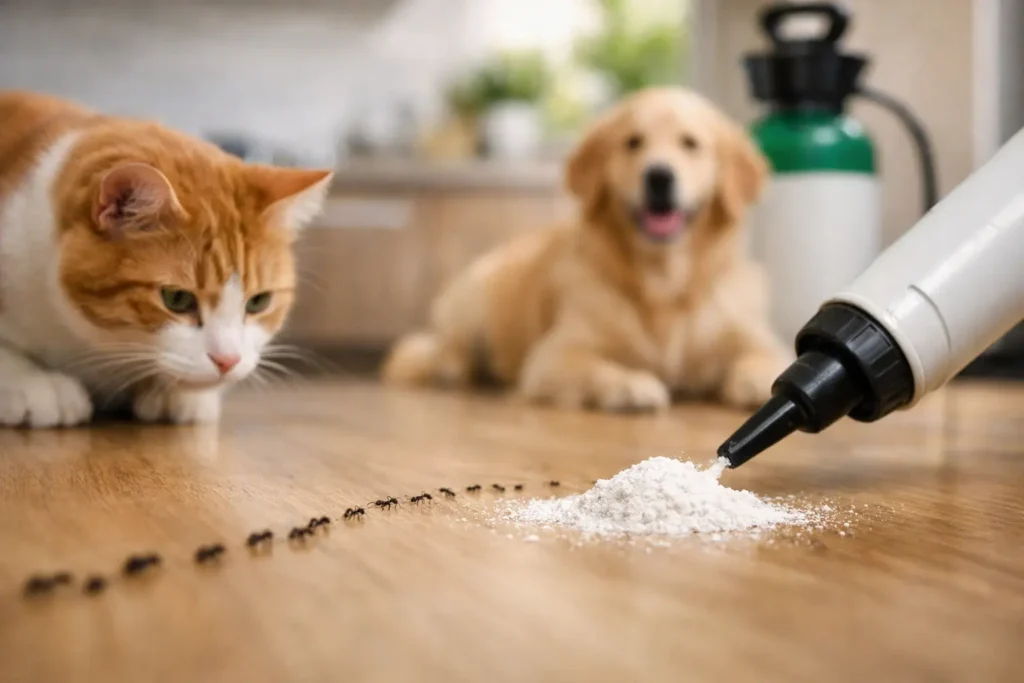
A line of ants crossing the kitchen floor can turn into a bigger concern when a curious dog or cat is nearby. Pet safe ant extermination is not about choosing the strongest product on the shelf. It is about stopping the colony while limiting your pet’s access to treatment materials, food sources, and active ant trails.
The right approach depends on where ants are nesting, how severe the activity is, and whether your pet can reach the treated area. A few scouts near a window may respond to sanitation and targeted baiting. Persistent trails, ants in multiple rooms, or activity around foundations usually require a more complete inspection and treatment plan.
Why Ant Control Must Start at the Colony
Spraying the ants you can see may provide a quick visual result, but it often does not solve the infestation. The workers traveling across your counter, patio, or bathroom floor are only a small part of a much larger colony. In Southern California, common species such as Argentine ants can form interconnected colonies that move between wall voids, landscaping, irrigation areas, and neighboring properties.
When workers are killed without addressing the nest, the colony may redirect its trail and reappear somewhere else. This is why safe, effective ant control focuses on identifying entry points, moisture conditions, food sources, and the areas where ants are likely nesting.
For homes with pets, this strategy has another benefit: it reduces the need for broad, repeated indoor applications. Targeted treatment is generally more controlled than treating every baseboard or repeatedly using aerosol sprays where pets eat, sleep, and play.
What Pet Safe Ant Extermination Really Means
“Pet safe” should never mean that a treatment can be handled carelessly. Any pest control product, including products described as natural or eco-friendly, needs to be used according to its label and kept out of reach of animals. Dogs and cats can be exposed by licking a treated surface, eating bait, walking through a wet application, or finding a product that was stored improperly.
A responsible pet-conscious plan starts with the least intrusive effective option and uses treatment only where it is needed. Depending on the infestation, that may include enclosed bait stations, crack-and-crevice applications, exterior perimeter treatments, and exclusion work to reduce future entry.
The goal is not simply to use less product. The goal is to use the right method in the right location, at the right time.
Baits can be effective when placed correctly
Ant baits work because foraging ants carry food back to the colony. This helps reach ants that never leave the nest. However, bait placement matters. Baits should be installed in secured, inaccessible locations or tamper-resistant stations, never left where a pet can chew, lick, or knock them over.
It also takes patience. If ants are actively feeding on a bait, avoid immediately spraying the trail unless a pest professional advises otherwise. Interrupting the feeding activity can prevent workers from carrying the bait back to the colony.
Exterior treatment often provides the best first line of defense
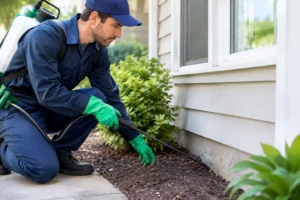
Many ant problems begin outside. Ants are attracted to moisture near irrigation lines, potted plants, mulch, cracks in concrete, and gaps around utility penetrations. Addressing these areas can reduce the number of ants that make it indoors.
Exterior applications must still be managed carefully. Pets should stay away from treated areas until products have dried completely and the technician confirms reentry is appropriate. Water bowls, toys, food dishes, and pet bedding should be moved away from the treatment zone beforehand.
Steps You Can Take Before Treatment
A professional service is more effective when simple conditions around the property are addressed at the same time. These steps also help reduce the need for frequent treatments.
Start by cleaning food residue from counters, floors, and under small appliances. Store pet food in sealed containers, and avoid leaving a full bowl out overnight if ants are feeding nearby. Wipe up spills promptly, especially sweet drinks, grease, and wet food.
Next, reduce moisture. Repair dripping faucets, check beneath sinks, and make sure outdoor irrigation is not oversaturating soil against the foundation. Ants often follow moisture, particularly during warm, dry periods when water is limited elsewhere.
Finally, look for obvious entry points around windows, doors, plumbing lines, and utility openings. Sealing gaps will not eliminate an established colony by itself, but it can make a meaningful difference after treatment has reduced activity.
Protecting Dogs, Cats, and Other Pets During Service
Before an ant treatment, tell your pest control provider which animals live in the home and where they spend time. This includes cats that access cabinets, dogs that use the yard, birds, reptiles, and aquarium fish. Different animals have different exposure risks, and that information helps the technician choose placement and timing carefully.
During service, keep pets in a separate room or off the property as instructed. Remove food and water bowls from treatment areas, pick up toys, and cover or relocate pet bedding. If your pet has access to a patio, side yard, or garage, confirm whether those spaces are being treated and when they are safe to use again.
After service, follow the reentry instructions exactly. Do not let pets investigate bait placements, lick baseboards, or walk through wet products. If you are ever unsure whether an area is dry or safe for your pet, ask before allowing access.
If a pet eats bait or shows unusual symptoms after possible pesticide exposure, contact your veterinarian or an animal poison resource immediately. Have the product name and treatment details available. Fast, accurate information is more useful than guessing what your pet may have encountered.
When Store-Bought Products Can Make the Problem Worse
A DIY ant product may seem like the fastest answer, but multiple products used at once can complicate control. Repellent sprays can scatter ants into new areas. Strong cleaners applied directly over bait trails can remove the scent trail, but they can also make baiting less effective if used too soon. Unsecured bait products are a clear concern in homes with pets.
The biggest issue is misidentification. Not all ants respond to the same bait or treatment approach, and some species have more than one nesting site. Carpenter ants, for example, may point to moisture-damaged wood that needs attention beyond pest treatment. A recurring ant problem may also be connected to landscaping, plumbing leaks, wall voids, or neighboring activity.
When ants keep returning after repeated DIY attempts, the most affordable next step is often an inspection rather than another round of products.
When to Call for Professional Pet-Safe Ant Control
Call a licensed pest professional when you see steady trails every day, ants in kitchens and bathrooms despite cleaning, activity in several rooms, or ants entering through walls and electrical outlets. Property managers should also act quickly when tenants report recurring ants, since delayed treatment can spread complaints and make the source harder to isolate.
A professional inspection can identify the species, locate likely nesting zones, and build a treatment plan around your household. At Impressive Exterminating, that means focusing on fast response, targeted applications, and long-term prevention rather than treating visible ants alone.
For homes, apartments, and businesses across Los Angeles County and Orange County, ongoing monitoring can be especially helpful when ants return seasonally or property conditions create repeated pressure. The best plan may include an initial treatment followed by scheduled service, or it may be a focused correction paired with exclusion and sanitation recommendations. It depends on the property and the level of activity.
A pet-friendly home does not have to mean living with ants. With secure treatment placement, clear reentry guidance, and attention to the colony behind the trail, you can protect your pets while getting lasting relief from the infestation.
Frequently Asked Questions
Is diatomaceous earth safe to use around dogs and cats?
Food-grade diatomaceous earth is generally considered low-risk for pets when used correctly, but it’s not risk-free. It can irritate the eyes, skin, and respiratory tract if a pet inhales a large amount, and it should never be used in a way that lets pets walk through it repeatedly or breathe in dust clouds. Keep it in cracks and crevices away from pet traffic areas rather than dusting open floors.
Is boric acid dangerous for pets?
Boric acid is a common ingredient in ant baits and can be harmful if a pet ingests a significant amount, causing symptoms like vomiting or lethargy. It’s generally considered lower-risk than some synthetic insecticides when used correctly in sealed bait stations, but “sealed and out of reach” is the key phrase — loose boric acid powder or an open bait tray is a real hazard for a curious pet.
Will my dog get sick if they eat an ant bait station?
It’s possible, especially with larger or more curious dogs that manage to break open a bait station. Most professional-grade stations are designed to be tamper-resistant, but no station is completely dog-proof against a determined chewer. If you know your pet chews on things, tell your technician so bait can be placed in a location or housing your pet truly cannot access — and if ingestion happens, contact your veterinarian or a pet poison hotline right away with the product name on hand.
How long does it take for pet-safe ant treatment to actually work?
Bait-based treatment is intentionally slow because it relies on foraging ants carrying the product back to the colony — visible activity often continues for several days to a couple of weeks even when the treatment is working. Spraying visible ants may look like an instant fix, but it typically doesn’t reach the colony and can make baiting less effective if done too soon after installation. Patience with baiting usually produces a more complete, longer-lasting result than repeated spraying.
Are “natural” or essential-oil ant sprays actually safe for pets?
Not automatically. “Natural” doesn’t mean risk-free — some essential oils (like tea tree oil) are known to be toxic to cats in particular, even in small amounts. Always check that a product is specifically labeled safe for the pets in your home, follow the label exactly, and don’t assume a plant-based product is harmless just because it isn’t a synthetic pesticide.
Can indoor ant spray hurt my cat if it walks across a sprayed counter?
It can, especially with cats, since they groom themselves constantly and may ingest residue from their paws or fur. This is one of the reasons professional pet-conscious treatment favors targeted bait placement and crack-and-crevice application over broad surface spraying in homes with cats — less exposed surface area means less chance of incidental ingestion.
What should I do if my pet eats ant bait or seems sick after ant treatment?
Contact your veterinarian or an animal poison control hotline immediately, and have the product name, active ingredient, and approximate time of exposure ready. Watch for drooling, vomiting, tremors, or unusual lethargy. Don’t wait to see if symptoms get worse before calling — fast information gets your pet faster, more accurate care.
Do I need to remove my pet’s food and water bowls before ant treatment?
Yes, always move food and water bowls, toys, and bedding away from any area being treated, both indoors and outdoors, before the appointment. This is one of the simplest and most effective ways to reduce accidental exposure, since ants and pets are often drawn to the same food-adjacent areas.