A pest problem inside your home, office, or rental property creates an immediate concern: you want the pests gone, but you do not want to introduce a new risk for your family, pets, tenants, or customers. So, are pest treatments safe indoors? When they are selected for the specific problem, applied by a licensed professional, and paired with clear preparation and re-entry instructions, indoor treatments can be both safe and highly effective.
The key is not simply whether a product is used. Safety depends on what is being treated, where the activity is found, who occupies the property, and how the treatment is applied. A targeted plan for ants in a kitchen is very different from a rodent issue in an attic, a bed bug infestation in a bedroom, or termites inside structural wood.
Are Pest Treatments Safe Indoors for Families and Pets?
Professional pest control is designed to manage exposure while controlling the infestation at its source. Licensed technicians use products according to their labels, which specify where a product can be applied, how much can be used, and whether people or pets must stay out of the treated area for a set period.
For many common indoor pests, treatment does not mean spraying every room from wall to wall. In fact, broad, unnecessary application is not the best approach. Effective pest management focuses on pest pathways, nesting areas, cracks and gaps, wall voids, plumbing entries, baseboards, and other targeted locations where pests hide or travel.
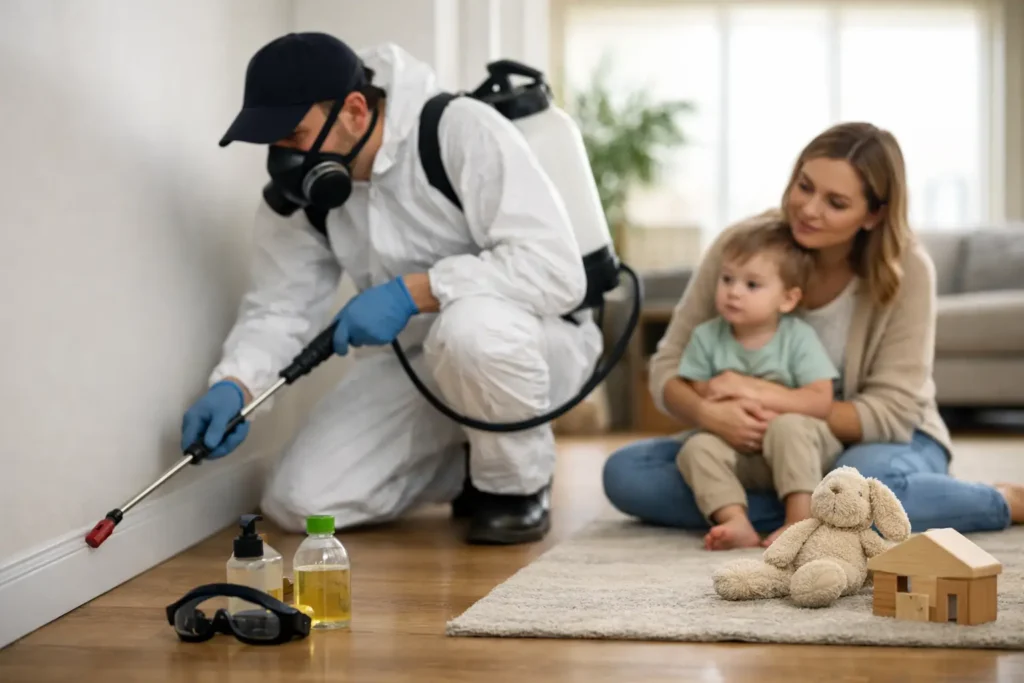
That approach matters for households with babies, children, older adults, pets, or people with respiratory sensitivities. Your technician should ask about these factors before treatment and adjust the service plan when needed. You should also tell the technician about fish tanks, pet enclosures, indoor birds, allergies, pregnancy, or medical concerns so appropriate precautions can be discussed before service begins.
No treatment should be presented as risk-free. Pesticides are regulated products, and they must be handled carefully. However, risk is greatly reduced when the correct product is used in the correct place at the correct amount and when the property owner follows the technician’s instructions.
What Makes an Indoor Pest Treatment Safer?
A safe indoor treatment begins with inspection, not a one-size-fits-all spray. The technician needs to identify the pest, locate activity, determine how the pests are entering, and understand the conditions helping them survive. Moisture, food access, clutter, damaged screens, open utility gaps, and unsealed cracks can all contribute to repeat problems.
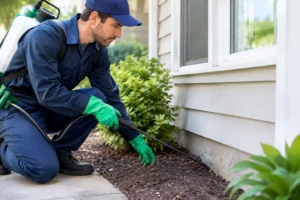
The safest and most dependable plans use integrated pest management. This means combining targeted treatment with practical prevention. For example, ant control may involve treating active trails and entry points while also addressing leaks, food storage, and gaps around windows or pipes. Rodent control may involve traps and exclusion work rather than relying on a single treatment method.
For indoor service, professionals commonly use a combination of carefully placed baits, crack-and-crevice applications, traps, monitoring devices, exclusion materials, and limited liquid applications where appropriate. The right method depends on the pest.
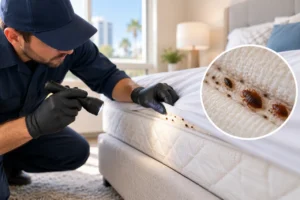
Baits can be useful for ants and cockroaches because pests carry the product back to the colony or harborage area. Traps and monitoring devices help identify rodent activity and reduce populations without placing treatment across open living areas. Bed bug services may require detailed room preparation, targeted applications, and follow-up inspections because these pests hide in seams, furniture joints, and small cracks.
Why the Pest Problem Changes the Treatment Plan
Different pests require different safety steps. A professional should explain the method being recommended instead of treating all indoor infestations the same way.
Ants, roaches, and silverfish
These pests often travel along predictable routes near kitchens, bathrooms, appliances, and plumbing. Treatment may focus on bait placements, small targeted applications, sanitation recommendations, and sealing entry points. Keeping countertops clear and promptly cleaning food spills helps the treatment work faster and reduces the chance of future activity.
Rodents and mice
Rodent control is not just about removing what is currently inside. It requires finding and closing the openings that allow rats or mice to return. Indoors, technicians may use secured traps in activity areas and inspect attics, garages, crawl spaces, utility lines, and exterior gaps. Households should never handle rodenticides or dead rodents without proper guidance.
Bed bugs
Bed bug control is often more involved because the infestation can spread through bedrooms, upholstered furniture, luggage, and neighboring units. A safe plan may include detailed preparation, laundering and bagging instructions, vacuuming, targeted treatment, and scheduled follow-up. Property managers should act quickly because clear communication and coordinated access can limit spread within a building.
Termites
Termite treatment may involve localized work, bait systems, structural applications, or fumigation, depending on the species and extent of damage. Fumigation requires everyone, including pets and plants, to leave the structure until it has been cleared for re-entry. It is highly controlled and should only be performed by properly licensed professionals following all required procedures.
Preparation and Re-Entry Instructions Matter
The service itself is only one part of safe indoor pest control. Preparation helps protect occupants and allows the treatment to reach the pest more effectively. Instructions vary by service, but they may include covering or putting away food, clearing items from under sinks, moving pet bowls and toys, giving access to baseboards, or vacuuming before a bed bug treatment.
After service, follow the re-entry guidance exactly. Some treatments allow normal use of the area once products are dry. Others require people and pets to remain out of the space for a specified period. Do not guess or rely on advice from a neighbor who had a different pest problem treated. Ask your technician for instructions that apply to your home or business.
If you have an aquarium, it may need to be covered and its air pump turned off during certain applications. Birds can be especially sensitive, so they may need to be moved from the treatment area. Pet owners should also prevent animals from licking or touching treated surfaces until the technician confirms it is safe to resume normal access.
Questions to Ask Before Indoor Treatment
You deserve straightforward answers before anyone treats your property. Ask what pest has been identified, what method will be used, where products will be placed, and what you need to do before and after the appointment. You can also ask about re-entry timing, pet precautions, follow-up service, and the steps that will prevent the issue from coming back.
Be cautious of providers who promise to solve every pest issue with a single generic treatment or cannot explain their process. Fast response is valuable, especially with rodents, bed bugs, and stinging insects, but speed should not replace a careful inspection and a clear plan.
For landlords and business owners, communication is equally important. Tenants and staff need accurate preparation and access instructions, particularly when treatment involves kitchens, break rooms, shared spaces, or occupied units. A well-managed service plan protects people while minimizing disruption to daily operations.
How to Keep Indoor Pest Control Working Safely
Treatment works best when the property supports it. Store food in sealed containers, repair water leaks, empty trash regularly, reduce cardboard clutter, and close gaps around doors, pipes, and utility lines. These simple steps remove the food, water, and shelter pests need.
Ongoing pest maintenance can also reduce the need for larger corrective treatments later. Regular inspections and monitoring catch early activity before ants build strong trails, rodents establish nesting sites, or termites cause more extensive damage. For Southern California properties, year-round prevention is especially practical because mild weather allows many pests to remain active across the seasons.
Impressive Exterminating builds treatment plans around the actual pest pressure at your property, with focused applications and prevention recommendations that help deliver lasting relief. Whether you are protecting a family home, a rental unit, or a local business, the goal should be the same: solve the infestation quickly while treating your indoor environment with care.
If you are seeing droppings, insect trails, bites, damage, or repeat activity, do not wait for the problem to grow. A professional inspection can clarify what you are dealing with, what treatment is appropriate, and exactly how to keep everyone on the property protected.