A rat spotted near the garage or a mouse caught in the pantry can make trapping feel like the obvious first move. But rodent proofing versus trapping isn’t really an either-or decision for most Southern California properties — and treating it as one is a common reason rodent problems keep coming back. A trap removes the rodent you know about. Proofing is what stops the next one from getting inside in the first place.
The right approach depends on what’s actually happening at your property. A single mouse might call for targeted trapping and a careful inspection. Droppings in several areas, scratching in the walls, chewed wiring, or activity around dumpsters usually points to a bigger issue that needs removal, exclusion, sanitation guidance, and follow-up monitoring together. Speed matters here because rodents reproduce fast — a single pair of mice can produce dozens of offspring in a year — and they can contaminate food, chew through insulation and wiring, and create repair bills well beyond the cost of pest control.
The Core Difference: Removal vs. Prevention
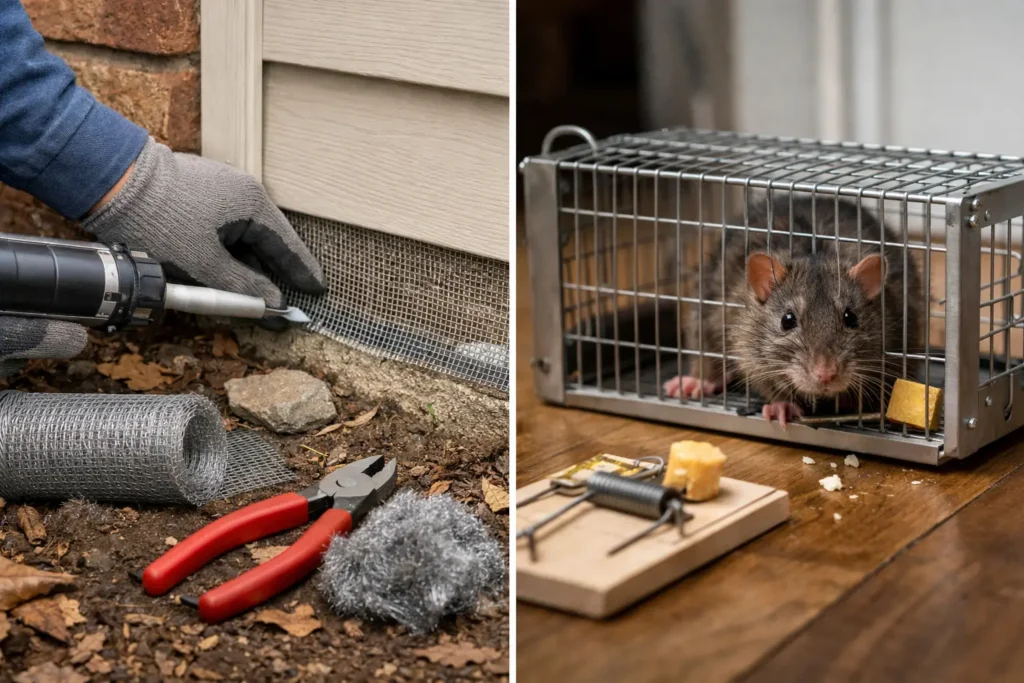
Trapping is active removal. It’s designed to capture rodents already living in or traveling through a structure. Properly placed traps can meaningfully reduce activity fast, especially when a technician identifies the actual routes rodents use between nesting areas, food sources, and entry points — rather than setting traps at random.
Rodent proofing (also called exclusion) is prevention. It means locating and sealing the openings that let mice and rats in to begin with. Common problem spots include gaps around utility lines, damaged vents, openings beneath doors, roofline gaps, cracked foundations, and poorly sealed garage doors. Rodents don’t need much room: mice can squeeze through an opening about the size of a dime, and rats can use a gap roughly the size of a quarter.
Trapping addresses the animal. Proofing addresses the access point. Skipping either one leaves a real gap in protection. Trap without sealing entry points, and new rodents can simply move into the space the last one left behind. Seal everything while rodents are still inside, and you risk trapping animals in walls, attics, or crawl spaces — which creates its own problem.
Why Trapping Alone Often Stalls Out
Trapping is often the necessary first step when there’s clear evidence of active indoor activity: fresh droppings, gnaw marks, grease rub marks along walls, noises after dark, or disturbed pet food. For an active infestation, professional trap placement consistently outperforms a handful of store-bought traps set along a baseboard, because rodents travel along edges and behind stored items rather than across open floor space. Trap type, bait, placement, and quantity all affect how quickly activity actually drops.
But trapping has real limits. It requires regular checking, safe handling, and adjustment as activity shifts. It also doesn’t answer the more important question: why did rodents get in to begin with? In homes with children or pets, improperly placed traps can create their own safety concern. Commercial properties need extra care, since traps have to be positioned discreetly in ways that protect employees, customers, inventory, and food-handling areas.
There’s also a behavioral factor worth knowing: rodents that survive a near-miss with a trap can become trap-shy, learning to avoid the same trap type or location going forward. That’s one reason a DIY trapping effort can quietly stall even while droppings keep appearing — the remaining rodents have adapted, and the entry point they used the first time is still wide open.
Why Rodent Proofing Delivers the Long-Term Fix
Proofing is what turns a short-term removal effort into an actual prevention plan. It’s especially valuable for homeowners and property managers who deal with the same problem every fall, after nearby construction, or whenever landscaping gets overgrown.
A thorough exclusion service starts with inspection, not guesswork. A trained professional checks the full structure — roofline, attic vents, crawl space, foundation, exterior doors, pipe penetrations, utility connections, and garage. In many cases, the entry point isn’t anywhere near where the rodents are actually being seen. A mouse in the kitchen may have entered through a gap near the water heater on the other side of the house. Rats in an attic may be climbing trees, utility lines, fences, or exterior features to reach a roof opening.
Effective proofing uses materials rodents genuinely can’t chew through — caulk alone rarely holds up against a larger gap. Door sweeps, welded or hardware-cloth mesh, vent covers, and repairs to damaged building materials are typically part of a real solution, since rodents can chew through standard plastic, foam, and rubber with relative ease. The goal is closing access without blocking required ventilation or trapping moisture.
Proofing has trade-offs too. Older homes can have many hidden gaps, so complete exclusion sometimes takes longer than a single trapping visit. Multi-unit buildings and commercial properties often require coordinating with tenants, maintenance teams, and neighboring spaces. Even so, reducing access points is usually the most cost-effective way to prevent recurring rodent activity over time — it’s a one-time investment against a recurring service cost.
The Best Answer Is Usually Both, in the Right Order
For most active infestations, the most effective approach isn’t “rodent proofing versus trapping” — it’s trapping followed by carefully timed proofing and monitoring. This combination removes the rodents already inside while closing the routes that would let more in.
Order matters here. If activity is light and the entry point is obvious, exclusion can sometimes happen quickly while traps confirm no rodents remain inside afterward. With heavier activity, a technician may start with a targeted trapping program, track results, and then seal entry points only once the interior population is under control — this sequencing avoids the worst-case outcome of sealing live rodents into an inaccessible space.
Sanitation and habitat changes support both methods regardless of order. Keep food in sealed containers, clean crumbs and grease from kitchens promptly, avoid leaving pet food out overnight, and manage clutter in garages, storage rooms, and crawl spaces. Outside, secure trash lids, remove fallen fruit, trim branches away from the roofline, and keep dense vegetation from touching exterior walls. None of this replaces professional rodent control on its own — but it makes a property meaningfully less appealing in the first place.
Warning Signs You Shouldn’t Wait On
A rodent issue rarely improves on its own. Mice and rats can damage electrical wiring, insulation, stored belongings, and even vehicle components, and their droppings and urine can contaminate surfaces and food storage areas, creating a real health concern for families, tenants, employees, and customers.
Call for an inspection when you notice repeated droppings, nighttime scratching, a persistent musty odor, gnawed packaging, shredded-material nests, or an unexplained uptick in insects around pet food and trash areas. Daytime sightings deserve a faster response too — seeing a rodent during daylight hours can mean competition for food or nesting space has already increased inside the structure.
Property managers should pay particular attention to shared walls, utility rooms, trash enclosures, vacant units, and landscaping near buildings, since one unsealed opening or poorly managed waste area can affect multiple units at once. Businesses in particular should act quickly to protect their reputation, meet health expectations, and avoid disrupting operations.
What a Professional Rodent Control Plan Should Actually Include
A dependable rodent service should be built around your specific property, not limited to dropping off a few traps and leaving. It should start with a detailed inspection and a clear explanation of where activity is happening, what’s likely attracting rodents, and which access points need attention.
The plan should include safe, strategic removal methods, practical exclusion recommendations, and follow-up visits when needed. Monitoring matters because a quiet night doesn’t always mean the problem is gone — rodents are naturally cautious around new objects, and reduced visible activity can simply mean they’ve grown wary rather than left. A good provider should also tell you what to do between visits and give straightforward guidance for protecting children, pets, tenants, and customers throughout the process.
At Impressive Exterminating, rodent control is built around fast response, effective treatment, and long-term prevention for homes and businesses across Los Angeles County and Orange County. That means looking past the immediate sighting to the conditions that actually let rodents return.
If you’re hearing movement overhead, finding fresh droppings, or resetting the same trap week after week with no change, treat it as a property protection issue rather than a one-time nuisance. A timely rodent inspection can identify the real source, safely remove active rodents, and help keep your space protected long after the traps come down.
Frequently Asked Questions
Is it better to trap mice or seal entry points first?
It depends on how active the infestation is. If activity is light and the entry point is obvious, sealing it quickly while confirming with traps that no rodents remain inside can work well. With heavier activity, most professionals trap first to reduce the population, then seal entry points — sealing everything while rodents are still inside risks trapping them in walls or crawl spaces.
Why do my mouse traps stop working after a while?
Rodents that survive a near-miss can become “trap-shy,” learning to avoid a specific trap type, bait, or location. If activity continues after weeks of trapping, it’s usually a sign that entry points haven’t been addressed — new rodents may be replacing the ones removed — or that the trapping strategy itself needs to change (different placement, bait, or trap type).
How small of a hole can a mouse or rat get through?
A mouse can squeeze through an opening roughly the size of a dime (about a quarter-inch). A rat needs a slightly larger gap, roughly the size of a quarter. Because of this, gaps around utility lines, vents, and foundation cracks that look too small to matter are often exactly where rodents are getting in.
Does rodent proofing actually stop rodents, or do they just chew through it?
Proper exclusion uses materials rodents genuinely struggle to chew through — welded wire mesh, metal flashing, and heavy-duty door sweeps — rather than caulk or foam alone, which rodents can gnaw through fairly easily. The material and installation quality matter as much as whether an opening gets sealed at all.
If I hire a pest control company, will they seal my house completely?
A thorough exclusion service inspects the full structure — roofline, attic vents, crawl space, foundation, exterior doors, and utility penetrations — and seals every entry point found during that inspection. Very old homes or complex structures can have hidden gaps that surface over time, which is why many providers include a follow-up check as part of a complete rodent proofing plan.
Can I do rodent proofing myself?
Small, obvious gaps around doors or single utility penetrations can sometimes be handled with proper materials and care. However, most infestations involve multiple entry points that aren’t visible from ground level — roofline access, attic vents, and gaps behind exterior features are commonly missed in DIY efforts, which is why professional inspection tends to catch what a homeowner walk-around doesn’t.
How do I know if I have mice or rats?
Droppings are one of the clearest indicators: mouse droppings are small (about the size of a grain of rice), while rat droppings are noticeably larger. Rats also travel farther from their nest — over 50 feet in some cases — while mice tend to stay within 10 to 20 feet of food and shelter, which affects where a technician looks for the entry point and where traps get placed.
Will sealing entry points get rid of rodents that are already inside?
No. Sealing entry points prevents new rodents from entering, but it doesn’t remove rodents already living inside a structure. That’s why exclusion is typically paired with trapping — proofing without addressing an existing indoor population can trap animals inside rather than keep them out.