A warm evening on the patio can change quickly when mosquitoes start circling ankles, guests, and pets. In Southern California, mosquito season is not limited to a short summer window. Mild temperatures, irrigated landscaping, pools, and small pockets of standing water can support mosquito activity for much of the year.
For homeowners, property managers, and business owners, the goal is not simply to get through a few itchy bites. It is to reduce the conditions that allow mosquitoes to breed near the property and respond quickly when activity becomes a recurring problem.
When Is Mosquito Season in Southern California?
Mosquito activity often begins to increase in spring as daytime temperatures rise and can remain high through fall. [Update: Vector control officials across Los Angeles, Orange, and Ventura counties have confirmed that the traditional May–October window has been stretching later each year. The Greater Los Angeles County Vector Control District has reported that tracking now runs into late November and sometimes early December, compared with mid-October just a couple of decades ago.] In many parts of Los Angeles County and Orange County, mosquitoes may still be active during warm winter stretches, especially around consistently watered yards, shaded areas, and properties with standing water.
The busiest period is usually late spring through early fall, when heat speeds up the mosquito life cycle and people spend more time outdoors. A few warm days after rain or heavy irrigation can be enough to create a breeding opportunity — [wetter-than-average winters have, in recent years, produced mosquito counts several times higher than the five-year average in parts of Orange County, arriving weeks earlier than residents expect]. That is why mosquito prevention works best as an ongoing property-maintenance habit rather than a once-a-year task.
Not every mosquito problem looks the same. A single-family home with a neglected birdbath has different risk factors than an apartment complex with shared landscaping, or a restaurant patio with planters and outdoor drains. A professional inspection can identify where activity is starting instead of treating only the visible adult mosquitoes.
Why Mosquitoes Become a Property Problem So Fast
Mosquitoes need water to reproduce, but it does not take much. Some species can breed in water collected in a bottle cap, plant saucer, clogged gutter, or folded pool cover — [as little as a quarter-inch of standing water, according to county vector control agencies]. Once eggs are laid, warm conditions can move the process from larvae to biting adults surprisingly quickly, sometimes in about a week.
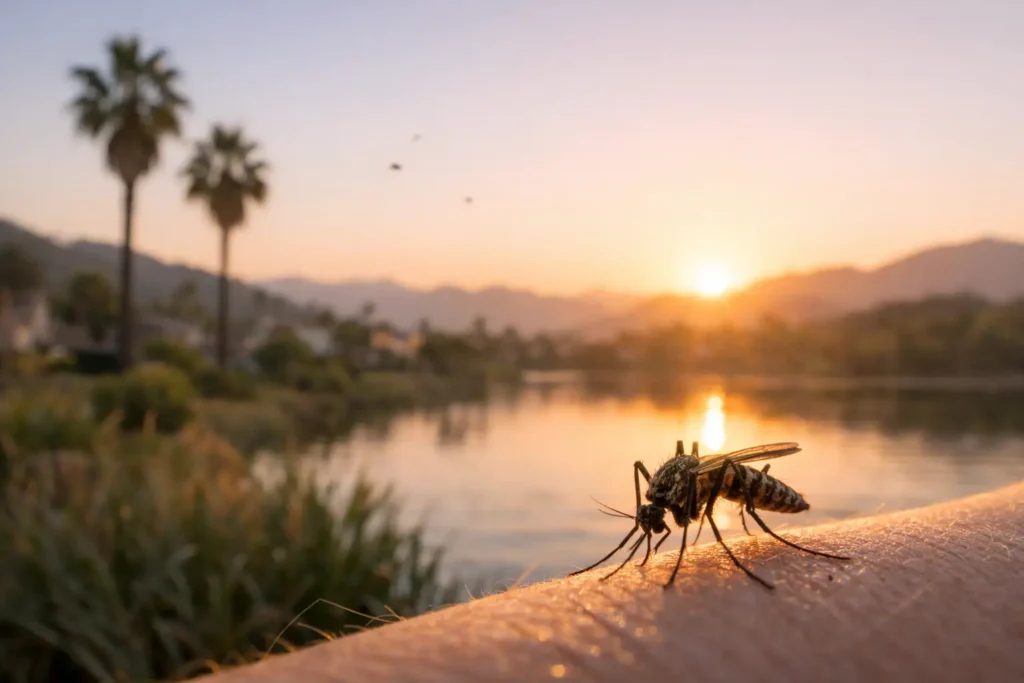
Southern California properties often have the exact conditions mosquitoes prefer: regular watering, ornamental plants, outdoor entertaining areas, pools, shaded patios, and drainage features that are easy to overlook. [The mosquito species commonly found in the area now includes the invasive Aedes aegypti — often called the “ankle-biter” mosquito — a small, black-and-white striped species that arrived in Southern California via international cargo shipments roughly a decade ago and has since spread through most of the region.] Unlike native Culex mosquitoes, which mainly bite at dusk and dawn, Aedes mosquitoes bite aggressively during the day, target ankles and legs, and can bite the same person multiple times in one encounter. So the problem is not always limited to evening hours.
Beyond discomfort, persistent mosquito activity can affect how people use a property. Families may avoid their backyard. Tenants may submit repeated complaints. Customers may cut a meal or visit short because of bites. Mosquito control is therefore both a comfort issue and a property-management concern.
The First Places to Check for Breeding Water
Start with a slow walk around the exterior of the property after watering or rain. Look closely at anything that can hold water for several days. The most common trouble spots include:
- Plant saucers, buckets, toys, tarps, wheelbarrows, and unused containers
- Clogged gutters, downspouts, outdoor drains, and low spots in landscaping
- Birdbaths, pet bowls, fountains, and rain barrels that are not refreshed or maintained
- Pool covers, spas, decorative ponds, and irrigation leaks
Empty and scrub containers at least once a week during active mosquito periods. Scrubbing matters because eggs can adhere to the sides of a container above the water line — [Aedes eggs can also survive dry conditions for months and hatch once water returns, which is why a container that “looked dry all winter” can still produce a new batch of mosquitoes after the first spring rain]. If a container must hold water, keep it covered or properly treated according to its intended use.
For pools and spas, maintain proper circulation and sanitation. A neglected pool can become a major mosquito source, but even a maintained pool can have nearby problem areas such as a sagging cover or clogged deck drain. Property managers should also inspect common areas regularly, since a single overlooked location can affect multiple units.
Reduce Adult Mosquito Resting Areas
Removing water is the most effective starting point, but mosquitoes also need protected places to rest. Dense shrubs, overgrown ground cover, cluttered storage areas, and shaded zones near patios can give adult mosquitoes a place to wait for people and pets.
Keep vegetation trimmed away from doors, walkways, and seating areas. Remove unnecessary debris from side yards and behind sheds. Check window and door screens for tears, gaps, or frames that do not close securely. These small repairs make it harder for mosquitoes to move from the yard into the home or business.
Outdoor fans can provide short-term relief in gathering spaces because mosquitoes are weak flyers. They are useful for patios, receptions, and outdoor work areas, but they do not solve a breeding source elsewhere on the property. Repellent and protective clothing can also help individuals, particularly during peak activity, while the property-wide issue is being addressed.
When DIY Prevention Is Not Enough
Do-it-yourself prevention can make a meaningful difference when the source is obvious and limited. It becomes harder when mosquitoes continue showing up despite regular cleanup, when the property has large or complex landscaping, or when standing water cannot be easily accessed or eliminated.
Apartment communities, commercial properties, and homes near drainage areas may need a more detailed evaluation. Mosquitoes do not always breed in the place where they bite. They may be coming from a hidden irrigation issue, a blocked drain, a neighboring source, or an area of dense vegetation that is not part of the usual cleanup routine.
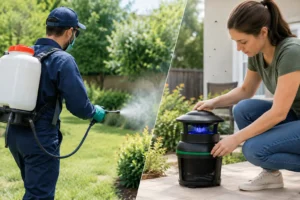
A professional mosquito control service begins by looking for contributing conditions, not just applying a quick spray. The right plan may include targeted treatment of active areas, recommendations for eliminating breeding sites, and follow-up service based on the property’s layout and mosquito pressure. Treatment choices should be made with children, pets, customers, tenants, and the surrounding environment in mind.
At Impressive Exterminating, mosquito service is designed around the conditions at your property and the level of activity you are seeing. A customized approach helps address immediate outdoor discomfort while supporting long-term prevention.
Mosquito Season Prevention for Rental and Commercial Properties
For property owners and managers, consistency is the difference between a manageable issue and repeated complaints. A simple inspection routine after rain, landscaping work, or irrigation adjustments can catch problems before mosquito numbers build.
Assign responsibility for common problem areas, including trash enclosures, utility zones, pool decks, planters, roof drains, and vacant-unit patios. If landscaping is handled by a vendor, make mosquito prevention part of the conversation. Leaks, drainage problems, and overwatering should be reported and corrected promptly rather than treated as cosmetic concerns.
Businesses with outdoor seating should inspect their patios before busy service periods. Clear standing water, maintain drains, keep planters from holding excess water, and make sure doors close properly. These steps support a more comfortable customer experience without relying on a last-minute response after guests have already noticed the problem.
Act Early Instead of Waiting for Peak Activity
The best time to address mosquitoes is when the first signs appear: more bites outside, insects gathering near shaded areas, or water repeatedly collecting in the same spot. Waiting until mosquito activity is heavy can make control more difficult because multiple breeding cycles may already be underway.
If mosquitoes are interrupting your home life, affecting tenants, or making outdoor areas uncomfortable for customers, schedule an inspection before the problem grows. Fast, targeted service and practical prevention can help you reclaim the spaces you maintain and enjoy.
Frequently Asked Questions
When does mosquito season actually end in Southern California?
There is no hard stop anymore. Local vector control districts have tracked mosquito activity extending into late November and even early December in recent years, compared with a traditional cutoff around mid-October. Warm winter stretches, irrigated landscaping, and standing water can keep mosquitoes active well outside the “official” May-through-October window, so prevention should continue year-round rather than pausing after summer.
Why am I getting bitten during the day? I thought mosquitoes only came out at dusk.
That’s a common source of confusion, and it usually comes down to which mosquito is doing the biting. Native Culex mosquitoes (sometimes nicknamed “barbecue biters”) are most active at dawn and dusk. But an invasive species, Aedes aegypti, has spread through most of Southern California since around 2011 and behaves very differently — it bites aggressively during daylight hours, often targets ankles and lower legs, and can bite the same person several times in one visit.
What are “ankle-biter” mosquitoes, and are they dangerous?
Ankle-biters are the common nickname for Aedes aegypti (and the related Aedes albopictus), small black-and-white striped mosquitoes that arrived in the region via international shipping. They’re known for persistent daytime biting and unusually itchy bites. They can transmit viruses such as dengue, chikungunya, and Zika, though local transmission in California is currently rare. Their bigger day-to-day impact for most homeowners is the sheer number and frequency of bites, since they breed in tiny amounts of water close to the house — planters, gutters, pet bowls — rather than far-off wetlands.
Do I need to worry about West Nile Virus from mosquitoes in my yard?
West Nile Virus is carried by native Culex mosquitoes and does show up in Southern California mosquito samples most years, with case counts and positive samples typically peaking in late summer. The risk to any individual is generally low, but county health departments do track and report human cases annually. If you’re seeing heavy mosquito activity, especially near dusk, it’s worth taking prevention seriously and reporting significant breeding sources (like a green, neglected pool nearby) to your local vector control district.
My yard doesn’t have any standing water — why do I still have a mosquito problem?
Mosquitoes don’t always breed where you see them biting. A property can look completely dry on the surface while a clogged gutter, an irrigation leak behind a fence, a neighbor’s uncovered rain barrel, or a shaded drainage low spot is quietly producing new mosquitoes just a short flight away. This is one of the most common reasons DIY cleanup doesn’t fully solve a mosquito problem — a professional inspection can trace activity back to a source that isn’t obvious from a quick walk-through.
Can a neglected pool or yard next door really affect my property?
Yes. A green, untreated pool is one of the most productive mosquito breeding sites there is, and adult mosquitoes can travel a meaningful distance from where they hatch. If you’ve addressed every obvious source on your own property and are still dealing with bites, a nearby neglected pool, construction site, or vacant property is a common culprit worth asking your pest control provider or local vector control district about.
Is professional mosquito treatment safe for kids and pets?
A responsible provider will choose products and application methods with children, pets, and the surrounding environment in mind, and will explain any re-entry times before treating. If you have a pool, edible garden, fish pond, or family members with sensitivities, mention that when scheduling so the treatment plan can account for it.