West Nile virus in Los Angeles is a growing concern for homeowners, especially during warmer months when mosquito activity increases across Southern California. Families in Los Angeles and Orange County often wonder whether mosquitoes around their homes could carry dangerous diseases.
Most mosquito bites do not cause West Nile virus, and most infected people never develop symptoms. However, infected mosquitoes can transmit the virus, and some infections can cause serious neurological illness.
The answer is that most mosquito bites do not cause West Nile virus, and most people who become infected never develop symptoms. However, infected mosquitoes can transmit the virus, and some infections can cause serious neurological illness.
For homeowners in Los Angeles and Orange County, understanding the actual risks is more useful than worrying about every mosquito bite.
The good news is that practical prevention measures, regular property maintenance, and professional mosquito control in Los Angeles can help reduce mosquito activity and potential exposure.
How Serious Is West Nile Virus in Southern California?
West Nile virus in Los Angeles is an ongoing public health concern because infected mosquitoes are regularly detected in Southern California. Mosquito activity typically increases during warmer months, particularly in summer and fall.
According to California public health research, West Nile virus activity generally increases during warmer months, particularly in summer and fall.
Southern California’s warm temperatures, irrigated landscaping, and residential water sources can create favorable conditions for mosquitoes.
In 2026, California health researchers reported increased West Nile virus activity compared with the same period in 2025.
For example, UC Berkeley Public Health reported that Los Angeles County had identified 67 West Nile virus-positive mosquito pools by mid-July 2026, compared with six during the equivalent period in 2025.
These findings demonstrate why mosquito surveillance and prevention remain important.
However, detecting infected mosquitoes in a county does not mean every neighborhood or individual mosquito presents the same level of risk.
Homeowners should focus on reducing mosquito breeding conditions and avoiding unnecessary bites rather than assuming every mosquito carries the virus.
What Is West Nile Virus, and How Does It Spread?
West Nile virus primarily circulates between birds and mosquitoes.
Mosquitoes become infected when they feed on birds carrying the virus. An infected mosquito may subsequently transmit the virus to a person through a bite.
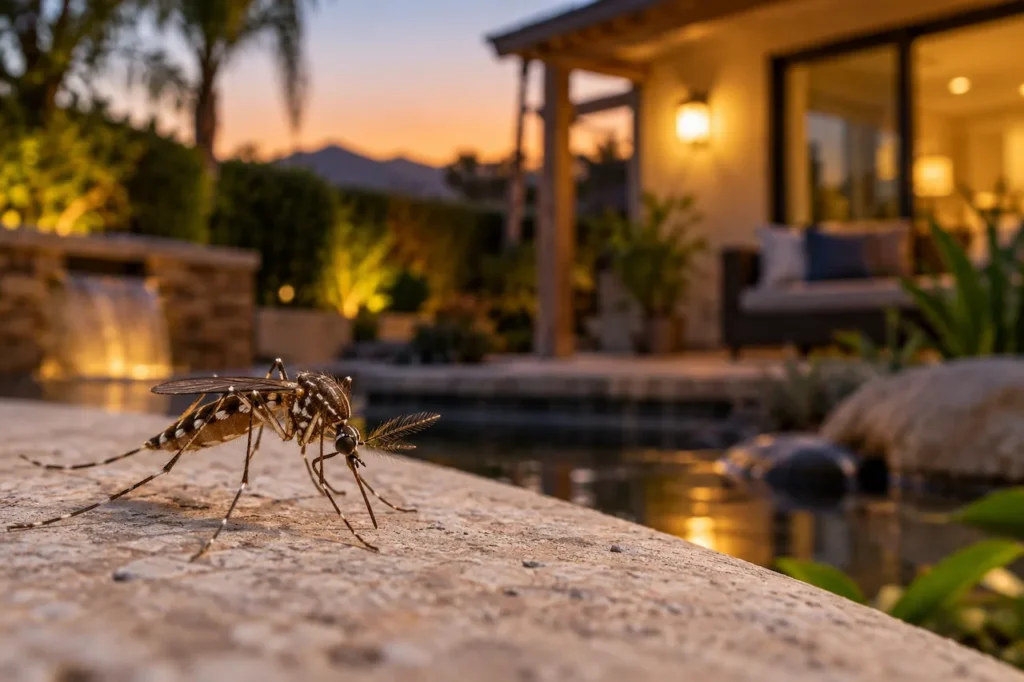
In California, Culex mosquitoes are the principal vectors responsible for West Nile virus transmission.
This distinction matters because Southern California also has invasive Aedes mosquitoes, which frequently bite during daylight hours.
Although both mosquito groups are concerning, they do not present identical disease risks.
West Nile virus does not ordinarily spread through casual contact, sharing food, or touching another person.
The most effective way to reduce the risk of infection is to prevent mosquito bites.
What Are the Symptoms of West Nile Virus?

One reason West Nile virus can be confusing is that many infected people never realize they have it.
Approximately 80% of infected individuals experience no symptoms.
Around 20% may develop a febrile illness involving:
- Fever and headache
- Muscle aches or joint pain
- Fatigue and weakness
- Nausea or vomiting
- Occasionally, a skin rash
Symptoms generally develop within 2–14 days after infection.
Most people recover without serious complications, although fatigue can sometimes continue for weeks.
A small percentage develop severe neurological illness.
Warning signs can include severe headache, neck stiffness, confusion, muscle weakness, seizures, or paralysis.
Anyone experiencing these symptoms should seek urgent medical attention.
Adults aged 60 and older and people with certain medical conditions face a greater risk of severe illness.
There is currently no licensed human vaccine or specific antiviral treatment for West Nile virus.
This makes prevention particularly important.
Why Are Mosquitoes a Persistent Problem in Los Angeles?
Southern California’s climate creates conditions that can support mosquito populations for extended periods.
Unlike regions with consistently freezing winters, Los Angeles often experiences mild temperatures that allow mosquito activity beyond the traditional summer season.
Several common residential conditions can contribute to mosquito problems.
Standing Water Around Homes
Mosquitoes require water for their immature stages to develop.
Common breeding locations include flowerpot saucers, clogged gutters, birdbaths, unused containers, outdoor toys, neglected swimming pools, and drainage areas.
Even small quantities of water can support certain mosquito species.
Homeowners should inspect their properties at least once a week and remove unnecessary standing water.
Overwatered Landscaping
Irrigation systems help maintain Southern California gardens, but leaking sprinklers and poorly draining soil can create persistent wet areas.
Water collecting beneath shrubs, around patios, or beside foundations may contribute to mosquito breeding.
Repairing irrigation leaks and adjusting watering schedules can reduce these conditions.
Dense Vegetation and Shaded Areas
Adult mosquitoes often rest in protected, shaded environments.
Overgrown shrubs, thick landscaping, and poorly maintained vegetation can provide resting areas close to outdoor living spaces.
Trimming unnecessary vegetation can make these locations less favorable.
Nearby Properties
Mosquitoes do not recognize property boundaries.
Even homeowners who maintain their yards carefully may experience mosquito activity originating from neighboring properties, storm drains, or other nearby water sources.
When mosquito problems persist, a professional inspection can help determine which conditions are manageable on the property.
What Should Southern California Homeowners Actually Worry About?
Not every mosquito sighting should cause alarm.
Instead, homeowners should pay attention to several specific warning signs.
1. Repeated Mosquito Activity Around Outdoor Living Areas
Frequent bites around patios, gardens, and outdoor seating areas suggest that mosquito populations may be established nearby.
The first step is to inspect for standing water and shaded resting areas.
2. Mosquitoes Appearing Indoors
Mosquitoes entering bedrooms and living areas may indicate damaged screens, poorly sealed doors, or frequent access through open entrances.
Repairing window screens and installing properly fitted door screens can help prevent entry.
3. Water That Remains Undisturbed for Days
Containers that repeatedly collect water can become mosquito breeding sites.
Emptying and scrubbing these containers weekly is an important preventive measure.
4. Mosquito Activity Near Vulnerable Family Members
Households with older adults or individuals at greater risk of severe West Nile illness should be especially consistent about bite prevention.
5. Persistent Problems Despite Basic Prevention
If mosquito activity continues after eliminating standing water and using appropriate repellents, additional investigation may be necessary.
Homeowners comparing treatment options can read our guide to Professional Versus DIY Mosquito Control to understand when professional assistance may be worthwhile.
How to Reduce Mosquitoes Around Your Southern California Home
Effective mosquito prevention begins with simple property maintenance.
Remove Standing Water Weekly
Inspect outdoor containers, flowerpots, buckets, birdbaths, gutters, and other areas where water accumulates.
Empty and scrub containers whenever possible.
Maintain swimming pools and repair drainage problems.
For water features that cannot be drained, ask your local vector control agency about appropriate mosquito management options.
Use EPA-Registered Insect Repellents
Repellents containing DEET, picaridin, IR3535, or other EPA-registered active ingredients can help prevent mosquito bites.
Follow the product label, including age restrictions and application instructions.
Wear Protective Clothing
Long sleeves, long pants, and loose-fitting clothing can reduce exposed skin.
This is especially useful when spending time outdoors during periods of increased mosquito activity.
Improve Window and Door Screens
Inspect screens for tears, gaps, or loose fittings.
Repairing these openings helps prevent mosquitoes from entering indoor living spaces.
Maintain Landscaping
Trim overgrown vegetation, address excessive moisture, and remove unnecessary outdoor clutter.
These actions can reduce mosquito resting areas and potential breeding conditions.
DIY vs. Professional Mosquito Control: Which Is Better?
Both approaches have a role in managing mosquito problems.
DIY prevention is often sufficient when mosquito activity is limited and homeowners can identify and eliminate the breeding source.
Professional mosquito control may be helpful when activity continues despite preventive efforts.
| Factor | DIY Mosquito Prevention | Professional Mosquito Control |
| Best for | Minor mosquito problems | Persistent mosquito activity |
| Initial cost | Generally lower | Higher initial investment |
| Property inspection | Homeowner-led | Technician-led |
| Treatment approach | Basic prevention and retail products | Targeted treatments and recommendations |
| Follow-up | Homeowner responsibility | May include scheduled service |
| Limitations | Hidden breeding areas may be missed | Cannot eliminate every mosquito or disease risk |
Professional services should complement, not replace, source reduction and personal bite prevention.
For homeowners concerned about maintaining protection throughout the season, our Monthly Exterminator Service Review for Homeowners explains what ongoing pest management should include.
When Should You Consider Professional Mosquito Control in Los Angeles?
Professional mosquito control in Los Angeles may be worth considering when mosquitoes repeatedly interfere with normal outdoor activities.
Common situations include persistent mosquito activity despite removing standing water, difficult-to-access drainage areas, extensive landscaping, and recurring problems around patios or shared residential spaces.
At Impressive Exterminating Pest Control, mosquito management begins with understanding the property and identifying conditions contributing to the problem.
Our mosquito control services help homeowners and businesses throughout Los Angeles County and Orange County reduce mosquito activity around outdoor spaces.
A customized treatment plan may involve targeted applications, source-reduction recommendations, and ongoing maintenance.
Professional treatment cannot guarantee protection against West Nile virus, so repellents and personal precautions remain essential.
How Can Homeowners Keep Mosquito Problems From Returning?
Mosquito prevention is most effective when it becomes part of regular property maintenance.
A weekly inspection should include checking containers, removing standing water, inspecting irrigation systems, and examining outdoor areas where mosquitoes are frequently observed.
Homeowners should also monitor changes in pest activity after rainfall, landscaping work, or irrigation repairs.
When selecting pest control services, ask how inspections, preventive maintenance, and follow-up visits are handled.
Our article on Are Pest Treatments Safe Indoors? provides additional guidance about responsible treatment practices and protecting household occupants.
Frequently Asked Questions About West Nile Virus in California
Is West Nile virus common in Los Angeles?
West Nile virus is regularly detected in Los Angeles County. However, the number of infected mosquitoes and human cases varies by year, season, and location. Most mosquito bites do not result in infection.
Can you get West Nile virus from every mosquito bite?
No. West Nile virus is transmitted through the bite of an infected mosquito. Most mosquitoes are not infected, and not every mosquito species is an important West Nile virus vector.
What time of day are West Nile mosquitoes most active?
Culex mosquitoes, which are the primary West Nile virus vectors in California, are generally most active around dusk, nighttime, and dawn. However, bite prevention is useful whenever mosquitoes are present.
Can mosquitoes breed in a clean backyard?
Yes. Even well-maintained properties can contain standing water in flowerpot saucers, drains, birdbaths, and other overlooked locations.
Does professional mosquito control prevent West Nile virus?
Professional mosquito control can help reduce mosquito populations and potential exposure. However, no residential treatment can guarantee that someone will not contract West Nile virus.
What should I do if I think I have West Nile virus?
Contact a healthcare professional if you develop symptoms after possible mosquito exposure. Seek urgent medical attention for severe headache, neck stiffness, confusion, significant weakness, or other neurological symptoms.
How often should homeowners inspect for mosquitoes?
Inspecting outdoor water sources at least once a week is recommended. Additional checks after rain or irrigation problems can help identify new breeding conditions.
Protect Your Los Angeles Home With Smarter Mosquito Prevention
West Nile virus is a legitimate public health concern in Southern California, but homeowners do not need to treat every mosquito bite as a medical emergency.
The most effective response is practical prevention.
Removing standing water, using appropriate repellents, maintaining landscaping, and addressing persistent mosquito activity can help reduce exposure.
For homeowners dealing with recurring mosquito problems, Impressive Exterminating Pest Control provides professional mosquito management services throughout Los Angeles County and Orange County.
Ready to reduce mosquito activity around your property?
Schedule a consultation with Impressive Exterminating Pest Control to discuss your mosquito concerns, property conditions, and available treatment options.
Protect your outdoor comfort with a prevention plan designed for Southern California living.