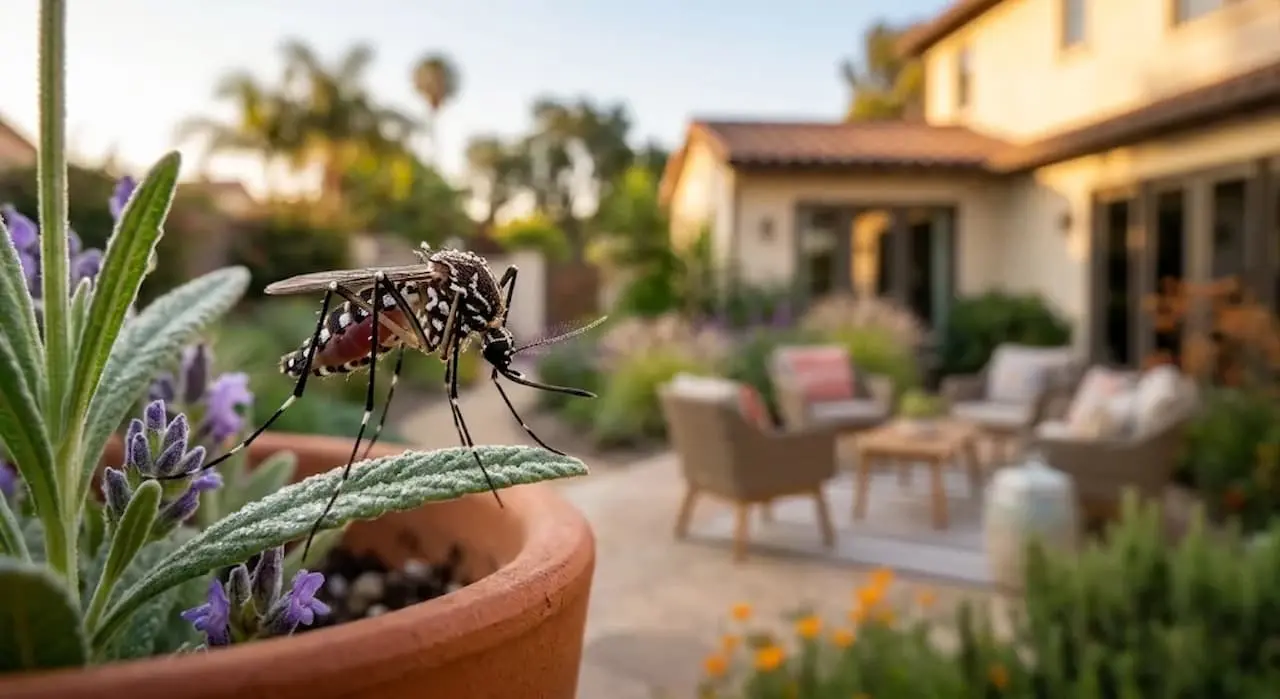
To get rid of mosquitoes, remove every source of standing water at least once a week, trim the dense plants where adults rest, treat water you can’t empty with a mosquito larvicide (Bti), and protect yourself with an EPA-registered repellent. If bites continue after those steps, a professional barrier treatment plus breeding-site inspection can stop the cycle.
Why Do Mosquitoes Keep Coming Back to My Yard?
If mosquitoes keep showing up, one of three things is usually going on:
- Hidden breeding water. A mosquito can grow from egg to biting adult in as little as 5–7 days in Southern California. It doesn’t take a pond. A bottle cap, a plant saucer or a clogged gutter is enough.
- Shady resting spots. Adult mosquitoes spend the day in cool, humid, protected places like ivy, hedges, dense shrubs and crowded potted plants, then come out to bite.
- A source next door. Mosquitoes don’t respect fences. If you’ve cleaned up your yard and still get bitten, a neighbor’s yard, a neglected pool or a drainage area may be producing them.
This is why spraying a few times or lighting a citronella candle rarely solves it. The fix is to break the breeding cycle and reduce where adults hide.
How to Get Rid of Mosquitoes in Your Yard: 7 Steps
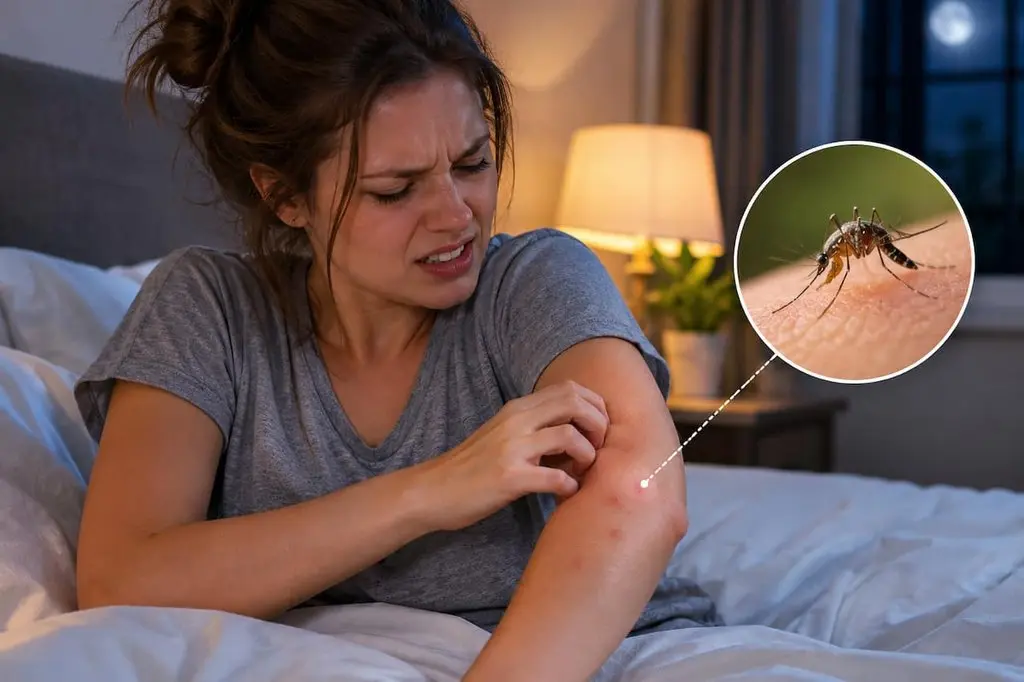
Step 1: Tip and toss standing water every week
Walk your property after watering or rain and empty anything holding water. Scrub the container, because eggs stick to the sides above the waterline. In Southern California, the invasive “ankle biter” mosquito can breed in as little as a teaspoon of water, and its eggs can survive dry spells and hatch when water returns.
Commonly seen:
- Buckets, toys, wheelbarrows and tarps
- Plant saucers and unused planters
- Birdbaths and pet bowls (refresh at least weekly)
Commonly missed:
- Bottle caps and small cans
- Clogged gutters and downspout elbows
- Yard drains, low spots and irrigation leaks
- Pool covers, tarps and folded boat covers
- Rain barrels without screens
- Bromeliads, bamboo stumps and tree holes
- Portable basketball hoop bases and uncovered grills
Step 2: Fix the water you can’t see
Check sprinkler heads and irrigation lines for leaks, clean gutters, and make sure patio and yard drains aren’t holding water. Overwatered landscaping creates a steady supply of small puddles.
Step 3: Treat water you can’t empty with Bti
For ornamental ponds, rain barrels and other permanent water, use a Bti product (Bacillus thuringiensis israelensis), sold as “dunks” or “sprinkles” at garden centers. Bti targets mosquito larvae. Follow the label, since a dunk typically lasts several weeks before it needs replacing. Screen rain barrels so adults can’t lay eggs in them.
Step 4: Cut down resting areas
Trim ivy, hedges and overgrown shrubs so you can see through them. Space out potted plants and clear clutter from side yards and behind sheds. Dense vegetation gives adult mosquitoes shade and shelter during the day. Drought-tolerant plants also tend to mean less overwatering and fewer puddles.
Step 5: Keep them out of your home
Repair torn window and door screens, check that doors seal properly, and don’t leave doors open with lights on at dusk. Indoors, empty any plant saucers and check for slow leaks.
Step 6: Protect yourself while you work on the yard
Use a repellent with an EPA-registered active ingredient, such as DEET, picaridin, IR3535 or oil of lemon eucalyptus, and follow the label. Wear long sleeves and pants during peak activity. A fan on the patio helps too, since mosquitoes are weak fliers.
Step 7: Add a professional barrier treatment if bites continue
If you’ve done steps 1–6 and mosquitoes keep returning, it’s time to treat where adults actually live. A technician applies a targeted barrier treatment to shrubs, shaded areas and resting spots, and inspects your property for breeding sources you may have missed.
See our mosquito control service.
Which Mosquito Remedies Work and Which Don’t?
| Method | Does it help? | Notes |
| Emptying standing water | Yes, the most important step | Do it weekly. It stops mosquitoes before they fly. |
| Bti dunks and sprinkles | Yes, for water you can’t empty | Targets larvae only, not biting adults. |
| EPA-registered repellent | Yes, for personal protection | Protects you, but doesn’t reduce the population. |
| Trimming dense vegetation | Yes, helps | Removes daytime hiding spots. |
| Professional barrier treatment | Yes, reduces adults quickly | Works best together with water removal. |
| Fans | Some help | Good for patios and dining areas. |
| Repellent plants (citronella, lavender, rosemary) | Limited | Mild effect at best. Not a stand-alone solution. |
| Citronella candles and essential oils | Limited | Short-lived and only near the source. |
| Repellent bracelets | Little evidence | Protect only a very small area. |
| UV bug zappers | Poor | They kill many insects but few mosquitoes. |
| “Mosquito repellent” phone apps | Don’t rely on them | No dependable evidence they work. |
How Fast Will I See Results?
- Same week: Dumping standing water and cleaning gutters stops new mosquitoes from developing.
- Within 1–2 weeks: Adult numbers drop as the existing generation ages out and no new one replaces it.
- 24–48 hours after a professional treatment: Most customers notice a significant drop in mosquito activity around treated areas.
- Ongoing: During peak season, service every 21–30 days keeps new generations from rebuilding.
No method can guarantee zero mosquitoes, because they can fly in from neighboring properties. The goal is to cut the number on your property dramatically.
What’s Different About Mosquitoes in Southern California?
Two types of mosquitoes cause most of the trouble in Los Angeles and Orange County, and they behave differently:
| Invasive Aedes (“ankle biters”) | Culex (house mosquitoes) | |
| When they bite | Mostly daytime, also dawn and dusk | Mostly dusk, dawn and night |
| Where they bite | Often ankles and legs | Anywhere exposed |
| Where they breed | Tiny containers: saucers, caps, clogged gutters | Larger, often dirtier water: neglected pools, ponds, drains |
| Why it matters | Hard to control and often bred near your home | West Nile virus in Southern California is spread by Culex |
Local vector control districts track both species. If you spot a green, neglected pool or a large water source on someone else’s property, report it to your local vector control district, since they typically handle public spaces and many offer free inspections.
For more on the invasive species, see the Greater LA West Vector Control guide and the Orange County Mosquito and Vector Control District.
When mosquitoes are most active depends on the season. See When Is Mosquito Season in Southern California?
When Should I Call a Mosquito Exterminator?
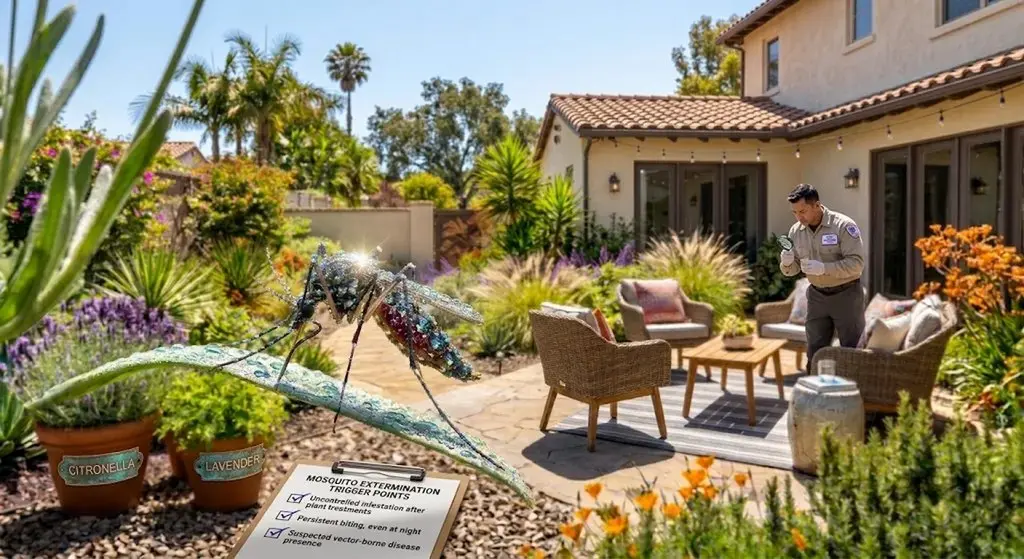
DIY steps work well for small, obvious problems. Call a professional if:
- You’ve removed standing water and still get bitten every time you’re outside
- You have a large yard, heavy landscaping, a pool, a pond or a drainage area
- You can’t find the source and suspect hidden water or a neighbor’s property
- Mosquitoes are keeping your family from using the patio or backyard
- You run a rental, HOA or business and tenants or customers are complaining
Not sure which route fits? Read Professional vs DIY Mosquito Control: Which Works?
What our mosquito service includes
- Property inspection. We look for breeding sites, dense vegetation and shaded resting spots most homeowners don’t think to check.
- Barrier treatment. We treat shrubs, shaded areas and resting spots around your yard’s perimeter to reduce adult mosquitoes where you actually spend time.
- Breeding-site reduction. We point out standing water and drainage or irrigation issues worth fixing between visits.
- Seasonal protection. For lasting results, we recommend service roughly every 21–30 days during peak season, with one-time and monthly options.
Worried about treatment around kids and pets? Read Safe Pest Control for Dogs and Cats and Are Pest Treatments Safe Indoors?
Frequently Asked Questions
Why do I have so many mosquitoes when I don’t see any standing water?
Mosquitoes breed in tiny, easy-to-miss places such as bottle caps, clogged gutters, plant saucers, irrigation leaks and drains. The source may also be on a neighbor’s property. If bites continue after you’ve cleaned up, a professional inspection can often find what you missed.
What kills mosquito larvae naturally?
Bti (Bacillus thuringiensis israelensis) targets mosquito larvae and is sold as dunks or sprinkles. Mosquitofish and fountains or bubblers in ponds can also help. Always follow the product label, and use these only for water you can’t empty.
Do mosquito dunks work?
Yes, for water you can’t dump, such as ponds and rain barrels. They don’t kill adult mosquitoes, so they work best alongside weekly water removal.
Do citronella candles, plants and bracelets work?
Only a little. Citronella and herbs like lavender or rosemary have a mild effect close to the source, and repellent bracelets protect a very small area. None of them reduce the mosquito population in your yard.
Do bug zappers and mosquito traps work?
Bug zappers kill many insects but few mosquitoes. Some traps can help reduce numbers, but they aren’t a one-and-done fix, and they don’t remove breeding water.
What time of day are mosquitoes most active?
Culex mosquitoes are most active at dusk, dawn and night. The invasive Aedes “ankle biters” bite during the day and often go for ankles and legs.
How do I get rid of mosquitoes inside my house?
Repair window and door screens, empty plant saucers, check for slow leaks, and use a fan or screens in sleeping areas. If they keep getting in, find the outdoor source. See our mosquito control service.
How long does it take to get rid of mosquitoes?
Removing breeding water starts working within days, and many customers see a significant drop within 24–48 hours of professional treatment. Lasting results need ongoing water control and, in peak season, regular service.
Can you get rid of mosquitoes completely?
No. They can fly in from nearby properties, but consistent control dramatically reduces how many breed and rest on yours.
Is mosquito treatment safe for pets and kids?
We use treatments designed to be safe for pets and plants once dry, and we’ll walk you through exactly what’s applied and any precautions for your yard.
How often should I treat my yard for mosquitoes?
During peak season, roughly every 21–30 days, so new generations can’t rebuild between visits.