Quick answer: Document the evidence (photos, a captured sample, dates), report it in writing to your landlord or property manager immediately, and request a professional inspection. In California, landlords are generally responsible for bed bug treatment costs under the state’s habitability laws, and tenants are protected from retaliation for reporting in good faith.
Waking up with itchy bites is stressful. Finding a small, reddish-brown bug, dark spotting along a mattress seam, or shed skins near the bed can make it feel urgent fast. This apartment bed bug reporting guide helps renters take clear, practical action before the problem spreads to another room or unit.
Bed bugs are not a sign of poor housekeeping. They travel easily in luggage, upholstered furniture, clothing, and shared walls or utility openings. The faster a suspected issue is reported and inspected, the better the chance of containing it with less disruption for everyone in the building.
Confirm the Signs Before You Report
Bites alone do not confirm bed bugs. Mosquitoes, fleas, skin irritation, and other causes can look similar. What matters is finding physical evidence near where people sleep or rest.
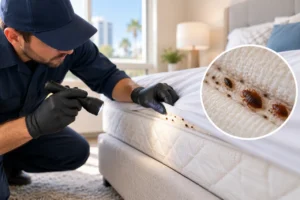
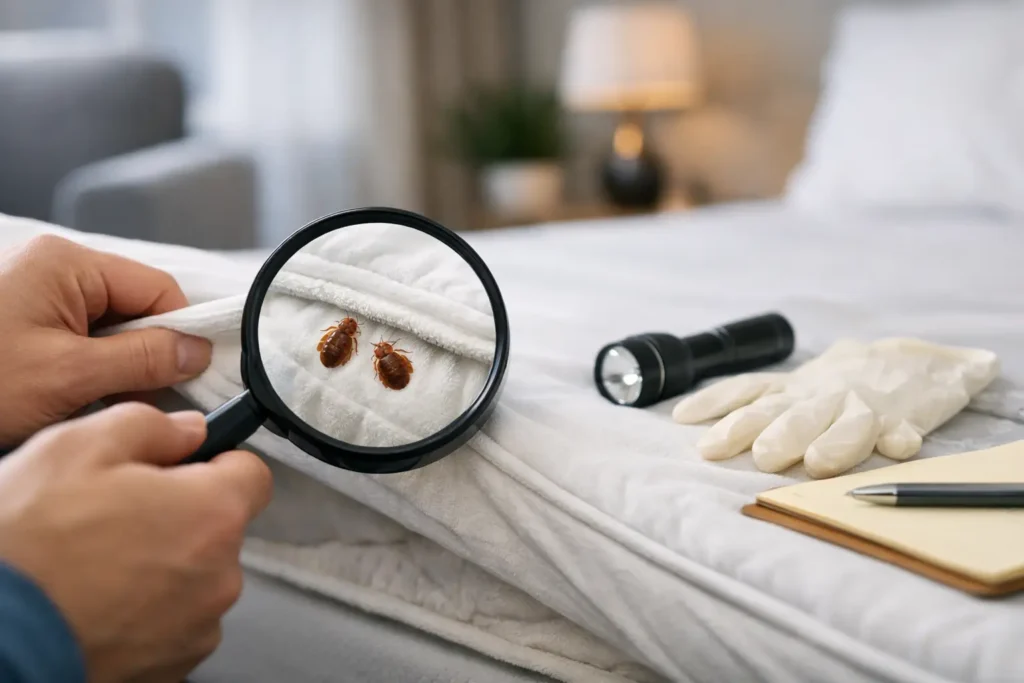
Check mattress piping, box springs, bed frames, headboards, upholstered chairs, baseboards, and cracks around the bed. Bed bugs are small and flat, often about the size and shape of an apple seed when fully grown. Look for live insects, pale shed skins, tiny white eggs, or pepper-like dark spots that may be dried droppings.
If you find a bug, capture it without crushing it. A clear tape strip, sealed bag, or small container can preserve the sample for identification. Take well-lit photos of the insect and any evidence around the bed. Do not rely on a photo alone, but it gives your landlord or property manager useful context when you make the report.
Avoid moving the mattress, sofa, or other potentially affected furniture into a hallway, garage, dumpster area, or another unit. That can spread bed bugs through the property and make the source harder to identify.
How to Report Bed Bugs in an Apartment
Report the issue as soon as you have a reasonable concern. Even if you are not fully certain, a timely inspection is a better response than waiting for the signs to become obvious.
Start with the reporting method required in your lease or building rules. This may be an online maintenance portal, email, written maintenance request, or property management office. A phone call can be useful for urgency, but always follow it with a written record.
Your report should be factual and specific. Include the date you noticed the problem, the rooms where you found signs, what you observed, and whether anyone in the home has experienced bites. Attach photos if you have them. Ask for a professional pest inspection and request written confirmation that your report was received.
A simple report might say: “On [date], I found suspected bed bug evidence on the mattress seam in the primary bedroom, including dark spotting and a small insect I saved in a sealed bag. I am requesting a licensed pest inspection and instructions for preparing the unit.”
Keep copies of every email, portal submission, photo, inspection notice, and treatment instruction. If you speak with a manager by phone, write down the date, time, name of the person, and what they said. Good documentation protects you, helps the property respond faster, and creates a clear timeline if follow-up is needed.
What Not to Do While Waiting
Do not use bug bombs, foggers, alcohol sprays, or random store-bought pesticides in an attempt to solve the problem overnight. These products can be unsafe, may not reach bed bug hiding places, and can drive bugs deeper into walls, furniture, or adjacent units.
Do not start sleeping in a different room if you can avoid it. Bed bugs may follow their food source, which can expand the affected area. Keep sleeping arrangements consistent until the inspection team provides direction.
You also should not throw away furniture without approval or preparation. Discarded items can expose neighbors or sanitation workers if they are not clearly marked and handled correctly. Some furniture can be treated successfully, depending on the extent of the infestation and the item itself.
What Your Landlord or Property Manager May Do
Once bed bugs are reported, a responsible property manager should arrange a qualified inspection, communicate next steps, and coordinate access to the unit. Because bed bugs can move between apartments, professionals may recommend inspecting nearby units, common walls, or other locations based on the building layout and inspection findings.
Responsibility for inspection and treatment can depend on the lease, local ordinances, the building’s history, and how the infestation may have started. California rental requirements and local rules can vary, so avoid making assumptions about who will pay before reviewing your lease and discussing the situation in writing with management.
The immediate goal should be effective treatment, not blame. Bed bugs can be introduced in many ordinary ways, including travel, guests, secondhand items, moving trucks, and neighboring units. A professional inspection provides the information needed to choose a proper plan.
In dense multifamily areas like Huntington Beach and Alhambra, apartment buildings often need coordinated service rather than a one-unit-only approach. Treating only the visible room may not be enough if activity is found near shared walls, laundry areas, or adjacent apartments.
Prepare for Professional Bed Bug Treatment
Preparation requirements differ by treatment method. Your pest control provider or property manager should give you written instructions that fit the service plan. Follow them closely. Incomplete preparation is one of the most common reasons bed bug control takes longer than it should.
Many treatment plans require laundering bedding, clothing, and fabrics on high heat, then placing clean items in sealed bags or bins until treatment and follow-up are complete. Vacuuming can also help remove visible bugs and eggs from mattress seams, bed frames, carpets, and furniture cracks. Empty the vacuum contents into a sealed bag and place it in an outdoor trash container immediately.
Reduce clutter around beds, sofas, closets, and baseboards. This does not mean you need to empty your whole apartment without instructions. Moving belongings unnecessarily can spread bed bugs to clean areas. Instead, organize items as directed, keep treated belongings sealed, and give technicians clear access to the areas they need to inspect.
Ask the provider what to expect after treatment. Some activity may be seen briefly as bed bugs emerge from hiding places or encounter residual products. A follow-up inspection or additional service is often part of an effective plan because eggs and hidden insects can complicate one-time treatment.
If Your Report Is Ignored or Delayed
If management does not respond, send a polite written follow-up that references the original report date and asks for a specific inspection timeline. Keep the message focused on the health, comfort, and potential spread concerns rather than accusations.
If there is still no meaningful response, review your lease and contact the appropriate local housing or code enforcement resource for your city. Tenant rights and required notice procedures are location-specific, so use official local guidance before withholding rent, arranging independent work, or taking other legal steps. Those decisions can have consequences if handled incorrectly.
If you choose to arrange an inspection independently, ask for written findings and save the invoice. An experienced bed bug professional can identify the pest, explain the treatment scope, and document conditions in the unit. Impressive Exterminating provides inspection-driven bed bug control designed to address active infestations while helping prevent repeat activity.
A Note for Property Managers
A fast, organized response protects more than one apartment. It helps preserve tenant confidence, reduces the risk of wider spread, and can limit the cost of a larger building-wide issue.
Communicate clearly with the reporting resident, schedule qualified inspection quickly, and provide preparation instructions in plain language. Respect privacy while still coordinating any necessary neighboring-unit inspections. Tenants are more likely to cooperate when they understand that bed bugs are common hitchhikers, not a cleanliness failure. Impressive Exterminating works with property managers throughout Los Angeles County and Orange County, including multi-unit communities in Downey and Santa Fe Springs, to build coordinated treatment plans for entire buildings.
A bed bug report is not a maintenance request to put off until next week. Treat it as a time-sensitive issue, document every step, and work with a licensed professional who can build a plan for the apartment, the building, and the people who need to live there safely.
Frequently Asked Questions
In California, is my landlord legally required to pay for bed bug treatment?
In most cases, yes. Under California’s implied warranty of habitability (Civil Code Section 1941.1) and Assembly Bill 551 (Civil Code Section 1954.602), landlords are generally responsible for maintaining units free of bed bugs and for arranging treatment once notified. A landlord can only shift the cost to a tenant if they can show the tenant’s actions directly caused the infestation, which can be difficult to prove in multi-unit buildings where bed bugs travel through shared walls.
Does my landlord have to give me anything in writing about bed bugs?
Yes. California law (Civil Code 1954.603) requires landlords to provide tenants with a written bed bug disclosure explaining identification, prevention, and how to report a suspected infestation. If you never received one, ask your property manager for it in writing — it helps establish a documented timeline.
Can my landlord evict me for reporting bed bugs?
California law protects tenants from retaliatory eviction under Civil Code Section 1942.5 specifically for reporting habitability issues like bed bugs, as long as the report is made in good faith. Keep every report in writing so you have a documented, timestamped record if this becomes relevant.
Can I withhold rent if my landlord ignores my bed bug report?
Under certain circumstances California tenants can withhold rent for unaddressed habitability issues, but this is a legally sensitive step with specific requirements and potential consequences if done incorrectly. Review your lease and consult local tenant-rights resources or an attorney before withholding rent — don’t rely on general guidance alone for this decision.
How long does my landlord have to respond to a bed bug report?
California law doesn’t set one universal deadline for every situation, and required timelines can vary by city ordinance and lease terms. A responsible landlord should schedule a professional inspection promptly — if there’s no meaningful response after a reasonable window, follow up in writing and consider contacting local code enforcement or a tenant-rights organization.
Will bed bugs spread to my neighbor’s unit if it’s not treated quickly?
Yes, this is a real risk. Bed bugs move easily through shared walls, baseboards, electrical conduits, and plumbing penetrations in multi-unit buildings, which is exactly why professional pest companies often recommend inspecting adjacent units rather than treating just one apartment.