You wipe down the counters, put food away, and still find a line of ants marching across the backsplash by morning. If you are wondering how to get rid of ants in kitchen spaces without turning your home or business upside down, the answer is usually a mix of fast cleanup, smart treatment, and long-term prevention.
In Southern California, ants are a year-round issue. Warm weather, dry conditions, and easy access to water indoors make kitchens one of the first places they show up. The frustrating part is that seeing a few ants rarely means there are only a few ants. It usually means scouts already found a reliable food or moisture source and left a scent trail for the rest of the colony.
Why ants keep coming back to the kitchen
Ants are efficient. Once they find crumbs under a toaster, sticky residue near a trash can, pet food on the floor, or even moisture under a sink, they return again and again. Kitchens give them everything they need – food, water, warmth, and hiding spots.
A lot of property owners make the mistake of treating only what they can see. Spraying the visible ants may give short-term relief, but it often does not touch the colony behind the wall, under the slab, or outside near the foundation. In some cases, the wrong spray can make the problem worse by scattering the colony and pushing ants into new areas.
That is why effective ant control starts with the source, not just the trail.
How to get rid of ants in kitchen areas step by step
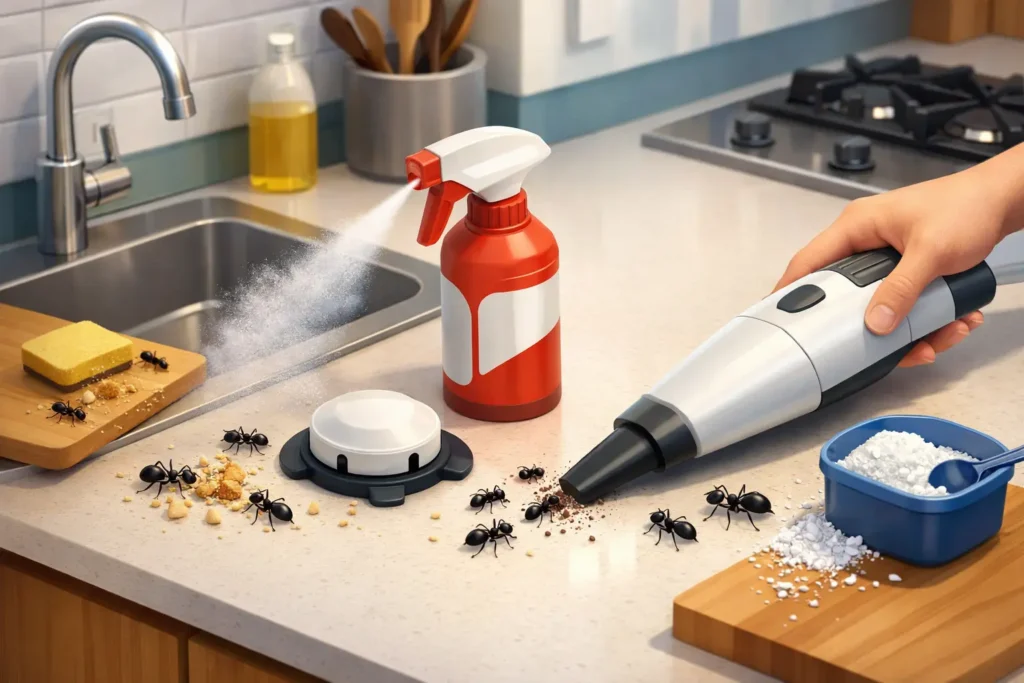
The first step is simple but important: remove what is attracting them. Wipe counters, sweep under appliances if possible, clean sticky jars and bottles, and empty trash regularly. Even a small ring of juice under a container or a few cereal pieces behind the coffee maker can keep an ant trail active.
Next, track where the ants are traveling. Follow the line as far as you can. Sometimes it leads to a gap around a window, a crack near baseboards, plumbing penetrations under the sink, or a door threshold with worn weather stripping. Knowing the access point helps you decide whether this is a small entry issue or part of a larger infestation.
After cleaning, use bait instead of relying only on over-the-counter ant spray. Bait works because ants carry it back to the colony, where it can affect more than just the ants you see. This matters because a kitchen infestation is often connected to a nest elsewhere on the property. The trade-off is speed. Baits usually take longer than contact sprays, but they are often far more effective for lasting control.
Place bait in areas where ants travel, but keep it away from food prep surfaces and out of reach of children and pets. Do not spray directly over bait placements. If you do, ants may avoid the bait entirely.
Then seal entry points once activity starts to drop. Caulk small cracks, repair torn screens, adjust door sweeps, and close gaps around pipes where possible. Sealing too early can trap ants inside the wall voids and redirect them to another room, so timing matters.
What not to do when ants show up
A fast reaction is understandable, but a few common moves can make kitchen ant problems harder to solve.
One is overusing household sprays. These products may kill the ants on the counter, but if the colony remains active, more ants often appear within hours or days. Another is leaving out bait for one day and deciding it does not work. Colonies vary, and some need more time depending on the species, colony size, and competing food sources.
It also helps to avoid switching products too often. If you put out bait, then wipe everything with strong cleaners, then spray repellents around the same trail, you can interrupt the very behavior that makes bait effective. Consistency usually gets better results.
The role of food and moisture control
Food gets most of the attention, but moisture is a major driver of ant activity in kitchens. Leaky supply lines, damp cabinets, condensation under sinks, and standing water near dishwashers can attract ants even when food is tightly stored.
That is why a good kitchen ant control plan includes both sanitation and moisture correction. Store dry goods in sealed containers, clean pet bowls after use, and fix minor plumbing leaks quickly. If you manage a rental or commercial property, this is even more important because recurring moisture issues can keep drawing ants back between treatments.
In restaurants, break rooms, and shared kitchens, the challenge is usually consistency. One deep cleaning does not solve a daily spill problem. The best results come from routine cleaning habits backed by targeted pest control.
When DIY ant control works – and when it usually does not
If you are dealing with a small, new trail and can clearly identify the source, DIY steps may be enough. A thorough cleaning, properly placed bait, and sealing a visible entry point can sometimes stop early activity.
But if ants keep returning, appear in multiple rooms, show up after every weather shift, or seem to be coming from walls, cabinets, or electrical outlets, the issue is likely larger than a countertop problem. That is especially true in Southern California, where Argentine ants and other persistent species can build large interconnected colonies.
At that point, the question is less about how to kill a few ants and more about how to stop the infestation at the property level. That usually requires inspection, species identification, exterior treatment, and a prevention plan that addresses how ants are entering in the first place.
How professional ant treatment solves the full problem
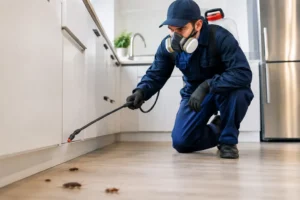
Professional ant control is built to do what store-bought products usually cannot: locate the source, treat the right areas, and reduce the chance of reinfestation. A licensed technician looks at more than the kitchen floor. They inspect plumbing points, wall voids, exterior access routes, landscaping near the structure, and foundation gaps that may be feeding the problem.
Treatment depends on the situation. Some infestations respond well to targeted baiting. Others need a combination of interior spot treatment, exterior perimeter service, exclusion work, and ongoing monitoring. The right plan depends on the species, the size of the infestation, and how the property is built.
This is also where safety matters. In homes with children and pets, and in businesses that serve customers, treatment should be effective without creating new concerns. That is why many customers prefer a professional service that uses proven methods and tailors the approach to the space.
For recurring infestations, ongoing maintenance often makes more sense than one-time treatment. Ants are persistent, and prevention is usually more affordable than repeated emergency calls.
How to keep ants out of the kitchen for good
Long-term relief comes from making the kitchen and the areas around it less attractive and less accessible. Keep counters and floors free of crumbs, store pantry items in sealed containers, and rinse recyclables before putting them in bins. Check under sinks and behind appliances for leaks or hidden moisture.
Outside the kitchen, trim vegetation that touches the structure and avoid letting mulch, debris, or dense ground cover create easy pest harborage near entry points. If ants are nesting close to the building, indoor cleanup alone will not solve the issue.
It also helps to think seasonally. During heat waves and dry spells, ants often move indoors looking for water. After rain, they may shift nesting sites and show up in new places. A prevention plan that works in spring may need adjusting in late summer.
If you are dealing with repeated activity in a home, rental unit, office, or commercial kitchen, fast response matters. The longer ants establish trails, the easier it is for the infestation to expand. Companies like Impressive Exterminating focus on safe, effective treatment and long-term prevention because quick relief is only part of the job.
When to call for expert help
If you have cleaned thoroughly, tried bait correctly, and ants are still showing up, it is time for an inspection. The same goes for larger infestations, multiple ant trails, or any situation where the source is unclear. A professional can tell you whether the issue is isolated to the kitchen or part of a broader property-wide problem.
The good news is that kitchen ants are treatable. The key is not chasing every visible ant. It is removing what attracts them, interrupting the colony, and closing the doors they keep using. When that happens, the kitchen starts feeling like yours again – clean, controlled, and protected.