A trail of ants across the kitchen counter usually starts with only a few workers. By the time spray, soap, or a wiped-down trail seems to solve the problem, the colony may still be active behind a wall, beneath a patio, or outside near the foundation. The best ant control products do more than kill the ants you can see. They help stop the colony, remove food sources, and prevent the next trail from forming.
For homeowners, landlords, and business owners in Los Angeles County and Orange County, the right product depends on the ant species, where it is nesting, and how urgently the problem needs to be resolved. Southern California properties commonly deal with Argentine ants, odorous house ants, pavement ants, and, in some cases, carpenter ants. A product that works well for one situation may be disappointing in another.
What Makes an Ant Product Actually Effective?
The first question is not which product has the strongest smell or fastest knockdown. It is whether the treatment reaches the colony. Worker ants are only a small part of the problem. They travel out from a nest to find water and food, then return to feed the colony, including the queen.
This is why bait is often more effective than contact spray for an established indoor trail. Properly placed bait allows foraging ants to carry the active ingredient back to the nest. It takes longer than spraying visible ants, but it addresses the source instead of only clearing the counter for the afternoon.
The best results usually come from matching the product to the job. Indoor bait can reduce active foraging. Exterior treatments can limit entry points. Exclusion and sanitation make the property less attractive after activity drops. For a large infestation, that combination is usually safer and more dependable than repeatedly applying one over-the-counter product.
Best Ant Control Products by Problem Type
Ant bait stations for kitchens, bathrooms, and cabinets
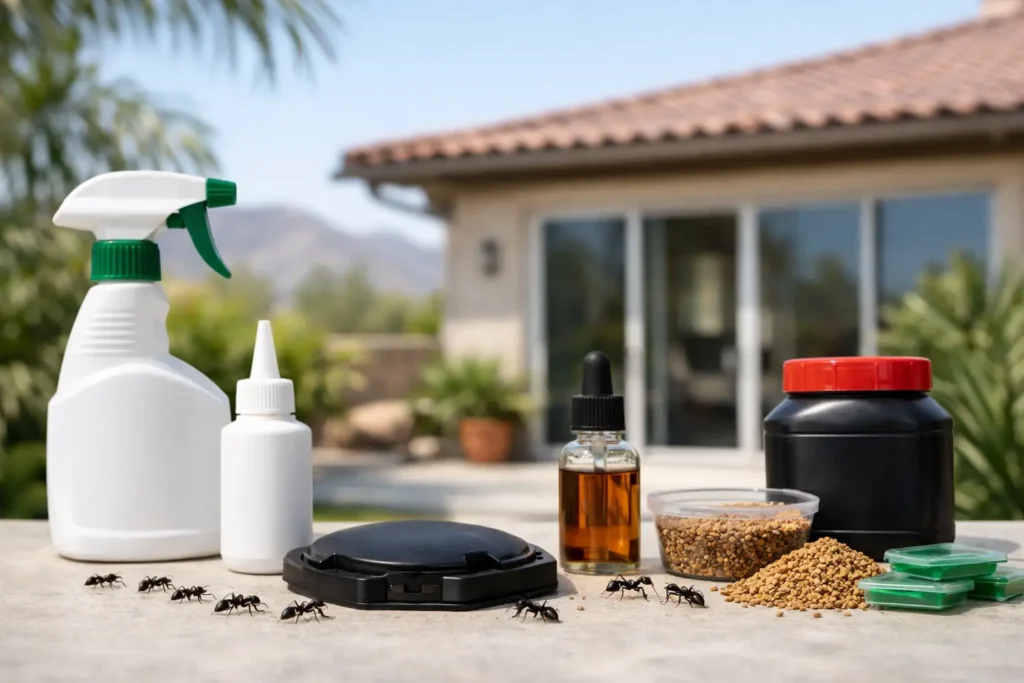
Ready-to-use bait stations are one of the best choices when ants are actively trailing indoors. They keep bait contained, are easy to place near activity, and generally require less direct handling than loose gels or liquids. Place them close to trails, under sinks, behind appliances, or near entry points, but not directly on freshly sprayed surfaces.
The trade-off is patience. It may take several days to see a noticeable reduction, and activity can briefly increase as ants recruit more workers to the food source. That is often a sign that the bait is being accepted. Avoid killing the ants around an active bait station unless the label specifically directs otherwise.
For homes with children or pets, placement matters as much as product selection. Use tamper-resistant stations where appropriate, keep them out of reach, and follow all label instructions. If ants are appearing in several rooms every day, the nest may be outside or inside a wall, making a professional inspection the more efficient option.
Ant gel bait for precise, targeted treatment
Gel bait is useful when ants are traveling through cracks, cabinet hinges, wall gaps, window frames, and other tight spaces where a station will not fit. It can be highly effective because small placements can be made directly beside the trail.
However, gel bait is not a set-it-and-forget-it solution. It can dry out, get contaminated by cleaners, or lose appeal if the colony’s food preference changes. Ants may prefer sweet bait at one time and protein or grease-based food at another. When bait is ignored, changing bait formulation can make a real difference.
Gel is best used carefully in low-access areas. Overapplying it does not improve results and can create a mess. Small, fresh placements near active travel paths are usually more effective than large blobs placed far from the trail.
Liquid ant bait for heavy foraging activity
Liquid bait is particularly useful for sugar-feeding ants, including the persistent Argentine ants common in Southern California. It gives workers an easy food source and can attract large numbers quickly. For broad, steady trails along baseboards, windows, or patio doors, liquid bait may outperform a small enclosed station.
Its downside is that liquid can spill, dry out, or attract ants to an inconvenient spot if placed poorly. It should be kept away from food-prep surfaces and positioned where children and pets cannot access it. Outdoor use also requires attention to heat, irrigation, rain, and direct sunlight.
Residual barrier treatments for doors, windows, and foundations
A residual insecticide treatment creates a barrier along common entry areas such as exterior door thresholds, window frames, utility openings, and foundation edges. These products can reduce the number of ants entering a structure and are especially useful when activity begins outside.
Barrier treatments are not always enough on their own. In fact, spraying directly over an active baiting program can interfere with colony elimination by repelling or killing foragers before they carry bait back. The better approach is often to bait the active colony while treating exterior entry points strategically.
For apartment buildings, restaurants, offices, and other commercial properties, widespread exterior activity may involve several colonies. A customized service plan is often more practical than repeated spot treatment because it accounts for landscaping, trash areas, irrigation, tenant activity, and structural gaps.
Non-repellent treatments for hard-to-control infestations
Non-repellent ant treatments are designed so ants are less likely to detect and avoid treated areas. Instead of immediately driving them away from a surface, these products can affect ants as they move through treated zones and interact with the colony.
This category can be very effective, but correct application is important. The wrong placement may miss travel routes, and unnecessary indoor application creates more exposure than needed. Licensed pest control professionals use inspection findings to determine whether a non-repellent treatment, baiting program, exterior perimeter service, or a combination is the right fit.
Outdoor granules for lawns, patios, and landscape beds
Granular products may help manage ants in landscape beds, around patios, near walkways, and in other outdoor areas where nests are visible or activity is concentrated. They can be useful for reducing ant pressure before it reaches the home.
Still, granules are not a cure for every ant problem. Irrigation can affect performance, and colonies may be spread across neighboring properties, planter areas, or cracks in hardscape. If trails keep returning after outdoor treatment, look for moisture sources, aphid-producing plants, leaking irrigation, and openings around the structure.
Products That Often Disappoint
Fast-acting aerosol sprays have a place when you need to eliminate a small number of visible ants immediately. They can provide short-term relief, especially before guests arrive or when ants are near a food area. But they rarely eliminate a hidden colony and may scatter ants into new routes.
Home remedies can also have limited value. Vinegar and soap solutions may erase scent trails temporarily, but they do not reliably control an established nest. Essential oils can repel some ants, yet repellency alone often moves the issue rather than ending it.
A better short-term response is to clean the trail with soapy water, store food in sealed containers, remove pet food overnight, repair moisture issues, and place the right bait near active foraging. That gives you a practical way to reduce activity while the bait works.
When to Stop Trying Products and Call a Professional
DIY ant control is reasonable for a small, occasional trail that responds to sanitation and baiting. It becomes less practical when ants are present daily, appear in multiple rooms, return after treatment, or show up around electrical outlets, wall voids, or water-damaged wood.
Carpenter ants deserve prompt attention because they can nest in damp or compromised wood. While they do not cause damage in the same way termites do, recurring carpenter ant activity can point to a moisture or structural issue worth addressing.
Professional ant service is also a strong choice for rental properties and businesses. Tenants and customers need quick relief, but the property also needs a treatment plan that reduces repeat complaints. A trained technician can identify likely species, locate entry points, use targeted products, and build prevention into ongoing service.
At Impressive Exterminating, ant control begins with the conditions that are drawing ants in, not just the trail that happens to be visible during the visit. That may include targeted baiting, exterior protection, crack-and-crevice treatment, and recommendations for eliminating moisture and food sources.
Prevention Makes Every Treatment Last Longer
Ants need three things: food, water, and access. Keep counters and floors free of crumbs, rinse recyclables, seal pantry foods, and avoid leaving pet bowls out overnight. Check under sinks, around refrigerators, and near water heaters for leaks or condensation. Outside, trim vegetation away from the structure and seal gaps around pipes, doors, and windows.
No product can compensate for a steady food source or an open path into the building. The most effective ant control plan combines a product that fits the infestation with simple property maintenance and monitoring. If the same trail keeps coming back, treat that as a signal to find the colony and the entry route, not as a reason to buy another can of spray.
Frequently Asked Questions About Ant Control Products
Why do I have more ants after putting out bait?
A short-term increase in activity is common and usually not a sign the bait has failed. Ant baits work by attracting foraging workers, who carry the food back to the colony to feed other workers and the queen. A spike in traffic around the bait for the first few days typically means more ants are recruiting to the food source, which is exactly how the bait is designed to reach the nest. Activity should taper off within one to two weeks. If it does not, the ants may be rejecting that particular bait formulation, or the colony may be too large or too well established for an over-the-counter product to reach on its own.
Is ant spray or ant bait more effective?
Bait is generally more effective for an established indoor trail because it targets the colony instead of only the ants that are visible. Contact sprays kill on contact but do nothing for the workers, larvae, and queen still inside the nest, and spraying near an active bait station can actually interfere with baiting by repelling foragers. Spray still has a place for an immediate, one-time knockdown of a small number of visible ants, such as before guests arrive, but it is not a long-term fix for a recurring trail.
Do home remedies like vinegar, dish soap, or essential oils actually get rid of ants?
They offer limited, temporary relief. Vinegar and soapy water can wipe out the scent trail ants use to navigate, and essential oils like peppermint can repel some species, but neither eliminates the nest. Repelling ants from one surface often just pushes them to find a new route into the home. These methods work best as a quick cleanup step between bait applications, not as a replacement for bait or professional treatment.
How long does it take for ant bait to fully work?
Most bait products need one to two weeks of consistent activity to meaningfully reduce a colony, and severe or well-established infestations can take longer. Patience matters more than potency here — replacing bait too often, or switching products before giving one enough time, can reset the process. If a trail is still active after two to three weeks with no improvement, the bait may not be palatable to that ant species, or the colony may be too large for consumer products to reach fully.
Why isn’t the ant bait I bought at the store working?
The most common reasons are palatability, placement, and interference. Different ant species prefer different food types — some favor sugar-based bait, others prefer protein or grease — so a product that worked for a previous ant problem may not appeal to the current species. Bait placed on a recently cleaned or sprayed surface can also lose effectiveness, and household cleaners can contaminate gel bait. If store-bought bait consistently fails after correct placement and enough time, that is usually the point where a professional-grade bait or an inspection makes more sense than trying another retail product.
What ant control products do professional exterminators use that aren’t sold in stores?
Licensed pest control companies typically have access to professional-strength baits, non-repellent liquid treatments, and formulations not sold at retail, along with the training to match the product to the ant species and nesting location. The bigger difference is usually the process: a technician inspects the property to find entry points and likely nest locations first, then combines interior baiting with exterior treatment, rather than applying one product throughout the home.
Are ant baits and sprays safe to use around kids and pets?
Most residential ant bait stations are designed with a tamper-resistant housing that keeps the bait itself inaccessible, but placement still matters — keep stations and gel bait out of reach of small children and curious pets, and always follow label instructions for indoor use. If anyone in the home has respiratory sensitivities or you’re treating a space used by infants or pets that put things in their mouths, ask a licensed pest control company about low-odor or targeted options before treating on your own.
What kind of ants are most common in Southern California homes?
Argentine ants are the most frequently reported household ant across Los Angeles and Orange County, known for large trailing colonies that follow moisture and food sources. Odorous house ants and pavement ants are also common indoors, while carpenter ants show up less often but deserve prompt attention because they nest in damp or compromised wood.
When should I stop trying products myself and call a professional?
It’s time to call a professional when ants return daily despite consistent baiting and cleaning, when they’re appearing in multiple rooms at once, or when activity is centered around electrical outlets, wall voids, or water-damaged wood — all signs the colony may be inside the structure rather than outside it. Recurring carpenter ant activity is also worth a prompt inspection, since it can point to a moisture problem behind the walls.