A termite inspection can reveal activity in places you cannot see – inside walls, beneath flooring, or along a foundation. That is why fumigation versus baiting is not simply a question of which treatment costs less. The right answer depends on the termite species, where the colony is feeding, how widespread the damage is, and how quickly your property needs protection.
For homeowners, landlords, and business owners in Los Angeles and Orange County, a professional inspection is the best starting point. Fumigation and baiting can both be effective termite treatments, but they solve different problems. Choosing the wrong approach can leave active termites behind or create unnecessary disruption.
Fumigation Versus Baiting: The Core Difference
Fumigation is a whole-structure treatment. The building is sealed with tarps, and a fumigant is introduced to reach drywood termites throughout the structure. Because the gas moves through enclosed spaces, it can eliminate termites in hidden galleries, wall voids, attic framing, and other hard-to-reach areas.
Baiting is a targeted, monitored treatment most often used for subterranean termites. A licensed technician places bait stations in the soil around the property or in areas of known activity. Foraging termites feed on the bait and carry it back to the colony. Over time, the bait disrupts the termites’ ability to grow and survive, reducing and potentially eliminating the colony.
The important distinction is simple: fumigation treats the entire structure at once, while baiting works through termite foraging behavior over time. Neither option is automatically better. Each is designed for a different type of infestation.
When Fumigation Is Usually the Better Choice
Fumigation is commonly recommended when drywood termites are active in multiple areas of a home or building. Drywood termites live inside the wood they consume and do not require contact with soil. In Southern California, they are a frequent concern in attics, eaves, window frames, fascia boards, cabinets, and interior framing.
If an inspection finds drywood termite pellets in several rooms, evidence in the attic, or activity in areas that cannot be accessed for localized treatment, fumigation may offer the most dependable coverage. It addresses active termites throughout the structure rather than treating only the spots that are visible.
Fumigation is also a practical option when a property has a long history of drywood termite activity or when previous spot treatments have not resolved the problem. Spot treatment can be appropriate for isolated, accessible infestations, but it may not reach separate colonies elsewhere in the structure. Whole-structure fumigation removes that uncertainty when infestation is widespread.
The trade-off is preparation. Residents, pets, plants, and food items may need to be removed or handled according to the fumigation preparation instructions. The property must remain vacant during treatment and aeration, and re-entry is allowed only after the proper clearance process is complete. For many property owners, that temporary inconvenience is worthwhile when the goal is comprehensive drywood termite control.
What Fumigation Does Not Do
A successful fumigation eliminates termites that are present during the treatment, but it does not create a lasting barrier against future termite activity. New drywood termites can eventually enter through exposed wood, roofline gaps, vents, or other openings.
That is why preventive steps still matter after fumigation. Repairing moisture-damaged wood, sealing entry points, keeping vegetation trimmed away from the structure, and scheduling periodic inspections help protect the investment. Fumigation is a powerful corrective treatment, not a reason to stop monitoring the property.
When Termite Baiting Makes More Sense
Baiting is often a strong solution for subterranean termites. These termites live in the soil and travel through mud tubes to reach wood in a structure. They may attack sill plates, subfloors, posts, framing, fences, and other wood that is near the ground.
A bait system is especially useful when the goal is to target the colony without tenting the entire property. Stations are checked on a schedule, and bait is added when termite activity is detected. This allows a trained technician to track activity and adjust the treatment plan as conditions change.
For an occupied apartment community, office, restaurant, or home where tenting would be difficult to coordinate, baiting can be a less disruptive option. It also fits well with long-term termite monitoring, particularly for properties with recurring subterranean termite pressure.
The main consideration is speed. Baiting is not an overnight solution because termites must find and feed on the bait before it can affect the colony. Active feeding, weather, soil conditions, colony size, and the availability of nearby food sources can all influence the timeline. A professional may recommend supplemental localized treatment if termites are actively damaging a specific area and immediate protection is needed.
Treatment Speed, Coverage, and Disruption
Property owners often compare fumigation and baiting based on price alone, but three practical factors usually matter more: the species involved, the coverage needed, and how much disruption the property can accommodate.
Fumigation typically provides fast results for widespread drywood termite infestations because it reaches the full structure in a single treatment period. It is comprehensive, but it requires scheduling, preparation, temporary vacancy, and careful coordination for homes with tenants, pets, or business operations.
Baiting provides ongoing, targeted control for subterranean termites and usually allows people to remain in the property. It requires patience and regular service visits. The treatment is designed to work gradually through the termite colony, which makes professional monitoring a central part of its effectiveness.
Cost also depends on more than the treatment method. Structure size, accessibility, the severity of activity, construction type, preparation needs, and whether repairs are required can all affect the estimate. A lower initial price is not always the better value if it does not address the termite species or the full extent of the problem.
How a Professional Chooses the Right Treatment
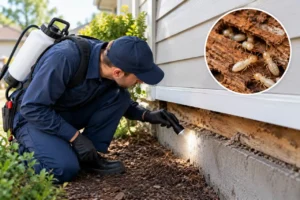
A thorough termite inspection should identify whether the infestation is drywood, subterranean, or in some cases both. The technician looks for pellets, mud tubes, damaged wood, moisture conditions, entry points, and signs of active feeding. They also consider where the activity is located and whether it is limited to one accessible area or spread through multiple sections of the building.
For example, drywood termite pellets falling from attic framing and several interior walls may point toward whole-structure fumigation. Mud tubes rising from the soil onto a foundation wall are more consistent with subterranean termites, where baiting or another soil-focused treatment may be recommended.
The best plan may also combine methods. A property can have separate termite issues that require different solutions, or it may need treatment followed by preventive monitoring. A reliable pest professional should explain what was found, why a particular method is recommended, what preparation is required, and what follow-up protection looks like.
Safety and Preparation Matter
Both treatment methods should be performed by licensed professionals who follow product labels, state regulations, and clear safety procedures. Before fumigation, customers receive detailed preparation instructions covering occupancy, food, medications, plants, pets, and re-entry. Following those instructions closely helps the process move safely and on schedule.
With baiting, the stations are installed and serviced by trained technicians in designated exterior areas or approved locations. The system is managed as part of a structured treatment plan, not as a do-it-yourself shortcut. Proper placement and consistent monitoring are what make baiting useful against subterranean termite colonies.
If you are deciding between fumigation and baiting, do not guess based on one visible sign of termites. Ask for an inspection that identifies the termite type and maps the extent of activity. The right treatment should fit your property, protect the people who use it, and address the infestation rather than just the evidence you can see.
A fast, informed decision can prevent a small termite problem from becoming expensive structural damage. Schedule an inspection early, keep records of any termite evidence you find, and choose the treatment that gives your property the coverage it actually needs.