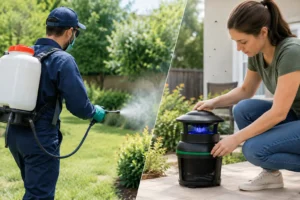
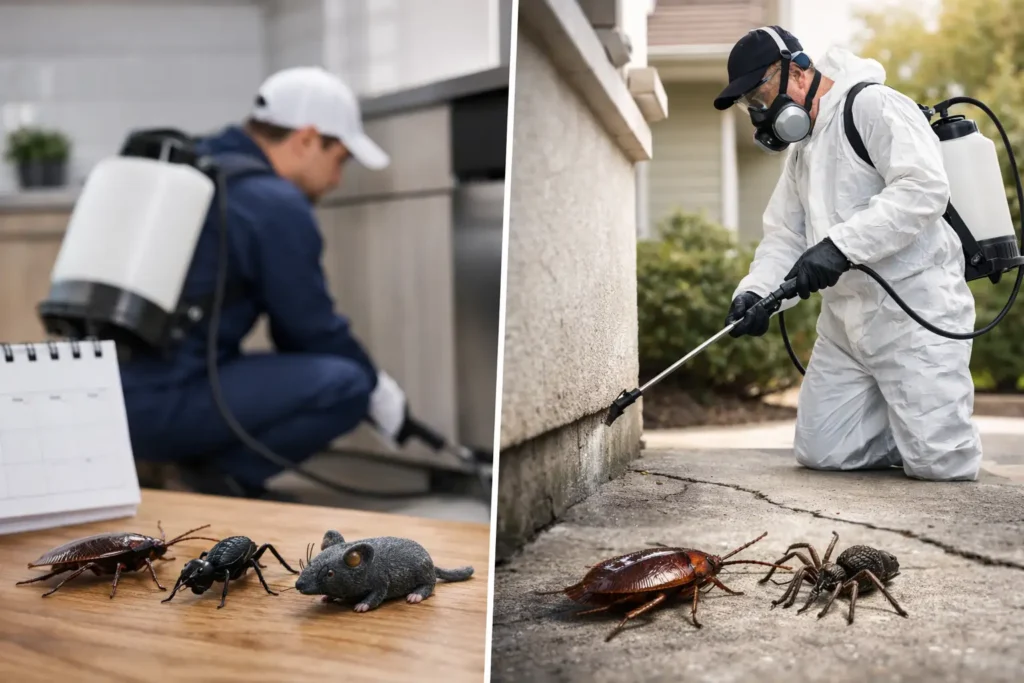
A trail of ants across the kitchen counter, scratching in the walls, or a sudden wasp nest near the entry can make pest control feel urgent – because it is. The real question is whether monthly pest control versus one time service will give your home or business the protection it needs. The best choice depends on the pest, the severity of the problem, the property, and whether you want relief today or reliable prevention over time.
For many Southern California properties, pests are not a one-season issue. Warm weather, dense neighborhoods, food sources, irrigation, and nearby construction can keep ants, roaches, spiders, rodents, and mosquitoes active throughout the year. A professional plan should solve the pest issue in front of you while helping prevent the next one.
Monthly Pest Control Versus One-Time Treatment: The Real Difference
A one-time pest control treatment is designed to address a specific, current problem. A licensed technician inspects the property, identifies likely pest activity and entry points, then applies targeted treatment where it is needed. It can be an effective option when the issue is isolated, newly discovered, or unlikely to return once the source is removed.
Monthly pest control is an ongoing maintenance program. Instead of waiting for pests to become visible again, technicians return on a regular schedule to monitor activity, treat problem areas, refresh protective barriers when appropriate, and adjust the approach as conditions change. It is built for long-term protection rather than a single pest event.
Neither option is automatically right for every property. A homeowner with one visible wasp nest may not need a recurring plan. A restaurant, apartment building, or home with recurring roaches and rodents usually benefits from regular service because one treatment rarely changes the conditions that attract pests.
When One-Time Pest Control Makes Sense
One-time service can be a smart, affordable answer when the pest problem is clearly defined and has a limited source. For example, a technician may remove a new wasp nest, treat a localized ant trail, or address spiders concentrated around exterior doors and windows. If there is no history of repeat activity and the property has been inspected carefully, a single treatment may be enough.
It can also make sense when a property owner needs a specialized, inspection-based solution. Termites, bed bugs, and major rodent activity are not simple spray-and-go problems. They require a detailed assessment and a treatment plan based on the species, extent of activity, structure, and safety needs of the occupants. The initial service may be a focused treatment, although follow-up visits are often necessary to confirm the issue is resolved.
A one-time visit is most useful when you can answer three questions with confidence: What pest are you seeing? Where is it coming from? What is changing to keep it from coming back? If the answer to the third question is unclear, a one-time service may only provide temporary relief.
Why Monthly Pest Control Often Delivers Better Value
Pests reproduce, move, and adapt. What looks like a few ants near a sink can be a larger colony outside. A single mouse sighting may mean there is an opening behind an appliance, in a garage, or along a utility line. Monthly service gives a professional the opportunity to catch those patterns before they become a larger infestation.
Regular service is especially valuable for properties that repeatedly deal with ants, cockroaches, spiders, silverfish, mosquitoes, rats, or mice. It is also a strong fit for homes with children or pets, rental properties with frequent tenant turnover, and businesses that cannot afford pests in front of customers.
Prevention is more than a perimeter treatment
Effective ongoing pest control is not simply repeating the same application every month. A quality program includes inspection and observation. Technicians look for moisture issues, food sources, harborage areas, gaps around doors, damaged screens, rodent entry points, and changes in pest pressure.
That matters because treatment without prevention can become a cycle. For example, killing ants indoors may stop the visible trail, but activity can return if exterior colonies still have access to water and food. Rodent control is more effective when trapping and treatment are paired with exclusion recommendations that help close the routes rodents use to enter.
Southern California pest pressure does not always pause
In Los Angeles County and Orange County, mild temperatures can allow pest activity to continue long after other parts of the country experience a winter slowdown. Ants may seek water during dry stretches. Rodents may move indoors when weather changes or nearby construction disrupts nesting areas. Mosquitoes can breed anywhere standing water remains available.
Monthly visits make it easier to respond before a seasonal shift becomes an infestation. This proactive approach is particularly helpful in Long Beach, Huntington Beach, and other areas where dense housing, landscaping, and commercial activity can create consistent pest pressure.
Cost: Look Beyond the First Visit
A one-time service usually has a lower upfront cost because you are paying for a single inspection and treatment. That can be the practical choice for a limited issue. However, it may cost more over time if the same pest keeps returning and each new outbreak requires another service call.
Monthly plans spread the cost of protection across the year and can reduce the chance of a major, expensive infestation. The value is not only in routine treatment. It is in having a professional familiar with your property, a regular inspection schedule, and a faster path to action if activity appears between visits.
Still, recurring service should not be sold as a one-size-fits-all answer. A good provider should explain what is included, how often visits occur, which pests are covered, what follow-up support is available, and when specialized treatment may require a separate plan. Clear expectations help you compare the actual value of each option.
How to Choose the Right Service for Your Property
Start with the pattern, not just the pest you saw. If this is the first isolated occurrence and you have identified a clear cause, a one-time treatment may be enough. If you have treated the same issue before, see pests in multiple areas, manage a multi-unit property, or want protection before a problem starts, monthly service is usually the stronger choice.
Consider the consequences as well. A few spiders in a storage area may be manageable with focused service. Roaches in a kitchen, rodents in an attic, bed bugs in a rental, or termites near structural wood deserve immediate professional attention and a plan that includes follow-up. Businesses should also weigh reputation and health standards. One pest sighting can affect customer confidence far beyond the cost of service.
Be honest about what you can maintain between visits. Keeping food sealed, removing standing water, reducing clutter, trimming vegetation away from structures, and repairing openings all help. But even well-maintained properties can develop pest issues. Professional treatment adds trained inspection, safe product selection, and a response plan based on real pest behavior.
What a Dependable Pest Control Plan Should Include
Whether you choose one-time or monthly service, the provider should begin with an inspection rather than a guess. The technician should identify the likely pest, explain the treatment approach in plain language, and discuss practical prevention steps for the property.
Look for treatment that is targeted, effective, and mindful of children, pets, tenants, employees, and customers. Safe pest management means using the right method in the right place, not applying more product than necessary. For ongoing plans, the service should also be flexible enough to address changing activity instead of treating every visit exactly the same.
Impressive Exterminating helps homeowners, property managers, and local businesses choose service based on the problem in front of them and the protection they need next. From urgent pest activity to ongoing maintenance, the goal is fast response, dependable results, and fewer surprises between visits.
If pests have become a repeating problem, do not wait for the next sighting to decide. A professional inspection can show whether a focused one-time treatment is enough or whether regular protection will bring greater peace of mind.
Frequently Asked Questions
How much does monthly pest control typically cost compared to a one-time treatment?
A one-time treatment usually has a higher single-visit cost since it covers a full inspection and complete treatment in one appointment, often in a similar range to what several months of a recurring plan would cost combined. Monthly or quarterly plans spread a lower cost across more visits and typically include ongoing monitoring. Exact pricing depends on your property size, the pest involved, and the severity of the issue, so it’s worth getting a specific quote after inspection rather than comparing based on general estimates alone.
Am I locked into a contract if I sign up for monthly pest control?
This varies by provider, so ask directly before signing anything. A trustworthy provider should clearly explain the commitment length, cancellation process, and any fees involved upfront — you shouldn’t have to dig through fine print to understand what you’re agreeing to. If flexibility matters to you, ask specifically about month-to-month options versus longer-term agreements.
What happens if pests come back between my scheduled monthly visits?
This is exactly what separates a good recurring plan from a bare minimum one — ask your provider whether they’ll come out for a free re-treatment if activity appears between regularly scheduled visits, rather than making you wait for the next appointment. A strong guarantee (like re-treating at no additional cost if pests return) should apply between visits, not just at the end of a service.
Is quarterly pest control the same as monthly?
No — quarterly service means a technician visits roughly every three months, while monthly service means visits happen every month. Quarterly can be sufficient for lower-pressure properties with minimal past pest activity, while monthly is generally recommended for properties with recurring ant, roach, rodent, or spider issues, food-service businesses, or homes near dense landscaping and water sources where pest pressure stays constant.
Can I switch from one-time treatment to a monthly plan later if the problem comes back?
Yes, in most cases. Many customers start with a one-time service for an isolated issue and upgrade to recurring service if the same pest returns or a new one appears — this is a completely normal path and doesn’t mean the first treatment failed. Signs it may be time to switch include repeat visits for the same pest, activity in multiple areas, or a property with ongoing risk factors like a restaurant kitchen or dense landscaping.
Does a one-time treatment come with any kind of warranty?
This depends on the pest and the provider — some one-time treatments (like wasp nest removal or a localized ant treatment) may include a limited window where the company will return if the same issue reappears, while more complex problems like termites or bed bugs often require a specific treatment plan with its own follow-up schedule rather than a blanket one-visit warranty. Ask what’s covered and for how long before choosing a plan.
Is monthly pest control worth it if I rarely see bugs?
If your property has genuinely low pest pressure — no history of recurring issues, no major food/water/shelter attractants nearby — a one-time or occasional treatment may be enough, and a good provider should tell you that honestly rather than upselling an unnecessary plan. Monthly service earns its value on properties with recurring pressure: multi-unit buildings, homes near dense landscaping or water sources, restaurants, and anywhere pests have returned more than once.