A few wasps near a flowering plant may be normal. A steady stream of wasps disappearing into a roofline, wall gap, patio cover, or shrub is different. That activity often means there is an active nest nearby, and prompt wasp removal can prevent painful stings, property disruption, and a much larger problem.
For homeowners, landlords, and business owners, the goal is not simply to knock down a nest. Safe, effective control means identifying where wasps are entering, treating the colony correctly, and helping prevent another nest from forming in the same vulnerable spot.
Why an Active Wasp Nest Needs Attention
Wasps can become highly defensive when they believe their nest is threatened. This is especially true around enclosed nesting areas such as eaves, attics, wall voids, sheds, and outdoor structures. A nest that seems small from the ground may hold far more activity behind siding or inside a hidden cavity.
The risk is greater when the nest is close to a doorway, pool, play area, parking lot, trash enclosure, or outdoor dining space. At a home, children and pets may accidentally get too close. At an apartment building, office, restaurant, or retail property, a visible wasp problem can affect tenants, employees, and customers quickly.
Stings are painful for most people and can be medically serious for anyone with an allergy. Even without an allergy, multiple stings are a concern. That is why disturbing an established colony is rarely a good do-it-yourself project.
Signs You May Need Wasp Removal
You do not always see the nest first. Watching the insects’ flight pattern is often the best clue. If wasps repeatedly travel to one crack, vent, roof edge, or tree branch, treat that area as active until a professional inspection confirms otherwise.
Common signs include:
- Frequent wasp traffic around one part of the property, especially during daylight hours
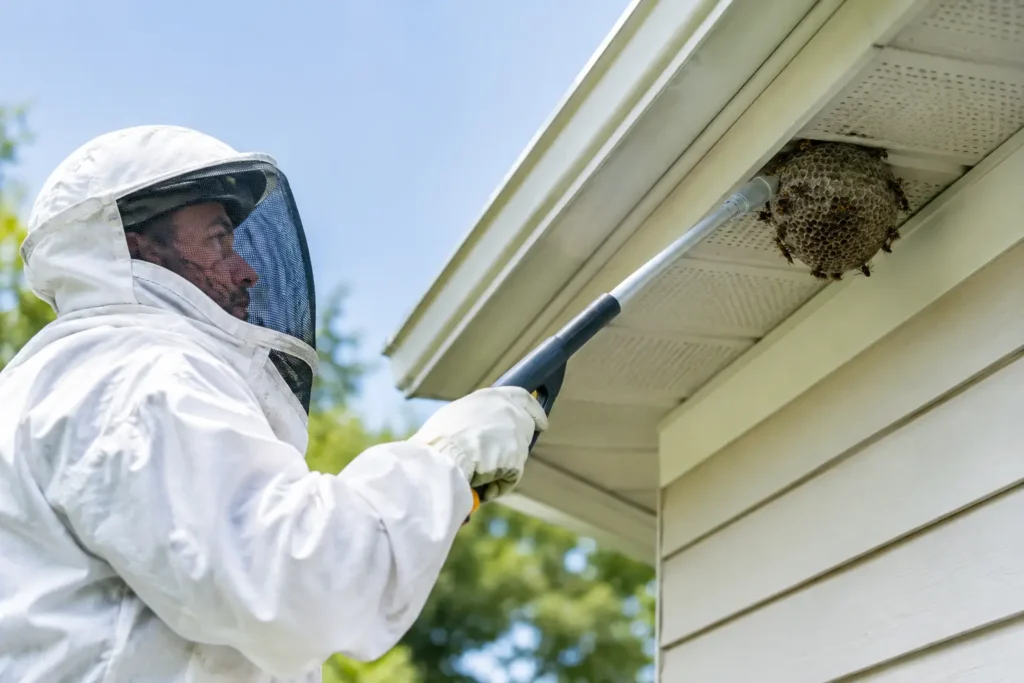
- A visible paper-like nest under an eave, deck, patio cover, or inside a shed
- Buzzing or insect activity coming from a wall, ceiling, attic, or exterior vent
- Wasps gathering around trash, sweet drinks, pet food, or outdoor eating areas
- Sudden stings near a lawn, landscape bed, or ground opening, which can indicate a ground nest
Activity can increase through the warmer months in Southern California. A small early nest may be easier to address than a mature colony that has had weeks to grow. Calling when you first notice repeated activity usually gives you more options and less disruption.
What Not to Do Around a Wasp Nest
The fastest-looking solution is often the riskiest one. Spraying a nest from a ladder, hitting it with a broom, sealing an entry hole while wasps are still inside, or using fire or water can send angry wasps toward anyone nearby. These actions can also drive insects farther into walls or ceilings, where removal becomes more complicated.
Avoid standing directly below a nest or trying to inspect it at close range. Keep children, pets, visitors, and staff away from the area. If the nest is near a required entrance, create a temporary alternate route when possible and mark the area so no one walks into the flight path.
Do not assume every flying insect is a wasp. Honey bees, bumblebees, yellowjackets, and paper wasps require different handling. A trained pest professional can identify the insect and recommend the right approach rather than applying a one-size-fits-all treatment.
Why Sealing the Opening Too Soon Can Backfire
A common mistake is to caulk a gap where wasps are entering a wall before the colony has been treated. The insects may search for a new way out, potentially emerging indoors through light fixtures, vents, or gaps around windows. Proper treatment addresses the active colony first. Exclusion work should follow when it can be done safely and effectively.
How Professional Wasp Removal Works
A professional service starts with an inspection of the activity, nest location, entry points, and conditions that may be attracting wasps. The technician considers the type of structure, whether people are regularly using the area, and whether the nest is exposed or hidden inside a void.
Treatment is selected for the location and pest involved. An exposed nest may require a targeted application and safe removal once activity has stopped. Hidden nests in wall voids or roof areas need a more careful approach that controls the colony without creating an indoor emergence problem. The right plan protects people first while limiting unnecessary treatment around the property.
After the immediate activity is handled, prevention matters. Wasp control may include recommendations to repair screens, close small gaps around utility lines, secure trash lids, remove fallen fruit, and reduce access to sugary food and drink outdoors. These steps do not replace treatment for an established nest, but they make your property less inviting to future colonies.
At commercial properties, a good plan also considers operations. A restaurant patio, warehouse loading area, school walkway, or multifamily trash enclosure may need service scheduled around foot traffic and business hours. Clear communication helps protect customers and occupants while the issue is addressed.
When to Treat Wasp Activity as Urgent
Some wasp problems should not wait for a convenient day. Request fast service if anyone has been stung repeatedly, a nest is located near a main entrance or play area, wasps are entering the living space, or a person at the property has a known sting allergy.
Ground-nesting yellowjackets can be especially unpredictable because people may unknowingly step near the entrance. Likewise, a nest inside a wall should be assessed promptly. Continued activity can lead to more insects finding their way indoors or create problems when the colony eventually declines.
If there is a severe allergic reaction after a sting, seek emergency medical care immediately. Pest control handles the nest issue, but it should never delay medical attention for breathing trouble, facial swelling, dizziness, or other serious symptoms.
Wasp Prevention Between Services
No property can eliminate every outdoor wasp, particularly near gardens and warm-weather gathering spaces. The practical goal is to reduce nesting opportunities and keep activity away from people. Regular property checks are useful in spring and early summer, when new queens begin building nests in protected areas.
Walk around the exterior once a week and look under eaves, patio furniture, mailboxes, deck rails, play equipment, and shed roofs. Check window screens and vents for damage. Keep outdoor trash containers closed, rinse recyclable cans when practical, and clean spills after barbecues or outdoor events.
Property managers can make prevention easier by including wasp checks in routine maintenance requests. Tenants should be encouraged to report repeated insect traffic rather than trying to remove nests themselves. Early reporting is safer for everyone and can help avoid emergency service later.
Reliable Help for Homes and Businesses
Wasp activity creates stress because it can change how people use a yard, entryway, patio, or workplace. The right response is calm, careful, and focused on the actual source of the problem. Impressive Exterminating provides inspection-driven wasp control for homes and businesses across Los Angeles County and Orange County, with treatment recommendations based on your property and the level of activity.
If you are seeing regular wasp traffic or have found a nest, keep the area clear and arrange a professional inspection. Addressing it early gives your family, tenants, employees, and customers more room to enjoy the property safely.