Discovering termites in your home is stressful enough. But when you have a dog that plays in the backyard, a cat that sleeps near the windows, or birds and fish inside your house, another concern becomes just as important: Is termite treatment safe for pets?
You want to stop termites before they cause expensive damage, but you also want to protect your animals from unnecessary pesticide exposure.
The answer depends on the treatment method, the product used, where it is applied, and how carefully safety instructions are followed.
Some termite treatments involve localized applications or enclosed bait stations. Others, such as whole-structure fumigation, require every person and pet to leave the building until it has been officially cleared for re-entry.
This guide explains how different termite treatments affect pets, how to prepare your home, which precautions matter most, and what to do if you suspect accidental exposure.
It is especially relevant for homeowners in Los Angeles County and Orange County who want effective termite control without overlooking their pets’ safety.
Quick answer: Termite treatment can be carried out with precautions that reduce risks to pets, but no pesticide treatment should be considered automatically harmless. Keep animals away from application areas, follow product-specific instructions, and never allow pets to return after structural fumigation until the licensed fumigator formally clears the property.
The goal is to eliminate termite activity while minimizing unnecessary exposure for your household.
Is Termite Treatment Safe for Pets? Understanding the Risks
Termite control products are designed to manage termite infestations, but their active ingredients can also pose risks to animals if exposure occurs.
Dogs and cats might walk through treated soil, lick contaminated paws, chew treated wood, or investigate bait stations.
Birds, fish, reptiles, and small mammals require additional planning because their housing, ventilation, water systems, or sensitivity to environmental changes can complicate treatment.
However, the presence of a pesticide does not automatically mean a pet will be exposed to a harmful amount.
Actual risk depends on several factors:
- The product and active ingredient
- The amount and route of exposure
- Where the treatment is applied
- Whether the material remains accessible
- The animal’s species, size, age, and health
- Whether the applicator follows label directions
- How carefully homeowners follow re-entry instructions
The most useful question is not simply whether a product is advertised as pet-friendly.
Instead, ask your termite professional: What treatment is necessary, where will it be applied, and how will you prevent my pets from contacting it?
Which Termite Treatments Require Pet Safety Precautions?
Not every termite infestation requires the same treatment.
Drywood termites can live inside wooden structures, while subterranean termites usually maintain connections with soil.
Identifying the species and affected areas helps determine whether targeted treatment, bait systems, soil treatment, or fumigation is appropriate.
For a deeper explanation, read our guide to drywood versus subterranean termite treatment.
1. Localized Liquid and Foam Termite Treatments
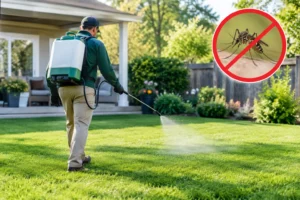
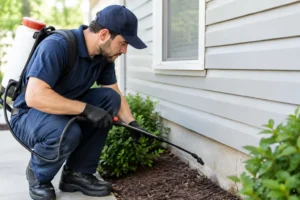
Localized applications may involve treating specific wooden components, termite galleries, cracks, or other affected areas.
A professional may inject a registered product into an identified infestation rather than apply it broadly throughout the home.
This can limit the treatment area, but it does not eliminate exposure risks.
Pet safety precautions:
- Remove pets from the application area.
- Move pet bowls, bedding, and toys when instructed.
- Prevent pets from licking or chewing treated surfaces.
- Keep animals away until the applicator confirms that all applicable re-entry conditions have been met.
- Ask whether treated wood or openings need to remain inaccessible.
Best next step: Tell your technician about pets that chew furniture, scratch walls, hide beneath cabinets, or spend time near the proposed treatment area.
2. Termite Bait Stations Around the Home
Termite bait stations are commonly used for certain subterranean termite problems.
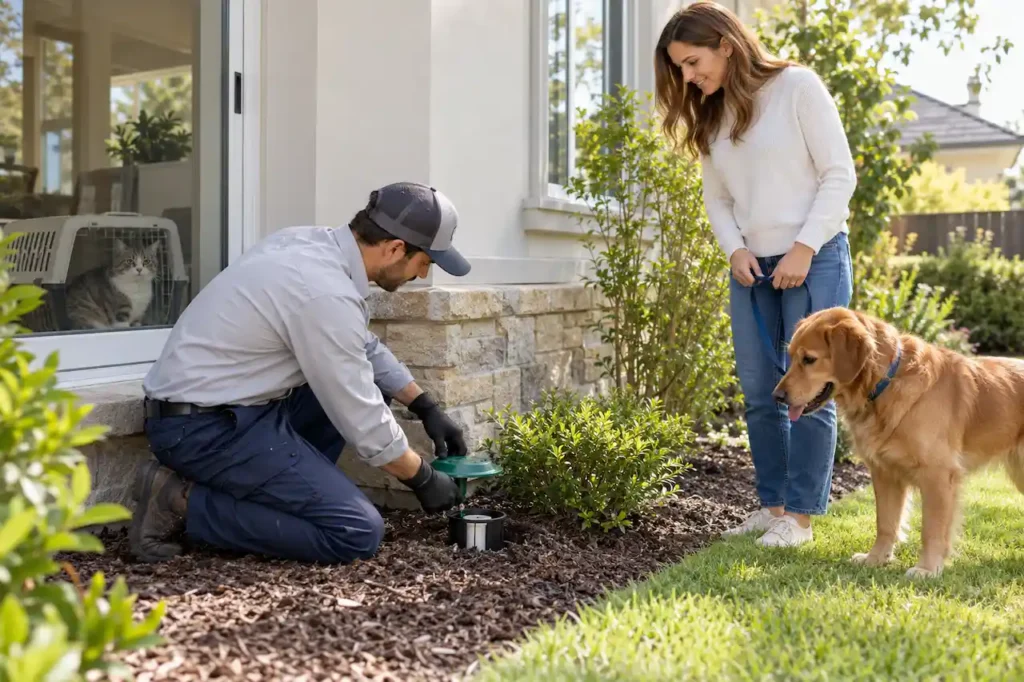
They are generally installed in the ground around a property and designed to allow termites to encounter bait inside an enclosed station.
Because the bait is contained rather than openly spread across a surface, accessible exposure can often be reduced when stations are properly installed and maintained.
However, a secured bait station is not automatically risk-free.
Dogs that dig, chew plastic, or eat unusual objects may damage a station.
Pet safety precautions:
- Tell the technician if your dog digs in the yard.
- Ask where stations will be installed.
- Keep pets from disturbing station covers.
- Do not open or move bait stations yourself.
- Contact the pest control company if a station becomes damaged.
For homeowners with active termite concerns, professional termite control services can help determine whether baiting is suitable for the property’s infestation.
3. Liquid Soil Treatments Around the Foundation
Some subterranean termite treatments involve applying liquid termiticide to soil around or beneath the foundation.
This may require trenching, drilling, or treating specific access points around the building.
The treatment area can overlap with places where dogs play, cats explore, or outdoor pets rest.
Pet safety precautions:
- Keep animals out of active work areas.
- Remove outdoor food and water bowls before treatment.
- Do not allow pets to dig in treated soil.
- Prevent contact with wet application areas.
- Follow the product-specific re-entry instructions provided by the applicator.
- Ask whether irrigation, rain, or disturbed soil affects any required precautions.
Do not assume that a fixed number of hours is appropriate for every soil treatment.
The product label and technician’s instructions determine when pets can safely access the area.
4. Whole-Structure Termite Fumigation
Whole-structure fumigation is significantly different from localized termite treatment.
It may be recommended when drywood termite activity is widespread or involves inaccessible areas of a building.
During fumigation, a licensed operator introduces fumigant gas into a sealed structure under controlled conditions.
Every pet must be removed before fumigation begins.
This includes:
- Dogs and cats
- Birds
- Fish and aquarium animals
- Reptiles and amphibians
- Rabbits, hamsters, and guinea pigs
- Other household animals
Pets cannot remain in a separate bedroom, bathroom, closed cage, or indoor aquarium during whole-structure fumigation.
The property must be professionally aerated, tested, and formally cleared before animals or people return.
Important: Do not judge fumigation safety by odor, whether the tent has been removed, or how many hours have passed.
For additional information about termite treatment approaches and fumigation preparation, read our eco-safe termite treatment review.
Termite Treatment Safety Comparison for Pet Owners
| Treatment method | Main pet concern | Important precaution |
| Localized liquid or foam | Contact with application areas | Keep pets away until authorized |
| Termite bait stations | Chewing or opening stations | Prevent access and damage |
| Liquid soil treatment | Contact with treated soil | Follow label-based access restrictions |
| Whole-structure fumigation | Exposure to fumigant gas | Remove all pets until official clearance |
| Professional heat treatment | High temperatures and equipment | Remove pets from heated areas and follow the treatment plan |
No single method is appropriate for every infestation.
Choose the treatment based on inspection findings and discuss animal safety requirements before approving the work.
How to Prepare Your Pets Before Termite Treatment
Good preparation reduces the chance of accidental exposure and makes the treatment process easier for both homeowners and technicians.
Step 1: Tell the Technician About Every Pet
Before scheduling treatment, explain which animals live on the property.
Include animals that are easy to overlook, such as fish, reptiles, birds, and outdoor pets.
Tell the technician if an animal has:
- Respiratory problems
- A history of seizures
- A habit of licking or chewing objects
- Access to crawl spaces or other hidden areas
- Difficulty being transported
- Special temperature or habitat requirements
If an animal has medical concerns, speak with your veterinarian about the planned relocation or potential exposure.
Step 2: Remove Pet Food, Toys, and Bedding
Depending on the treatment area, you may need to move:
- Food and water bowls
- Pet beds and blankets
- Chew toys
- Litter boxes
- Pet carriers
- Outdoor feeding stations
- Aquariums or enclosures
Store belongings in a clean location that will remain outside the treatment area.
Do not assume that moving items to another room is sufficient for whole-structure fumigation.
Step 3: Arrange a Safe Location for Your Pets
For treatment that requires pets to leave, make arrangements before the appointment.
Possible options include staying with family, using a pet boarding service, or arranging suitable accommodation elsewhere.
Choose a location that meets the animal’s normal needs.
For cats and small mammals, remember that unfamiliar environments can cause stress.
Birds, reptiles, and aquarium animals may need more specialized transportation and housing.
Step 4: Confirm When Pets Can Return
Ask the termite professional for explicit instructions.
Useful questions include:
- Which areas are being treated?
- What product will be applied?
- Must every animal leave the building?
- When will treated areas be available again?
- Are there restrictions on outdoor soil access?
- Will any bait stations remain accessible?
- How will fumigation clearance be confirmed?
Do not rely on an internet article to establish the correct re-entry time for a specific job.
Step 5: Inform Everyone With Access to the Property
If family members, dog walkers, cleaners, tenants, or maintenance staff may enter the property, tell them about the treatment restrictions.
This helps prevent someone from unknowingly bringing a pet back into an area before it is approved for use.
Can Dogs and Cats Be Around Termite Treatment?
Dogs and cats are common household pets, but their behavior creates different exposure concerns.
Termite Treatment Safety for Dogs
Dogs often explore the environment using their noses and mouths.
Some may dig near foundations, chew wooden surfaces, or lick their paws after walking outdoors.
These behaviors can increase the risk of contacting treatment materials if the area is accessible too soon.
What dog owners should do:
- Keep dogs away from treated soil and work areas.
- Pick up toys and food bowls before service.
- Prevent digging around termite bait stations.
- Follow the applicator’s re-entry instructions.
- Contact a veterinarian if exposure is suspected.
Termite Treatment Safety for Cats
Cats may hide beneath furniture, enter small spaces, climb onto treated surfaces, or groom their paws and fur.
Indoor cats should never be assumed to be out of the treatment area simply because they are not visible.
What cat owners should do:
- Locate and secure cats before technicians begin work.
- Check hiding places before any required evacuation.
- Move litter boxes and feeding supplies when instructed.
- Prevent access to treated surfaces until clearance.
- Watch for unusual behavior following suspected exposure.
For both dogs and cats, the safest approach is to control access rather than assume the animal will avoid a hazardous location.
What About Birds, Fish, Reptiles, and Small Pets?
Not all pets can follow the same preparation plan.
Birds
Birds have sensitive respiratory systems and require particular care around airborne contaminants.
Tell the termite company about birds before work is scheduled.
Arrange appropriate relocation whenever required by the treatment plan.
Fish and Aquariums
Aquariums require specific planning because water, air pumps, and filtration systems may create exposure pathways.
For whole-structure fumigation, fish and other aquarium animals must be removed from the structure according to the fumigator’s directions.
For other treatments, ask the professional whether the tank must be relocated or protected.
Do not independently turn off life-support equipment or assume that covering a tank will prevent pesticide exposure.
Reptiles and Amphibians
Reptiles and amphibians may require controlled temperatures, humidity, and specialized enclosures.
Plan transportation and temporary housing with the animal’s needs in mind.
Rabbits, Hamsters, and Guinea Pigs
Small mammals may come into contact with treated floors, bedding, cages, or other surfaces.
Move their enclosures when instructed and ensure replacement housing is clean and suitable.
When in doubt, seek guidance from the pest professional and a veterinarian familiar with the species.
How Long After Termite Treatment Can Pets Return Home?
This is one of the most important questions to ask before scheduling treatment.
There is no universal re-entry time that applies to every termite treatment.
The required waiting period depends on the product label, application method, treated area, and relevant environmental conditions.
For some localized applications, the technician may permit re-entry after specific conditions have been met.
Other treatments may require additional restrictions.
Whole-structure fumigation requires formal re-entry clearance by the authorized fumigator.
Do not assume pets can return simply because a surface feels dry.
Also, do not use a general estimate of 24 or 48 hours as permission to return after fumigation.
Before bringing pets home, confirm that the applicator or fumigator has authorized re-entry.
For broader information about indoor pesticide precautions, see our article on whether pest treatments are safe indoors.
What Should You Do if Your Pet Is Exposed to Termite Chemicals?
Accidental exposure can occur when an animal contacts wet treatment materials, chews a bait station, enters a restricted area, or ingests a pesticide.
If you suspect exposure, respond promptly.
Step 1: Remove Your Pet From the Exposure Area
Move the animal away from the suspected source if doing so is safe.
Do not enter a fumigated structure or other hazardous area to retrieve an animal. Contact emergency responders and the fumigation operator.
Step 2: Contact a Veterinarian or Animal Poison Service
Do not wait for severe symptoms if you know or strongly suspect that pesticide ingestion or meaningful exposure occurred.
Tell the veterinary professional:
- The product name
- Active ingredient, if known
- Approximate exposure time
- How exposure may have occurred
- The animal’s species and weight
- Any symptoms you have noticed
If the animal has trouble breathing, collapses, experiences seizures, or shows other serious symptoms, seek emergency veterinary care immediately.
Step 3: Do Not Induce Vomiting Without Veterinary Advice
Different pesticide products require different responses.
Inducing vomiting or applying home remedies without instructions can worsen the situation.
Ask the veterinarian whether any skin or fur decontamination is appropriate.
Step 4: Watch for Possible Exposure Symptoms
Potential warning signs include:
- Excessive drooling
- Vomiting or diarrhea
- Tremors
- Difficulty breathing
- Weakness or unusual tiredness
- Loss of coordination
- Agitation
- Seizures
These symptoms can have many causes and do not by themselves prove pesticide poisoning.
However, suspected exposure combined with unusual symptoms requires prompt veterinary assessment.
In the United States, the ASPCA Animal Poison Control Center can be reached at (888) 426-4435. Consultation fees may apply.
How to Choose Termite Treatment When You Have Pets
Pet owners should not have to choose between ignoring termite damage and accepting an unexplained treatment plan.
A qualified termite professional should be able to explain the proposed treatment and its limitations.
Ask for a Proper Termite Inspection
Different termite species require different treatments.
An inspection should identify available evidence, affected areas, and conditions supporting activity.
If you have found discarded wings, mud tubes, or damaged wood, review our Los Angeles termite inspection guide before scheduling an assessment.
Compare Treatment Options
Ask whether a localized treatment is suitable or whether the infestation requires a more extensive approach.
Do not automatically assume that localized treatment is safer or more effective in every situation.
The correct method must address the actual infestation.
Request Product and Preparation Information
Ask which pesticides or fumigants will be used and request the relevant safety instructions.
If you have birds, reptiles, fish, or pets with medical needs, explain their circumstances before approving the service.
Confirm Follow-Up Requirements
Ask whether the proposed service includes monitoring, additional inspections, or a warranty.
A clear follow-up plan helps homeowners understand what to expect after treatment.
How to Prevent Termites Without Creating Unnecessary Risks for Pets
Termite prevention should begin with property maintenance and early detection.
Not every preventive step requires pesticide application.
Repair Moisture Problems
Fix plumbing leaks, damaged irrigation systems, and drainage issues that keep soil or wooden components damp.
Reduce Wood-to-Soil Contact
Avoid leaving firewood, lumber, or unnecessary wood debris against the foundation.
Make appropriate building repairs where vulnerable wooden components contact soil.
Monitor Outdoor Wooden Structures
Inspect accessible fences, decks, patio covers, and wooden trim for visible evidence of termite activity.
Do not use untreated pesticides on areas where pets regularly rest or play.
Schedule Periodic Inspections
Inspections can help homeowners detect warning signs and determine whether treatment is necessary.
The frequency should reflect property conditions, termite history, and professional recommendations.
Avoid Unnecessary DIY Chemical Applications
Do not mix pesticides, use outdoor-only products indoors, or assume that household remedies can eliminate established termite colonies.
Improper applications may expose pets without effectively controlling termites.
Frequently Asked Questions About Termite Treatment and Pets
Is termite treatment safe for dogs?
Termite treatment can be managed with precautions that reduce exposure risks for dogs. The necessary restrictions depend on the product and treatment method. Dogs should remain away from treated areas until the professional authorizes access.
Is termite treatment safe for cats?
Cats can be exposed through grooming, treated surfaces, and inaccessible hiding places. Remove them from treatment areas and follow the technician’s instructions before allowing them to return.
Can I leave my pets at home during termite treatment?
Sometimes, depending on the treatment and whether pets can be safely isolated from the affected area. Whole-structure fumigation requires every pet to leave the building.
Is termite fumigation safe for pets after the tent is removed?
Pets may return only after the licensed fumigator has completed the required procedures and formally cleared the property for re-entry. Tent removal alone does not establish safety.
How long should I keep my dog away from termite-treated soil?
Follow the specific product label and applicator instructions. Some treatments have drying or access restrictions, but no single waiting period applies to every product or job.
Are termite bait stations poisonous to dogs?
Termite baits contain active ingredients that are intended to affect termites. Their potential risk to dogs depends on the particular product and exposure. Prevent chewing, ingestion, and unauthorized access to stations.
What if my dog licks a treated surface?
Move your dog away from the area and contact your veterinarian or an animal poison resource for advice. Provide the product name and describe the possible exposure. Do not induce vomiting without professional instructions.
Is a pet-friendly termite treatment completely chemical-free?
Not necessarily. The term “pet-friendly” is not a guarantee that a treatment contains no pesticides or poses no risk. Ask about the actual method, product, precautions, and restrictions.
Can I keep my fish tank inside during termite fumigation?
No. Aquarium animals must be removed during whole-structure fumigation according to the fumigation company’s preparation requirements. Arrange suitable temporary housing and ask about the aquarium equipment and water system.
Do birds need to leave during termite treatment?
Birds must leave during whole-structure fumigation. For other treatments, requirements depend on the product, application location, and possible exposure. Discuss bird housing and ventilation with the pest professional.
Is heat treatment safer for pets than fumigation?
Heat treatment avoids fumigant gas, but pets cannot remain in areas being heated to termite-control temperatures. It also may not be appropriate for every infestation. A professional should explain the effectiveness, preparation, and safety requirements.
Can my pets sleep in the bedroom after spot treatment?
Only after the applicator confirms that the room meets the specific product’s re-entry requirements. Ask whether bedding, floors, furniture, or pet belongings need special handling.
Should I notify my veterinarian before termite treatment?
It can be helpful when a pet has respiratory illness, other medical conditions, advanced age, or special housing needs. Your veterinarian can advise about the animal’s individual health concerns.
How do I find a termite company that considers pet safety?
Look for an appropriately licensed professional who explains the termite species, proposed treatment, products used, preparation steps, access restrictions, and follow-up plan. Avoid companies that guarantee every treatment is completely harmless.
Impressive Exterminating Pest Control serves homeowners throughout Los Angeles County and Orange County, including Long Beach, Bellflower, Cerritos, Torrance, Downey, Anaheim, and nearby Southern California communities.