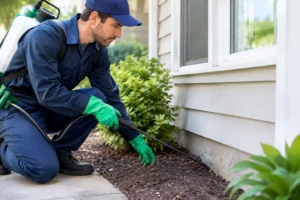
A faint line of mud along a garage wall, a pile of what looks like pepper near a windowsill, or a soft spot in a baseboard can be easy to dismiss. In Southern California, those details can be early termite evidence. This Los Angeles termite inspection guide explains what a professional inspection covers, when to schedule one, and how to respond before hidden damage becomes a larger repair bill.
Termites do not always announce themselves with obvious damage. They often work inside walls, beneath flooring, around plumbing penetrations, and in structural wood that is rarely visible. That is why an inspection is not just a quick look for insects. It is a focused evaluation of conditions that may support termite activity now or later.
Why Los Angeles Properties Need Termite Inspections
Los Angeles County properties face termite pressure throughout much of the year. Warm temperatures, drywood termites that can live entirely inside wood, and subterranean termites that travel through soil all create a risk for houses, rental units, offices, and retail spaces.
Age is not the only factor. Older homes may have more exposed wood, past repairs, or crawlspace conditions that deserve attention, but newer construction can have risk too. Landscaping that touches siding, drainage problems, wood fencing connected to the building, and moisture near kitchens or bathrooms can all make a property more attractive to termites.
For landlords and property managers, inspections also help protect units between tenants and document the condition of the property. Business owners benefit from early detection because termite damage can disrupt operations, affect customer-facing areas, and create avoidable maintenance costs.
When to Schedule a Termite Inspection in Los Angeles
A yearly professional inspection is a sensible baseline for many Southern California properties. Some homes need more frequent attention, especially if there has been prior termite activity, a history of moisture intrusion, extensive wood features, or an active construction project nearby.
You should schedule an inspection promptly when you notice discarded wings near windows or doors, mud tubes on foundations, hollow-sounding wood, bubbling paint, tight-fitting doors, or small pellets below wood trim. These signs do not confirm the termite species or the extent of damage, but they are enough reason to have a licensed professional assess the area.
Timing also matters during a real estate transaction. Buyers should not rely solely on a general home inspection to identify termite concerns. A dedicated termite inspection is designed to look for wood-destroying organisms, evidence of infestation, and conditions that may lead to future problems. Sellers can benefit too, since discovering an issue early gives them more control over repairs and treatment decisions.
[New section addressing the #1 and #2 most-searched questions on this topic: cost, and who pays]
What Does a Termite Inspection Cost in Los Angeles?
Pricing depends on why you’re getting inspected and what documentation you need:
- Homeowner-requested inspection (no active sale): Many licensed termite companies offer this at no charge, especially when the visit is also an opportunity to discuss treatment or an ongoing service plan.
- Standard paid inspection: Typically runs roughly 75–150 for a straightforward property.
- Real estate transaction inspection with a formal Wood-Destroying Organism (WDO) report: Often runs higher, commonly in the 125–460 range in the Los Angeles market, since lenders and escrow companies usually require detailed documentation, photos, and a signed report rather than just a verbal opinion.
If the inspection finds active termites, treatment cost is a separate line item and varies widely based on the termite species, the extent of activity, and whether the recommended approach is localized treatment or whole-structure fumigation — costs for treatment in the LA area commonly range from a few hundred dollars for a contained, localized issue up to several thousand for a full-structure job.
Who pays for the termite inspection when buying or selling?
There’s no single legal rule — it’s negotiated as part of the purchase agreement. That said, in the majority of Los Angeles-area home sales, the seller conventionally covers the cost of the termite (WDO) inspection and any resulting Section 1 clearance work, since it’s part of demonstrating the property is in sellable condition. Buyers should confirm this explicitly in their contract rather than assuming, since practices can vary by transaction and by what each party negotiates.
What Happens During a Professional Termite Inspection
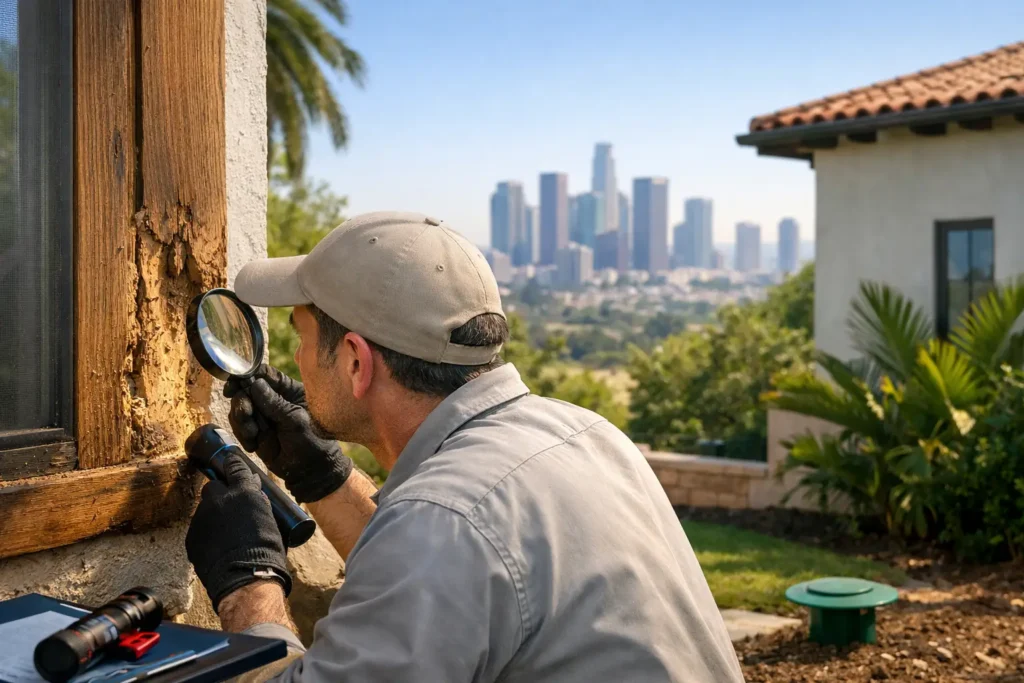
A thorough inspection starts with access. The inspector examines accessible interior and exterior areas, including foundation walls, garages, attics, crawlspaces, patios, door frames, windows, baseboards, exposed beams, and areas around plumbing. They also look at nearby wood structures such as fences, decks, sheds, and planters when those features may connect to or affect the building.
The goal is to identify three things: active termite evidence, termite damage, and conditions conducive to infestation. Active evidence might include live insects, fresh mud tubes, or new frass, which is the pellet-like material produced by drywood termites. Damage can include weakened wood, galleries inside framing, or trim that appears intact until it is tested. Conducive conditions may include excessive moisture, earth-to-wood contact, cracks around utility lines, cellulose debris in a crawlspace, or vegetation pressed against the structure.
Not every area can be inspected without moving furniture, opening walls, or entering inaccessible spaces. A dependable inspector should explain those limitations clearly rather than make assumptions. If there is evidence behind a finished wall or beneath flooring, the next step may involve further evaluation or a targeted recommendation based on the level of risk.
Subterranean vs. Drywood Termites
The type of termite affects the treatment approach. Subterranean termites typically live in soil and travel into structures through concealed pathways. Their mud tubes help maintain the moisture they need while moving between the ground and wood. Treatment may focus on the soil, foundation entry points, and colony activity around the structure.
Drywood termites live within the wood they consume and do not need ground contact. They often leave small, hard pellets that accumulate beneath infested wood. Because they can be isolated in one area or spread through several sections of a structure, treatment can range from targeted local work to whole-structure fumigation. The right choice depends on the species, the extent of activity, the construction of the building, and whether hidden areas are likely involved.
How to Read a Termite Inspection Report
A termite report should give you more than a vague recommendation to treat. It should identify where evidence was found, describe whether the issue appears active or inactive, note visible damage, and outline conditions that increase risk. Ask the inspector to walk you through the findings in plain language, particularly if the report uses technical terms or marks locations on a diagram.
Pay close attention to whether recommendations address the source of the problem. For example, treatment may be necessary, but a leaking hose bib, poor drainage, or a planter against the siding should also be corrected. Treating termites without addressing moisture or access points can leave the property vulnerable to another infestation.
If repairs are recommended, understand the difference between pest treatment and structural repair. A termite company can identify visible damage and provide treatment options, while a qualified contractor may need to assess whether framing, trim, flooring, or other components require repair or replacement. Do not assume cosmetic damage tells the full story. Conversely, do not assume every finding means major structural work is needed. The appropriate response depends on the location and severity of the damage. [Not every finding requires whole-structure fumigation — a report that recommends localized spot treatment for an isolated finding, rather than defaulting to the largest possible job, is generally a sign of an inspector working in your interest rather than upselling.]
Preparing Your Property for an Inspection
You do not need to overhaul the property before an inspector arrives. However, clear access makes the inspection more complete and helps prevent missed areas. Move stored items away from garage walls when possible, unlock gates, provide access to attics and crawlspaces, and make sure the inspector can reach areas beneath sinks and around water heaters.
If you have seen pellets, wings, or a mud tube, leave the evidence in place until it can be evaluated. Sweeping it away may make the area look better temporarily, but it removes useful clues. Taking a photo with the date can also help show whether evidence is recurring.
For rental and commercial properties, coordinate access with tenants or staff ahead of time. Clear communication reduces delays and makes it easier to inspect utility rooms, storage areas, exterior perimeters, and other spaces that may otherwise be unavailable.
Prevention After the Inspection
Termite prevention is a property-maintenance habit, not a one-time task. Keep mulch, soil, and stored lumber from directly contacting siding or structural wood. Direct water away from the foundation, repair plumbing leaks quickly, and trim plants so they do not trap moisture against the building. Firewood and lumber should be stored away from the structure and elevated off the ground.
Monitoring matters after treatment as well. A quality termite plan should account for the specific type of termite found, the construction of the building, and the activity level. A local, licensed professional can help determine whether targeted treatment, ongoing monitoring, or a broader solution is the most practical choice for your property.
For homeowners and property managers across Los Angeles County, Impressive Exterminating provides inspection-driven termite service focused on fast response, safe treatment options, and long-term protection. The best time to act is when the evidence is small enough to investigate carefully, not after damage has become impossible to ignore.
If you have a concern, schedule the inspection, ask questions about the findings, and keep the report for your property records. A clear answer now can protect the wood, the value, and the peace of mind you depend on.
Frequently Asked Questions
How much does a termite inspection cost in Los Angeles?
It depends on the purpose. A homeowner-requested inspection with no active sale is often free through many licensed local companies, especially if you’re open to discussing treatment. A standard paid inspection typically runs about 75–150. If you need a formal Wood-Destroying Organism (WDO) report for a real estate transaction — which lenders and escrow often require — expect a higher cost, commonly in the 125–460 range in the LA market, since it involves detailed documentation rather than just a verbal assessment.
Who pays for the termite inspection when buying or selling a home?
It’s negotiated between buyer and seller as part of the purchase contract, not set by law. In most Los Angeles-area transactions, the seller conventionally covers the termite inspection and any required Section 1 clearance work as part of getting the property into sellable condition, but this should be confirmed explicitly in your contract rather than assumed.
Is a general home inspection enough, or do I need a separate termite inspection?
A general home inspection is not a substitute for a dedicated termite inspection. General inspectors typically flag visible concerns but aren’t specifically trained or licensed to identify wood-destroying organisms, active versus inactive evidence, or termite species. A separate, licensed termite inspection is the standard for both buyers wanting full information and sellers wanting an accurate picture before listing.
What is a WDO report, and do I need one?
A Wood-Destroying Organism (WDO) report is a formal, standardized document — often required by lenders, escrow, or VA/FHA loan underwriting — that details any evidence of termites, other wood-destroying pests, or damage found during inspection, along with treatment recommendations. If you’re buying, selling, or refinancing a property in Los Angeles, there’s a good chance the transaction will require one even if you weren’t otherwise planning to get inspected.
How often should I get a termite inspection if I’ve never had a problem?
An annual inspection is a reasonable baseline for most Southern California properties, given how much year-round warmth supports termite activity in this region. Homes with a prior termite history, known moisture issues, extensive wood features, or nearby construction work may benefit from more frequent checks.
Does every termite finding mean I need whole-house fumigation?
No. Fumigation is generally reserved for drywood termite activity that’s extensive, hidden in multiple areas, or otherwise not practical to treat locally. A contained, accessible, isolated finding can often be resolved with targeted spot treatment instead. An inspector or company that automatically recommends the biggest possible job for every finding is worth a second opinion — a trustworthy report explains why a given treatment level fits your specific situation.