A termite swarm near a window, tiny piles of what looks like sawdust, or a mud tube climbing a foundation can all signal trouble. But drywood versus subterranean termite treatment is not a one-size-fits-all decision. The right response depends on the termite species, where the colony is active, how far it has spread, and how the property is built.
For homeowners, landlords, and business owners in Los Angeles and Orange County, a professional inspection is the fastest way to replace guesswork with a clear plan. Treating the wrong termite type can leave active colonies behind, allowing damage to continue where it cannot be seen.
Why Termite Species Changes the Treatment
Drywood and subterranean termites damage wood, but they live very differently. That difference determines where a licensed termite professional looks, which treatment methods will work, and what prevention should follow.
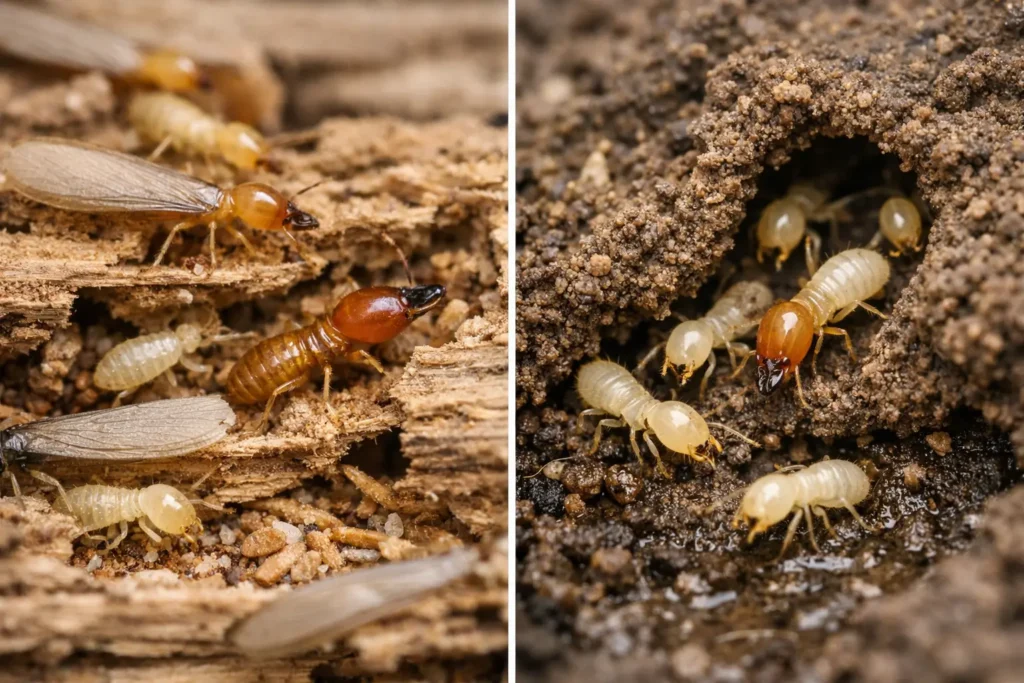
Drywood termites live directly inside dry, sound wood. They do not need contact with soil to survive, so they may infest attic framing, rafters, fascia boards, window trim, doors, furniture, and structural lumber. A colony can remain hidden inside a wall or upper level of a building for years.
Subterranean termites live in the soil and need moisture to survive. They travel between the ground and a food source through protected mud tubes, cracks in concrete, utility openings, and other hidden routes. Their colonies can be large, and they often attack framing near foundations, crawl spaces, garages, plumbing penetrations, and areas with moisture problems.
The key point is simple: drywood termites are usually treated in the wood they occupy, while subterranean termites require treatment around or below the structure to interrupt their connection to the soil.
Drywood Versus Subterranean Termite Treatment Options
A detailed inspection should identify the species before treatment begins. In some properties, especially older homes or buildings with multiple additions, more than one termite issue may be present. A customized plan prevents a visible symptom in one location from distracting from activity elsewhere.
Treating Drywood Termites
Drywood termite treatment generally falls into two categories: localized treatment and whole-structure fumigation. The appropriate choice depends on the number of infested areas, the extent of activity, and whether the infestation can be reached effectively.
Localized treatment targets known areas of infestation. A professional may access infested wood through small, strategic openings and apply a treatment designed to reach termites inside galleries. This can be a practical choice when activity is limited to a defined section of trim, a door frame, or a small structural area. It may also be appropriate when a full fumigation is not necessary or when a property needs a less disruptive option.
However, localized treatment has limits. Drywood termites can move through connected wood members and remain concealed behind finished walls, ceilings, or insulation. If inspections show widespread activity, multiple colonies, or inaccessible areas, whole-structure fumigation may offer the most dependable way to address the infestation throughout the building.
Fumigation involves enclosing the structure and using a gas treatment that penetrates areas where termites may be hidden. Occupants, pets, and plants must leave the property during the process, and the structure must be cleared according to required safety procedures before anyone returns. It is highly effective for widespread drywood termite infestations, but it does not repair termite damage or prevent future termites from entering after treatment.
Treating Subterranean Termites
Subterranean termite treatment focuses on creating a protective barrier or eliminating the colony through a monitored baiting strategy. Because these termites begin in the soil, surface spraying inside the home alone will not solve the underlying problem.
Liquid soil treatments are placed around the foundation, beneath affected areas when needed, and at likely entry points. The goal is to create a treated zone that termites cannot cross without exposure. Depending on construction, a technician may treat soil next to the foundation, drill through concrete slabs in specific locations, or address crawl-space conditions that support termite activity.
Bait systems are another option. Stations are placed in the ground around the property and monitored over time. When termites feed on the bait, it can be shared throughout the colony. Baiting can be especially useful where ongoing monitoring is preferred or where a conventional soil treatment is not the best fit for the site.
Subterranean termites are strongly connected to moisture. Correcting leaking pipes, poor drainage, standing water, damaged gutters, and wood-to-soil contact can make treatment more effective and reduce the chance of future activity.
Warning Signs Can Point to the Right Termite
You do not need to identify the species on your own, but certain signs can help you explain the issue during an inspection request.
Drywood termites often leave small, hard pellets called frass. These pellets may collect beneath a kick-out hole in wood, along window sills, below baseboards, or on attic surfaces. Unlike sawdust, drywood termite pellets are uniform and granular. You may also notice blistered paint, hollow-sounding wood, or wings near windows after a swarm.
Subterranean termites are more likely to leave mud tubes on foundation walls, piers, garage walls, or plumbing lines. Damaged wood may look layered, etched, or packed with soil. Swarming winged termites can also appear indoors, particularly in spring or after humid weather, but the mud tubes and moisture connection are stronger clues.
Termite damage is often hidden. A wall can look normal while termites are feeding behind it. That is why a prompt inspection matters after a swarm, pellet piles, mud tubes, or unexplained wood damage appear.
Cost and Disruption: What Should You Expect?
The cost of termite treatment varies because the scope of work varies. A localized drywood treatment may cost less than whole-structure fumigation, but it is only a good value when the infestation is truly limited and accessible. Choosing a smaller treatment for widespread activity can lead to repeat costs and additional damage later.
Subterranean termite treatment costs depend on the size of the structure, foundation type, amount of drilling or trenching required, infestation pressure, and whether ongoing bait monitoring is included. A property with a raised foundation may require a different approach than a slab-on-grade home, retail space, or apartment building.
Disruption is also different. Fumigation requires temporary vacancy and preparation. Localized drywood treatment and many subterranean treatment plans may allow more of the property to remain in use, though specific treatment areas may need to be cleared. For rental properties and businesses, planning treatment around tenant needs or operating hours can reduce unnecessary interruption.
A professional should explain the recommended method, what preparation is required, what areas will be treated, and what follow-up is needed before work begins. Clear expectations are part of effective termite service.
Prevention After Treatment Matters
Treatment removes or controls the active termite problem, but long-term protection requires attention to conditions that attract termites. Keep firewood, lumber, cardboard, and stored materials away from exterior walls. Avoid direct wood-to-soil contact around decks, fences, planters, and siding. Repair exterior wood damage before it creates an easy access point.
For subterranean termite prevention, direct water away from the foundation and address leaks quickly. Keep crawl spaces ventilated where appropriate, and avoid allowing mulch or soil to cover weep holes or siding. For drywood termites, maintain painted or sealed exterior wood, repair cracks around windows and rooflines, and inspect exposed eaves and fascia regularly.
Regular inspections are especially valuable in Southern California, where termites can remain active for much of the year. Properties with past infestations, older wood construction, moisture issues, or neighboring termite activity deserve closer attention.
When to Schedule a Termite Inspection
Schedule an inspection as soon as you see termite wings, frass, mud tubes, damaged wood, or a swarm. It is also smart to arrange an inspection before buying a property, after major water damage, or when preparing a rental unit for new tenants.
Impressive Exterminating provides inspection-driven termite solutions designed around the property and the infestation, not a generic treatment package. A licensed professional can determine whether drywood termites, subterranean termites, or another wood-destroying pest is present and recommend a safe, effective next step.
If you are seeing signs now, do not wait for visible damage to become a larger repair project. A fast inspection gives you the information needed to protect the structure, the people who use it, and your peace of mind.