Termite damage rarely announces itself. By the time it’s visible — buckled trim, a soft spot in flooring, a door that suddenly won’t close — the colony has usually been active for months, sometimes years. For a commercial property, that hidden timeline is expensive: repairs disrupt tenants, operations, and budgets, often at the worst possible moment.
This guide covers what actually prevents termite damage in commercial buildings across Los Angeles County and Orange County, retail storefronts, offices, restaurants, warehouses, and multifamily properties and what a realistic inspection and prevention schedule looks like.
Why Commercial Properties Face Different Termite Risk Than Homes
Commercial buildings simply have more places for termites to go unnoticed: utility rooms, roof lines, crawl spaces, storage areas, shared walls, landscaping, and plumbing penetrations. Construction type, occupancy, and maintenance schedules all change where termites are likely to travel and feed — which is why a generic, one-size-fits-all treatment plan tends to underperform on commercial sites.
Southern California properties commonly deal with two distinct termite risks:
- Drywood termites, which live directly inside the wood they infest and don’t need soil contact — meaning they can be present in upper floors, roof framing, and furniture-grade wood far from ground level.
- Subterranean termites, which travel through soil and require moisture, entering structures from the ground up, often through slab cracks or plumbing penetrations.
Because these two species behave so differently, prevention starts with correctly identifying which risk (or both) applies to your building — not with guessing.
What a Commercial Termite Inspection Should Actually Cover
A thorough commercial inspection goes beyond a walk around the exterior. Depending on the property, it should include:
- Crawl spaces, basements, attics, and roof connections
- Utility rooms, garages, and storage areas
- Points where plumbing or electrical lines penetrate the building
- Shared walls and common areas in multifamily or mixed-use buildings (activity in one unit can affect the whole structure)
- Fences, decks, and planters attached to or near the building
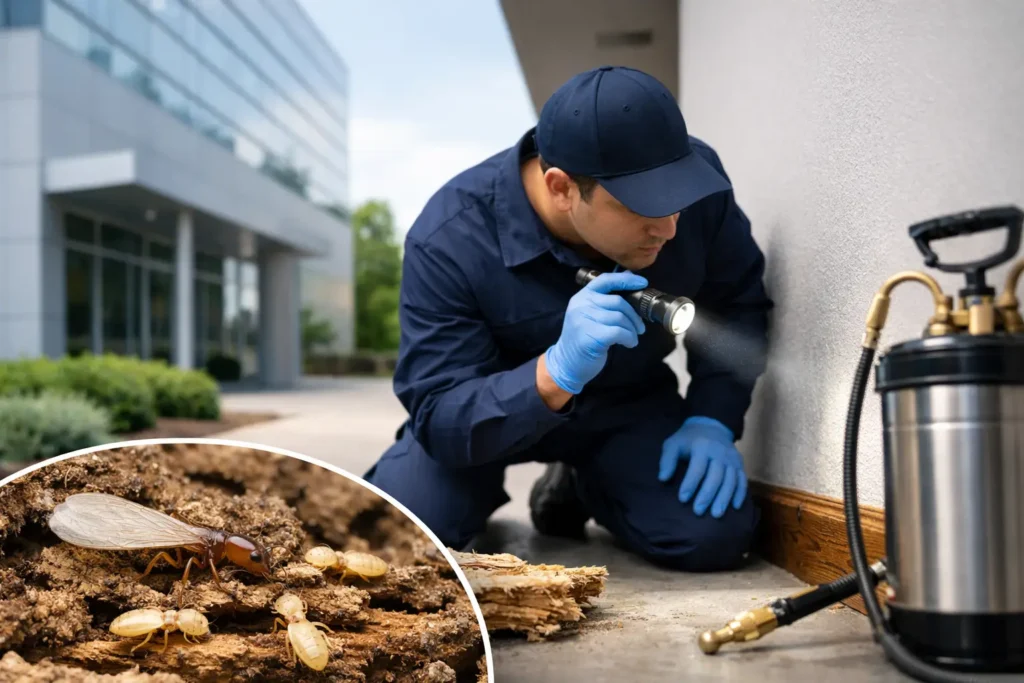
Warning signs a technician looks for: discarded wings near windows or lights, small pellet-like droppings (frass), mud tubes along foundations, blistered or bubbling paint, hollow-sounding wood when tapped, and doors or windows that suddenly fit poorly.
How often should a commercial property be inspected? Annual inspections are a reasonable baseline for most businesses. Properties with a prior termite history, extensive exposed wood, moisture problems, or dense landscaping close to the structure typically warrant more frequent, customized monitoring.
Also Check: Commercial Termite Prevention Guide for Businesses
What Commercial Termite Treatment Actually Costs
Pricing for commercial termite work varies significantly based on square footage, species, and severity — but industry cost data gives a useful reference range:
| Treatment type | Typical cost range |
|---|---|
| Standard inspection | $75–$200 (often free with a service agreement) |
| Localized/spot treatment (contained activity) | $200–$800 |
| Liquid soil treatment (subterranean, per linear foot of foundation) | $3–$16/linear foot |
| Full structural fumigation (widespread drywood) | $1,500–$8,000+, depending on building size |
| Annual monitoring/renewal | $100–$500/year |
For commercial buildings, the total cost depends heavily on whether treatment is localized or building-wide, and whether the business can remain open during service — fumigation, for instance, requires temporary vacancy and advance scheduling.
Removing the Conditions Termites Need
Prevention is largely about denying termites the moisture and wood access they depend on:
- Fix leaks quickly — plumbing, roof penetrations, gutters, and irrigation heads. Moisture around a foundation should never be treated as a “later” problem.
- Reduce wood-to-soil contact. Wood siding, posts, fencing, and stored lumber or pallets should not create a direct bridge from the ground to the building.
- Manage landscaping. Trim vegetation back from the structure; avoid piling heavy mulch directly against the foundation, since it retains moisture and can hide early warning signs.
- Coordinate reporting. Maintenance staff, tenants, and contractors should have one clear channel to report possible termite signs (discarded wings, soft wood, mud tubes) so nothing sits in a work-order queue for weeks.
Also Check: Choosing a Local Termite Company Near Alhambra
Building Termite Checks Into Routine Maintenance
The businesses that avoid expensive termite surprises are usually the ones that fold termite awareness into existing maintenance routines rather than treating it as a separate task.
Ask landscaping crews, plumbers, and maintenance staff to flag anything unusual during routine work — new wood damage, leaks, mud tubes, swarming insects, or changes around doors and baseboards — and keep a simple record of where and when signs appeared. That history helps a termite professional spot patterns (like recurring moisture near one wall) far faster than a cold inspection.
When to Call for Emergency Commercial Termite Service
Don’t wait for the next scheduled inspection if you see active swarmers, fresh mud tubes, soft or damaged wood, or a sudden spike in insect activity near the building. These signs justify a prompt inspection — especially for properties with tenants, customers, pending inspections, escrow deadlines, or planned renovations, where delay adds real business risk on top of the pest risk.
Impressive Exterminating provides inspection-driven commercial termite prevention across Los Angeles County and Orange County.
Call (562) 246-9044 for a free inspection before a hidden problem becomes a visible repair bill.
Frequently Asked Questions
How much does commercial termite treatment cost in Southern California?
It depends heavily on scope. Localized spot treatment for a contained issue can run $200–$800. Liquid soil treatment for subterranean termites typically runs $3–$16 per linear foot of foundation. Full-structure fumigation for widespread drywood termite activity commonly runs $1,500–$8,000 or more, depending on building size. Annual inspections are often included free with a service agreement, or run $75–$200 standalone.
How often should a commercial building get a termite inspection?
Annually is a reasonable baseline for most commercial properties. Buildings with a documented termite history, significant exposed wood, chronic moisture issues, or dense landscaping close to the structure usually benefit from more frequent, customized monitoring rather than a once-a-year checkup.
What’s the difference between drywood and subterranean termite risk for a commercial building?
Drywood termites live inside the wood they infest and don’t need soil contact, so they can turn up in upper floors, roof framing, or furniture-grade wood. Subterranean termites travel through soil and need moisture, entering from the ground — often through foundation cracks or plumbing penetrations. Because the entry points and treatment methods differ, an accurate inspection needs to identify which type (or both) is present before recommending treatment.
Can a business stay open during termite treatment?
It depends on the treatment method. Localized or soil treatments can often be scheduled around business hours with minimal disruption. Full-structure fumigation requires the building to be vacated for a set period, so it needs advance scheduling and clear communication with tenants or staff — this is usually the deciding factor when comparing fumigation against a more localized treatment plan.
Does landscaping really affect termite risk?
Yes. Mulch piled directly against a foundation retains moisture and can hide mud tubes or other early warning signs. Vegetation touching exterior walls creates a bridge termites can use to reach the structure while staying hidden. Trimming plants back from the building and managing mulch depth are simple, low-cost prevention steps that are frequently overlooked in commercial landscaping contracts.
Who is responsible for termite prevention in a multi-tenant commercial building — the landlord or the tenant?
This is typically defined in the lease, but property owners generally carry the underlying responsibility for structural pest prevention, since termite damage affects the building itself, not just a tenant’s space. Commercial leases often specify who handles inspection costs and treatment costs — it’s worth confirming this in writing before an issue arises, not after.
What early warning signs should maintenance staff be trained to look for?
Discarded insect wings near windows or lighting, small pellet-like droppings (frass) that can resemble sawdust or pepper, mud tubes running along foundations or walls, blistered or bubbling paint, wood that sounds hollow when tapped, and doors or windows that suddenly stick or fit poorly. None of these confirm the extent of an infestation on their own, but any of them justifies a professional inspection rather than a wait-and-see approach.