
You find a pile of tiny pellets on a windowsill, a few papery wings on the floor or a mud-colored tube along the foundation. Now you want to know one thing: how do you get rid of termites, and fast? The honest answer is that it depends on which termite you have. The right fix for one can be useless for the other.
It’s termite season more often than most people think here. Drywood termites swarm mostly in the fall, and subterranean termites swarm after rain in late winter and spring, so there’s rarely a quiet stretch in Southern California.
To get rid of termites, confirm they’re termites (not flying ants), identify whether they’re drywood or subterranean, and get a licensed professional inspection. Then match the treatment to the species and how far the damage has spread.
Drywood termites are treated with local (spot) treatment or whole-home fumigation (tenting). Subterranean termites are treated with soil treatments or bait stations. DIY products rarely reach the colony, and UC IPM says they’re generally not effective.
Key takeaways
- Drywood and subterranean termites need different treatments.
- Fumigation works on drywood termites. It doesn’t work on subterranean termites.
- Spot treatment only kills termites where it’s applied, so a thorough inspection matters.
- Fumigation doesn’t prevent future termites, so annual inspections still matter.
- Fix moisture and wood-to-soil contact to lower your risk after treatment.
First, Are They Really Termites?
Winged termites are often confused with flying ants. Seeing swarmers doesn’t always mean your home is infested, but it’s a strong reason to get an inspection.
| Termites | Flying ants | |
|---|---|---|
| Antennae | Straight | Bent (elbowed) |
| Waist | Thick, uniform | Pinched |
| Wings | Four wings, all the same length | Front wings longer than back wings |
Signs of termites around your home:
- Tiny, hard, sand-like pellets (frass) below wood trim, windows or attic beams
- Pinhole “kick-out” holes in wood
- Discarded wings on windowsills or in spiderwebs
- Mud tubes along foundation walls or in the crawl space
- Wood that sounds hollow or papery when tapped
- Bubbling paint or warped surfaces with no moisture source
Not sure what you found? See Termite Droppings but No Termites? What to Do Next.
Drywood vs Subterranean Termites: Why the Type Matters
| Drywood termites | Subterranean termites | |
|---|---|---|
| Where they live | Inside dry, sound wood above ground (attic framing, eaves, trim, furniture) | In the soil, traveling to wood through mud tubes |
| Telltale sign | Pellets (frass) and kick-out holes | Mud tubes and damaged wood near soil |
| Swarm season in Southern California | Mostly September–November | Mostly late winter and spring, after rain |
| How colonies spread | Can start many small colonies in the same building | Large colony connected to the soil |
| Typical treatment | Local treatment, whole-home fumigation (tenting) or heat | Soil (liquid) treatment, bait stations or both |
A key point from UC IPM: subterranean termites in a structure can’t be controlled with drywood methods like fumigation or heat, because the colony lives in or near the soil. That’s why identification comes before treatment.
Can You Get Rid of Termites Yourself?
For active termites, usually not. UC IPM says do-it-yourself termite products are generally not effective, and the pesticides and equipment needed for structural infestations are available only to licensed pest control operators. Drywood termites are especially hard to confirm and measure because they hide inside wood.
What you can do yourself is reduce the conditions that help termites:
- Fix leaks and keep gutters and downspouts clear
- Keep wood, mulch and firewood from touching the house
- Keep soil and planters away from the foundation and siding
- Seal cracks and replace damaged wood
- Keep crawl space vents clear and the area dry
These steps lower your risk. They don’t remove a colony that’s already there.
How to Get Rid of Termites: 7 Steps
Step 1: Confirm and document what you found
Take photos of pellets, wings, mud tubes or damaged wood. Collect a few insects or wings in a sealed bag or tape. Don’t spray swarmers with household insecticide. It kills the ones you can see, not the colony.
Step 2: Get a licensed professional inspection
A proper termite inspection identifies the termite species, maps where activity is and recommends treatment. It should cover the attic, crawl space, foundation, eaves, decks, fences, window and door frames and areas near moisture. Ask for the findings in writing.
Buying or selling? A real estate termite inspection gives you the written report for escrow.
Step 3: Match the treatment to the termite and the spread
- Contained drywood activity in one accessible area: local (spot) termite treatment
- Widespread or hidden drywood activity: termite fumigation (tenting) or, where available, whole-structure heat
- Subterranean termites: soil treatment, bait stations or a combination, through our termite treatment service
California’s Structural Pest Control Board notes that spot treatments kill termites only where they’re applied, so be wary of any company that promises whole-house results from spot treatment alone.
Step 4: Prepare for treatment
Prep depends on the method. For fumigation, you’ll plan lodging for your household and pets for about 2–3 days, bag or remove food and medicines not in sealed containers, remove plants and trim vegetation away from the house. Your technician will give you a written checklist. Learn more in Termite Fumigation: What Property Owners Should Know.
Step 5: Get the treatment done by a licensed company
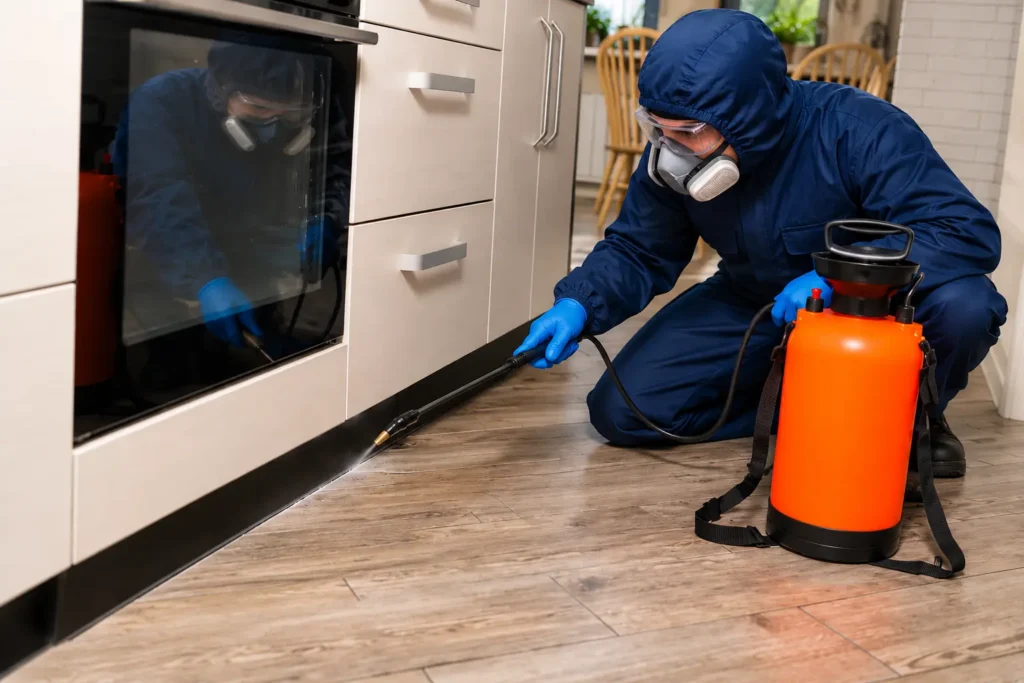
Fumigation must be performed by trained, certified professionals, with gas monitoring and clearance testing before you re-enter. UC IPM notes monitored fumigation has the highest success rate. Not sure whether tenting or baiting fits your home? Read Fumigation Versus Baiting: Which Works Best?
Step 6: Fix the conditions that attracted them
- Repair leaks and improve drainage
- Replace damaged or rotted wood
- Remove wood-to-soil contact, stored lumber and old stumps near the house
- Keep mulch and soil below the siding line
- Seal gaps where utilities enter the structure
Step 7: Schedule follow-up and annual inspections
Fumigation kills the termites present, but it leaves no lasting protection, so new swarmers can still land and start new colonies. Annual inspections are a common practice in termite-heavy areas like Southern California. If you’ve already been tented, read Can Termites Come Back After Tenting?
Termite Treatment Options Compared
| Method | Best for | Time | Leave home? | Notes |
|---|---|---|---|---|
| Local (spot) treatment | Contained, accessible drywood activity | Often a few hours | Usually no | Only treats where applied |
| Fumigation (tenting) | Widespread or hidden drywood activity | About 2–3 days | Yes | Treats the whole structure, no lasting residual |
| Heat (whole structure) | Drywood, where offered | Hours | Yes, for a shorter time | Ask your company if it’s available |
| Soil (liquid) treatment | Subterranean termites | Hours to a day | Usually no | Creates a protective zone around the foundation |
| Bait stations | Subterranean termites | Installation hours, colony decline over weeks | No | Needs monitoring |
For a closer look at eco-friendlier options, see Eco-Safe Termite Treatment Review.
What Doesn’t Work for Termites
| Method | Reality |
|---|---|
| Hardware-store sprays and foggers | Kill visible termites, not the colony. UC IPM says DIY pesticides are generally not effective |
| Spraying swarmers | Kills only the ones you see |
| Cardboard “traps” | May attract termites but won’t eliminate a colony |
| Vinegar, essential oils, soapy water | Only reach what they touch |
| Beneficial nematodes, boric acid on surfaces | Limited and inconsistent for structural infestations |
| Spot treatment for widespread drywood activity | Misses hidden colonies, so you may pay twice |
| Assuming fumigation protects you for years | It leaves no lasting protection |
How Long Does It Take to Get Rid of Termites?
| When | What happens |
|---|---|
| Day 1–7 | Inspection and written findings, treatment plan and scheduling |
| Local treatment day | Treatment is often completed in a few hours |
| Fumigation | About 2–3 days including setup, gas exposure, aeration and clearance |
| Bait or soil treatment | Installation in hours to a day. Colony decline can take weeks to a few months |
| After treatment | Follow-up inspection, then annual inspections |
Common Mistakes
- Waiting. Termite damage is slow, but it adds up, and standard homeowners insurance usually doesn’t cover it.
- Treating the wrong species. Fumigation doesn’t help with subterranean termites.
- Relying on a quick look. A rushed inspection can miss hidden activity.
- Choosing spot treatment because it’s cheaper. If activity is widespread, you may end up paying twice.
- Skipping the written report. You need the species, locations and recommendation on paper.
- Ignoring moisture. Leaks and wood-to-soil contact keep inviting termites.
- Picking only on price. Compare the inspection, method, warranty and what’s included.
When Should I Call a Termite Exterminator?
Call a professional as soon as you see pellets, swarmer, mud tubes or damaged wood, or if it’s been more than a year since your last inspection.
Our process is simple: a licensed technician inspects your property, shows you what we find, explains the right treatment and gives you the price up front. We apply treatments with care for the people and pets you love. And if termites come back, so do we, at no additional cost. Learn more about termite control or read how to pick a local pest control company.
Schedule a Free Termite Inspection · Call (562) 246-9044
Wondering about safety around kids and pets? See Is Pest Control Safe for Babies, Kids and Pets?
Frequently Asked Questions
What is the fastest way to get rid of termites?
Get a licensed inspection to confirm the species, then treat accordingly. Drywood termites are treated with local treatment or fumigation, and subterranean termites with soil treatment or bait stations. Over-the-counter sprays rarely reach the colony.
Can I get rid of termites myself?
Rarely. UC IPM says DIY termite pesticides are generally not effective and that professional products aren’t available to the public. You can reduce conditions that attract termites, but active colonies need professional treatment.
What kills termites instantly?
Contact products can kill the termites they touch, but they don’t reach the colony or termites hidden in wood. Fumigation and bait or soil treatments are designed to reach the whole colony.
How do I know if termites are gone?
No new pellets, mud tubes or live termites, and a clean follow-up inspection from a licensed professional. Keep up annual inspections after treatment.
How long does it take to get rid of termites?
Local treatment is often done in a few hours, and fumigation takes about 2–3 days. Bait or soil treatment for subterranean termites can take weeks to months for the colony to decline.
Is fumigation the only way to treat drywood termites?
No. Contained, accessible activity can often be handled with local treatment. Widespread or hidden activity is a better fit for fumigation or whole-structure heat. An inspection decides which applies.
Does tenting get rid of subterranean termites?
No. Subterranean termites live in or near the soil and are treated with soil treatment or bait stations. See our termite treatment service.
Can termites come back after treatment?
Yes. Fumigation leaves no lasting protection, and new swarmers can start new colonies. That’s why annual inspections matter. Read Can Termites Come Back After Tenting?
How often should I have a termite inspection?
At least once a year is common practice in termite-prone areas like Southern California, and any time you see swarmers, pellets or mud tubes.
Does homeowners insurance cover termite damage?
Typically no. Most policies exclude it as preventable, which is why regular inspections matter.
What do termite droppings look like?
Tiny, hard, sand-like pellets with six slightly concave sides, often in small piles below wood. See Termite Droppings but No Termites?
Does fumigation damage furniture, electronics or belongings?
No. The gas passes through household items without harming them. Food, medicine and items not in sealed containers need to be bagged or removed, and pets and plants must leave.
Are termite treatments safe for pets and kids?
We apply treatments with care for the people and pets you love and explain any precautions beforehand, including when it’s safe to return.
When is termite season in Southern California?
Drywood swarms peak in the fall (September–November), and subterranean swarms follow rain in late winter and spring. Annual inspections catch activity in any season.