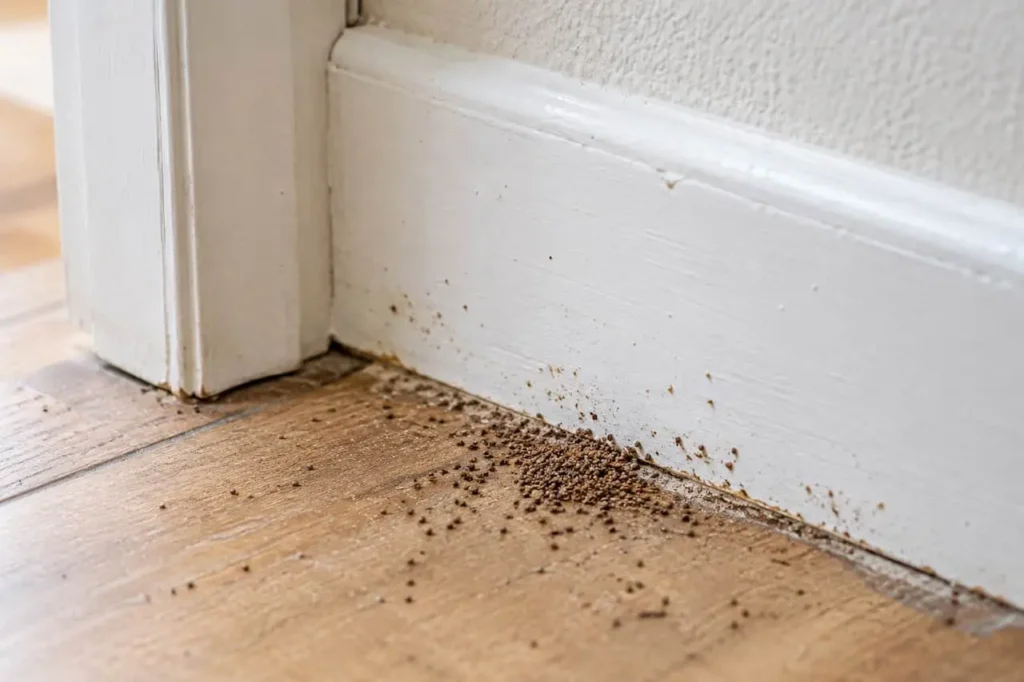
Finding tiny piles of pellets near a windowsill, wooden doorframe, baseboard, or attic beam can be confusing. You clean them up, inspect the surrounding area, and find no insects anywhere. So, where are the droppings coming from?
If you’re experiencing this problem, termite droppings but no termites visible doesn’t necessarily mean your home is free from an infestation. Drywood termites can live inside wooden structures, leaving evidence of their activity while remaining hidden from view.
However, not every pile of debris is termite frass. Sawdust, insect droppings, dirt, and other household debris can look similar.
For homeowners across Los Angeles County and Orange County, California, understanding the difference can help prevent unnecessary worry while ensuring genuine termite activity isn’t overlooked.
In this guide, we’ll explain what termite droppings look like, why you might not see live termites, how to investigate the evidence safely, and when professional termite inspection makes sense.
What Does It Mean When You Find Termite Droppings but No Termites?
If you find suspected termite droppings but cannot see live termites, there are several possible explanations.
The material could be drywood termite frass pushed out of a small opening in infested wood. The termites may be living inside a wall, ceiling, window frame, or another concealed wooden structure.
Alternatively, the pellets could be old debris from a previous infestation, or the material may come from another insect or an entirely different source.
Drywood termites live inside the wood they consume. Unlike subterranean termites, they don’t need to maintain a connection with the soil. They can therefore remain hidden in dry wooden components while pushing their fecal pellets through small openings.
These pellets may accumulate below the infested area, creating the impression that the problem appeared overnight.
The most important point is that droppings alone cannot confirm whether termites are currently active. Their appearance, location, recurrence, and any additional evidence should be evaluated together.
If the pellets keep appearing in the same location, arrange an inspection rather than repeatedly cleaning them up and assuming the problem has disappeared.
How to Identify Termite Droppings in Your Home
Before assuming you have termites, examine the material carefully without disturbing the suspected infestation.
Drywood termite droppings are commonly called frass. They are different from the loose, powdery debris people often associate with wood damage.
Here are some characteristics that can help you recognize suspected termite frass.
1. Small, Hard Pellets
Drywood termite frass typically consists of tiny, hard, elongated pellets. Under magnification, the pellets often have distinctive ridges or grooves.
Their color may vary from light tan and beige to darker brown, depending on the wood the termites consume.
Unlike ordinary sawdust, termite frass tends to contain recognizable individual pellets rather than uniformly fine powder.
2. Small Piles Beneath Wooden Surfaces
Look at where the material accumulates.
Possible locations include:
- Window frames and windowsills
- Wooden doorframes
- Baseboards and trim
- Attic framing and exposed beams
- Wooden cabinets and furniture
- Areas beneath small openings in wooden surfaces
A pile directly below a tiny hole in wood deserves closer attention because drywood termites may push their droppings out through openings known as kick-out holes.
Nevertheless, location alone cannot confirm that the material is termite frass.
3. Small Holes in Wood
Drywood termites may create small openings through which they remove waste.
If you find pellets beneath a tiny hole, photograph the area and record its location.
Avoid drilling into the wood, enlarging the opening, or applying chemicals to investigate further. These actions may damage the material or interfere with a proper assessment.
4. Reappearing Pellets After Cleaning
One of the most useful observations is whether the material returns.
If you remove a small pile and discover fresh-looking pellets in the same location later, there may be an ongoing source nearby.
However, vibration can release old material from wooden cavities, and other insects can produce similar debris. Reappearance is a reason to investigate, not definitive proof of active termites.
Termite Droppings vs Sawdust: What’s the Difference?
| Feature | Possible Termite Frass | Sawdust |
| Appearance | Small, distinct pellets | Fine particles, shavings, or wood fibers |
| Texture | Often hard and granular | Usually softer and powdery |
| Shape | Individual pellets may show ridges | Irregular fragments |
| Common location | Beneath small openings in infested wood | Near cutting, drilling, sanding, or damaged wood |
| Possible source | Drywood termite activity | Woodworking, repairs, or other wood-damaging activity |
| What it indicates | Possible drywood termite activity | Depends on the source of the material |
These differences are useful clues, but appearance alone cannot establish a diagnosis. Other insects can also leave pellet-like debris, and old termite frass can remain after treatment.
If you’re unsure what you’ve found, photograph it and arrange a professional assessment.
Why Are There Termite Droppings but No Visible Termites?
There are several reasons you might discover termite-like pellets without seeing the insects themselves.
1. Termites Are Hiding Inside the Wood
Drywood termites spend much of their lives inside wooden structures. They create galleries as they feed, often leaving the exterior surface relatively intact.
This means an infestation can exist inside a window frame, attic beam, doorframe, or other wooden component without visible insects.
You may notice the waste they expel long before you see a termite.
2. The Infestation Is Located Behind a Wall or Ceiling
Termites don’t need to be visible in a room to be present in the surrounding structure.
They may occupy wooden framing behind drywall, above ceilings, or inside concealed sections of the building.
Droppings that appear near a wall or ceiling could indicate activity in nearby wood, although the exact source needs to be established.
Don’t remove drywall or dismantle structural components simply to search for insects. A professional inspection can help determine whether further investigation is necessary.
3. The Droppings Are From an Older Infestation
Finding termite frass doesn’t automatically mean the infestation is active today.
Old pellets may remain in hidden spaces, beneath trim, or inside cavities long after treatment.
Renovations, movement, or vibration can sometimes dislodge this material and make it appear new.
If the property has a history of termite treatment, check the available inspection reports, treatment records, and warranty documentation.
A qualified inspector can evaluate the evidence and determine whether additional investigation is needed.
4. The Material Comes From Another Pest
Not all insect droppings are termite frass.
Depending on their shape, location, and surrounding evidence, the material could come from other insects or animals. Sawdust and debris from deteriorating wood can also be mistaken for termite droppings.
Avoid making a treatment decision based solely on a photograph or a quick visual comparison.
Correct identification matters because the appropriate response depends on the actual source.
5. The Termites Are Active but Difficult to Detect
A lack of visible insects doesn’t rule out an active infestation.
Termites may remain inside wood for extended periods, and their activity may be limited to concealed areas.
Other clues, including fresh-looking frass, small openings, discarded wings, damaged wood, or mud tubes, can help an inspector decide where to investigate.
For additional information about the inspection process, read What a Termite Inspection Reveals About Your Home.
What Should You Do If You Find Termite Droppings?
Discovering suspected termite frass doesn’t mean you need to panic or immediately commit to an expensive treatment.
The best approach is to preserve useful evidence, examine the surrounding area safely, and establish whether termites are responsible.
Follow these steps.
Step 1: Photograph the Droppings
Take clear photographs before cleaning anything.
Capture:
- A close-up of the pellets
- The surrounding wooden surface
- Any small holes nearby
- The wider area showing where the material accumulated
Include an object for scale if you can do so without disturbing the evidence.
Photographs can help document changes over time and provide useful context during an inspection.
Step 2: Record the Location
Write down exactly where you found the material.
For example, you might record that the pellets appeared below a bedroom window, beside a wooden doorframe, or near an attic beam.
Note the date and whether you’ve seen similar material in the same location previously.
If the material returns after cleanup, record that observation too.
Step 3: Look for Other Warning Signs
Without damaging the property, inspect accessible areas around the suspected source.
Look for:
- Small openings in wooden surfaces
- Additional piles of pellets
- Hollow-sounding or visibly damaged wood
- Discarded termite wings near windows or doors
- Mud tubes along accessible foundation surfaces
- Peeling or blistering paint without an obvious explanation
These signs do not all indicate the same termite species. For example, mud tubes are associated with subterranean termites, while pellet-like frass is characteristic of drywood termites.
For a clearer understanding of these differences, see Drywood Versus Subterranean Termite Treatment.
Step 4: Avoid Spraying the Area Immediately
It’s tempting to apply an insecticide as soon as you suspect termites.
However, an unconfirmed diagnosis can lead to unnecessary chemical exposure without resolving the underlying problem.
Surface sprays may kill insects they contact but fail to reach a concealed colony. They can also complicate the assessment if the wrong product is applied.
Avoid injecting chemicals into holes, opening walls, or treating structural wood without understanding the source of the activity.
If termites are confirmed, the treatment should match the species, infestation location, and extent of activity.
Step 5: Arrange a Professional Termite Inspection
If the evidence suggests termite activity, the material keeps returning, or you’re unsure what you’re seeing, arrange an inspection.
A qualified professional can examine the affected area, identify potential termite activity, assess accessible wood, and explain whether further investigation is necessary.
The goal is to determine whether the evidence points to an active infestation, an older problem, or a different source altogether.
For homeowners in Los Angeles County and Orange County, an inspection can help establish the next steps before unnecessary repairs or inappropriate treatments are undertaken.
Can Termite Droppings Damage Your Home?
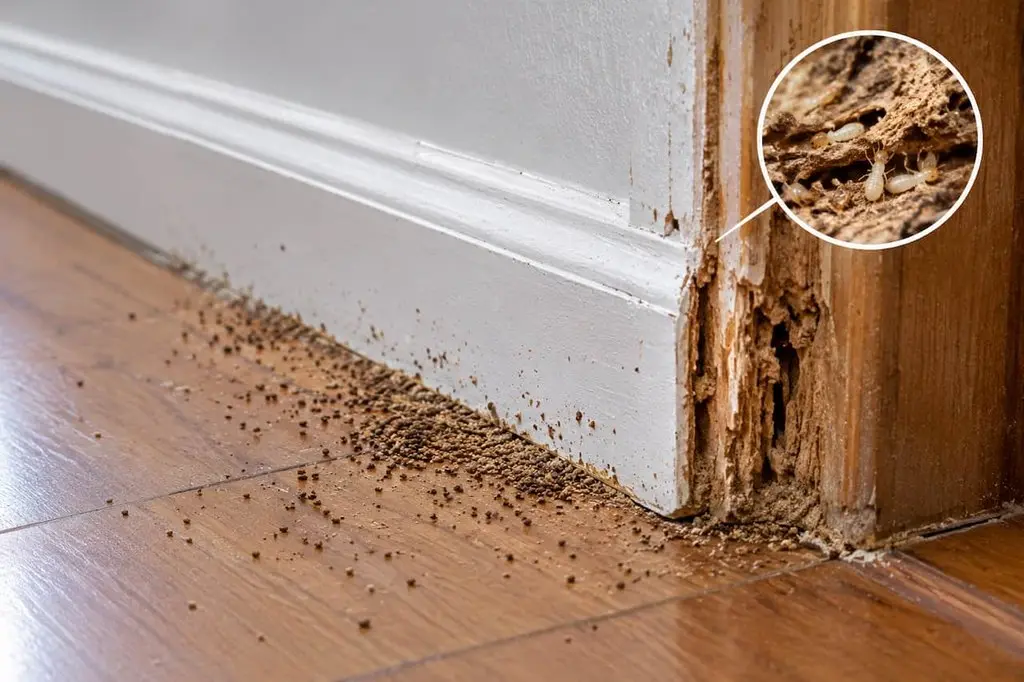
Termite droppings themselves are not generally the cause of structural damage. They are a potential indicator of termite activity, and the underlying feeding activity is what deserves attention.
Drywood termites consume wood and create internal galleries. Depending on the location and extent of an infestation, prolonged activity can weaken affected wooden components.
The actual risk depends on several factors:
- Whether termites are currently active
- Which termite species is involved
- How much wood has been affected
- Whether structural components are involved
- Whether the infestation is localized or more widespread
A small pile of suspected frass doesn’t automatically mean your home has significant structural damage.
Likewise, a clean-looking surface doesn’t guarantee the wood underneath is unaffected.
If you find suspected droppings alongside soft wood, visible deterioration, or other warning signs, seek a professional assessment instead of waiting for obvious damage to develop.
How Do Professionals Determine Whether Termites Are Still Active?
Determining whether an infestation is active requires more than looking at a pile of droppings.
An inspection generally considers several pieces of evidence together.
Examining the Source of the Droppings
The inspector may examine nearby wood for kick-out holes, galleries, damage, and other signs associated with drywood termites.
Where access permits, the surrounding structure may also be checked for evidence of concealed activity.
Checking for Additional Signs
Depending on the property, an inspector may examine accessible attic areas, trim, doorframes, window frames, foundation surfaces, and other locations where termite activity could occur.
The inspection should also consider moisture conditions and construction features that could contribute to termite risk.
Reviewing Previous Treatment Records
If the property has previously received termite treatment, documentation may help explain the findings.
Old frass can remain after a successful treatment, so the presence of pellets alone does not establish treatment failure.
A professional may recommend additional monitoring or follow-up inspection when the available evidence is inconclusive.
Recommending Treatment Based on the Findings
If active termites are confirmed, the treatment plan should reflect the species and extent of the infestation.
Localized treatment may be appropriate for some limited infestations. More widespread drywood termite activity may require a different approach, potentially including whole-structure fumigation.
Subterranean termite problems may require treatments directed at soil entry routes or other areas associated with colony access.
No single treatment is appropriate for every termite problem.
Learn more about the options in Termite Pest Control That Protects Your Property.
How to Reduce the Risk of Future Termite Problems
Although you cannot eliminate every termite risk, routine property maintenance can help reduce conditions that make infestations more likely or allow them to go unnoticed.
Address Moisture Problems
Repair leaking pipes, damaged gutters, and plumbing issues promptly.
Make sure water drains away from the foundation where possible. Investigate persistent dampness around crawl spaces, wooden structures, and other vulnerable areas.
Moisture management is particularly important for reducing conditions favorable to subterranean termites and wood decay.
Keep Wood Away From Soil
Avoid direct contact between exposed structural wood and soil.
Store firewood and unused lumber away from the building, and remove accumulated wood debris near the foundation.
Also, avoid allowing soil or landscaping materials to conceal vulnerable structural components.
Maintain Exterior Wood
Inspect accessible wooden trim, fascia boards, doors, and window frames periodically.
Repair deteriorated wood and maintain appropriate protective finishes.
These measures won’t guarantee termite prevention, but they can help identify vulnerable areas before problems become more extensive.
Schedule Inspections When Appropriate
Consider a professional inspection if you’ve previously had termites, noticed suspicious pellets, found discarded wings, or discovered unexplained wood damage.
An inspection can also be useful before a property purchase or when planning renovations that expose concealed wooden structures.
For additional guidance, read When to Call a Termite Exterminator.
When Should You Call a Termite Professional?
You should arrange an inspection when you find suspected termite droppings alongside other warning signs or when the material repeatedly appears in the same location.
It’s particularly important to investigate if you notice:
- Fresh-looking pellets beneath small holes in wood
- New or recurring piles after previous cleanup
- Discarded wings near windows or doors
- Wood that appears damaged or weakened
- Mud tubes on accessible foundation surfaces
- Evidence of possible termite activity after previous treatment
You don’t need to identify the termite species yourself before asking for help.
A professional inspection can establish what the evidence suggests and whether treatment is warranted.
Protect Your Southern California Property With Impressive Exterminating
If you’re finding termite-like droppings in your home, office, or rental property, the first step is to identify their source.
Impressive Exterminating provides pest control services for property owners in Los Angeles County and Orange County, California.
An inspection can help determine whether the material is consistent with termite activity, whether additional evidence is present, and which next steps are appropriate for the property.
Don’t assume the problem is harmless simply because you cannot see live termites. Equally, don’t assume every pile of pellets means you need extensive treatment. Get the evidence evaluated before deciding what to do.
Visit Impressive Exterminating to learn more about the company’s pest control services and request assistance with a suspected termite problem.
Frequently Asked Questions About Termite Droppings but No Termites
1. Can you have termite droppings without having termites?
Yes. You may find old frass left behind by a previous infestation, or the material may have been dislodged from a concealed space. It may also come from another pest or source. If the pellets are suspected termite frass, an inspection can help establish whether active termites are present.
2. What do termite droppings look like?
Drywood termite droppings typically appear as tiny, hard, granular pellets that may be tan, beige, brown, or another wood-related color. Under magnification, individual pellets often have distinctive ridges. Their appearance can provide clues, but professional identification may be necessary.
3. Does finding termite droppings always mean an active infestation?
No. Frass can remain after a previous infestation or treatment. Finding fresh-looking pellets or repeated accumulations may raise concern, but neither observation conclusively proves that termites are active. The surrounding evidence should be assessed.
4. Why do termite droppings keep appearing after I clean them?
Repeated accumulations can indicate that material is being expelled from a nearby opening or released from a concealed space. Active drywood termites are one possible explanation, but vibration and other sources may also account for recurring debris. Photograph the area and arrange an inspection if the problem continues.
5. Are termite droppings dangerous to humans?
Termite frass is primarily a sign of possible pest activity rather than a direct indicator of danger. Nevertheless, avoid deliberately inhaling dust or handling unidentified debris unnecessarily. Use ordinary cleaning precautions and investigate the source instead of relying on cleanup alone.
6. Can termite droppings be mistaken for sawdust?
Yes. Both may accumulate near wooden surfaces, but termite frass generally consists of distinct, hard pellets, whereas sawdust is more likely to contain irregular wood particles and powder. The distinction is not always obvious, especially in photographs.
7. Should I vacuum termite droppings?
You can clean up suspected frass after documenting it, but photograph the area first and record where it appeared. If the material returns, arrange an inspection. Cleaning removes the visible debris but does not determine whether an infestation is present.
8. What is the difference between drywood termite droppings and subterranean termite evidence?
Drywood termites commonly leave pellet-like frass that they expel from infested wood. Subterranean termites are more commonly associated with protective mud tubes connecting the soil to a food source. Both can damage wood, but their biology and treatment requirements differ.
9. Can termites live inside walls without being visible?
Yes. Termites can occupy concealed wooden structures and remain out of sight. Depending on the species and location, evidence may include frass, mud tubes, discarded wings, or damaged wood. An inspection may be needed to investigate concealed areas.
10. How do professionals determine whether termite activity is still present?
Professionals assess the suspected source, nearby wood, possible entry points, additional signs, and the property’s treatment history. They use the combined evidence to determine whether further investigation or treatment is appropriate. A pile of droppings alone is not sufficient to confirm an active infestation.
11. How quickly should I arrange a termite inspection?
Arrange an inspection promptly if you find recurring suspected frass, visible wood damage, discarded wings, or other signs of possible termite activity. If structural wood appears severely weakened, avoid disturbing it and seek a professional assessment as soon as possible.
12. Does termite treatment remove existing droppings?
Treatment is intended to address the termite problem, not automatically remove every trace of old frass. Previously accumulated pellets may remain in concealed areas after treatment. Cleaning and repairs may be separate tasks, depending on the property and the findings.
Final Takeaway
Finding termite droppings but no termites can leave homeowners wondering whether the problem is active, old, or unrelated to termites altogether.
The most reliable approach is to document the material, check for additional warning signs, avoid unnecessary chemical applications, and arrange a professional inspection when the evidence warrants it.
For property owners in Los Angeles County and Orange County, identifying the source early can help clarify the risk and prevent suspected termite activity from being ignored.
If the droppings keep returning, don’t rely on cleaning alone. Find out what’s causing them before deciding on treatment.