A mosquito problem often starts with something smaller than a cup of water. A clogged rain gutter, forgotten plant saucer, children’s toy, or low spot near an irrigation line can become a breeding spot before you notice more mosquitoes around the patio. To manage mosquito breeding sites effectively, focus on removing or treating standing water before larvae have time to develop.
For homeowners, landlords, and business owners in Southern California, this is the most dependable first line of defense. Adult mosquito treatments can reduce the number of biting mosquitoes in an area, but lasting control depends on stopping the next generation at the source.
Why Mosquito Breeding Sites Need Fast Attention
Mosquitoes need water to reproduce, but that water does not need to be deep, clean, or permanent. Many species can lay eggs in containers, clogged drainage areas, neglected pools, and small pockets of water left after irrigation or rain. In warm weather, larvae can develop quickly, which means a site that holds water for a week can support a new wave of adult mosquitoes.
Southern California properties are especially likely to have recurring sources of water. Regular landscape irrigation, decorative features, swimming pools, pet bowls, patio furniture, and outdoor storage can all create conditions mosquitoes use. The goal is not to eliminate every drop of water on your property. It is to make sure water does not sit undisturbed long enough for mosquitoes to breed.
This matters for more than comfort. Mosquitoes can interfere with outdoor gatherings, tenant satisfaction, and customer experience at restaurants, offices, and retail properties. Reducing breeding sites helps protect the people who use your property while making outdoor spaces more enjoyable.
How to Manage Mosquito Breeding Sites Around Your Property
The most effective approach is a short weekly inspection. Pick the same day each week, especially during warmer months, and walk the property with an eye for containers, drainage problems, and shaded areas where water may be hidden. After rain or a sprinkler repair, inspect again.
Empty small containers and store them correctly
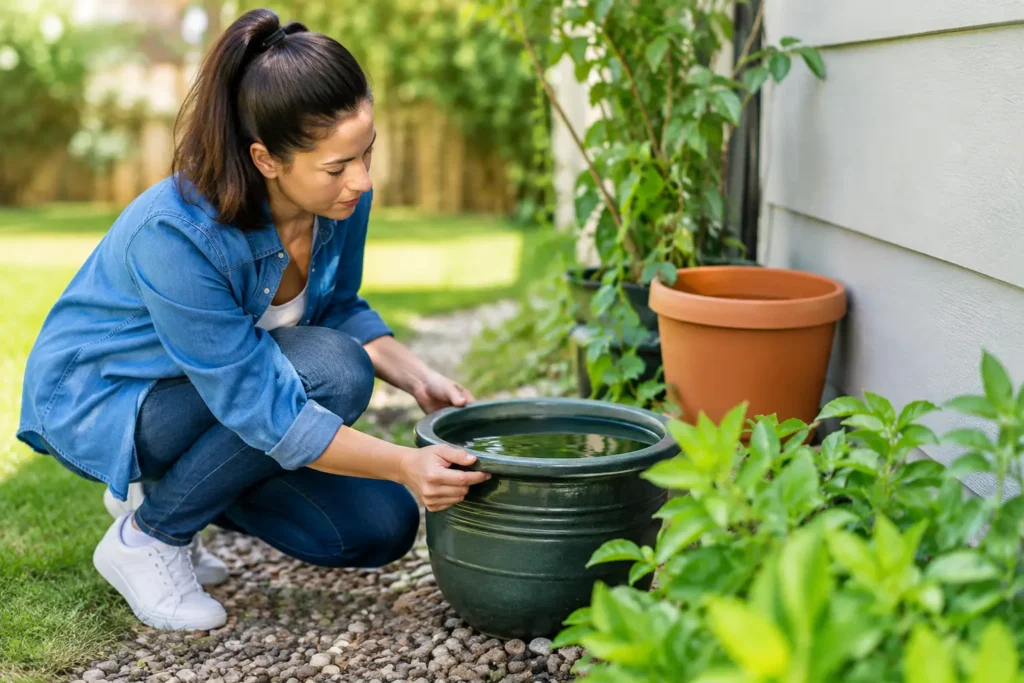
Start with items that can collect rainwater or irrigation runoff. Buckets, wheelbarrows, flowerpots, tarps, toys, trash can lids, outdoor furniture covers, and unused planters are frequent offenders. Empty them completely and turn them upside down when they are not being used.
Do not overlook plant saucers. They are easy to miss because they sit beneath healthy-looking plants, yet they can hold enough water for mosquito larvae. Empty saucers after watering, or consider using landscaping methods that do not require them. If you must keep a container outdoors, make sure it has drainage holes and is not collecting water in its base.
Keep gutters, drains, and irrigation areas flowing
Blocked gutters can hold water for days in a shaded location, creating an ideal mosquito habitat that is difficult to see from the ground. Clear leaves, roof debris, and sediment so water moves through the system properly. Check downspout extensions and drain outlets as well. If water pools at the end of a downspout, adjust grading or drainage so it disperses instead of collecting near the foundation.
Irrigation deserves the same attention. A broken sprinkler head, slow leak, or overwatered landscape bed can leave recurring puddles that mosquitoes use. Run each zone and watch for pooling. Repair leaks promptly, redirect spray away from paved areas, and adjust schedules to avoid oversaturation. This can also reduce water waste and protect landscaping.
Maintain pools, spas, fountains, and water features
A properly maintained swimming pool is not usually a mosquito breeding site. The concern begins when a pool is unused, poorly circulated, or left with untreated water. Keep filtration equipment running as recommended, maintain appropriate water chemistry, and remove leaves and debris that shelter larvae.
Spas should be covered and maintained when not in use. Decorative fountains and birdbaths need fresh movement or frequent water changes. Empty and refill birdbaths at least once a week, and clean their surfaces to remove organic buildup. For fountains, make sure the pump is working and water is circulating consistently.
Ponds require a more tailored solution. Draining a healthy pond is not always practical or beneficial. Instead, maintain circulation, manage excessive plant growth, and consult a licensed mosquito professional about appropriate larval control options that are designed for water features. The right method depends on the pond’s size, fish, wildlife, and how the water is used.
Cover and maintain water storage
Rain barrels, water tanks, and similar storage containers can be useful, but they need tightly fitted lids or fine mesh screening over openings. Mosquitoes can enter through surprisingly small gaps. Check screens for tears and make sure overflow outlets are protected.
Pet water bowls are another common question. Pets need fresh water, so the answer is not to remove the bowl. Instead, replace the water daily and scrub the bowl regularly. The same principle applies to outdoor livestock water containers and other necessary water sources: keep them clean, refreshed, and managed on a consistent schedule.
Look beyond the obvious containers
Some of the most persistent mosquito sources are hidden. Walk slowly around fences, shrubs, storage areas, and side yards. Look for discarded tires, corrugated drainage tubing, plastic sheeting, construction materials, unused grills, and areas where landscape fabric has sagged into a basin.
If your property has crawl space vents, basement drains, or utility boxes that collect water, investigate the cause rather than simply dumping the water once. A recurring source needs a lasting fix, such as improved drainage, repair work, or a professional inspection. Property managers should also inspect vacant units, common areas, dumpster enclosures, and maintenance yards, where stored materials can accumulate water without anyone noticing.
What to Do When You Find Mosquito Larvae
Mosquito larvae are small, wriggling organisms that move near the water’s surface. If you find them in a disposable source, empty the water onto dry ground where it will soak in, then scrub the container. Simply pouring out the water is helpful, but cleaning the sides removes eggs that may remain attached above the waterline.
For water that cannot be emptied, such as a pond, water barrel, or drainage feature, avoid guessing with household chemicals. Bleach, oils, and unapproved products can harm plants, pets, wildlife, and local waterways without solving the underlying problem. Use only products labeled for the specific setting and follow directions exactly, or bring in a licensed pest control professional to assess the site.
Adult mosquito sprays also have limits. They may provide short-term relief around patios, landscaping, or commercial outdoor areas, but spraying alone will not control mosquitoes if breeding sites remain active. The strongest mosquito program combines source reduction, targeted treatment when appropriate, and ongoing monitoring.
When Professional Mosquito Control Makes Sense
Some mosquito issues are simple to correct with weekly maintenance. Others point to a larger drainage, landscape, or neighborhood problem. Professional help is especially valuable when mosquitoes remain active despite removing standing water, when there is a neglected pool or large water feature, or when a commercial property needs a dependable prevention plan.
A trained technician can inspect areas that are easy to overlook, identify likely breeding conditions, and recommend treatment based on the property’s layout and activity. For families, tenants, employees, and customers, the right plan should prioritize safe, effective methods and practical prevention steps instead of relying on repeated one-time sprays.
At Impressive Exterminating, mosquito service can be tailored to the conditions around your home or business, including recurring breeding areas and high-use outdoor spaces. Fast action is especially useful before a backyard event, during a tenant complaint, or when mosquito activity suddenly increases after irrigation or rain.
A ten-minute weekly walk around your property can prevent a frustrating mosquito problem from taking hold. Start with the water you can see, then check the places you are most likely to forget. Consistent prevention gives you the best chance of enjoying your outdoor space with fewer bites and fewer surprises.