A mouse seen near the break room, ants crossing a reception counter, or flies circling the trash area can change how employees and visitors feel about an office fast — sometimes within a single afternoon. The best pest control for offices isn’t a generic monthly spray. It’s a fast, discreet, inspection-driven plan that removes the active problem and fixes the conditions that let pests inside to begin with.
For office managers, building owners, and business operators, the stakes go well beyond a single sighting. A pest problem left unaddressed can trigger tenant complaints, hurt online reviews, and in some cases create real health-code exposure. What you actually need is a clean, professional workplace, minimal disruption to daily operations, and a dependable way to prevent the problem from resurfacing — which means inspection-driven treatment paired with ongoing prevention, not a one-time reactive visit.
What Actually Makes Office Pest Control “The Best”
Office pest control works best when it combines immediate treatment with practical, ongoing prevention. A qualified technician should inspect more than just the spot where a pest was seen. Pests travel through wall voids, utility lines, ceiling spaces, shared hallways, loading areas, and gaps around doors — treating only the visible trail or nest often provides short-term relief while leaving the actual source completely untouched.
A strong commercial service starts by identifying the pest, the extent of activity, likely entry points, food and water sources, and any areas that could support nesting or breeding. Rodents might be entering through an exterior gap hidden behind equipment. Ants could be following moisture near a break room sink. Small flies often point to a drain issue, a trash problem, or overlooked organic buildup somewhere out of sight.
The right treatment also depends heavily on the type of office. A medical office, professional suite, school-adjacent facility, warehouse office, and shared coworking space each have different schedules, foot traffic patterns, and sanitation concerns. The best providers adapt the plan to the building instead of running the same generic treatment everywhere.
Start With a Thorough Office Inspection
A detailed inspection removes the guesswork. Before treatment begins, a pest professional should evaluate both interior and exterior conditions, paying close attention to kitchens, break rooms, restrooms, copy rooms, storage closets, janitorial areas, receiving doors, and dumpster locations — the areas that consistently generate the most activity in commercial buildings.
Inside, technicians look for droppings, rub marks, gnawing, insect trails, shed skins, nesting material, moisture, and gaps around plumbing or electrical penetrations. Outside, they check landscaping, drainage, trash storage, door sweeps, wall cracks, roofline access, and utility openings. These details matter because pests rarely stay confined to one obvious location — a rodent sighting in a break room might trace back to a gap on the opposite side of the building entirely.
For multi-tenant buildings, communication matters just as much as the inspection itself. A pest issue can move between suites or start in a shared area, so property managers should work with a provider that documents findings clearly and coordinates service without creating confusion — or alarm — for tenants who aren’t directly affected.
Match the Treatment to the Actual Pest Problem
The most effective office pest control plan is targeted, not generic. Different pests require different treatment methods, monitoring schedules, and prevention steps, so a single “spray everything” approach rarely solves the underlying issue.
Rodents and Mice
Rats and mice cause more than an unpleasant sighting — they can damage wiring, contaminate food-storage areas, leave droppings in supply closets, and create real concern among staff and customers who spot them. Effective rodent control includes locating entry points, placing secured traps or monitoring devices in appropriate areas, removing nesting opportunities, and recommending exclusion repairs to close the routes rodents are actually using.
Sealing gaps is one of the most valuable long-term rodent prevention steps a building can take, but exclusion alone rarely solves an active infestation on its own. A complete plan addresses the current population while closing the paths that would let new rodents in.
Ants, Cockroaches, and Other Crawling Insects
Ants are common in offices wherever crumbs, beverage spills, moisture, or accessible trash are present. Cockroaches tend to shelter behind appliances, in cabinets, around plumbing, and near cluttered storage. Silverfish often show up in areas with higher humidity and heavy paper storage.
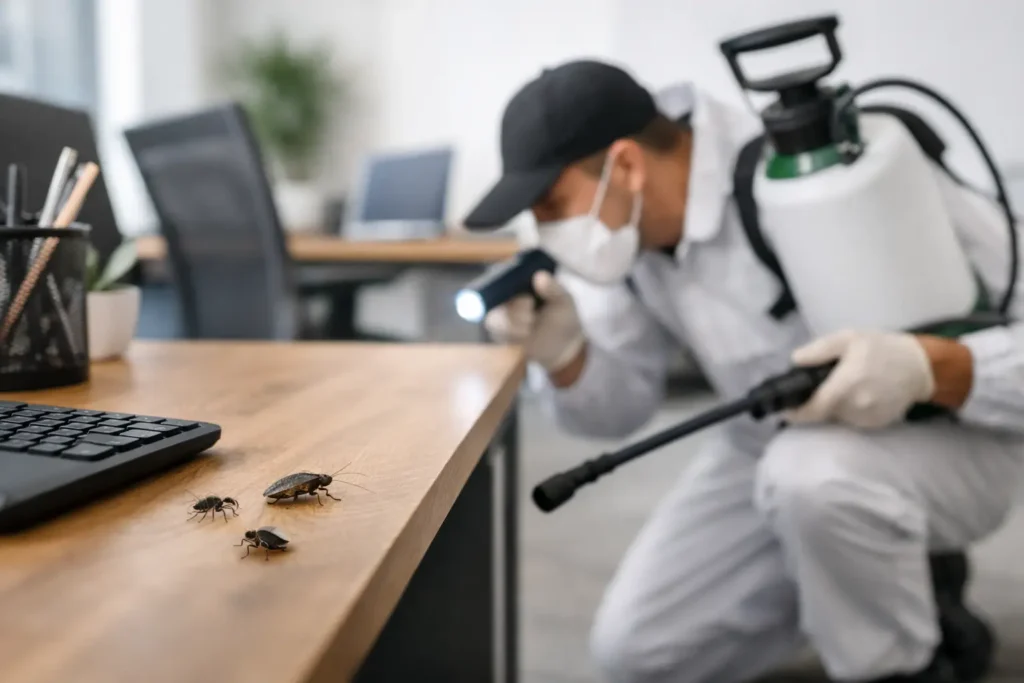
Treatment may involve carefully placed baits, crack-and-crevice applications, targeted residual products, and sanitation recommendations. Broad, visible spraying isn’t always the right call, particularly in occupied workspaces during business hours — targeted methods are often more effective while causing far less disruption to employees and daily operations.
Flies, Mosquitoes, and Occasional Invaders
Flies almost always signal an underlying source that needs attention — overflowing trash, a dirty drain, food residue, or standing moisture somewhere out of sight. Mosquito activity near entrances is frequently tied to standing water somewhere on the property. Spiders, wasps, and bees may call for exterior service focused on web removal, nesting sites, and protected entry areas around the building’s perimeter.
These problems are often seasonal, but waiting until they become highly visible tends to make them harder to manage. Regular exterior inspections help catch changing conditions early, before they start affecting the workplace itself.
Choose Safe, Low-Disruption Service
Office managers shouldn’t have to choose between pest control and a productive workday. Ask how treatments are scheduled, what areas need preparation, and whether staff need to avoid treated spaces for any period of time — a professional provider should explain this clearly before service ever begins.
Eco-friendly and integrated pest management (IPM) approaches focus on using the least invasive effective option for the situation, which can include monitoring, exclusion, sanitation improvements, habitat reduction, and targeted product use only when actually needed. Safe treatment doesn’t mean ignoring the infestation — it means using proven methods thoughtfully, matched to the specific pest and workplace conditions.
Discretion matters just as much for client-facing offices. Law firms, medical practices, retail offices, and other professional buildings need service handled respectfully and efficiently. Flexible scheduling reduces interruptions, and clear reporting gives managers the information they need without adding one more task to an already full day.
Prevention Is What Actually Keeps Pests From Returning
One-time service can be appropriate for a small, isolated problem. But offices with recurring pest pressure, shared walls, food areas, frequent deliveries, or nearby landscaping usually benefit from ongoing maintenance instead. Regular visits let technicians inspect monitoring devices, catch new conditions early, and respond before a minor issue becomes a full infestation.
Office staff play a real role in prevention too. A handful of consistent habits make a measurable difference: keeping food in sealed containers, emptying trash regularly, cleaning spills promptly, reporting leaks quickly, and avoiding long-term clutter buildup in storage rooms. None of this replaces professional treatment — but it makes professional treatment significantly more effective and longer-lasting.
Building maintenance matters equally. Repair loose door sweeps, seal openings around utility lines, address water leaks promptly, keep exterior trash areas clean, and avoid letting vegetation touch the building’s exterior walls. Pests are ultimately looking for three things — food, water, and shelter. Removing easy access to any one of those meaningfully reduces pressure on the whole property.
Questions to Ask Before Hiring an Office Pest Control Company
The lowest quote isn’t always the best value if it only covers a quick spray with no inspection, follow-up, or prevention plan attached. Before choosing a provider, ask whether the company is licensed and insured, how it identifies the actual source of an infestation, and what follow-up is included in the service.
Ask how service records are handled, too. Clear documentation is genuinely useful for property managers, tenant communication, internal facility records, and businesses that need to maintain health or cleanliness standards. A good provider should be able to explain exactly what was found, what was treated, what employees should do next, and when the area will be checked again — in plain language, not jargon.
Fast response matters as well. A single rodent sighting or cockroach report can escalate quickly if it sits unaddressed. Look for a local company that can assess the situation quickly and recommend a practical next step, rather than making you wait through an extended scheduling window while the problem grows.
When to Call for Professional Help
Call promptly if you see rodent droppings, gnaw marks, roaches during the day, repeated ant trails, insect activity spread across multiple rooms, wasp nests near entrances, or pests reappearing after prior treatment. Repeated sightings almost always mean the underlying condition hasn’t actually been corrected yet.
For offices across Los Angeles County and Orange County, Impressive Exterminating provides inspection-based commercial pest control built around the property, the pest, and how urgent the issue actually is. Whether you need help with an active infestation or reliable ongoing maintenance, a customized plan can protect your workplace without unnecessary disruption to your team or your clients.
A professional office should feel welcoming from the front door to the break room. If pests are starting to threaten that standard, scheduling an inspection early gives you more options, less disruption, and a much better chance of solving the problem before employees or customers ever notice it.
Frequently Asked Questions
How often should an office get professional pest control service?
It depends on the building’s pest pressure, but many offices benefit from monthly or quarterly visits rather than a single reactive treatment. Buildings with shared walls, food service areas, frequent deliveries, or a history of recurring activity typically need more frequent monitoring than a standalone office with minimal foot traffic.
What’s the difference between commercial pest control and residential pest control?
Commercial pest control has to account for factors residential service doesn’t — client-facing discretion, health code compliance, coordination across multiple tenants or suites, scheduling around business hours, and documentation that satisfies property management or health inspection requirements. The treatment methods overlap, but the planning and communication around them are significantly more involved.
Can pest control be done without disrupting the workday?
Yes, in most cases. Targeted methods like baiting, crack-and-crevice treatment, and exclusion work often don’t require broad spraying or staff to avoid the space for an extended period. A professional provider should explain scheduling and any prep needed clearly before service, so it can typically be scheduled around business hours with minimal disruption.
What attracts pests to office buildings specifically?
The same three things that attract pests anywhere: food, water, and shelter. In offices, that usually means break room crumbs and spills, standing moisture near sinks or drains, cluttered storage rooms that create hiding spots, and exterior gaps around doors, utility lines, or the roofline that provide easy access from outside.
Do I need pest control if I’ve only seen one bug or one mouse?
A single sighting doesn’t always mean a full infestation, but it’s worth an inspection rather than ignoring it — especially for rodents, since a single mouse sighting often means more are already present given how quickly they reproduce. An inspection can confirm whether it’s an isolated incident or an early sign of a larger issue.
What should be included in a commercial pest control contract?
Look for a clear inspection process, documentation of what’s found and treated, a defined follow-up schedule, and specifics on what happens if pests return between visits. Vague contracts that only promise “monthly service” without describing what that service actually includes tend to leave gaps in accountability.
How do multi-tenant office buildings handle pest problems that cross suites?
Pests can move through shared walls, ceiling spaces, and utility lines between tenant suites, so treatment often needs to extend beyond the unit where the problem was first reported. Property managers should work with a provider experienced in multi-tenant coordination — one that can inspect adjacent spaces and communicate findings clearly without causing unnecessary alarm among unaffected tenants.
Is eco-friendly pest control effective for office buildings?
Yes. Integrated Pest Management (IPM) approaches — which prioritize monitoring, exclusion, and sanitation alongside targeted product use — are generally well-suited to occupied office environments because they minimize broad chemical exposure for staff while still addressing the source of the problem, not just the visible symptom.