A single mouse dropping behind a stock shelf, a trail of ants near a break room sink, or a small gap beneath a loading door can turn into a costly business problem fast. A consistent commercial pest inspection checklist helps business owners and property managers find warning signs before pests affect customers, employees, inventory, or inspections.
For Southern California businesses, pest pressure can change quickly with heat, landscaping, construction activity, food waste, and seasonal moisture. The goal is not simply to find pests after they arrive. It is to identify the food, water, shelter, and entry points that make a commercial property attractive in the first place.
Start With the Right Inspection Routine
The right inspection schedule depends on your property type, operating hours, and risk level. A restaurant, grocery store, warehouse, medical office, apartment building, or childcare facility may need more frequent checks than a low-traffic professional office. Properties with dumpsters, receiving areas, shared walls, landscaping, or older utility penetrations also deserve closer attention.
For many businesses, a monthly professional inspection combined with brief weekly staff checks is a practical approach. Staff members do not need to identify every insect species. They should know how to report sightings, leaks, droppings, damaged packaging, unusual odors, and pest activity quickly.
Document each inspection. A clear record of what was found, where it was found, what action was taken, and when follow-up is needed gives management a reliable history. It also helps reveal patterns that a one-time inspection can miss.
Commercial Pest Inspection Checklist: Exterior Areas
Many commercial pest problems begin outside. Rodents, cockroaches, ants, spiders, mosquitoes, and other pests usually enter because the building offers an easy route inside or conditions that support them nearby.
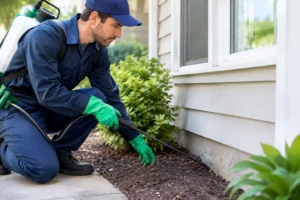
During an exterior inspection, check these areas carefully:
- Building foundations, exterior walls, rooflines, vents, and utility openings for cracks, gaps, damaged screens, or unsealed penetrations.
- Doors, loading docks, delivery entrances, and garage doors for worn sweeps, damaged seals, or gaps large enough for rodents and insects.
- Dumpsters, recycling stations, grease areas, and outdoor trash cans for loose lids, spills, buildup, or trash stored too close to the building.
- Landscaping, mulch, tree branches, planters, weeds, and ground cover that touch the structure or create harborage near walls.
- Standing water in drains, clogged gutters, irrigation areas, outdoor containers, or low spots that may support mosquito activity.
- Exterior lighting, especially near doors and windows, where insects gather and may attract spiders or enter when doors open.
Pay special attention to loading zones. Frequent deliveries mean frequent door openings, cardboard buildup, and hidden spaces where rodents and cockroaches can travel. Keeping the area clean and reporting damaged door seals promptly can prevent a small issue from becoming an active infestation.
Inspect Food, Water, and Storage Areas Indoors
Inside the building, focus on the conditions pests need to survive. Food debris, moisture, clutter, and undisturbed hiding places can support pest activity even in a well-maintained property.
Begin in break rooms, kitchens, food-prep spaces, vending areas, employee lockers, and janitorial closets. Look beneath sinks, behind appliances, around floor drains, and inside cabinets. Cockroaches often hide in warm, damp areas near motors, plumbing, and wall voids. Ants may appear around sugary spills, pet food, or water sources.
Check dry storage and inventory areas for torn packaging, webbing, droppings, insect activity, or products stored directly on the floor. Rotation matters. Older boxes and forgotten items create quiet harborage and make pest signs harder to spot. Keep inventory elevated where practical and leave enough space between stored goods and walls for cleaning and inspection.
Water issues deserve immediate attention. Leaking pipes, sweating refrigeration lines, slow drains, and wet mop heads can support pests long after a food spill is cleaned up. In commercial facilities, moisture control is often the difference between occasional pest sightings and repeated activity.
Look for Evidence, Not Just Live Pests
A professional inspection should never rely only on whether a live pest is visible that day. Many pests are active at night or remain hidden in wall voids, equipment, ceiling spaces, and storage areas.
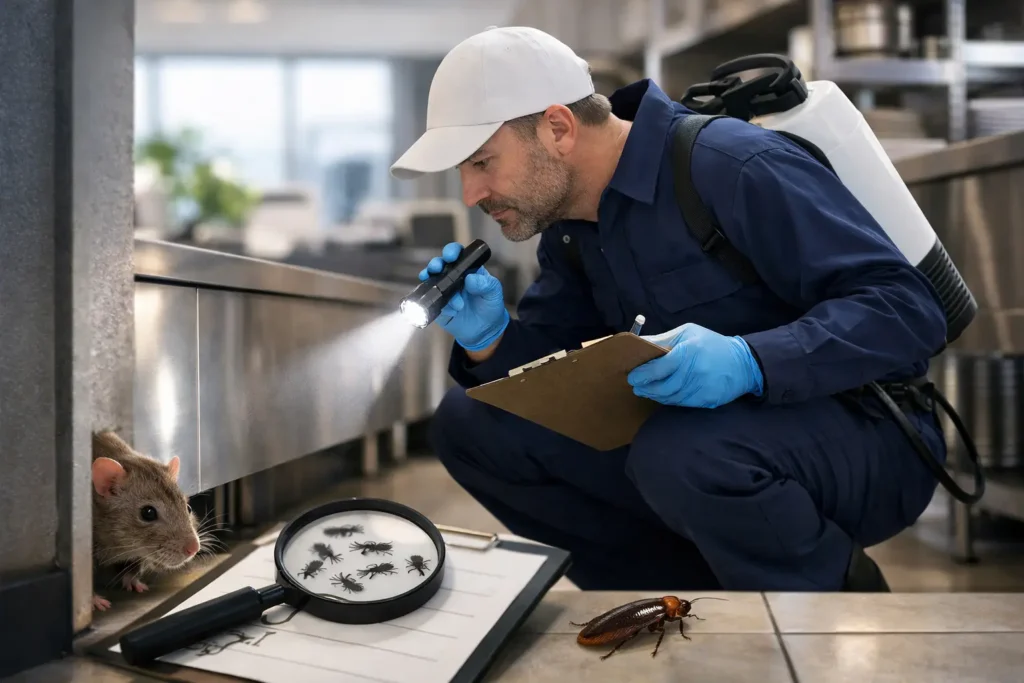
Look for evidence such as rodent droppings, gnaw marks, greasy rub marks along walls, shredded nesting material, insect cast skins, egg cases, wings, webbing, and unusual odors. Fresh rodent droppings are usually dark and soft, while older droppings tend to fade and dry out. The location matters as much as the amount. Signs concentrated near a wall, utility room, or receiving door can point to an active travel route.
For termites, inspect accessible wood, baseboards, window frames, utility areas, and exterior structures for mud tubes, damaged wood, discarded wings, or areas that sound hollow when tapped. Not every wood issue is termite damage, and not every pest sign indicates an active infestation. That is why a licensed pest professional should confirm the cause before treatment decisions are made.
Check High-Risk Areas by Business Type
Every commercial property has its own pressure points. A restaurant may need close attention around floor drains, grease areas, food deliveries, and kitchen equipment. A warehouse may need stronger rodent exclusion around dock doors, pallet storage, and exterior perimeter fencing.
Property managers should inspect trash rooms, laundry rooms, utility closets, vacant units, roof access areas, and shared plumbing lines. In offices, break rooms, ceiling voids, copy rooms, and employee food storage are common trouble spots. Retail businesses should watch receiving areas, fitting rooms, storage rooms, and product displays near exterior doors.
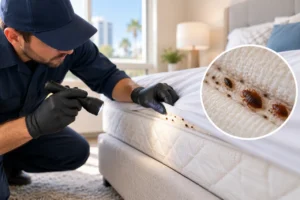
Bed bug concerns require a different approach. Hotels, multifamily properties, healthcare settings, and businesses with upholstered seating should respond quickly to reports of bites, blood spots, shed skins, or insects found around seams, cracks, and furniture joints. Avoid moving suspected items through the property until a professional has assessed the situation, since that can spread the problem.
Review Sanitation and Exclusion Practices
Treatment can reduce active pests, but long-term control depends on what happens between services. During each inspection, review whether daily operations are creating repeat opportunities for pests.
Ask whether trash is removed on schedule, food is stored in sealed containers, spills are cleaned promptly, cardboard is broken down regularly, and cleaning teams can reach behind equipment. Check whether doors are propped open, whether employees are feeding birds or animals near the building, and whether maintenance requests for leaks or damaged screens are being completed.
Exclusion is especially valuable for rodent control. Small openings around pipes, conduits, door frames, and roof penetrations can provide access. Sealing entry points is not always a one-day job, particularly on older or larger buildings, but it should be part of the pest management plan. Trapping without exclusion may reduce activity temporarily while leaving the original route open.
Record Findings and Set a Clear Response Plan
A useful inspection ends with action, not just a checklist. Record the date, inspector, pest signs found, affected areas, likely contributing conditions, corrective steps, and follow-up date. Photos can be helpful for tracking changes, especially around exterior gaps, water damage, or recurring storage issues.
Prioritize urgent findings first. Active rodent signs near food, cockroach activity in a kitchen, termite evidence, stinging insects near customer entrances, and bed bug reports require fast professional attention. Lower-level risks, such as a minor landscape issue or a door sweep beginning to wear, should still be scheduled for correction before they become larger problems.
A customized commercial pest control plan should combine inspection, targeted treatment, monitoring, sanitation guidance, and exclusion recommendations. The exact approach depends on the pest, the building, and the sensitivity of the environment. A daycare, restaurant, and warehouse should not receive the same generic service plan.
For businesses in Los Angeles County and Orange County, Impressive Exterminating provides inspection-driven pest management designed to address active problems quickly while helping prevent repeat activity. Safe, effective treatment and proactive monitoring give business owners one less operational risk to manage.
The best time to inspect is before a customer sees a pest, an employee files a complaint, or inventory is damaged. Put this checklist on a regular schedule, encourage fast reporting from your team, and address small conditions while they are still easy to fix.