A garage can look clean, stay closed most of the day, and still become the one place spiders keep returning. That is because garages offer what spiders need most: quiet corners, cluttered storage, insects to eat, and easy entry points around doors and utility lines. The best spider control for garages is not one spray or one web-removal session. It is a practical plan that removes the conditions drawing spiders in and keeps new activity from building back up.
For homeowners, landlords, and business owners, the goal is simple: make the garage less inviting to spiders without creating unnecessary risk for children, pets, tenants, or customers.
Why Spiders Settle Into Garages
Spiders do not usually enter a garage because the space is dirty. They enter because it is protected from weather and has reliable hiding places. Cardboard boxes, rarely moved tools, stacked firewood, shelving gaps, and dark corners create ideal harborage. Exterior lights can also attract moths, flies, and other insects, giving spiders a steady food source close to the building.
In Southern California, garage spider activity can continue through much of the year. Warm weather means insect activity rarely disappears completely, and open garage doors give pests a direct route indoors. A few webs near the corners may be a minor nuisance. Repeated webs, egg sacs, or spiders appearing around stored belongings point to a larger prevention issue.
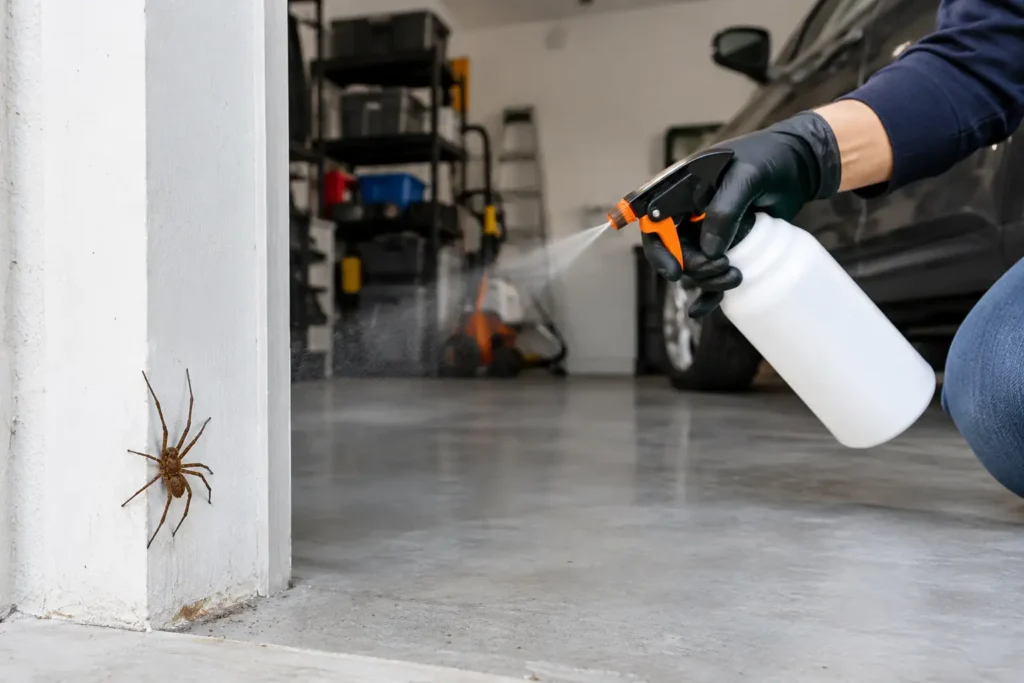
Some species are more than an inconvenience. Black widow spiders commonly prefer sheltered, undisturbed areas such as garages, sheds, woodpiles, and storage spaces. Their webs are often irregular and close to the ground, behind boxes, beneath shelves, or around outdoor equipment. Because bites can require medical attention, it is better not to reach into hidden spaces without looking first.
Best Spider Control for Garages Starts With Inspection
Effective control starts by identifying where spiders are active and why they are staying. A quick look at the center of the garage is not enough. Check along wall-floor junctions, behind stored items, around water heaters, near electrical panels, beneath workbenches, and at the corners of the garage door.
Look for webs, egg sacs, insect activity, and signs of access points. Common entry areas include worn weatherstripping, gaps at the bottom or sides of the garage door, damaged screens, cracks around pipes, and openings where cables enter the wall. If spiders can get inside, the insects they feed on often can too.
A professional inspection is especially helpful when activity is persistent, when black widows are suspected, or when the garage is part of a rental, multifamily, or commercial property. The right treatment depends on the species, the level of activity, how the space is used, and whether children, pets, or employees access the area.
Remove Webs, Egg Sacs, and Hiding Places
Physical removal is one of the fastest ways to reduce visible spider activity. Use a vacuum attachment or long-handled duster to remove webs from corners, ceiling edges, shelving, door tracks, and behind equipment. Vacuuming is preferable to simply knocking webs down because it also captures spiders and egg sacs when done carefully. Empty the vacuum outside promptly in a sealed bag.
This step matters because a garage with undisturbed webs signals a safe habitat. Removing them disrupts established activity and makes it easier to spot new webs later. It is not a complete solution by itself, but it is an important part of control.
Storage changes make a noticeable difference as well. Move boxes and stored items off the floor when possible, and leave a small gap between shelving and walls so hidden areas can be inspected. Plastic storage bins with secure lids are usually a better choice than cardboard, which absorbs moisture and provides more creases for insects and spiders to hide.
Be cautious with stored shoes, gloves, holiday decorations, sports gear, and tarps. Shake out items that have been sitting untouched before bringing them indoors or putting them on. If firewood is kept nearby, store it away from the garage and off the ground whenever practical.
Cut Off the Food Source
Spider control works better when insect control is part of the plan. A garage with crickets, roaches, flies, silverfish, or other small insects will continue to attract spiders, even after webs are removed. Treating spiders without addressing their food source can lead to a frustrating cycle of repeat activity.
Start by limiting moisture and food debris. Repair leaks around water heaters, washing machines, or exterior faucets. Keep trash containers closed, clean up spills, and avoid leaving pet food in the garage overnight. Sweep beneath shelving and work areas where dead insects and debris collect.
Outdoor lighting deserves attention too. Bright lights near the garage can attract insects after dark. When possible, use warm-toned bulbs, place lighting farther from entry doors, or use motion-activated fixtures. The goal is not to make the property dark or unsafe. It is to reduce the insect traffic that turns a garage into a feeding ground.
Seal the Openings That Let Spiders In
Exclusion is one of the best long-term spider control measures for garages. A treatment can reduce current activity, but sealing gaps helps prevent the next wave from entering.
Inspect the garage door seal first. If daylight is visible along the bottom or sides when the door is closed, pests have an access route. Replace worn bottom seals and damaged side weatherstripping. Add door sweeps to pedestrian doors, repair torn window screens, and seal smaller openings around utility penetrations with appropriate materials.
Not every crack should be sealed without thought. Garages need proper ventilation, and some openings may serve a building function. If you are unsure whether an opening can be closed safely, have a pest professional assess it rather than blocking vents or creating a moisture problem.
When Treatment Is Needed
For a light spider issue, cleaning, exclusion, and regular monitoring may be enough. For recurring webs, egg sacs, venomous spider concerns, or heavy insect activity, a targeted professional treatment is often the more dependable choice.
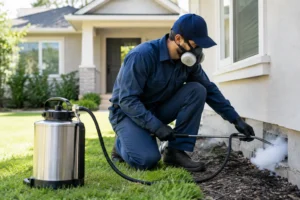
The safest effective approach is inspection-driven, not a one-size-fits-all spray. A licensed technician can treat active harborage areas, exterior entry zones, cracks, and other targeted locations while considering how the garage is used. This is especially valuable in homes with pets and children, as well as apartment communities, warehouses, offices, and businesses where people may enter the space throughout the day.
Avoid relying on foggers or applying large amounts of store-bought pesticide across the entire garage. These products may not reach the protected areas where spiders hide, can create unnecessary exposure, and do little to correct entry points or insect pressure. Sticky traps can help monitor activity along walls and behind storage, but they are best used as a supplement rather than the main solution.
Build a Maintenance Routine That Prevents Returns
A garage does not need constant attention to stay less attractive to spiders. A brief monthly check can catch conditions before they become a larger problem. Remove fresh webs, inspect door seals, check for moisture, and look behind items that have not been moved recently.
For properties with frequent pest activity, ongoing pest maintenance provides added protection. Regular service helps manage the insects spiders feed on, monitors new entry points, and keeps exterior pressure from moving inside. This is often a better value than waiting for a visible infestation to grow.
If you see black widows, repeated egg sacs, or spiders returning soon after cleaning, do not keep guessing at the cause. Impressive Exterminating can provide a fast inspection and a customized spider control plan designed to protect your garage and the people who use it. A safer garage starts with addressing the hidden corners before they become a bigger problem.