Finding a black widow spider near your garage, patio, or garden can be unsettling, especially if you have children or pets. In Southern California, these spiders commonly live around homes, where sheltered spaces, clutter, and insect activity provide suitable conditions.
The challenge is that black widow spiders in Southern California often hide in places homeowners rarely inspect. You might notice their irregular webs beneath outdoor furniture, near a storage shed, or around an exterior utility box without seeing the spider itself.
Knowing where to look, how to recognize potential warning signs, and what to do after finding a spider can help you reduce unnecessary risks around your property.
Where Do Black Widow Spiders in southern California Hide Around Homes?
Western black widow spiders (Latrodectus hesperus) are found throughout California. They generally prefer dark, dry, sheltered locations where they can build webs and remain undisturbed during the day. They are usually more common outdoors than in occupied indoor spaces.
Here are the places Southern California homeowners should inspect carefully.
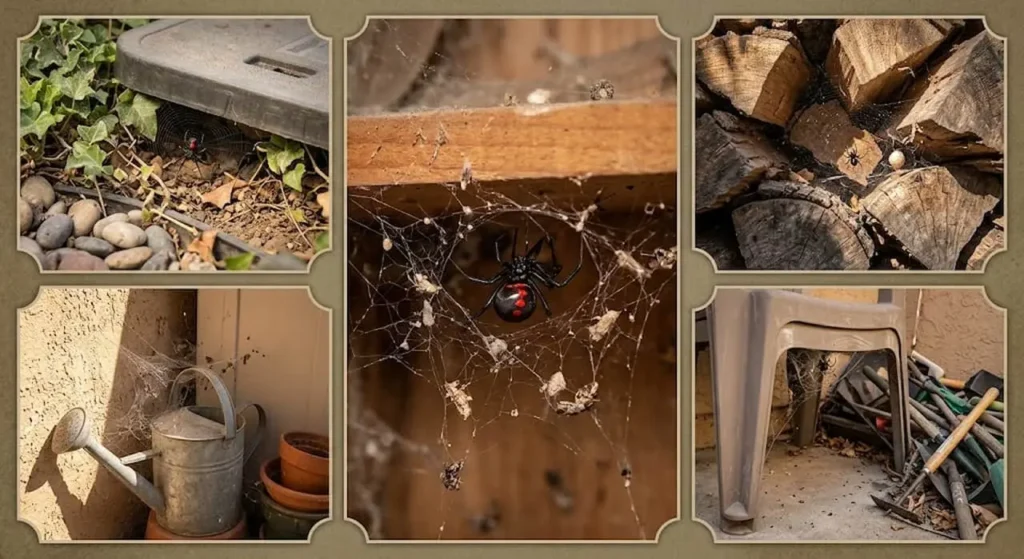
1. Garages and Storage Areas
Garages are among the most important places to check for black widow spiders. They provide sheltered corners, stored belongings, and relatively undisturbed spaces where spiders can establish webs.
Look around:
- Garage door tracks and nearby corners.
- Shelves containing cardboard boxes and seasonal decorations.
- Spaces behind stored equipment.
- Areas around vents, doorframes, and wall openings.
- Undisturbed shoes, gardening supplies, and outdoor gear.
What to do: Reduce clutter and move long-term storage into sealed plastic containers. Keep items off the floor when practical, and inspect them before handling. Wear gloves when moving stored belongings, but remember that gloves do not eliminate every risk.
2. Under Patio Furniture and Outdoor Seating
Patio chairs, outdoor sofas, picnic tables, and benches can provide ideal hiding places, particularly when their undersides contain protected gaps.
Homeowners sometimes discover webs beneath chair seats, along furniture frames, or around the joints of outdoor tables.
Before using furniture that has remained outside for a long time:
- Visually inspect the underside and corners.
- Check gaps and recessed areas without reaching inside blindly.
- Avoid placing your bare hands beneath seats or cushions.
- Keep furniture away from dense vegetation and accumulated debris.
If you repeatedly discover suspected black widows around your seating area, consider having the area professionally inspected before continuing to use it.
3. Woodpiles, Firewood and Stacked Materials
Firewood, lumber, bricks, and other stacked materials create sheltered spaces that spiders can use as retreats.
This is particularly relevant to properties with outdoor fireplaces, garden projects, sheds, or renovation materials.
To reduce the risk:
- Store firewood away from the house whenever possible.
- Keep woodpiles elevated and organized.
- Avoid reaching between logs without checking first.
- Remove unnecessary boards, cardboard, and construction debris.
- Inspect materials before carrying them indoors.
Important: Do not dismantle a suspected spider hiding place with bare hands. If you discover several spiders or egg sacs, leave the immediate area undisturbed and seek professional guidance.
4. Outdoor Utility Boxes and Foundation Gaps
Black widows can hide in protected holes and crevices around buildings. These include spaces near foundations, gaps around pipe penetrations, and certain exterior utility enclosures.
Homeowners may overlook these areas because they are low to the ground or partially concealed.
Check accessible areas around:
- Exterior wall openings and foundation cracks.
- Irrigation equipment and accessible utility enclosures.
- Gaps around pipes and cables.
- Exterior vents and sheltered wall recesses.
- Rock borders and retaining walls.
Never put your fingers into a dark opening to check whether a spider is present. Do not open electrical equipment or disturb utility installations to investigate a suspected hiding place.
Where structural gaps are contributing to pest entry, appropriate sealing and screening can help reduce access.
5. Sheds, Garden Equipment, and Outdoor Storage
Garden sheds and storage areas often contain everything black widows need: shelter, minimal disturbance, and access to insects.
Check the undersides of stored pots, garden tools, equipment frames, and seldom-used containers. Inspect corners near doors and vents, particularly where debris has accumulated.
Before using a shovel, moving a container, or picking up a forgotten gardening glove, inspect the item first.
Keep sheds organized and remove unnecessary clutter. Store gloves, shoes, and outdoor clothing in closed containers when practical.
6. Barbecue Grills, Trash Bins, and Outdoor Toys
Outdoor objects with sheltered undersides can become spider hiding places.
Pay particular attention to:
- Barbecue grill frames and protected recesses.
- The undersides and handles of outdoor trash bins.
- Children’s outdoor toys and play equipment.
- Pool equipment and storage containers.
- Patio decorations and objects that remain stationary for long periods.
These locations deserve additional attention when children regularly play outside or family members handle equipment without checking it.
Before moving an object, inspect its visible surfaces and accessible openings. Avoid reaching into concealed spaces.
7. Eaves, Window Frames and Exterior Corners
Although many black widows stay close to the ground, some establish retreats in elevated protected spaces, including eaves and exterior crevices.
Look for irregular, tangled webs around sheltered corners, window frames, vents, and other protected sections of the exterior.
Outdoor lighting can attract insects, which provide food for spiders. Where practical, position exterior lights away from doors and windows while maintaining adequate lighting for safe access.
Removing accessible webs and reducing insect activity can help make these locations less attractive. However, a web alone does not confirm that a black widow is present.
How to Recognize a Black Widow Spider
Correct identification matters because Southern California is home to several spider species, including the brown widow.
An adult female western black widow typically has:
- A shiny black body.
- A rounded, bulbous abdomen.
- A red or orange hourglass-shaped marking on the underside of the abdomen.
- An irregular, tangled web rather than a symmetrical circular web.
Juvenile black widows and males can look different from adult females, sometimes displaying lighter markings or banded patterns. Therefore, the absence of a familiar red hourglass does not automatically rule out a widow spider.
Brown widows also occur in Southern California. Their appearance and egg sacs can differ from those of black widows, so identification based on color alone can be unreliable.
If you are unsure which species you have found, do not handle it to examine its markings. Take a photograph from a safe distance if possible and ask a qualified pest professional for identification.
Also Check: Professional Spider Control Services
Are Black Widow Spiders Dangerous to People and Pets?
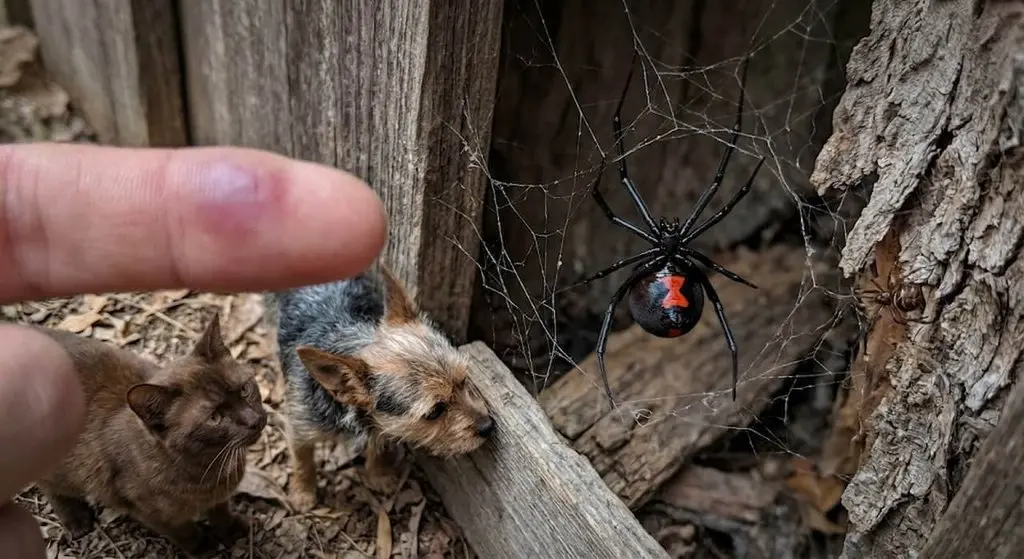
Black widows are venomous, and their bites can cause significant pain and other symptoms. However, they are generally reclusive rather than aggressive, and bites often occur when a spider is accidentally pressed against the skin or disturbed.
Possible symptoms include localized pain, muscle cramps, abdominal pain, sweating, nausea, and other systemic reactions. The severity varies, and symptoms should not be assessed from the bite’s appearance alone.
If you suspect a black widow bite:
- Move away from the spider and remain as calm as possible.
- Seek prompt medical advice or contact Poison Control for guidance.
- Obtain emergency medical assistance for severe pain, significant muscle cramping, breathing difficulties, or other serious symptoms.
- Do not attempt to catch the spider with your hands.
In the United States, Poison Control is available at 1-800-222-1222. Call 911 for a medical emergency.
If you suspect your pet has been bitten, contact a veterinarian promptly, particularly if you notice pain, unusual agitation, muscle tremors, vomiting, or weakness.
Households with young children, older adults, or pets should pay particular attention to suspected black widow activity around play areas, storage spaces, and outdoor seating.
How to Reduce Black Widow Spiders Around Your Home
Finding a spider does not necessarily mean your property has an infestation. However, repeated sightings can indicate that suitable hiding places and food sources are available.
These steps can help reduce the likelihood of recurring activity.
Remove Hiding Places
Clear unnecessary clutter around garages, sheds, patios, and foundations. Keep stored items organized and avoid leaving equipment undisturbed for long periods.
Trim vegetation that touches the building and move accumulated debris away from exterior walls.
Inspect Before Moving Stored Items
Wear gloves when working with firewood, gardening equipment, and long-stored belongings. Inspect shoes, gloves, and outdoor equipment before use.
Avoid reaching into dark gaps or lifting objects without checking the areas underneath.
Seal Suitable Entry Points
Repair damaged screens and door sweeps. Seal appropriate cracks around foundations, windows, and utility penetrations without blocking ventilation openings that need to remain functional.
These measures can reduce opportunities for spiders and other insects to enter your home.
Reduce Insects Around the Property
Black widows feed on insects and other small arthropods. Reducing the insects attracted to your property may make the area less favorable for spiders.
Keep outdoor trash secured, clean up food debris, address unnecessary moisture, and adjust exterior lighting where practical.
Remove Accessible Webs Carefully
Use a suitable long-handled tool to remove accessible webs without placing your hands near the spider. Avoid disturbing a suspected black widow or egg sac.
Do not climb ladders or reach into confined spaces to remove webs in areas where you cannot safely see what is present.
For additional prevention guidance, read our guide on how to prevent spider infestations at home.
When Should You Call a Professional for Black Widow Spider Control?
DIY prevention can help when spider activity is occasional and limited to accessible outdoor areas. However, professional assistance may be appropriate if you repeatedly find suspected black widows, discover multiple egg sacs, or encounter spiders around areas frequently used by children and pets.
Consider professional help when:
- Spiders repeatedly appear in garages, sheds, or outdoor seating areas.
- Webs and suspected egg sacs return after cleanup.
- Several hiding places are difficult to access safely.
- You cannot confidently identify the spider.
- Spider activity continues despite reducing clutter and sealing suitable gaps.
Impressive Exterminating Pest Control provides residential and commercial pest management across Los Angeles County and Orange County. Its approach includes identifying pest activity, addressing contributing conditions, and recommending appropriate treatment and prevention.
Explore our spider control services for help managing recurring spider activity.
If other pests are contributing to the problem, our and general pest control services can help address other pest concerns around your property. You can also learn about professional versus DIY mosquito control to understand the differences between household prevention and professional pest management.
The appropriate treatment depends on the species, the location of the activity, and the conditions supporting it. A professional inspection can help determine which measures are suitable for your property.
Frequently Asked Questions
1. Where are black widow spiders most commonly found in Southern California?
Black widows commonly hide in sheltered outdoor locations, including garages, woodpiles, sheds, foundation crevices, and protected spaces around exterior structures. They may also be found beneath outdoor furniture and around stored equipment.
2. Do black widow spiders come inside houses?
They can enter homes, but they generally prefer protected outdoor areas. Indoor sightings may occur around garages, storage spaces, closets, or other undisturbed locations. Seal appropriate openings and reduce clutter to make your home less attractive to spiders.
3. What time of day are black widow spiders most active?
Black widows are primarily nocturnal. They often remain hidden during daylight and become more active at night, when they may occupy their webs to catch prey.
4. How can I tell if a spider web belongs to a black widow?
Black widow webs are typically irregular, tangled, and made of relatively strong silk. The spider may hide in a protected retreat connected to the web. Web appearance alone cannot confirm the species, so avoid handling the spider for identification.
5. Do black widow spiders lay eggs around homes?
Yes. Female black widows produce egg sacs that may be found in protected retreats near their webs. Western black widow egg sacs are generally smooth, rounded or teardrop-shaped, and pale yellow to light tan. Avoid touching suspected egg sacs, especially when the spider is nearby.
6. Will removing spider webs prevent black widows from returning?
Removing accessible webs can help, but it may not prevent future activity by itself. Other spiders can build new webs, and black widows may return if sheltered spaces and food sources remain available. Combine cleanup with clutter reduction, suitable sealing, and regular inspections.
7. Are black widows common in Los Angeles and Orange County?
Western black widows are widespread throughout California, including Southern California. Their presence varies by property and habitat, but sheltered outdoor spaces around homes can provide suitable conditions.
8. When should I seek professional black widow spider control?
Consider professional service if you repeatedly find suspected black widows, encounter multiple egg sacs, or discover spiders in difficult-to-access areas. Professional assessment is especially useful when activity occurs near frequently used patios, play areas, or storage spaces.
Protect Your Home From Black Widow Spiders
You do not need to eliminate every spider outdoors to make your property safer. The priority is to reduce suitable hiding places, identify concerning activity, and prevent accidental contact in areas your family uses regularly.
If black widow spiders kee
p appearing around your garage, patio, shed, or foundation, Impressive Exterminating Pest Control can help you assess the problem and determine appropriate next steps.
Serving Los Angeles County and Orange County, the company offers customized pest control for residential and commercial properties.
Contact Impressive Exterminating Pest Control to discuss your spider problem and arrange a professional inspection.