A termite problem in one unit can quickly become a building concern. So, can termites spread through apartments? Yes. Termites can move through connected framing, wall voids, utility openings, foundations, and shared exterior features. Seeing signs in a neighboring apartment does not prove they are already in yours, but it does mean the property should be inspected promptly.
For apartment residents, the biggest priority is reporting possible termite activity early. For owners and property managers, the priority is identifying the extent of the activity before damage and treatment costs grow. A fast, professional inspection gives everyone clearer answers and helps protect the entire property.
How termites move between apartment units
Apartments may have separate living spaces, but termites do not recognize unit boundaries. Many buildings share structural wood, plumbing routes, electrical penetrations, attic areas, crawl spaces, exterior trim, fences, decks, and landscape features. These connections can give termites a route from one area to another.
Subterranean termites are especially capable of traveling unseen. They live in the soil and build protected mud tubes to reach wood above ground. In a multi-unit building, they may enter through cracks around the foundation, expansion joints, plumbing lines, or slab openings, then feed behind walls or beneath flooring. One colony can forage across a large area, so activity found in one ground-floor unit may be connected to damage elsewhere in the building.
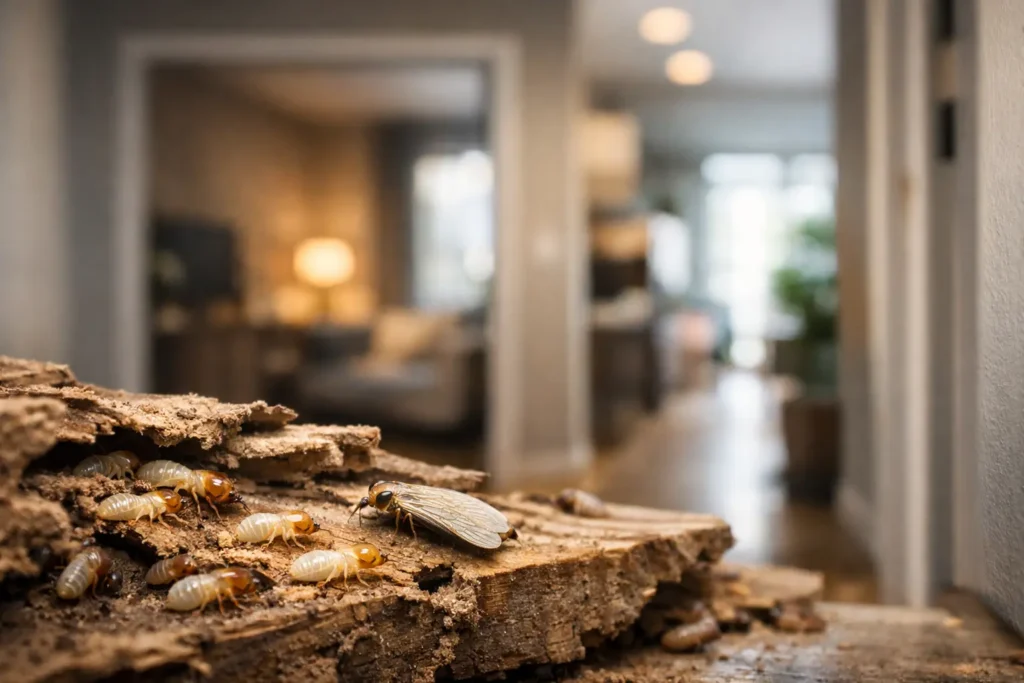
Drywood termites behave differently. They live inside the wood they infest and do not need contact with soil. They can spread when winged reproductive termites, often called swarmers, leave an established colony and find another suitable wood source nearby. In apartments, that may mean another section of shared framing, attic lumber, a door frame, or exterior fascia.
This is why treating only the visibly affected spot is not always enough. The right scope depends on the termite species, building design, extent of damage, and evidence found during inspection.
Signs termites may be active in your apartment
Termites are often difficult to spot because they feed inside wood, walls, and other hidden areas. Waiting for obvious damage can allow the problem to continue longer than necessary. Tenants and managers should take the following signs seriously:
- Small piles of pellet-like droppings near windows, baseboards, door frames, or furniture. These can indicate drywood termites.
- Thin mud tubes on foundation walls, garage walls, crawl spaces, plumbing penetrations, or exterior surfaces. These are commonly associated with subterranean termites.
- Swarming insects with equal-length wings, or piles of shed wings near windows and light fixtures.
- Wood that sounds hollow when tapped, feels soft, bubbles under paint, or appears cracked without an obvious moisture issue.
- Doors or windows that suddenly stick, although humidity and normal settling can also cause this.
A few discarded wings do not automatically mean there is an active infestation inside the unit. Swarmers can enter from outdoors, especially during termite swarming season. Still, they should be documented and reported. A trained termite professional can distinguish termites from flying ants and determine whether the evidence points to an active colony.
What tenants should do when they suspect termites
Tenants should notify the landlord, property manager, or maintenance contact in writing as soon as they notice possible termite signs. Include the date, the exact location, and clear photos when possible. This creates a record and helps management relay useful information to the inspection team.
Avoid spraying household insecticide into holes, cracks, or visible termite tubes. Store-bought products rarely reach the colony, and they can disturb termites enough to make activity harder to track. Do not knock down mud tubes before an inspection unless a professional instructs you to do so. Those tubes can help identify where termites are traveling.
It is also wise to move personal items away from visibly damaged areas, especially if wood is crumbling or a ceiling, cabinet, or floor feels unstable. Tenants should not attempt repairs themselves. Termite damage can be hidden, and opening walls or removing trim may spread debris or create avoidable safety issues.
In California, responsibility for termite treatment and repairs can depend on the lease terms, the property condition, and applicable housing requirements. Regardless of who arranges service, prompt communication is the practical first step. Termites are a property-wide issue, not something a tenant should be expected to solve alone.
What property managers and owners need to check
When termites are reported in one apartment, a professional inspection should look beyond that individual room. Connected units may need to be evaluated, along with shared walls, attic and crawl-space access, garages, exterior wood, foundation areas, plumbing locations, and common spaces.
The inspection should answer three questions: What type of termite is present? Is the activity active? How far may it extend? Those answers shape the treatment plan. A localized drywood termite issue may be addressed with targeted treatment in some cases. Widespread drywood activity across multiple structural areas may call for a larger treatment approach, including fumigation when appropriate.
Subterranean termites often require soil and structural treatment designed to stop access from below and protect vulnerable areas. Moisture correction may also be part of the solution. Leaking pipes, poor drainage, irrigation overspray, and wood-to-soil contact do not create termites, but they can make a property more attractive and allow damage to continue unnoticed.
Managers should also communicate clearly with residents. Let affected tenants know when inspections are scheduled, what access is needed, whether preparation is required, and whom to contact with questions. Good coordination reduces delays and helps prevent residents from accidentally interfering with treatment.
Why apartment termite treatment is not one-size-fits-all
The fastest option is not always the right option. Treating a single unit may be practical when inspection confirms a small, isolated problem. On the other hand, a building-wide strategy may be more cost-effective when colonies have access to shared structural pathways or when multiple units show evidence.
Fumigation can be highly effective for widespread drywood termites, but it requires careful preparation and temporary vacancy. Localized treatment can limit disruption, yet it may not be suitable if termite activity is concealed across many areas. Subterranean treatments can provide strong protection, but they must be planned around the building’s foundation, landscaping, utilities, and access points.
A licensed professional should explain the findings, the recommended treatment area, preparation requirements, and prevention steps in plain language. That lets owners make an informed decision while giving tenants realistic expectations about timing and access.
Preventing termites from moving through a multi-unit property
Prevention is not a replacement for treatment when termites are active, but it is essential after the immediate issue is resolved. Regular inspections are especially valuable for older apartment buildings and properties with wood siding, crawl spaces, aging plumbing, or dense landscaping near the structure.
Keep soil and mulch below siding and exterior wood. Repair water leaks quickly, direct irrigation away from the building, and maintain gutters and drainage so water does not collect near the foundation. Store firewood, lumber, and cardboard away from exterior walls. Exterior trim, balconies, fences, and decks should be checked for deterioration before termites can use damaged wood as an entry point.
For properties in Los Angeles County and Orange County, proactive termite inspections can be particularly useful because termite activity is common in Southern California’s mild climate. A prevention plan tailored to the building is more dependable than reacting only after residents see swarmers or damage.
When to schedule a termite inspection
Schedule an inspection quickly if you find mud tubes, droppings that resemble tiny pellets, swarmers, shed wings, or unexplained wood damage. It is also smart to call after a neighboring unit is confirmed to have termites, even if your apartment has no visible signs. Early inspection can separate a contained issue from a developing building-wide problem.
Impressive Exterminating can assess termite concerns, identify the likely source of activity, and recommend a safe, effective treatment plan for apartments and multi-unit properties. Quick action protects the structure, helps limit disruption for tenants, and gives everyone confidence that the problem is being handled properly.
A termite concern should not turn into weeks of uncertainty. Report the evidence, preserve the area for inspection, and get a qualified professional involved before hidden damage has more time to grow.