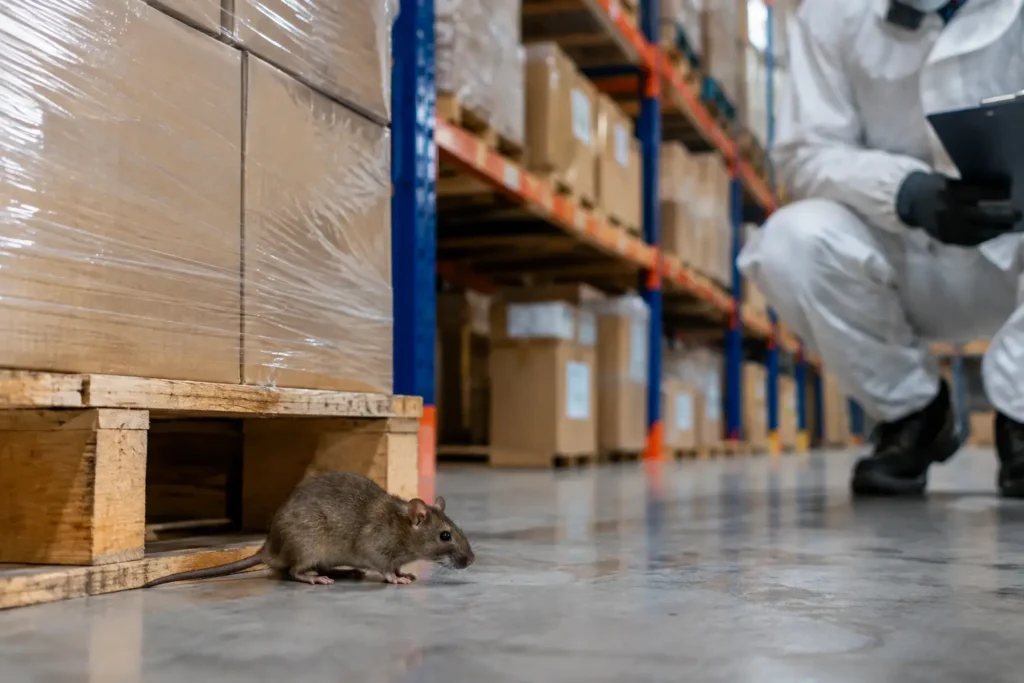
A warehouse rodent outbreak is not a problem that can wait for the next maintenance cycle. A few droppings near a loading dock, gnawed packaging in a storage aisle, or a rat seen after hours can quickly become damaged inventory, failed inspections, employee concerns, and interrupted operations. Fast action protects your products, your facility, and the trust your customers place in your business.
Warehouses give rodents exactly what they need: shelter, warmth, hiding places, food sources, and frequent access through open doors and delivery areas. In Southern California, rodent pressure can continue throughout the year, especially around commercial properties with nearby construction, landscaping, restaurants, or shared walls. The right response is not simply placing a few traps. It is finding how rodents got in, reducing what keeps them there, and monitoring the building until activity is controlled.
Why a Warehouse Rodent Outbreak Escalates Fast
Rodents are skilled at staying out of sight. Mice can enter through gaps as small as a dime, while rats can squeeze through surprisingly small openings around utility lines, dock doors, vents, and damaged exterior walls. By the time employees spot one during a shift, there may already be established activity in racking, wall voids, ceiling spaces, pallets, or break areas.
A busy warehouse can make the problem harder to detect. Constant deliveries bring in pallets, cardboard, and packaging that create temporary nesting material and concealment. Roll-up doors may remain open for long periods, and product spills can go unnoticed beneath racks. Rodents also travel along walls and protected edges, so activity in one corner of the building may signal a broader route through the facility.
The business impact goes beyond visible damage. Rodents can contaminate food products, packaging, and employee areas with droppings and urine. They chew wiring, insulation, and plastic, creating safety concerns and potential equipment failures. For facilities handling food, beverages, pharmaceuticals, pet products, or sensitive inventory, even a small incident can create serious compliance and reputation risks.
Signs Your Facility Needs Immediate Rodent Control
One sighting should be taken seriously, but it is not the only warning sign. Fresh droppings are often the clearest indicator of current activity. Dark, moist droppings generally suggest recent activity, while older droppings may look dry and gray. Gnaw marks on boxes, bite marks on cables, shredded paper, greasy rub marks along walls, and a stale odor in enclosed areas can also point to an active infestation.
Listen for scratching or movement in walls and above ceilings, particularly early in the morning, after closing, or during quiet periods. Employees may also report unexplained product damage or see tracks in dust near receiving areas. Keep these reports organized instead of treating them as isolated incidents. A simple log with the date, location, evidence, and any rodent sightings helps identify patterns and speeds up professional inspection.
If your warehouse handles regulated goods, do not move or discard potentially affected inventory without following your internal safety and quality procedures. Isolate the area, document what was found, and involve the appropriate manager. The correct response depends on the type of products stored and the level of contamination risk.
What to Do in the First 24 Hours
Start by limiting access to the affected area without stopping essential operations unnecessarily. Remove exposed food, employee snacks, standing water, and accessible waste. Inspect nearby pallets and lower storage locations for droppings, chew damage, or nesting material. Avoid sweeping or vacuuming dry rodent droppings, which can stir contaminated particles into the air. Use appropriate protective equipment and follow safe cleanup procedures.
Next, inspect the exterior and the operational weak points that rodents use most often. Loading docks, roll-up doors, pedestrian doors, trash enclosures, roofline gaps, plumbing penetrations, utility conduits, and damaged weather stripping deserve immediate attention. A door that does not close flush with the ground can provide an open invitation every night.
Notify your warehouse team of the issue and establish a clear reporting process. Staff should know not to handle rodent droppings casually, move traps without authorization, or leave food at workstations. This is not about blaming employees. It is about making sure everyone understands how their daily routines affect pest pressure.
Then schedule a professional inspection as soon as possible. Commercial rodent control should be customized to the facility, its inventory, its traffic flow, and any industry-specific requirements. A licensed pest professional can identify entry points, determine whether mice or rats are involved, place control devices strategically, and build a treatment plan that protects people and products.
Effective Warehouse Rodent Control Requires More Than Traps
Traps and monitored bait stations can be useful tools, but they work best as part of a complete program. A warehouse with open access points, cluttered storage, and available food will continue attracting rodents even after initial activity drops. Long-term protection requires exclusion, sanitation, targeted treatment, and ongoing monitoring.
Seal Entry Points Before Rodents Re-Enter
Exclusion is often the most valuable part of commercial rodent prevention. Repair gaps around pipes, doors, roof penetrations, vents, and wall joints with durable materials that rodents cannot easily chew through. Install or replace door sweeps, repair dock seals, and make sure roll-up doors close properly.
Some repairs may require coordination with a property owner, facilities team, or contractor. Do not let that delay the pest-control response. Temporary controls can reduce current activity while permanent repairs are scheduled, but the entry points still need to be addressed for lasting results.
Improve Storage and Sanitation Practices
Good warehouse housekeeping makes a major difference, though it is not a substitute for professional treatment. Keep pallets elevated and, where practical, leave enough space between stored goods and walls for inspection and cleaning. Rotate inventory, remove damaged cardboard promptly, and clean product spills quickly.
Outdoor conditions matter too. Keep dumpsters closed, manage overflow waste, and reduce dense vegetation or clutter close to the building. Rodents often use exterior storage, stacked pallets, and overgrown areas as cover before entering a facility.
Use Professional Monitoring and Documentation
Commercial facilities benefit from scheduled inspections and documented monitoring. Control devices should be placed based on rodent travel patterns and facility conditions, not randomly throughout the building. Regular service lets a technician track activity, adjust the plan, identify new vulnerabilities, and verify whether corrective actions are working.
The frequency of service depends on the severity of the outbreak, the size of the warehouse, the type of goods stored, and the surrounding environment. A small facility with a single entry issue may need a focused treatment and follow-up. A large distribution center, food-related operation, or property with ongoing exterior pressure may need a more frequent maintenance program.
Protect Employees, Inventory, and Operations
A fast response should also be a safe one. In occupied commercial settings, treatment methods must be selected and managed carefully. The goal is to control rodents without creating unnecessary risk for employees, visitors, pets in pet-product facilities, or sensitive inventory.
Your pest control provider should communicate clearly about device locations, service findings, sanitation recommendations, and needed exclusion work. That visibility helps managers make decisions quickly and gives employees confidence that the problem is being handled professionally. It also creates useful records for internal quality programs, tenant communication, and inspection readiness.
For property managers, rodent control may need to extend beyond one warehouse suite. Shared trash areas, common utility routes, neighboring businesses, and exterior landscaping can all affect results. Addressing only the unit where rodents were first seen may reduce symptoms without eliminating the source.
When to Call for Professional Help
Call immediately if you find fresh droppings in product areas, see rodents during daytime hours, discover gnawed electrical wiring, or notice recurring signs after do-it-yourself trapping. Daytime sightings can indicate heavier activity because rodents are being pushed out of their normal hiding areas.
Impressive Exterminating provides inspection-driven commercial rodent control for businesses across Los Angeles County and Orange County. A professional assessment can pinpoint the source of activity, recommend safe and effective treatment, and create a prevention plan that fits your facility’s operations.
The best time to act is when the first warning sign appears, not after damaged inventory and repeat sightings force a larger shutdown. Treat rodent control as part of facility protection, and your warehouse will be better prepared to stay clean, compliant, and open for business.