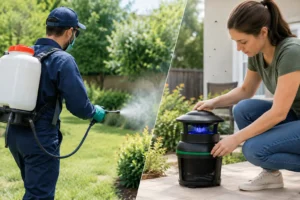
If you’ve searched “do termite bait stations really work,” you’ve probably run into two very different answers. Some pest control forums swear by liquid termiticide barriers. Others point to university research showing bait systems can eliminate entire colonies that liquid treatments miss. The honest answer is: it depends on your property, your termite species, and how the system is monitored — and that’s exactly what this termite baiting systems review breaks down.
A termite colony can feed beneath a Southern California property for months before anyone notices a damaged baseboard, bubbling paint, or a swarm of winged termites near a porch light. So the real question isn’t “which brand of bait is best.” It’s whether a system can actually find the colony, disrupt it at the source, and keep monitoring the property so a new colony doesn’t move in unnoticed.
For many homes and commercial buildings across Los Angeles and Orange County, baiting is a smart piece of a complete termite control plan. It isn’t always the fastest fix for active, widespread damage, and it’s not a substitute for a real inspection. Used in the right situation, though, it’s a targeted, low-disruption way to deal with subterranean termites at the source.
How Termite Baiting Systems Actually Work
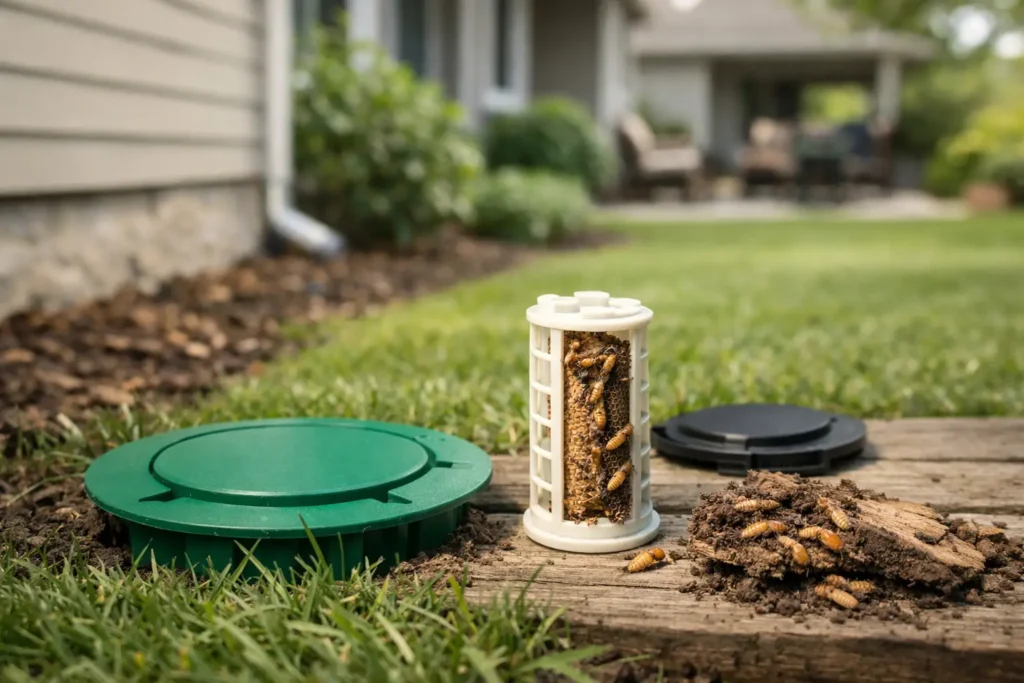
Termite bait stations are installed in the soil around a structure, typically near likely entry points such as foundation corners, downspouts, and known moisture areas. At first, each station holds a monitoring material that termites may discover while foraging underground. Once a technician confirms activity, the monitor is swapped for an actual bait cartridge that termites carry back into the colony.
The active ingredient is designed to interfere with a termite’s ability to molt and grow. Because affected termites don’t die on contact, they keep feeding and sharing the bait with nestmates before symptoms appear. That delay is the entire point of the system — it isn’t built to kill only the termites that wander into one station. It’s built to work backward into the colony feeding the damage.
That takes patience. Termites have to find the station, feed, and carry the bait home. Depending on termite pressure, weather, soil type, and colony size, meaningful results can take anywhere from a few weeks to several months. Any provider promising an overnight colony wipeout with bait alone isn’t giving you a realistic picture.
Termite Bait vs. Liquid Treatment: What the Research Actually Shows
This comparison comes up constantly in homeowner forums, and it’s worth addressing directly instead of dodging it. University of Florida entomology research on Formosan and Asian subterranean termites — species known for very large colonies — found that liquid termiticide barriers often affect only a fraction of a colony. Termites that die near a treated zone can pile up and cause the rest of the colony to simply reroute around it, leaving the nest itself untouched. Bait systems, by contrast, can reach and reduce a colony no matter how far the nest sits from the treated area, because the termites themselves carry the bait home.
That doesn’t make bait automatically superior in every situation. Veteran technicians will point out real counterexamples: a monitoring station sitting quietly in the yard while termites are actively tunneling up through a plumbing penetration on the opposite side of the house. Bait stations don’t attract termites from a distance — they only work if termites happen to forage near them. A liquid treatment creates a continuous barrier around the structure’s perimeter, which can stop termites from entering at all, including through entry points a station never sees.
The practical takeaway: baiting tends to outperform liquid barriers against large, established colonies over the long term, especially when combined with ongoing monitoring. Liquid treatment tends to outperform baiting when there’s a specific, known access point that needs an immediate, physical barrier. Many Southern California properties benefit from a combination of both, decided by an actual inspection rather than a one-size-fits-all sales pitch.
Where Baiting Performs Well
Low-disruption properties. Baiting is especially useful when owners want to avoid drilling or trenching around landscaping, patios, walkways, or hardscape. Stations sit in the soil, so installation is typically low-disruption for tenants, children, pets, or daily business operations when handled by a licensed professional.
Recurring termite pressure. Southern California’s mild year-round climate keeps subterranean termites active for long stretches of the year. An ongoing bait program gives a technician repeated chances to catch foraging termites before damage becomes visible indoors.
Colony-level control. A localized spot treatment can wipe out termites in one visible area without touching the colony feeding elsewhere. When termites are actively consuming bait, the system has a real chance to affect the broader population — not just the visible symptom.
Where Baiting Has Real Limitations
Bait stations don’t function like a chemical barrier. If termites are actively feeding somewhere else on the property, or if they have abundant natural food sources nearby (stumps, mulch, woodpiles), they may not find a station as quickly as an owner would like.
Baiting also requires a genuine long-term service commitment. Stations need scheduled inspection, replenishment, and accessibility. A buried station that’s never checked isn’t protection — it’s a false sense of security. This is why the quality of the monitoring plan matters just as much as the bait itself.
Finally, baiting usually isn’t the right stand-alone response when an inspection turns up severe active damage, termites in easily accessible structural wood, or conditions that call for immediate localized control. In those cases, a combination of targeted treatment, wood repair guidance, moisture correction, and exterior bait monitoring typically delivers a more dependable result than bait alone.
What to Ask Before Choosing a Baiting Plan
A dependable provider should start with a detailed inspection — not an immediate sales pitch. The technician needs to confirm whether you’re dealing with subterranean termites, drywood termites, old damage, or something else entirely. Bait stations are built for subterranean termites and are not the primary answer for drywood termites, which live entirely inside dry wood rather than foraging through soil.
Before signing anything, ask:
- How often will stations actually be inspected, and by whom?
- What happens the moment termites are found in a station?
- Is bait replacement included, or billed separately?
- How is activity documented over time?
- What does the warranty cover — station monitoring only, or repairs and interior treatment too?
A quality inspection should also flag the conditions that attract termites in the first place: excess moisture, leaking plumbing, poor drainage, wood-to-soil contact, firewood stacked against the structure, and mulch piled too high against exterior walls. Baiting performs better once these contributing conditions are corrected — not instead of correcting them.
Is a Termite Bait System Safe for Homes and Businesses?
Professionally maintained bait stations are designed to keep bait sealed inside locked, in-ground housings, which makes them a practical option for properties with kids, pets, customers, or active landscaping. As with any pest treatment, safety comes down to correct installation, proper handling, and following the technician’s instructions.
Let your provider know about upcoming landscaping projects, new patios, irrigation changes, or foundation work. Moving soil without accounting for station locations can quietly undo months of monitoring.
When to Call for a Termite Inspection
Don’t wait for visible structural damage. Mud tubes along a foundation, hollow-sounding wood, discarded termite wings near windowsills, doors or windows that suddenly stick, and blistered paint without an obvious moisture source all justify a prompt inspection — even if they don’t automatically mean a major infestation is underway.
Impressive Exterminating can evaluate the evidence and explain plainly whether baiting, localized treatment, fumigation, or a combined plan fits your property. The strongest termite protection isn’t the treatment with the boldest marketing claim — it’s the one matched to the termites actually present, your building’s construction, and a follow-up plan that doesn’t leave protection to chance.
If you’re weighing bait stations for a home, rental, or business in Los Angeles or Orange County, start with an inspection and insist on a monitoring schedule you actually understand. Early action gives you more options — and a much better shot at stopping termites before a hidden problem becomes an expensive repair.
Frequently Asked Questions
Do termite bait stations actually work?
Yes, when they’re professionally installed, correctly placed near likely termite activity, and inspected on a consistent schedule. Bait stations work by delayed action — termites carry bait back into the colony rather than dying on contact — so results build gradually rather than instantly. A station that’s installed and forgotten provides little real protection.
Are termite bait stations better than liquid treatment?
Neither method wins in every situation. Research on large subterranean termite colonies has found that liquid barriers can miss significant portions of a colony because dead termites near the treated zone cause the rest to reroute around it, while bait can reach the colony wherever it’s nesting. Liquid treatment, on the other hand, creates an immediate physical barrier at a known entry point, which bait alone doesn’t provide. Many properties benefit from a combination based on an actual inspection.
How long does it take for termite bait stations to eliminate a colony?
There’s no fixed timeline. Termites need to find the station, feed, and share the bait with the colony, which can take anywhere from several weeks to a few months depending on termite pressure, colony size, soil conditions, and weather. Be cautious of any provider promising immediate results from bait alone.
Can I install termite bait stations myself?
Store-bought stakes and stations exist, but professional-grade bait systems, correct placement near real termite activity, and a documented monitoring schedule make a significant difference in outcomes. DIY stations that sit unchecked for months provide little more than a false sense of security.
Do bait stations work for drywood termites?
No. Bait stations are designed for subterranean termites, which travel through soil to reach a structure. Drywood termites live entirely inside dry wood and don’t forage through soil, so they typically require localized treatment or structural fumigation instead.
How much do termite bait stations cost in Los Angeles and Orange County?
Cost depends on property size, the number of stations needed, and whether the plan includes ongoing monitoring visits or a one-time installation. Because pricing varies significantly by property, the most accurate way to get a number is a free inspection rather than a phone estimate.
What’s the difference between a monitoring station and a bait station?
A monitoring station contains an inspection material (often wood) that lets a technician check for termite activity without introducing any product. Once activity is confirmed, the monitor is replaced with an actual bait cartridge. Not every station on a property will necessarily contain active bait at any given time — some remain in monitoring mode.
Will termite bait stations protect my whole property, or just where they’re installed?
A well-designed bait program is meant to affect the broader colony, not just the termites near one station, because affected termites share bait throughout the nest. That said, coverage still depends on correct placement around the structure’s perimeter and known risk areas — it isn’t a guarantee against termites entering through an area with no nearby station.