
It’s termite season, and if you’ve caught a glimpse of small winged bugs near your porch light or windowsill lately, that’s not a coincidence. Across Los Angeles County and Orange County, this is the time of year when termite colonies send out swarmers to start new colonies — and one of those colonies could be picking out your house right now.
We get it, that’s not what anyone wants to hear. But here’s the good part: termite season is predictable, and it’s manageable, as long as you know what to look for and what to do next. At Impressive Exterminating, we’ve spent years helping families across Long Beach, Bellflower, Cerritos, and the surrounding communities catch termite activity early — before it turns into a five-figure repair bill.
This guide walks you through everything: the warning signs, how a termite inspection works, what treatment actually involves, and when fumigation (tenting) is the right call versus a smaller, targeted fix.
Why “It’s Termite Season” Isn’t Just a Marketing Line
Termites aren’t a minor nuisance. According to the National Pest Management Association, termites cause an estimated $6.8 billion in property damage across the U.S. every year — and here’s the part that catches most homeowners off guard: standard homeowners insurance almost never covers termite damage. Insurers treat it as a preventable maintenance issue, not a covered disaster. That means the cost of ignoring termite season doesn’t fall on your insurance company. It falls on you.
Southern California is also home to some of the most active drywood termite populations in the country, and pest researchers have flagged a newer concern for 2026: a hybrid termite species, created when Formosan and Asian subterranean termites crossbred, has been spreading and appears to be hardier and more prolific than either parent species. It’s one more reason “wait and see” isn’t a great strategy this time of year.
When Is Termite Season, Exactly?
Southern California doesn’t have one single termite season — different species swarm at different times:
- Drywood termites (the most common cause of structural damage in SoCal homes) typically swarm during the day, mainly September through November, with peak activity in late September and October.
- Subterranean termites swarm on warm days following rain, usually late winter through spring.
So depending on when you’re reading this, you’re likely sitting right in the middle of one of these windows. If you’ve noticed swarmers recently, that’s your cue to act now, not next month.
The Warning Signs We Tell Every Customer to Watch For
You don’t need to be an expert to catch the early signs — you just need to know what you’re looking at:
- Winged swarmers near windows, doors, or light fixtures, especially after a warm day
- Discarded wings left behind on windowsills, patios, or spiderwebs (a sign a swarm already happened, even if you didn’t see it)
- Frass, or termite droppings — tiny, oval, sand-like pellets that build up near baseboards or window frames
- Mud tubes — narrow, pencil-width tunnels of dirt running along your foundation or crawl space walls
- Hollow or papery-sounding wood when you tap on trim, fencing, or framing
If you’re seeing any of these, don’t reach for a can of bug spray. Spraying the swarmers you can see does nothing to the colony you can’t. The next right move is a real inspection.
Termite Inspection: What Actually Happens
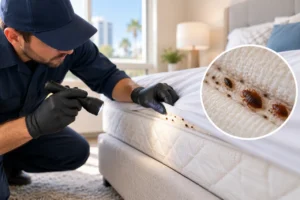
A proper termite inspection isn’t a quick walk-around — it’s a systematic check of every place termites like to hide:
- Attic framing, rafters, and roof sheathing
- Crawl spaces and the foundation line, checking for mud tubes
- Exterior wood, fencing, and anywhere wood touches soil
- Window and door frames, trim, and baseboards
- Areas near plumbing, since moisture draws subterranean termites in
If you’re buying, selling, or refinancing a home, a termite inspection is often required for escrow anyway — it’s worth having one done proactively rather than waiting for a lender to require it. At Impressive Exterminating, we offer a free inspection, because we’d rather find a small problem early than have a family find a big one later.
Termite Treatment: It’s Not One-Size-Fits-All
Once an inspection confirms activity, the right termite treatment depends on the species, how far it’s spread, and how accessible the affected areas are. We typically work with a few different approaches:
Bait Station Systems — designed around subterranean termites’ natural foraging behavior. Termites feed on the bait and share it with the rest of the colony, gradually reducing the population over time. Stations are locked and kid- and pet-safe.
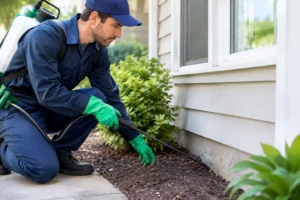
Liquid Termite Treatment — a termiticide applied to the soil around and under the foundation. Subterranean termites pick it up and spread it to others in the colony as they interact.
Combined Bait + Liquid Treatment — used for aggressive species like Formosan termites, which cause serious structural damage quickly and often need a dual approach to bring under control.
Fumigation (Tenting) — reserved for widespread drywood termite infestations, covered in detail below.
The right combination comes down to what your inspection actually finds — which is exactly why we don’t quote treatment over the phone before we’ve seen your property.
Termite Fumigation and Tenting: What to Expect
When drywood termite activity has spread across multiple areas of a home — or into spaces that are hard to reach directly — fumigation (tenting) is usually the most thorough option. Here’s how it works:
- Your home is sealed under a large tent
- A controlled fumigant gas is released to penetrate deep into wood, wall voids, and cracks that spot treatments can’t reach
- The gas is left in place for a set period, fully exposing every hidden pocket of activity
- The home is carefully aerated and tested before you’re cleared to re-enter
Fumigation typically takes 2–3 days from setup through re-entry clearance, and yes — you’ll need to arrange somewhere else to stay during that window, along with removing pets, plants, and unsealed food. It sounds disruptive, and for a few days it is, but it’s also the difference between treating the symptom and treating the entire colony.
Not every infestation needs full tenting. If activity is confirmed in one contained, accessible area, a targeted spot treatment may do the job for a fraction of the cost and disruption. This is exactly the kind of call our team explains clearly before recommending anything — no upselling, no guessing.
Why Families in Long Beach, Bellflower & Cerritos Choose Impressive Exterminating
We’re a family-owned business — Julio and his brother run the company, and it shows in how we treat every property like it’s the only one on the schedule that day. A few things our customers consistently mention:
- We explain what we find and why we’re recommending a specific treatment — not just a price
- Pet- and family-safe applications, because your home is more than a job site to us
- Our retreat guarantee: if termites come back, so do we, at no additional cost
- Local technicians who understand the specific termite pressure in your neighborhood, not a national call center
If it’s been a while since your last inspection — or you’ve never had one — termite season is the right time to change that.
Frequently Asked Questions
When does termite season start in Southern California?
Drywood termite swarms typically run from September through November, peaking in late September and October. Subterranean termites swarm in late winter through spring, usually after rain.
Do I need to leave my house for termite treatment?
Not always. Spot treatments and bait station installations don’t require you to vacate. Full fumigation (tenting) does require the home to be empty for the treatment period, typically 2–3 days.
How much does termite fumigation cost? Cost depends on the size of your home and the extent of the infestation. A free inspection is the fastest way to get an accurate number for your specific property rather than a generic estimate.
Are termite swarmers dangerous to people or pets?
No. Swarmers don’t bite or sting. The risk they pose is structural, not physical — but their presence is a strong sign a colony is active nearby.
Is termite damage covered by homeowners insurance?
Almost never. Most standard policies exclude termite damage because it’s considered preventable through regular inspection and maintenance — which is exactly why annual inspections matter.
How do I know if I need fumigation or just a spot treatment?
It depends on how widespread the activity is and how accessible the affected areas are. A licensed inspection is the only reliable way to know — we’ll walk you through exactly what we find and why we recommend one over the other.
What’s the difference between drywood and subterranean termites?
Drywood termites live inside the wood itself and are typically treated with fumigation or localized treatment. Subterranean termites live in the soil and travel into the structure through mud tubes, so they’re treated with liquid termiticide or bait stations at the foundation instead.
Don’t Let Termite Season Catch You Off Guard
It’s termite season, and the best time to find out where you stand is before you’re staring at hollow trim or a sagging floor. Impressive Exterminating offers free termite inspections across Los Angeles County and Orange County, with honest treatment recommendations — bait systems, liquid treatment, or full fumigation — based on what your home actually needs, backed by our retreat guarantee.
Schedule your free termite inspection today »
Related reading:
Termite Tenting and Fumigation Cost Guide ·
Termite Tenting vs. Spot Treatment ·