A line of ants moving from the kitchen counter to a tiny gap near the baseboard is more than an annoyance. It is a marked route leading workers back and forth from a food source to the colony. Knowing how to treat ant trails means interrupting that route, removing what attracted the ants, and choosing a treatment that reaches beyond the few insects you can see.
Spraying the visible line may provide a quick visual result, but it often does not solve the problem. In many cases, the colony is hidden in a wall void, beneath concrete, under landscaping, or outside near the foundation. A practical approach protects your home, tenants, employees, children, and pets while addressing the source of the activity.
Why Ant Trails Keep Coming Back
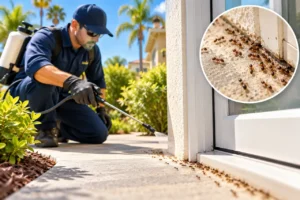
Ants leave behind pheromones, which are chemical scent markers that guide other ants to food and water. When one ant finds spilled juice, pet food, grease, crumbs, or moisture under a sink, other workers can follow that same route within hours.
This is why simply wiping up the ants without cleaning the trail often leads to another line in the same spot. The ants are following a signal that people cannot see. Weather can make the issue more noticeable in Los Angeles and Orange County as well. Heat and dry conditions send ants indoors in search of water, while rain can push colonies out of saturated soil and toward buildings.
The trail also may change. If ants cannot use one route, they may emerge from another crack, outlet, window frame, or plumbing opening. That does not necessarily mean a treatment failed. It can mean the colony is still active and searching for access.
How to Treat Ant Trails Step by Step
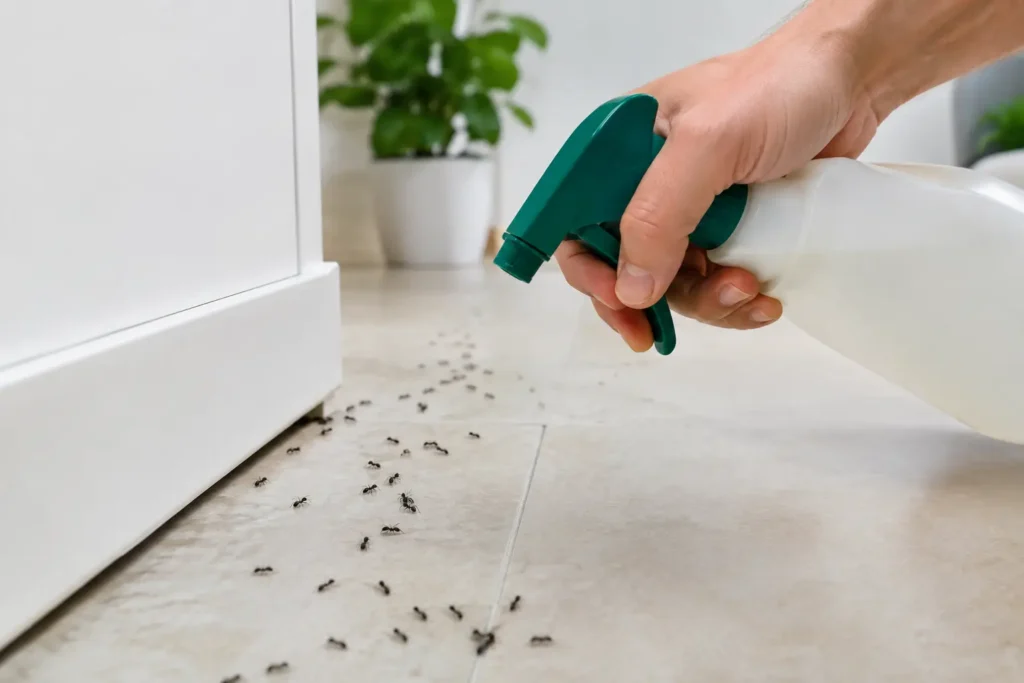
Start by observing the activity for a few minutes. Watch where the ants are traveling and identify what appears to be attracting them. Do not immediately spray the entire trail with a repellent product, especially if you plan to use bait. Ant bait works best when worker ants can carry it back to the colony.
Clean the Trail Thoroughly
First, remove the food source and the scent path. Vacuum up visible ants or wipe them away with a damp paper towel. Then clean the entire route, not only the area where ants are clustered. Use warm soapy water or a household cleaner appropriate for the surface, paying close attention to counter edges, cabinet seams, baseboards, floors, and the area around trash cans.
For kitchens, clean beneath small appliances and behind the stove if accessible. A thin film of grease or a few crumbs behind an appliance can sustain a trail for days. In bathrooms and laundry areas, dry standing water and inspect around pipes, drains, and pet water bowls.
Avoid mixing cleaning chemicals. Use one product according to its label, allow the surface to dry, and keep children and pets away until the area is safe to use again.
Use Bait Instead of Chasing Individual Ants
For an active indoor trail, bait is often more effective than contact sprays because it targets the colony indirectly. Place a ready-to-use ant bait station or gel bait close to the trail, but not directly on top of it. The goal is to let foraging ants feed and carry the material back to the nest.
Do not kill the ants you see gathering at bait right away. It can look like the issue is getting worse for a day or two, but increased feeding is often what you want. Worker ants are collecting the bait. Depending on the species, colony size, and location of the nest, noticeable reduction can take several days to two weeks.
Bait preference can vary. Some ants seek sweets, while others prefer protein or grease. If ants ignore a bait after a day or two, a different formulation may be needed. Always follow label directions and use tamper-resistant bait stations where children, pets, customers, or tenants could access the area.
Reduce Food and Moisture Sources
A clean trail treatment will not hold if ants continue finding easy meals. Store pantry goods, snacks, and pet food in sealed containers. Empty indoor trash regularly, wipe counters after food preparation, and rinse recyclables before placing them in bins.
Moisture control matters just as much. Repair leaking faucets, clear slow drains, dry up water around sinks, and check for condensation under refrigerators or near air-conditioning lines. Outside, do not allow irrigation to keep soil constantly wet next to the foundation. Ants thrive where food, water, and protected nesting sites are easy to find.
Close Entry Points After Activity Drops
Once baiting has reduced activity, seal obvious entry points around windows, doors, utility lines, pipe penetrations, and cracks in exterior walls. Replace worn weatherstripping and repair damaged screens. Caulking is a useful prevention step, but sealing too early can force ants to find a new indoor path before the colony has been addressed.
Focus on exclusion after the trail has slowed, and inspect the exterior for branches or shrubs touching the structure. Landscaping can act as a bridge that allows ants to bypass many of the barriers around a building.
What Not to Do When You See an Ant Trail
The fastest-looking solution is not always the most effective one. Avoid these common mistakes:
- Do not rely on repeated indoor aerosol spraying as the main solution. It may scatter ants or kill only a portion of the workers.
- Do not place bait beside strong-smelling cleaners or sprayed insecticides. Those products can discourage ants from feeding.
- Do not leave bait exposed where children, pets, tenants, or customers can touch it.
- Do not assume every ant is the same. Carpenter ants, Argentine ants, odorous house ants, and pavement ants can require different strategies.
Carpenter ants deserve particular attention. They do not eat wood, but they can tunnel through damp or damaged wood to nest. Large black ants, sawdust-like debris, or repeated activity near windows, roofs, plumbing leaks, or wood trim are reasons to schedule a professional inspection.
When a Professional Ant Treatment Is the Better Choice
DIY trail treatment is reasonable for a small, occasional line of ants with a clear food source. It becomes less practical when trails return repeatedly, ants are appearing in multiple rooms, or the source seems to be inside walls, under slabs, or around a commercial kitchen.
Property managers may need a coordinated plan when ant activity affects several units. Treating one apartment while ignoring shared plumbing lines, trash areas, landscaping, and neighboring entry points can lead to ongoing complaints. Businesses also need a discreet, documented solution that protects food-handling areas and avoids disrupting customers.
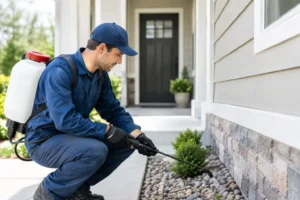
A licensed pest control professional can identify the ant species, inspect likely nesting areas, apply targeted treatment where appropriate, and recommend exclusion and sanitation steps for long-term prevention. This is especially valuable when you want a safe, effective approach without trial-and-error products throughout your property.
Impressive Exterminating provides customized ant control for homes and businesses across Los Angeles County and Orange County, with treatment plans designed around the activity, property layout, and safety needs of the people using the space.
Keep Ant Trails From Becoming a Recurring Problem
After the active trail is gone, make a quick weekly inspection part of your routine. Look under sinks, around pet feeding areas, along baseboards, behind appliances, and near exterior doors. Address crumbs, leaks, and gaps while they are small problems.
For properties with recurring seasonal activity, ongoing pest maintenance can be more cost-effective and less stressful than waiting for a full trail to form. The right treatment does more than clear the counter today – it helps make your property a much less inviting stop for the next colony searching for food and water.