A single wasp circling an eave in spring can become a busy nest by summer. Knowing how to stop wasps nesting before they settle in protects your family, pets, tenants, and customers from painful stings and prevents a small problem from becoming a difficult removal job.
Wasps look for protected, undisturbed places close to food, water, and building materials. In Southern California, mild weather can extend wasp activity well beyond the peak summer months. The most effective approach is to make your property less attractive early, spot new nest activity quickly, and leave established or hard-to-reach nests to a licensed professional.
Why Wasps Choose Certain Properties
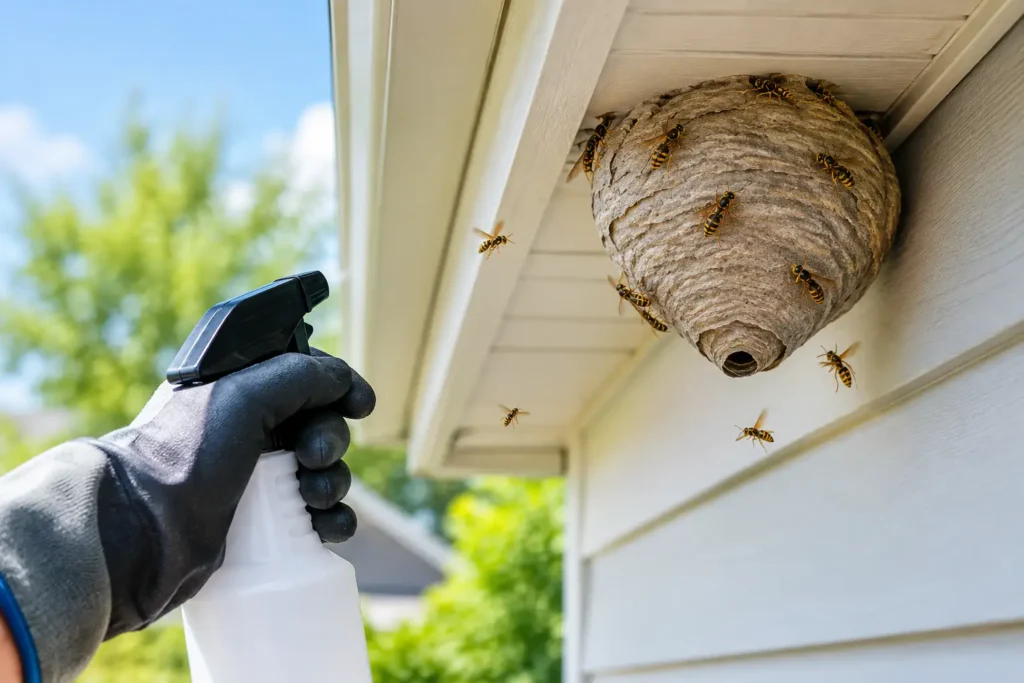
Most wasps do not build nests at random. Paper wasps often attach their open, umbrella-shaped nests beneath eaves, patio covers, deck railings, outdoor light fixtures, and fences. Yellowjackets are more likely to use wall voids, attic spaces, gaps around utility lines, or abandoned rodent burrows in the ground. Hornets tend to choose sheltered trees, shrubs, sheds, and rooflines.
A property becomes more appealing when it offers easy entry points, quiet protected corners, standing water, and reliable food. Open trash bins, fallen fruit, pet food, sugary drink spills, and outdoor dining areas can all draw foraging wasps close to the structure. Once a queen finds a suitable site in spring, she can begin building before most people notice.
That timing matters. A nest with only a queen and a few cells is far easier to address than a large late-season colony with many defensive workers.
How to Stop Wasps Nesting Before They Start
Prevention works best when it combines basic property maintenance with regular observation. You do not need to turn your home or business into a construction project. Focus first on the areas where wasps can enter, shelter, and find food.
Seal gaps around the building
Inspect eaves, fascia boards, attic vents, rooflines, siding, window frames, and areas where pipes or cables enter the building. Seal small gaps with appropriate exterior-grade materials and repair torn screens or damaged vent covers. Pay close attention to detached garages, sheds, patio structures, and outdoor storage areas, which are often overlooked until a nest is active.
Do not seal an opening if you already see wasps repeatedly entering and exiting it. Blocking an active colony inside a wall can force wasps into living spaces or create another exit point. In that situation, professional treatment should come first, followed by exclusion once activity has stopped.
Keep food and trash under control
Wasps are opportunistic scavengers, especially later in the season. Keep outdoor trash containers closed tightly and rinse food residue from recycling before placing it outside. If your property has communal bins, schedule regular cleaning around the enclosure and make sure lids are not left open.
At home, pick up fallen fruit, clean barbecue grills after use, and avoid leaving pet food outdoors. At restaurants, offices, apartment communities, and other commercial properties, monitor dumpster areas, break spaces, outdoor seating, and loading zones. These high-traffic areas often provide exactly what wasps are looking for.
Reduce water sources and shelter
Repair dripping outdoor faucets, avoid standing water in planters or buckets, and maintain pools and water features according to their normal care schedule. Wasps need water, particularly during hot, dry periods.
Trim branches and dense shrubs away from rooflines and exterior walls where practical. This improves visibility during inspections and reduces protected spots near the structure. Keep firewood, unused pots, lumber, and stored materials organized and off the ground when possible. A cluttered side yard can offer nesting cover as well as pest harborage.
Inspect early and often
From early spring through fall, take a few minutes each week to look under eaves, patio furniture, stair railings, play equipment, light fixtures, and shed overhangs. Watch for a single large wasp repeatedly investigating the same location or carrying tiny wood fibers. That can indicate a queen beginning a paper nest.
Early observation is not about getting close. Stand back, use caution, and avoid disturbing the area. If you see a small new nest in an accessible location and there is no sign of heavy activity, a professional can evaluate the safest removal method before the colony grows.
What Not to Do Around an Active Wasp Nest
When people feel threatened by wasps, it is tempting to act immediately. Unfortunately, many quick fixes make stings more likely and fail to solve the source of the problem.
Do not hit, knock down, burn, flood, or spray a nest with a garden hose. Do not try to cover it with a bag, seal it into a wall, or use homemade mixtures. These methods can provoke a defensive swarm, especially with yellowjackets and large paper wasp colonies. They also leave you without a clear way to confirm that the nest and its access points have been fully addressed.
Avoid using over-the-counter aerosol products on nests high above the ground, inside structural gaps, or near electrical equipment. Wind can blow product back toward you, and a ladder increases the risk of a fall if wasps become agitated. Families with allergies, young children, pets, or vulnerable neighbors should be especially cautious.
If wasps are entering a wall, attic, roof void, or ground opening, keep people away from that area and arrange a professional inspection. These nests require a more controlled treatment plan than a small, exposed nest on a fence.
When Professional Wasp Control Is the Right Choice
Professional service is the safest choice when a nest is active, difficult to reach, near a doorway or living area, or located within the structure. It is also the right call if anyone at the property has a known insect-sting allergy. Wasp reactions can be serious, and there is no benefit in taking unnecessary risks.
A licensed pest professional can identify the likely species, locate nest access points, treat the colony using an appropriate method, and recommend exclusion work once activity has ended. This matters because removing only a visible nest may not resolve an issue involving wall voids, rooflines, or underground yellowjacket nests.
For homeowners, landlords, and business owners in Los Angeles County and Orange County, Impressive Exterminating provides fast, inspection-driven wasp control designed to address both the active nest and the conditions that allowed it to develop. A customized plan is especially useful for apartment properties, outdoor dining areas, warehouses, schools, and homes with recurring seasonal activity.
After Removal: Prevent the Next Nest
Once a nest has been professionally treated or safely removed, do not assume the work is finished. Check the surrounding area for gaps, damaged screens, exposed wood, and food or water sources that may attract new queens. Clean the former nesting site according to the service professional’s guidance, since remnants can attract insects or signal a protected location.
Continue periodic exterior inspections through the rest of the season. Wasps do not generally reuse the exact same paper nest, but they may build nearby if the site remains sheltered and accessible. This is why sealing entry points and keeping outdoor areas clean are just as important as removing the nest itself.
For recurring problems, ongoing pest maintenance can provide another set of eyes on vulnerable areas before a new colony becomes established. Property managers may find this particularly helpful between tenant turnovers, after exterior repairs, or before warmer weather increases outdoor activity.
A wasp problem is easiest to solve while it is still small. If you notice repeated wasp traffic, a new nest, or activity near an entryway, keep your distance and act early. Prompt, safe treatment gives you the best chance of getting back to using your outdoor space without worry.