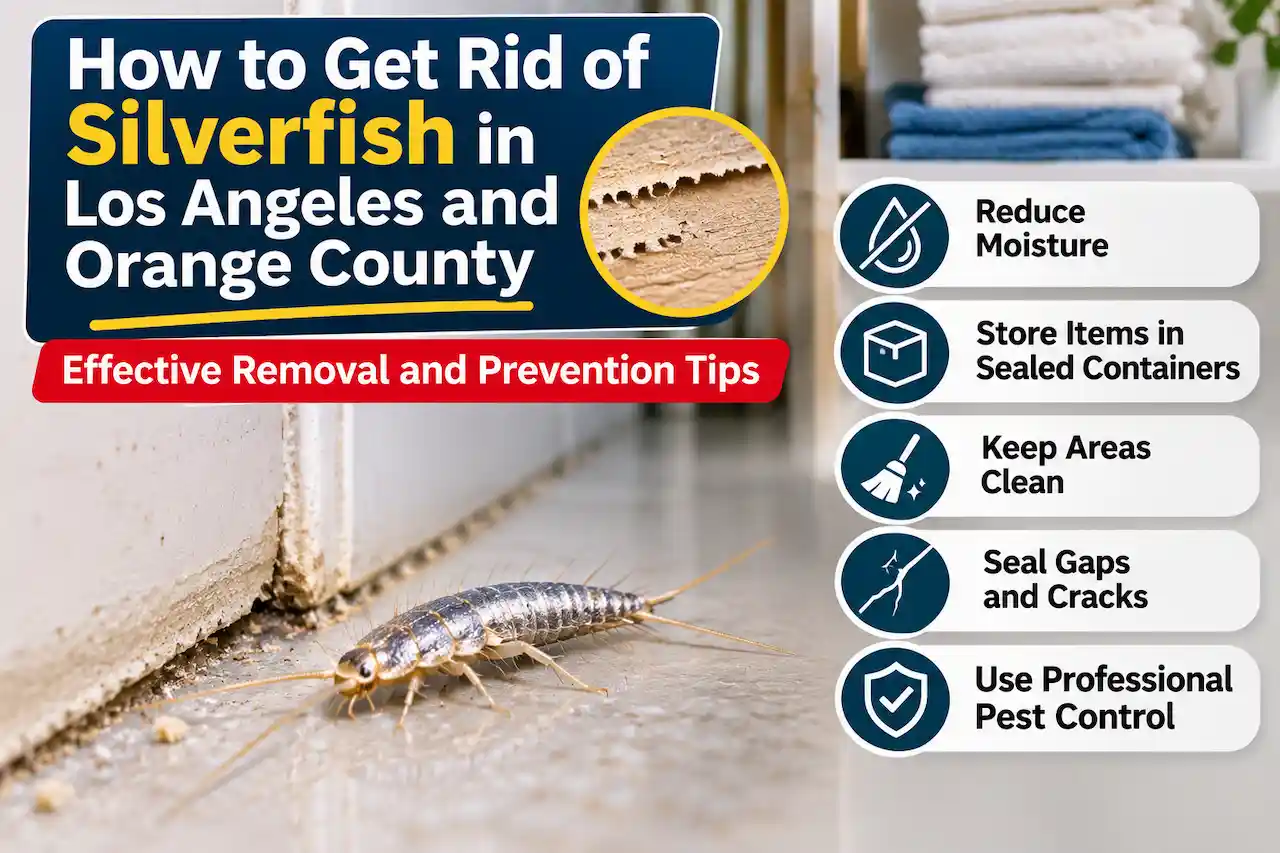
Finding a silverfish crawling across your bathroom floor, inside a closet, or between old books can be frustrating. These small, fast-moving insects prefer dark, sheltered spaces and can damage paper, wallpaper, clothing, cardboard, and stored belongings.
For homeowners and renters in Los Angeles County and Orange County, silverfish can become a recurring problem when moisture builds up around plumbing, bathrooms, laundry rooms, and storage areas. Even in Southern California’s relatively dry climate, leaking pipes, poorly ventilated rooms, and damp storage spaces can create ideal conditions.
The good news is that silverfish can be controlled when you address the conditions allowing them to survive.
To get rid of silverfish, repair moisture problems, improve ventilation, remove paper and cardboard clutter, vacuum hiding places, seal cracks, and use monitoring traps. Persistent infestations may require targeted professional treatment in cracks, crevices, and concealed spaces. Killing visible silverfish alone will not solve the problem if moisture and hiding places remain.
This guide explains how to get rid of silverfish in Southern California homes, what treatments work, which methods to avoid, and when professional pest control becomes necessary.
Key Takeaways
- Silverfish prefer damp, dark, protected locations.
- Bathrooms, kitchens, laundry rooms, closets, and storage spaces are common problem areas.
- Controlling humidity and repairing plumbing leaks are essential for long-term prevention.
- Cardboard, paper, book bindings, and certain fabrics provide food and shelter.
- Sticky traps help identify active areas but rarely eliminate large infestations alone.
- Foggers and random spraying are not recommended for silverfish control.
- Persistent infestations may require professional inspection and targeted treatment.
What Are Silverfish and How Do You Identify Them?
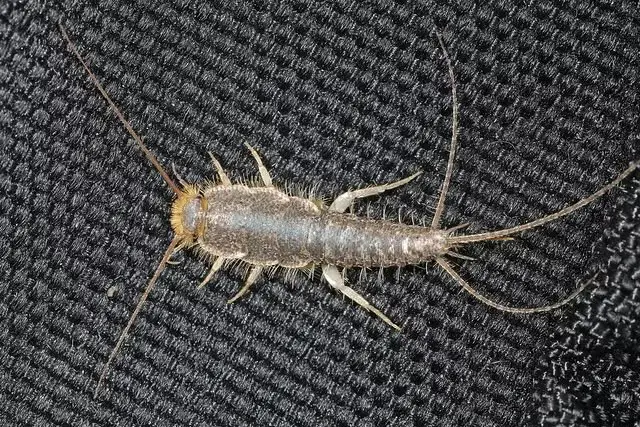
Silverfish are small, wingless insects with elongated bodies covered in silvery scales.
They usually measure approximately half an inch long, although some individuals grow larger.
Common characteristics include:
- Silver or pearl-gray coloration
- Long antennae extending from the head
- Three tail-like appendages
- A flattened, tapered body
- Fast, fish-like movement
- Activity in dark or sheltered areas
Silverfish are primarily nocturnal, so homeowners may notice property damage before seeing the insects themselves.
Silverfish vs Firebrats
Silverfish are sometimes confused with firebrats, a related household pest.
| Feature | Silverfish | Firebrats |
|---|---|---|
| Color | Silver or pearl-gray | Mottled gray or brown |
| Body shape | Long, tapered and wingless | Long, tapered and wingless |
| Preferred conditions | Warm, humid areas | Very warm areas, including some drier locations |
| Common hiding places | Bathrooms, laundry rooms and closets | Near heating equipment and hot pipes |
| Food sources | Paper, starches, fabrics and stored products | Similar starch-based materials |
Correct identification helps determine which environmental conditions need attention.
What Are the Signs of a Silverfish Infestation?
Silverfish often hide during the day, but their activity can leave noticeable clues.
Look for:
- Small holes or irregular feeding marks in books and paper.
- Yellowish stains on stored documents or fabrics.
- Shed skins around baseboards and closets.
- Silverfish appearing around sinks, bathrooms, or laundry rooms.
- Damage to cardboard, wallpaper, or stored belongings.
- Repeated sightings in the same room.
One silverfish does not necessarily mean you have a major infestation.
However, recurring activity or damage in multiple locations may indicate hidden populations.
Why Are Silverfish Common in Southern California Homes?
Silverfish need suitable food, shelter, and environmental conditions to survive.
Although Los Angeles and Orange County often experience relatively dry outdoor weather, indoor moisture problems can still support silverfish populations.
1. Moisture Around Bathrooms and Kitchens
Leaking pipes, condensation, and poorly ventilated bathrooms provide favorable conditions.
Check beneath sinks, around toilets, behind washing machines, and near water heaters.
2. Cardboard and Paper Storage
Silverfish feed on starches and other materials found in paper, book bindings, wallpaper adhesives, and certain fabrics.
Old cardboard boxes can provide both food and shelter.
3. Dark, Undisturbed Storage Areas
Garages, closets, cabinets, and storage rooms often remain undisturbed for long periods.
These locations allow silverfish to hide and reproduce without being noticed.
4. Accessible Food Sources
Silverfish may feed on cereal, flour, dry pet food, and other stored products.
Open packaging and food debris can support ongoing activity.
5. Seasonal Moisture and Poor Ventilation
Rainy periods, condensation, plumbing leaks, and poorly ventilated indoor spaces can increase humidity.
Homes with persistent moisture problems may experience silverfish activity even when outdoor conditions are dry.
For more information about seasonal pest activity, read Why Bugs Come Inside After Rain.
How to Get Rid of Silverfish: 7 Effective Steps
The most effective silverfish control plan focuses on reducing moisture, eliminating hiding places, and addressing active infestations.
Step 1: Find and Fix Moisture Problems
Begin by inspecting areas where silverfish have been observed.
Check:
- Under bathroom and kitchen sinks
- Around toilets and shower enclosures
- Behind washing machines
- Near water heaters
- Inside laundry rooms
- Around damp storage spaces
Repair dripping faucets, leaking pipes, and other moisture problems.
Use bathroom exhaust fans during and after showers.
For persistently humid rooms, consider a suitable dehumidifier.
Reducing moisture makes your home less favorable for silverfish.
Step 2: Remove Cardboard, Paper, and Clutter
Silverfish can survive on materials that many homeowners overlook.
Remove unnecessary cardboard boxes, old newspapers, and paper clutter.
For belongings you want to keep:
- Store important documents in sealed containers.
- Keep books in dry, ventilated spaces.
- Use secure storage bins for seasonal clothing.
- Avoid placing cardboard directly on damp floors.
- Inspect stored boxes before moving them into living areas.
Reducing clutter also makes inspections and treatment easier.
Step 3: Vacuum Hidden Areas Thoroughly
Regular vacuuming helps remove visible silverfish, shed skins, debris, and accessible eggs.
Concentrate on:
- Baseboards and wall edges
- Bathroom cabinets
- Closet corners
- Behind refrigerators and washing machines
- Beneath furniture
- Cracks near shelving
- Storage room corners
Dispose of vacuum contents according to the manufacturer’s instructions after cleaning affected areas.
Step 4: Seal Cracks and Potential Entry Points
Silverfish can hide in narrow cracks around plumbing, walls, and building materials.
Inspect openings around:
- Plumbing connections
- Window and door frames
- Baseboards
- Utility lines
- Wall and floor junctions
- Garage entrances
Use appropriate caulk, weatherstripping, and other suitable repair materials.
Seal gaps only after addressing underlying plumbing problems and checking for active moisture.
Exclusion helps reduce access to sheltered spaces and may limit movement between rooms.
Step 5: Use Silverfish Traps to Monitor Activity
Sticky traps can help identify where silverfish are active.
Place suitable monitoring traps along walls or in protected areas such as:
- Beneath bathroom sinks
- Behind toilets
- Inside closets
- Near bookshelves
- Around stored boxes
- Along laundry room edges
Keep traps away from children and pets.
Check them regularly and record where silverfish continue appearing.
Traps are useful for monitoring, but they may not reach insects hiding deep inside cracks or wall cavities.
Step 6: Avoid Foggers and Unnecessary Spraying
Many homeowners turn to aerosol sprays or total-release foggers when they see recurring pest activity.
However, foggers are not recommended for silverfish infestations because they may fail to reach concealed hiding places.
Random spraying can also introduce unnecessary pesticide exposure.
When chemical treatment is appropriate, use only products specifically labeled for silverfish and the intended application area.
Never mix pesticide products or apply them to food, dishes, bedding, or other prohibited surfaces.
Step 7: Schedule Professional Silverfish Control
If silverfish keep appearing despite cleaning, moisture correction, and monitoring, hidden populations may require targeted treatment.
A professional inspection can help identify:
- Concealed silverfish activity
- Excess humidity and moisture problems
- Potential entry points
- Cracks and wall voids supporting infestations
- Locations needing targeted treatment
- Conditions contributing to repeated activity
Impressive Exterminating provides professional silverfish control services for homes and businesses across its Southern California service areas.
Silverfish Control Methods Compared
| Method | Best Use | Important Consideration |
|---|---|---|
| Moisture control | Humid bathrooms, laundry rooms and storage | Essential for long-term prevention |
| Vacuuming | Visible insects, shed skins and debris | May not reach hidden populations |
| Clutter removal | Closets, garages and storage areas | Removes food and shelter |
| Crack sealing | Narrow openings and sheltered gaps | Requires inspection and repair |
| Sticky traps | Monitoring silverfish activity | Not a complete treatment |
| Targeted professional treatment | Persistent or widespread infestations | Must address moisture and hiding places |
No single treatment method solves every infestation.
The most dependable results come from combining moisture management, cleaning, exclusion, monitoring, and appropriate targeted treatment.
Where Do Silverfish Hide in Los Angeles and Orange County Homes?
Silverfish can occupy different parts of a residential property.
Bathrooms
Bathrooms provide humidity, darkness, and sheltered spaces near plumbing.
Inspect beneath sinks, around shower enclosures, behind toilets, and around cabinets.
Kitchens
Silverfish may hide near leaking pipes, cabinets, and stored dry food.
Look around plumbing penetrations and poorly sealed storage areas.
Garages and Storage Rooms
Cardboard boxes, stored paper, and undisturbed belongings provide favorable hiding places.
Inspect storage containers, shelving, and areas near exterior walls.
Attics and Closets
Stored clothing, papers, and other belongings can support silverfish activity when sufficient moisture is present.
Check for damaged paper and shed skins.
Laundry Rooms
Humidity, condensation, and leaking appliance connections can create suitable conditions.
For homeowners in Long Beach, Bellflower, Cerritos, Palos Verdes, and Anaheim, inspecting moisture-prone indoor areas is a practical first step regardless of the property’s age or style.
How Long Does It Take to Get Rid of Silverfish?
The timeline depends on infestation size, available hiding places, humidity, and treatment effectiveness.
| Stage | What to Expect |
|---|---|
| Initial inspection | Identify moisture problems and active areas |
| First cleaning | Remove clutter, debris and accessible insects |
| Moisture correction | Repair leaks and improve ventilation |
| Monitoring | Check traps over the following weeks |
| Targeted treatment | Apply appropriate products where necessary |
| Follow-up | Reassess activity and remaining problem areas |
Some minor problems improve after moisture and sanitation issues are corrected.
Established infestations may require several weeks of monitoring and additional treatment.
If activity continues after two to three weeks, inspect untreated hiding places and unresolved moisture sources.
What Doesn’t Work for Silverfish?
Relying Only on Vinegar
Vinegar is sometimes promoted as a silverfish treatment, but it is not a dependable solution for eliminating an established infestation.
It does not address hidden insects, eggs, or moisture conditions.
Using Essential Oils as the Main Treatment
Strongly scented oils may temporarily influence insect behavior, but they should not replace proven inspection, sanitation, and control methods.
Ignoring Plumbing Leaks
Silverfish thrive in damp environments.
Treating visible insects while leaving moisture problems unresolved can allow activity to continue.
Using Foggers
Foggers are not recommended for silverfish infestations because they may fail to reach the concealed areas where these insects hide.
Keeping Damaged Paper and Cardboard
Old paper and cardboard can provide food and shelter.
Leaving these materials in damp storage areas may support recurring activity.
Common Silverfish Control Mistakes
- Treating only visible insects. Hidden populations may remain in cracks and wall cavities.
- Ignoring moisture. Leaks and humidity continue supporting the infestation.
- Keeping cardboard in damp rooms. Paper products provide food and shelter.
- Using traps as the only treatment. Monitoring traps rarely control large populations alone.
- Applying pesticides incorrectly. Treatments should follow label instructions.
- Overlooking storage rooms. Closets, garages, and cabinets can contain hidden activity.
- Stopping prevention too early. Moisture control and monitoring should continue after visible activity declines.
Silverfish Control for Renters, Landlords, and Businesses
Silverfish problems can affect different types of properties.
Renters
If silverfish continue appearing in your apartment, document the activity and inform your landlord or property manager.
Report plumbing leaks, persistent humidity, and damaged stored belongings.
Landlords and Property Managers
Inspect moisture-prone units, shared storage areas, utility rooms, and recurring problem locations.
Correcting building maintenance issues can help prevent infestations from spreading.
For additional information, read Landlord Pest Responsibilities in California.
Businesses
Silverfish can affect offices, storage facilities, retail spaces, and properties where documents or paper-based materials are stored.
Routine inspections, humidity management, and appropriate treatment help protect stored materials.
When Should You Call a Silverfish Exterminator in Los Angeles or Orange County?
DIY prevention may help with occasional silverfish sightings.
Professional assistance is worth considering when:
- Silverfish keep appearing despite cleaning.
- Activity occurs in multiple rooms.
- Books, clothing, or documents show increasing damage.
- Monitoring traps repeatedly catch silverfish.
- Moisture problems have been corrected but activity continues.
- Insects appear to be hiding in inaccessible spaces.
What a Professional Silverfish Control Visit May Include
At Impressive Exterminating, the silverfish control process focuses on identifying and addressing the conditions contributing to pest activity.
Inspect: Check areas showing signs of silverfish, moisture problems, and possible hiding places.
Diagnose: Determine the likely extent of activity and contributing conditions.
Protect: Apply appropriate targeted treatments and recommend practical moisture and exclusion measures.
Monitor: Evaluate activity in important areas.
Report: Explain findings and provide prevention recommendations.
Follow Up: Reassess concerns and recommend additional action where necessary.
Learn more about Silverfish Control and General Pest Control.
Frequently Asked Questions
1. How do I get rid of silverfish in my Los Angeles home?
Repair moisture problems, improve ventilation, remove paper clutter, vacuum hiding areas, seal suitable cracks, and use traps to monitor activity. For persistent infestations, professional silverfish control may be necessary.
2. Are silverfish common in Orange County homes?
Silverfish can occur in Orange County homes when bathrooms, laundry rooms, closets, or storage areas provide suitable humidity, food, and shelter. Recurring activity often points to hidden moisture or storage conditions.
3. Do silverfish come from bathroom drains?
Silverfish do not normally breed inside household drains. They may appear near drains because surrounding areas contain damp cracks and hiding places. They can also become trapped in sinks and bathtubs.
4. Can silverfish damage clothes and books?
Yes. Silverfish feed on starches and materials found in paper, book bindings, wallpaper adhesives, and some fabrics. Their feeding can produce irregular damage and staining.
5. When should I hire a silverfish exterminator in Southern California?
Consider professional help when silverfish repeatedly appear, damage is increasing, several rooms are affected, or moisture correction and cleaning have not resolved the infestation.
Conclusion: Control Moisture, Remove Hiding Places, and Prevent Silverfish
Getting rid of silverfish requires more than killing the insects you see.
The most effective approach combines moisture correction, thorough cleaning, reduction of paper and cardboard clutter, sealing suitable openings, targeted treatment where necessary, and continued monitoring.
For homeowners in Los Angeles County and Orange County, regular inspection of bathrooms, laundry rooms, kitchens, and storage areas can help identify conditions that support silverfish before the problem becomes widespread.
If silverfish continue appearing or your belongings show signs of damage, professional inspection can help identify the source and recommend appropriate treatment.
Schedule Your Free Silverfish Inspection
Contact Impressive Exterminating or call (562) 246-9044.
Silverfish Control in Los Angeles and Orange County
We help homeowners, renters, landlords, and businesses across Los Angeles County and Orange County, including Long Beach, Bellflower, Cerritos, Palos Verdes, and Anaheim.
Related Services: Silverfish Control · General Pest Control
Related Reading: Best Way to Remove Silverfish · Pest Prevention That Protects Your Property · Why Bugs Come Inside After Rain