Have you noticed ants marching across your kitchen counter, cockroaches appearing in the bathroom, or spiders suddenly showing up near your windows after a rainstorm?
If so, you’re not alone. Many Southern California homeowners notice an increase in pest activity after rain, particularly when dry weather is interrupted by heavy rainfall.
The good news is that bugs after rain don’t necessarily mean your home is dirty or infested. Rain can disturb outdoor hiding places, saturate soil, change moisture conditions, and push certain pests to seek shelter elsewhere. Small openings around doors, windows, pipes, and foundations can provide easy access to your home.
However, there’s an important distinction: seeing one outdoor insect inside after a storm is different from discovering ants every morning or cockroaches repeatedly appearing in your bathroom.
Understanding why pests enter after rain can help you identify the source, prevent future intrusions, and determine when professional pest control is necessary.
For homeowners and businesses across Los Angeles County and Orange County, the right approach combines moisture management, exclusion, sanitation, and targeted pest treatment when needed.
Why Do Bugs Come Inside After Rain?
Rain changes the conditions around your property. Insects and other pests may respond by moving away from saturated soil, looking for drier shelter, or taking advantage of new sources of moisture and food.
Here are the most common reasons bugs enter Southern California homes after rainfall.
1. Rain Can Disturb Outdoor Pest Habitats
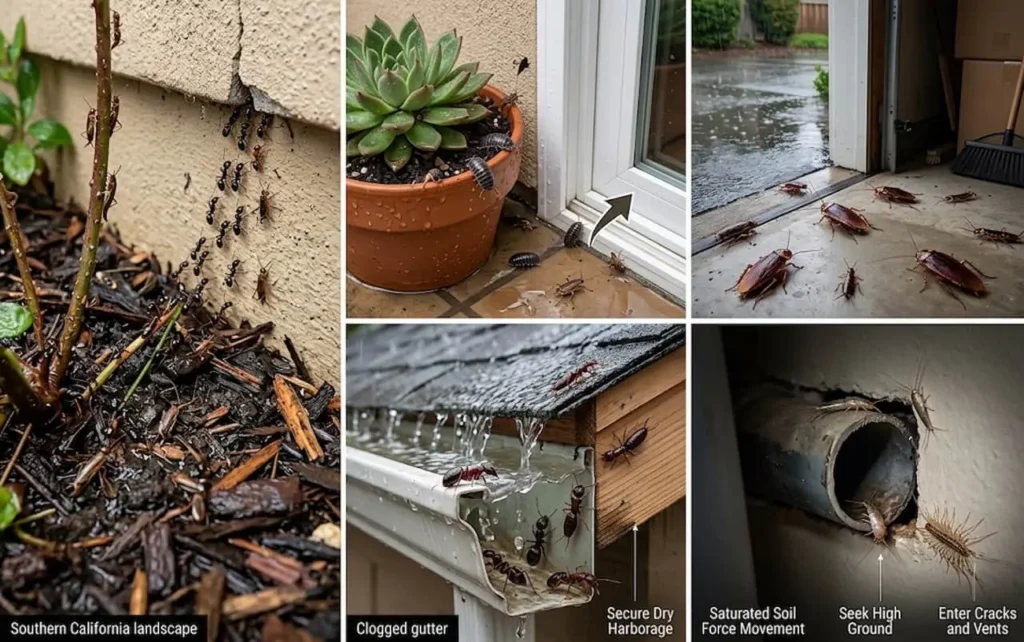
Many ants and other insects live in soil, beneath rocks, around landscaping, or inside protected spaces near building foundations.
Heavy rainfall can saturate these areas, disturb nesting locations, and change the conditions pests depend on. Some insects respond by relocating to nearby sheltered spaces.
Your home may offer several attractive alternatives, including dry wall cavities, garages, crawl spaces, kitchens, and areas beneath sinks.
What you can do:
- Check the soil and landscaping immediately around your foundation.
- Look for ant trails near doors, windows, and exterior walls.
- Remove accumulated leaves and debris near the house.
- Seal openings where utility pipes enter the building.
- Address recurring pest activity instead of treating only the insects you can see.
Keep in mind that not every ant colony floods during rain. Some nests drain effectively or remain protected underground. The effect depends on the insect species, the nest location, and the amount of rainfall.
2. Excess Moisture Can Attract or Displace Certain Pests
Some household pests are strongly associated with damp environments.
After rain, moisture may accumulate around foundations, beneath outdoor equipment, inside poorly ventilated garages, or near plumbing leaks. These conditions can encourage pest activity or make sheltered indoor areas more attractive.
Silverfish, for example, commonly occur in damp areas, while some cockroach species favor moist hiding places.
In Southern California, a leaking irrigation line, clogged gutter, or poorly draining yard can keep an area damp long after a storm ends.
What you can do:
- Inspect under kitchen and bathroom sinks for leaks.
- Check garages, laundry rooms, and storage areas for dampness.
- Clear gutters and downspouts so water drains away from the property.
- Repair leaking outdoor faucets and irrigation lines.
- Improve ventilation in persistently damp spaces.
- Avoid allowing water to collect against the foundation.
If pests repeatedly appear around a particular bathroom, laundry room, or garage, investigate the moisture source rather than assuming rain is the only cause.
3. Pests Can Enter Through Small Openings
Rain doesn’t need to create a new hole in your home to cause a pest problem. It may simply change outdoor conditions enough to encourage insects to use entry points that were already there.
Common access points include:
- Gaps beneath exterior doors.
- Damaged window screens.
- Cracks around window frames.
- Openings around plumbing and utility lines.
- Gaps where garage doors meet the floor.
- Cracks around exterior walls and foundations.
- Unsealed vents or other building penetrations.
Even a well-maintained home can have small gaps that are easy to overlook.
What you can do:
Walk around your home after the rain stops. Check door sweeps, window seals, garage-door edges, and the places where cables and pipes enter the building.
Install appropriate weatherstripping, repair damaged screens, and seal suitable cracks with materials designed for the location.
For drainage openings and ventilation points, use appropriate pest-resistant covers without blocking essential airflow or water drainage.
If insects continue entering despite sealing obvious gaps, a professional inspection can help identify less visible entry routes.
4. Rain Can Change Ant Activity Around Your Home
Ants are among the most noticeable pests after rain.
Some colonies may relocate when their nesting areas become saturated, while others simply increase their movement as environmental conditions change. Once worker ants discover food or water indoors, they can establish a trail that brings more ants into the same area.
In Southern California, Argentine ants are a particularly relevant concern because they commonly forage around homes and can form persistent trails.
You might notice them:
- Along kitchen countertops.
- Around sinks and faucets.
- Near pet food bowls.
- Along baseboards.
- Around sliding doors and window frames.
- Near exterior foundations and landscaping.
The important thing to remember is that killing the visible ants may not eliminate the colony or the route bringing them inside.
What you can do:
Clean food spills, store sweet foods in sealed containers, wipe away ant trails, and correct plumbing leaks.
Avoid spraying every ant you see without identifying the species and the source of activity. Some control methods work better when worker ants can carry an appropriate bait back to the colony.
For recurring problems, explore professional ant control services to determine the best approach for your property.
5. Cockroaches May Appear After Heavy Rain
Finding a cockroach in your bathroom or kitchen after a storm can be alarming, especially if you maintain a clean home.
Rain can influence the movement of some outdoor cockroach species, particularly around drains, landscaped areas, and other sheltered environments. Certain species may seek drier locations when their usual hiding places become wet.
However, rain does not explain every cockroach sighting.
The distinction between outdoor cockroaches and indoor-infesting species matters.
A large cockroach that occasionally enters from outside may indicate an exterior entry issue. Repeated sightings of smaller cockroaches, particularly in kitchens or near appliances, can indicate an indoor infestation that requires a different control strategy.
What you can do:
- Keep food and rubbish in sealed containers.
- Repair leaking pipes and faucets.
- Check door sweeps and exterior gaps.
- Avoid leaving pet food out overnight.
- Keep the area around drains and plumbing clean.
- Use appropriately placed monitoring traps to identify activity.
If cockroaches continue appearing, investigate the species and source rather than assuming the problem will disappear when the weather dries.
Learn more about professional cockroach and general pest control services to understand the available treatment options.
6. Spiders May Become More Noticeable Indoors
Spiders may appear more frequently after rain because environmental changes affect their outdoor hiding places and the insects they feed on.
Some may enter through gaps around windows, doors, garages, and other openings. Others may already be living in undisturbed parts of your home and simply become more noticeable when conditions change.
An occasional spider does not automatically indicate an infestation.
However, repeated sightings in the same area can justify checking for entry points, web-building locations, and other insects that provide a food source.
What you can do:
- Remove webs from corners and sheltered areas.
- Reduce clutter in garages and storage rooms.
- Keep vegetation from touching exterior walls where practical.
- Repair damaged window screens.
- Seal suitable gaps around doors and windows.
- Reduce the insects that spiders may be feeding on.
Avoid handling unidentified spiders, especially if you are uncertain whether they could pose a health risk.
For persistent activity, professional spider control can help identify contributing conditions and appropriate treatment options.
7. Rainwater Can Create New Mosquito Breeding Sites
Mosquitoes are another common concern after rain, but their behavior differs from that of ants and cockroaches.
Rainwater can collect in containers, gutters, plant saucers, discarded items, and other outdoor objects. If water remains available, certain mosquito species can use these sites to lay eggs and reproduce.
This means mosquitoes appearing several days after a storm may be connected to water that collected during the rainfall.
In Southern California, mosquito problems can also continue during dry periods because irrigation, leaking pipes, and poorly maintained water features provide additional breeding opportunities.
What you can do after rain:
- Empty water from plant saucers and outdoor containers.
- Check buckets, toys, tarps, and unused equipment.
- Clear clogged gutters.
- Repair leaking irrigation systems.
- Maintain pools and other water features appropriately.
- Check shaded outdoor areas where water may collect unnoticed.
Remember that eliminating standing water is not the same as eliminating adult mosquitoes already present.
If mosquito activity continues around your yard, explore professional mosquito control for help identifying breeding sources and reducing activity around outdoor living spaces.
Which Bugs Are Most Likely to Appear After Rain in Southern California?
The pests you encounter depend on the species living around your property, the amount of rainfall, the surrounding landscape, and the condition of your home.
| Pest | Why You Might See It After Rain | Where to Check | Recommended First Step |
| Ants | Changes in soil moisture or nest conditions may increase movement | Kitchens, windows, foundations | Remove food sources and follow ant trails |
| Cockroaches | Some outdoor species may seek shelter from wet conditions | Bathrooms, garages, exterior doors | Identify the species and seal entry points |
| Spiders | Changes in shelter or prey availability may affect their location | Corners, garages, windows | Remove webs and inspect gaps |
| Silverfish | Damp indoor conditions may support their activity | Bathrooms, cupboards, storage areas | Reduce moisture and improve ventilation |
| Mosquitoes | Rainwater can create breeding sites | Gutters, planters, containers | Empty standing water |
| Termite swarmers | Seasonal reproductive flights may coincide with weather changes | Windows, doors, lights, wooden structures | Preserve specimens and arrange identification |
One important distinction: seeing termites or termite swarmers after rain does not necessarily mean rain created a new termite infestation.
Termite colonies can remain active for a long time before becoming visible. Swarming is associated with reproductive activity and suitable environmental conditions, so the appearance of winged termites deserves attention.
If you find discarded wings, mud tubes, damaged wood, or repeated termite activity, arrange a professional inspection.
What Should You Do Immediately If Bugs Come Inside After Rain?
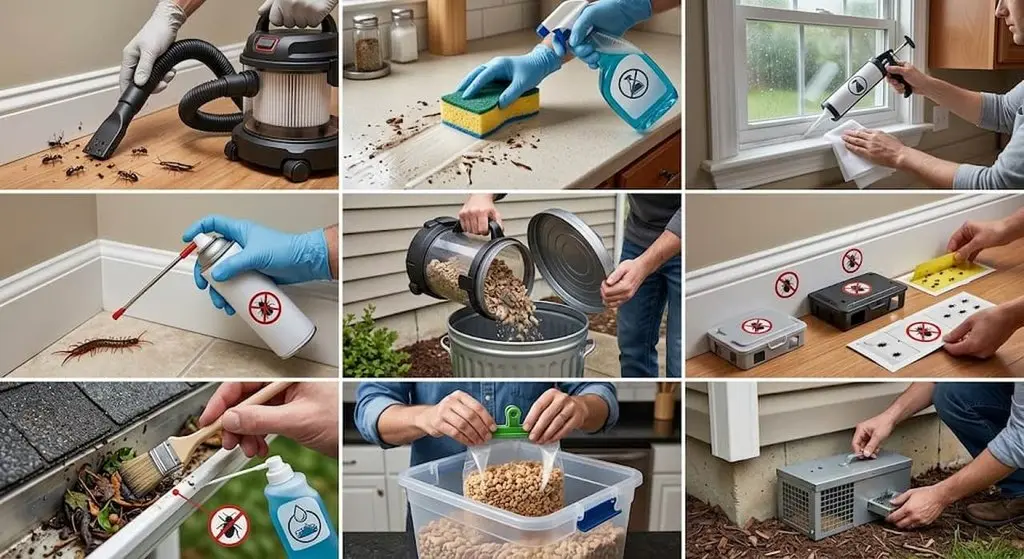
When pests suddenly appear, it is tempting to spray everything immediately. A better approach is to identify the likely source and take steps that reduce the chance of more pests entering.
Use this practical checklist.
Step 1: Identify the Pest
Try to determine whether you are dealing with ants, cockroaches, spiders, mosquitoes, termites, or another insect.
If possible, take a clear photograph without touching the insect.
Identification matters because different pests require different control methods. A strategy that works for outdoor ants may not resolve a cockroach infestation, and spraying unidentified insects can make the situation harder to assess.
Step 2: Check Where the Bugs Are Appearing
Look for patterns.
Are the insects concentrated near a bathroom drain, kitchen window, garage door, or exterior wall?
Are they appearing in one room or throughout the property?
Are you finding individual insects or large numbers of the same pest?
These observations can help distinguish occasional outdoor intrusions from a recurring indoor problem.
Step 3: Remove Food and Water Sources
Clean kitchen surfaces, secure rubbish, store food properly, and address leaks.
Dry damp areas where practical, but do not ignore the underlying cause of recurring moisture.
For outdoor pests, inspect the yard for standing water, dense debris, and other conditions that may support activity.
Step 4: Seal Entry Points
Check doors, windows, screens, and openings around utility lines.
Install door sweeps where necessary and repair damaged seals.
Do not seal drainage routes, ventilation openings, or other building features that must remain functional.
Step 5: Monitor for Recurring Activity
A single insect may have entered accidentally. Repeated sightings over several days deserve closer attention.
Record where and when you see pests. Monitoring traps may help identify activity, provided they are suitable for the pest and placed according to their instructions.
If the number of insects increases, activity spreads to other rooms, or the same pest keeps returning, consider a professional inspection.
Step 6: Know When to Call a Pest Control Professional
Professional help may be appropriate when:
- Ants return despite cleaning and basic prevention.
- Cockroaches appear repeatedly inside the home.
- You find signs of termites or possible structural damage.
- Pests enter through openings you cannot identify.
- Mosquitoes remain a persistent problem around your yard.
- You manage an apartment building or commercial property with recurring complaints.
A qualified pest control professional can inspect the property, identify contributing conditions, and recommend treatment suited to the pest and the environment.
For local assistance, Impressive Exterminating Pest Control serves residential and commercial customers across Los Angeles County and Orange County. The company offers inspections and pest management services designed to address current activity and help prevent recurring problems.
How to Prevent Bugs After Rain in Los Angeles and Orange County
Southern California has a varied climate, and pest activity can differ between coastal neighborhoods, inland communities, landscaped properties, and homes near drainage areas.
Prevention works best when it addresses the conditions around your specific property.
Inspect Your Home’s Exterior Before the Next Storm
Check window seals, exterior doors, garage-door edges, and gaps around utility pipes.
Repair damaged screens and weatherstripping before heavy rain arrives.
Keep Gutters and Drainage Areas Clear
Blocked gutters and poorly draining areas can allow water to accumulate around the property.
Clean gutters safely, keep downspouts functional, and address drainage issues that repeatedly leave the ground saturated.
If drainage problems are substantial or involve the foundation, consult an appropriate drainage or building professional.
Maintain Landscaping Around Your Foundation
Remove accumulated leaves, fallen branches, and unnecessary debris near exterior walls.
Keep vegetation appropriately trimmed and avoid allowing dense growth to create persistent contact with the building.
Inspect mulch and irrigated areas for excessive moisture or recurring pest activity.
Eliminate Standing Water
After rainfall, check outdoor containers, plant saucers, buckets, gutters, and other places where water may collect.
Repeat the inspection after subsequent storms, especially when water does not drain quickly.
This is particularly important for reducing mosquito breeding opportunities.
Address Indoor Moisture Problems
Repair plumbing leaks, improve ventilation where needed, and investigate dampness that keeps returning.
Persistent moisture may indicate a plumbing, drainage, or building-envelope problem that requires repair rather than pest treatment alone.
Consider Preventive Pest Management
If insects regularly enter your home after rain, the problem may involve more than one isolated opening.
Outdoor nesting sites, recurring moisture, landscaping conditions, and multiple entry points can contribute to repeated activity.
Preventive pest management may help identify these issues before they develop into more persistent problems.
For homeowners and property managers who experience recurring pest activity, a professional inspection can help determine whether targeted treatment, exclusion work, moisture correction, or ongoing service is appropriate.
When Are Bugs After Rain a Sign of an Infestation?
Not every insect sighting means your property has an infestation. Knowing which signs deserve attention can help you avoid unnecessary worry while responding promptly to genuine problems.
| What You Notice | What It Could Mean | What to Do |
| One or two outdoor insects near a door | Occasional entry from outside | Remove them and inspect the nearby opening |
| Ants returning along the same trail | An established foraging route or nearby colony | Identify the trail, remove food sources, and investigate the source |
| Repeated cockroach sightings indoors | Possible indoor infestation or recurring exterior entry | Identify the species and inspect likely hiding places |
| Winged termites or discarded wings | Possible termite reproductive activity nearby | Preserve a specimen or photograph and arrange an inspection |
| Persistent mosquito activity after water has drained | Nearby breeding sites or mosquitoes entering from outside | Inspect containers, gutters, drains, and surrounding areas |
| Insects appearing in multiple rooms | Several entry points or a broader pest issue | Arrange a more thorough inspection |
The key is the pattern, not just the timing. If pests repeatedly appear in the same area or continue showing up long after the rain has stopped, investigate the underlying cause.
How Impressive Exterminating Pest Control Can Help
For homeowners and businesses in Los Angeles County and Orange County, recurring pest activity can be frustrating, especially when basic cleaning and sealing do not solve the problem.
Impressive Exterminating Pest Control provides professional pest management for residential and commercial properties, with services covering common concerns such as ants, cockroaches, spiders, mosquitoes, termites, and rodents.
The company’s approach emphasizes inspection, targeted treatment, and prevention. Its website also advertises maintenance pest control starting at $45 per month, although the appropriate service and final price depend on the property and treatment requirements.
A professional inspection can help you understand:
- Which pest is entering your property.
- Where the insects may be coming from.
- Whether moisture or entry points are contributing to the problem.
- Which treatment options are appropriate.
- What preventive steps can reduce repeat activity.
The company serves communities across Los Angeles County, including Los Angeles, Long Beach, Pasadena, Glendale, Burbank, and Santa Monica, as well as Orange County communities such as Anaheim, Irvine, Santa Ana, Huntington Beach, Costa Mesa, and Fullerton.
If you are seeing bugs after rain repeatedly, do not rely on guesswork. Start by identifying the pest and checking for obvious entry points. If the problem continues, arrange an inspection to determine the most effective next step.
Ready to address recurring pests after rain? Contact Impressive Exterminating Pest Control to discuss your pest concerns and request an inspection for your Los Angeles or Orange County property.
Frequently Asked Questions About Bugs After Rain
1. Why do bugs come inside after it rains?
Rain can saturate soil, disturb some outdoor hiding places, and change moisture conditions around your property. Certain pests may move toward sheltered areas, including homes and garages, particularly when entry points are readily available.
However, not all insects respond to rain in the same way, and indoor infestations can have causes unrelated to weather.
2. Are bugs after rain normal in Southern California?
Yes, occasional insect activity after rainfall can be normal.
Ants, some outdoor cockroaches, spiders, and other insects may become more noticeable when weather conditions change. The amount of activity depends on the pest species, surrounding environment, and condition of the property.
Repeated sightings or large numbers of insects indoors warrant further investigation.
3. Why are there ants in my house after rain?
Some ant colonies may be affected by saturated soil or changing environmental conditions. Worker ants may then forage in new areas or use existing entry points to reach indoor food and water.
Clean up spills, store food in sealed containers, inspect entry points, and look for the route the ants are following. Persistent trails may require targeted ant control.
4. Why do cockroaches appear after heavy rain?
Some outdoor cockroach species may move toward sheltered locations when their usual hiding places become wet. They can enter through gaps around doors, drains, plumbing, and other openings.
However, repeated sightings of indoor-infesting cockroaches may indicate an established infestation rather than a temporary response to rainfall.
Correct identification is important for choosing an effective treatment.
5. Does rain cause more mosquitoes?
Rain can create standing-water sites that certain mosquitoes use for breeding. Water collected in containers, clogged gutters, and other outdoor objects may support mosquito development if it remains undisturbed.
Rain is not the only cause of mosquito activity, however. Irrigation leaks, neglected water features, and other persistent water sources can also contribute.
6. How long do bugs stay active after rain?
There is no single timeline.
Some insects may enter during or immediately after rainfall, while mosquito activity may increase later if rainwater creates suitable breeding sites. The duration also depends on temperature, humidity, drainage, pest species, and access to food or shelter.
If the same pests keep appearing for several days or repeatedly return after each storm, investigate the underlying conditions.
7. How can I keep bugs out of my house after rain?
Start with these steps:
- Repair damaged window screens.
- Install door sweeps where needed.
- Seal suitable cracks and gaps.
- Fix leaking pipes and irrigation lines.
- Keep gutters clear and direct drainage away from the home.
- Store food securely and remove rubbish regularly.
- Eliminate standing water around the property.
- Investigate recurring pest activity instead of treating isolated insects repeatedly.
These steps reduce common opportunities for pests to enter or thrive, although they cannot guarantee that no insect will ever get inside.
8. Should I spray pesticides whenever bugs appear after rain?
Not necessarily.
The best response depends on the pest species, the number of insects, their location, and whether an infestation is present.
Identify the insect before selecting a treatment, follow product-label directions, and consider children, pets, beneficial insects, and other environmental factors. Avoid mixing products or applying pesticides in ways not permitted by their labels.
For recurring or difficult-to-identify pest problems, professional advice can help prevent ineffective or unnecessary applications.
9. Can bugs after rain indicate termites?
They can coincide with termite activity, particularly when winged termites appear during a reproductive swarm.
However, rain alone does not establish that termites are present in your home’s structure.
If you discover winged termites, discarded wings near windows, mud tubes, or signs of damaged wood, arrange a termite inspection. Avoid disturbing suspected termite evidence unnecessarily before it can be identified.
10. When should I call a pest control company after rain?
Consider professional pest control if you notice repeated cockroach sightings, persistent ant trails, possible termite activity, ongoing mosquito problems, or insects entering through unknown locations.
An inspection is also useful when basic preventive measures fail or when you manage a property where recurring pests affect tenants, employees, or customers.
A professional can help identify the pest, assess the source, and recommend a treatment and prevention plan appropriate to your property.