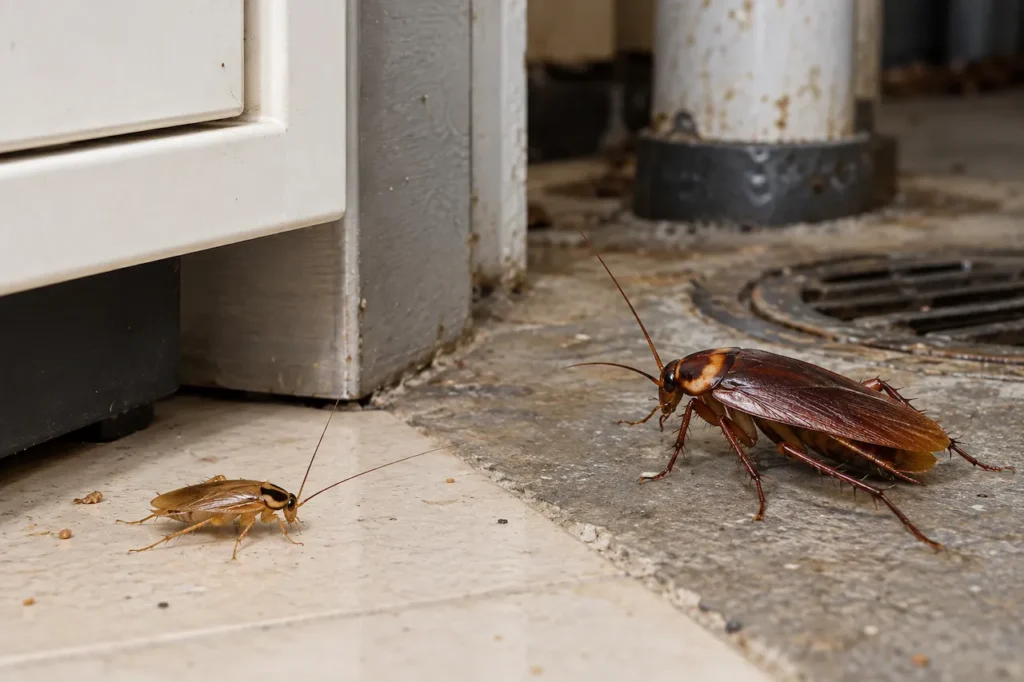
German cockroach California homeowners encounter is a small, fast-breeding indoor pest often confused with the larger American cockroach. Knowing the differences in size, appearance, habitat, and behavior helps you identify the species and choose the right treatment for your Southern California home.
Why Cockroach Species Identification Matters More Than You’d Think
Most store-bought sprays and foggers are built around a single assumption: that the roach came from outside and is just passing through. That assumption is true for one of these two species and completely wrong for the other. Spray the wrong product on the wrong species, and you won’t just fail to solve the problem — you can actually make it worse, scattering a German cockroach colony deeper into wall voids where it’s even harder to reach.
That’s why cockroach species identification is the first real step in solving the problem, not an optional detail.
German Cockroach California: The Indoor Breeder
Size & Color: German cockroaches are small, about ½ to ⅝ inch long, light tan to brown, with two dark parallel stripes running down the back of the head (the pronotum).
Where they live: German cockroaches live their entire lives indoors. They don’t come in from outside — they establish themselves in your kitchen, bathroom, or anywhere warmth, moisture, and food are close together, hiding in cracks, behind appliances, under sinks, and inside cabinet voids.
Why they’re harder to control: A female German cockroach carries her egg case (ootheca) attached to her body until just before the eggs hatch, rather than dropping it somewhere hidden. That means a huge share of the population is protected from contact sprays at any given time — and a single female can be responsible for thousands of descendants in a year. This is the species behind the fast-spreading infestations that seem to explode overnight.
Signs of an established German cockroach problem:
- Small tan roaches seen during the day, not just at night (a sign the population has outgrown its hiding spots)
- Droppings that look like coffee grounds or ground black pepper along cabinet edges and baseboards
- A persistent musty, oily odor in the kitchen or bathroom
- Roaches concentrated near the stove, dishwasher, or under the sink — the warmest, most humid spots in the house
American Cockroach: The Outdoor Scavenger
Size & Color: American cockroaches are much larger — up to 2 inches long — reddish-brown, with a pale yellowish marking shaped like a figure-eight just behind the head. They’re sometimes called “water bugs” because of where they’re usually found.
Where they live: Unlike German cockroaches, American cockroaches live outdoors by default — in sewers, storm drains, yards, and damp exterior areas — and wander inside through gaps, drains, or open doors when they’re chasing moisture or an easy meal. An American cockroach sighting is usually a sign of a moisture or entry-point issue, not an indoor breeding colony.
Signs you’re dealing with American cockroaches, not German:
- Large roaches, usually just one or two at a time rather than a visible population
- Sightings near drains, floor vents, laundry rooms, or garages rather than kitchen cabinets
- Activity that increases after rain, when outdoor burrows and sewer lines flood
German Cockroach vs. American Cockroach: Treatment Differences
This is where identification actually pays off. The right treatment depends entirely on which species you’re dealing with.
| German Cockroach | American Cockroach | |
| Primary approach | Indoor gel baits + insect growth regulators (IGRs) placed in cracks and crevices near harborage sites | Exterior perimeter treatment + sealing entry points + moisture control |
| Why | The colony lives and breeds indoors, so treatment has to reach the harborage points directly | The source is usually outside, so treating the inside alone won’t stop new roaches from wandering back in |
| Typical timeline | Multiple visits over several weeks to break the egg-to-adult breeding cycle | Often resolves faster once entry points and moisture sources are addressed |
| DIY success rate | Low for established infestations — sprays and foggers rarely reach egg-protected females hiding deep in cracks | Moderate for isolated sightings, since sealing gaps and fixing moisture issues often solves it |
The takeaway: treating an American cockroach problem like a German cockroach problem wastes money on unnecessary indoor baiting. Treating a German cockroach problem like an American cockroach problem — a one-time exterior spray — does almost nothing, because the colony was never outside to begin with.
Can You Get Rid of Cockroaches Yourself?
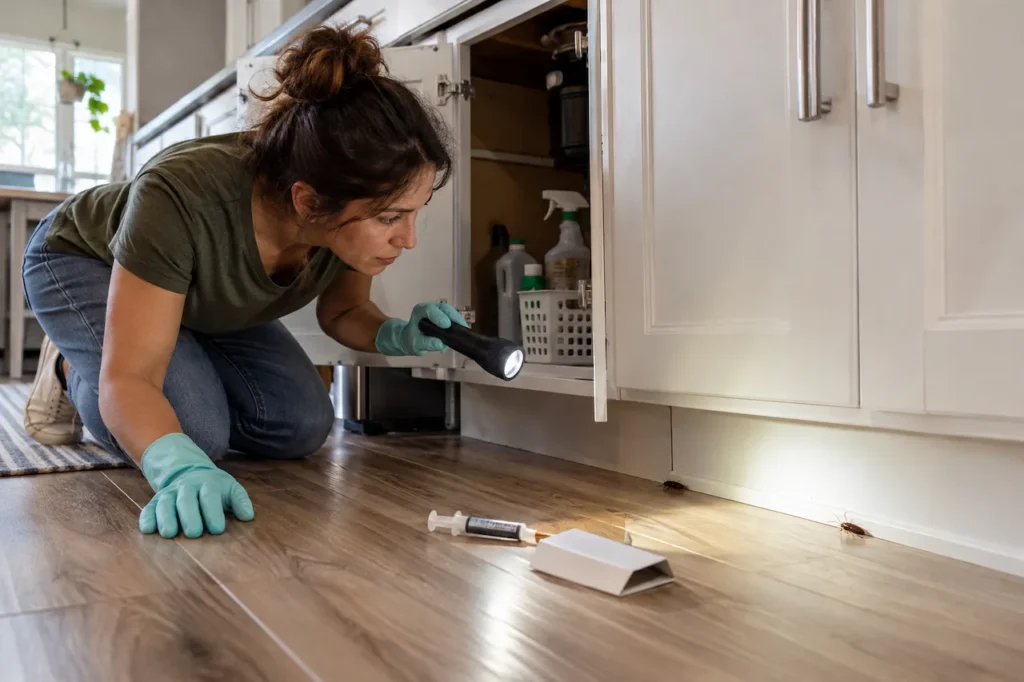
For a single American cockroach that wandered in after a storm, better sanitation, sealing gaps around pipes and doors, and addressing a moisture source can often solve the problem without professional treatment.
For German cockroaches, light, very early cases sometimes respond to careful cleaning and consistent gel baiting. But once you’re seeing roaches during the day, finding droppings along multiple cabinets, or noticing the musty odor, you’re dealing with an established population breeding faster than DIY methods can keep up with — and that’s when professional treatment makes the difference between solving it and chasing it for months.
How We Treat Cockroaches in Los Angeles & Orange County Homes
At Impressive Exterminating, every cockroach call starts with identification, not a generic spray. Our cockroach control service is built around the species we actually find:
- For German cockroach infestations: targeted gel baiting and IGR placement directly at harborage points — behind appliances, inside cabinet voids, under sinks — paired with follow-up visits to break the breeding cycle completely, not just knock down the visible population.
- For American cockroach activity: exterior perimeter treatment, entry-point sealing, and moisture correction to stop roaches from wandering in from drains, sewers, and yards in the first place.
If you’re dealing with a mixed problem — which happens more often in older homes with both indoor cracks and exterior drainage issues — our general pest control plans combine both approaches under one ongoing service, with regular visits so new activity gets caught before it becomes a full infestation again.
We treat homes and businesses throughout Long Beach, Bellflower, Cerritos, Torrance, Downey, and the surrounding Los Angeles and Orange County communities, and every visit starts with a free inspection so you know exactly which species you’re dealing with before any treatment begins. Current customers can also check our special offers page for active discounts on new service plans.
Frequently Asked Questions
How can I tell German and American cockroaches apart quickly?
Size and color are the fastest tell: German cockroaches are small (under ¾ inch) and light tan with two dark stripes behind the head, while American cockroaches are much larger (up to 2 inches), reddish-brown, with a pale figure-eight marking behind the head.
Why do German cockroaches keep coming back even after I spray?
Because the female carries her egg case until just before hatching, a large share of the population is protected from contact sprays at any time. Spraying kills what’s visible but typically misses the eggs and roaches hiding deep in cracks and voids, so the population rebounds within weeks.
Are American cockroaches as dangerous as German cockroaches?
Both species can contaminate food and surfaces and trigger allergies or asthma in sensitive individuals, since cockroach saliva, droppings, and shed skin are common allergens. American cockroaches are generally considered less of an indoor health concern simply because they don’t establish large breeding colonies inside the home the way German cockroaches do.
Can one German cockroach mean I have an infestation?
Not necessarily on its own, but seeing one during the day is a stronger warning sign than it would be for most pests, since German cockroaches are mostly nocturnal — daytime activity often means the hiding spots are overcrowded. It’s worth checking cabinets, under appliances, and baseboards for droppings or a musty smell to confirm.
Why did a cockroach treatment that worked for my neighbor not work for me?
If your neighbor had an American cockroach problem solved with an exterior spray and you’re dealing with an established German cockroach colony indoors, the same treatment simply won’t reach where your population is breeding. This is exactly why identification comes before treatment, not after.
Does sanitation alone get rid of German cockroaches?
Cleaning removes food sources and makes an area less attractive, which helps, but established German cockroach populations can survive on very little food and water. Sanitation supports treatment — it’s rarely enough to fully eliminate a colony on its own.
Don’t Guess — Get the Right Treatment the First Time
Treating the wrong species, or treating both the same way, is the single biggest reason cockroach problems drag on for months. Impressive Exterminating offers free inspections across Los Angeles County and Orange County, so you know exactly which cockroach you’re dealing with and get a treatment plan built around it — not a guess.
Schedule your free cockroach inspection today »
Related reading: Roof Rats vs Norway Rats: Which One Is In Your SoCal Attic? · Rat Control Versus Mouse Control: Key Differences · Mice Versus Rats Infestation Signs to Know · How to Treat Ant Trails and Stop Them for Good