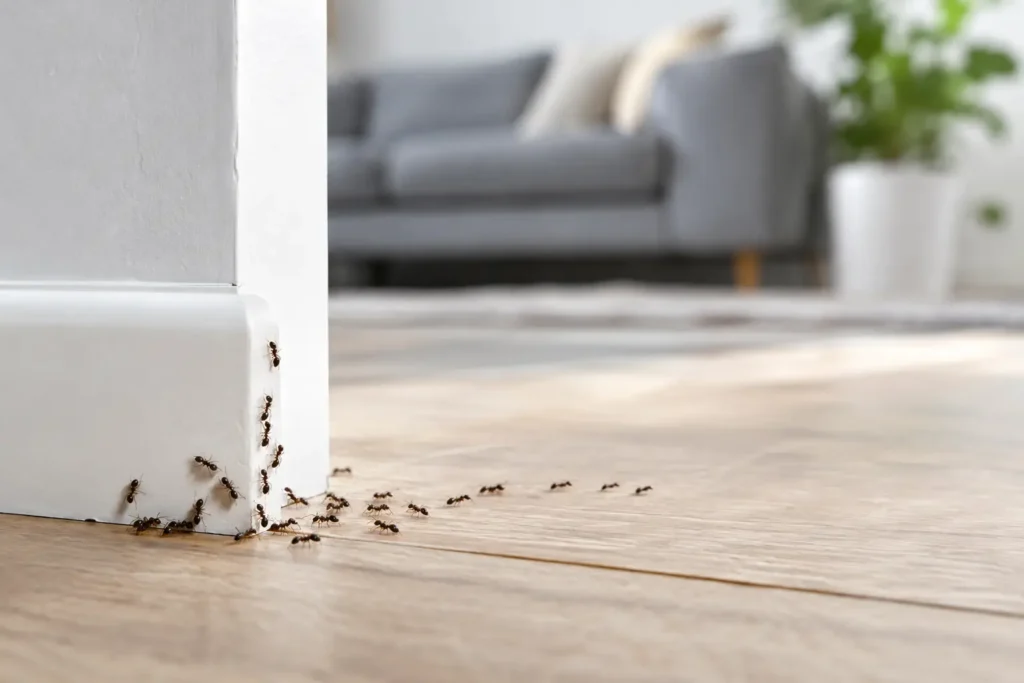
A line of ants can disappear after you clean the counter, only to show up again near the sink, pet bowl, or baseboards a few days later. So, why do ants return indoors even after you have removed the visible trail? Usually, the ants you see are only the foragers. The colony, food source, entry point, or scent trail that sent them inside may still be active.
For homeowners, landlords, and business owners, recurring ants are more than an annoyance. They can contaminate food areas, frustrate tenants and customers, and signal a moisture or access issue that needs attention. The good news is that repeat ant activity is preventable when the problem is treated at its source rather than only where ants are visible.
Why Do Ants Return Indoors?
Ants do not wander into a building at random. They follow resources and communicate efficiently with the rest of the colony. When one scout finds water, food, shelter, or a way inside, it leaves a chemical scent trail. Other ants follow that trail, strengthen it, and begin carrying resources back to the nest.
Wiping up the ants breaks up the immediate activity, but it may not eliminate the colony or remove the conditions that attracted them. In Southern California, ants can stay active for much of the year. Warm weather, dry outdoor conditions, and occasional moisture around kitchens, bathrooms, or irrigation can make indoor spaces especially attractive.
A return visit does not always mean a treatment failed. It can mean the colony is still being affected, another nearby colony has found the same entry point, or the original attractant has not been corrected. The right response depends on the ant species, the size of the infestation, and where the ants are nesting.
The Most Common Reasons Ants Keep Coming Back
Food is still easy to find
Even small crumbs and sticky residue can keep foraging ants interested. Sugar, grease, fruit, pet food, open pantry items, and residue around trash containers are common attractants. A kitchen can look clean and still provide enough food for an active colony.
This is especially common in shared buildings, offices, break rooms, restaurants, and rental properties. One unit or workspace may be spotless while another provides the food source supporting the trail. That is why recurring commercial or multifamily ant problems often require a property-wide plan rather than a single spot treatment.
Store dry goods in sealed containers, wipe counters and appliance edges, sweep beneath dining areas, and avoid leaving pet food out overnight. These steps help, but cleaning alone rarely resolves an established infestation.
Water and moisture are available
Ants need water, and dry periods often push them indoors to find it. Leaky pipes, damp cabinets, condensation, slow drains, wet mops, and overwatered houseplants can all provide what they need. Bathrooms, kitchens, laundry rooms, garages, and areas near water heaters deserve special attention.
Moisture also matters because it can point to a maintenance concern. Water-damaged wood, plumbing leaks, and poor drainage can create conditions that attract ants and other pests. If ants repeatedly appear in the same area, checking for moisture is just as important as looking for food.
The colony was not reached
Spraying visible ants may give quick relief, but contact sprays can miss the nest entirely. In some cases, they can scatter foragers and make the pattern of activity harder to track. Ant colonies may be in soil, wall voids, under slabs, landscaping, attic spaces, or other protected areas that are not obvious from indoors.
Effective ant control focuses on the colony, its travel routes, and the conditions around the property. Depending on the species and location, professionals may use targeted baiting, exterior perimeter treatment, crack-and-crevice applications, monitoring, and exclusion recommendations. The goal is not simply to reduce the number of ants on the counter. It is to stop the colony from successfully using your building.
Scent trails remain active
Ants use pheromones to direct other ants to a food or water source. Standard cleaning can remove much of a trail, but trails may continue along baseboards, behind appliances, in cabinet gaps, and near windows or doors. If the original path remains appealing, new foragers can rebuild activity quickly.
Clean affected surfaces thoroughly and pay close attention to edges, corners, and hidden areas. Then address the reason the trail formed in the first place. Removing the scent without correcting food, moisture, or access often gives only temporary results.
Small gaps create repeat access
Ants can enter through openings that are easy to overlook: gaps around pipes, worn weatherstripping, window tracks, door thresholds, utility penetrations, foundation cracks, and openings around exterior vents. They may also travel from trees, shrubs, ground cover, or irrigation areas that touch or sit close to the structure.
Sealing accessible gaps can make a meaningful difference, but it should be done after inspection. Blocking one opening does not eliminate a colony, and ants may simply choose another route. A professional inspection helps identify the active pathways and the areas that need long-term exclusion.
Why Ant Treatments Sometimes Seem to Make Activity Worse
After certain bait treatments, you may briefly notice more ants. That can be unsettling, but it is not always bad news. Baits are designed to be carried back and shared within the colony, so foraging activity can become more visible before it declines.
The key is to avoid disturbing treated areas or adding random sprays near bait placements unless instructed to do so. Repellent products can discourage ants from feeding on the bait and may reduce the treatment’s effectiveness. Follow the service recommendations and allow enough time for the product to work through the colony.
Results vary by species, colony size, weather, and whether there are multiple nests on the property. A qualified technician should explain what level of activity is normal after service, when improvement should occur, and when a follow-up visit is appropriate.
How to Stop Ants From Returning Indoors
The most dependable plan combines sanitation, moisture control, exclusion, and professional treatment when activity persists. Start by removing accessible food and water, then reduce the pathways ants use to enter.
Keep kitchen and dining surfaces free of crumbs, rinse recyclables, take trash out regularly, and place food in sealed containers. Repair plumbing leaks, dry wet areas promptly, and avoid excessive watering near the foundation. Trim vegetation away from exterior walls when possible, especially branches or plants that create a bridge to windows and rooflines.
Next, look for gaps around doors, windows, pipes, and utility lines. Replacing worn door sweeps and sealing obvious openings can reduce access. If you live in a townhome, apartment building, or managed property, notify the property manager when activity appears to move between units. Ants do not recognize unit boundaries, and successful control may require coordinated service.
For recurring activity, an inspection is the fastest way to avoid wasting time and money on temporary fixes. A licensed pest control professional can identify likely species, inspect exterior nesting zones, locate entry points, and select a treatment method that is appropriate for the property. This is particularly valuable for persistent trails, large numbers of ants, ants appearing from wall voids, or activity that returns after repeated store-bought treatments.
When to Call for Professional Ant Control
Call for professional help when ants return within days or weeks, when you see multiple trails, or when the problem spreads beyond one room. You should also schedule service if ants are appearing around electrical outlets, inside cabinets, near plumbing, or in a business where food safety and customer experience are priorities.
Carpenter ants deserve prompt attention because they can nest in damp or damaged wood. While they do not eat wood like termites, their excavation can contribute to damage over time. Correct identification matters, since treatment approaches differ between carpenter ants, Argentine ants, odorous house ants, and other common species.
Impressive Exterminating provides inspection-driven ant control for homes and businesses across Los Angeles County and Orange County, with treatment plans designed for fast relief and lasting prevention. Safe, targeted service can address the active infestation while helping reduce the conditions that invite ants back.
If ants keep finding their way indoors, do not settle for repeatedly wiping away the trail. Address the colony, the access points, and the attractants together, and your property has a much better chance of staying protected.