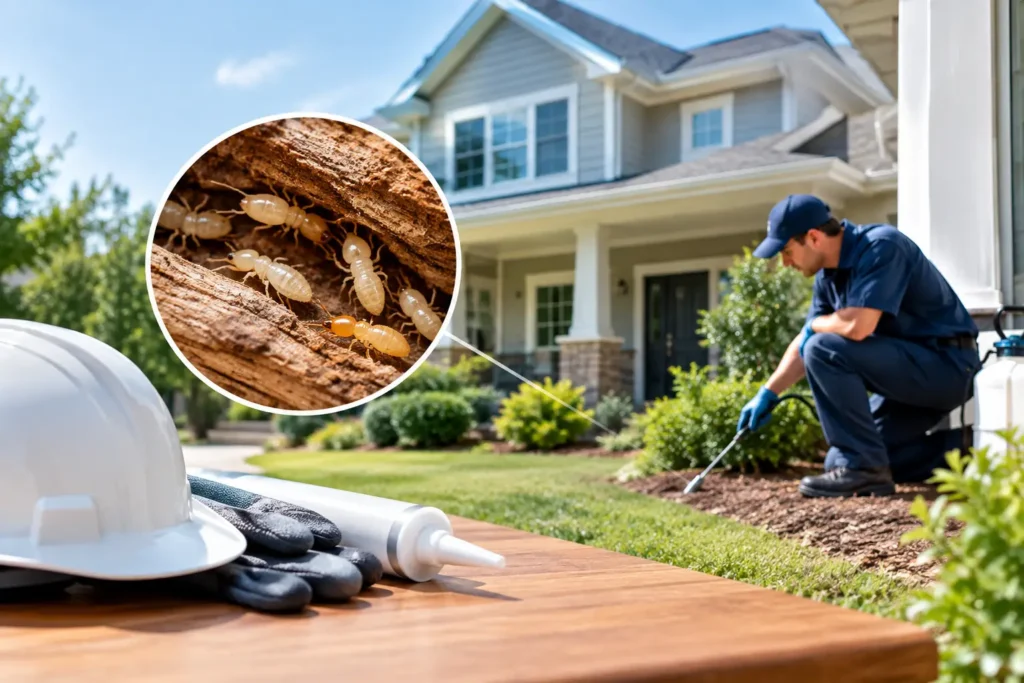
A small mud tube on a foundation wall or a few discarded wings near a window can signal a problem that has been developing out of sight for months. The best termite prevention methods focus on removing the conditions termites need before they reach the wood in your home or building. For Southern California property owners, that means managing moisture, limiting wood-to-soil contact, sealing entry points, and scheduling professional inspections before damage becomes expensive.
Termite prevention is not one product or one weekend project. It is a practical maintenance plan that protects the structure over time. The right approach depends on the property’s age, construction, landscaping, moisture conditions, and history of termite activity.
1. Keep Moisture Away From the Structure
Termites need moisture to survive, especially subterranean termites that travel through soil. A slow plumbing leak, clogged gutter, dripping hose bib, or poorly drained planter can create the damp conditions that make a property more attractive.
Start with the areas closest to the foundation. Repair leaking faucets, irrigation lines, roof leaks, and damaged plumbing as soon as possible. Make sure gutters and downspouts direct water away from the building, not toward the foundation or crawl space. Air-conditioning condensate lines should also drain properly.
For homes with crawl spaces, adequate ventilation and moisture control are especially important. Damp wood, standing water, and poor airflow can attract termites while also creating conditions for wood rot. If a moisture issue keeps returning, address the source rather than repeatedly treating the symptoms.
2. Eliminate Wood-to-Soil Contact
Direct contact between soil and wood gives subterranean termites an easy, hidden route into a structure. Wood siding, trim, deck posts, fence boards, and stored lumber should not sit directly on the ground near your home.
Keep exposed structural wood separated from soil whenever possible. If landscaping has built up against stucco or siding over time, pull it back to maintain a visible inspection gap. Termites often use mud tubes to travel from the soil to wood, and this clearance makes those tubes easier to spot.
Firewood deserves special attention. Store it off the ground and as far from the house, garage, or commercial building as practical. Firewood stacks can harbor termites without showing obvious signs from the outside. Bringing infested wood close to a structure creates an unnecessary risk.
3. Manage Mulch, Plants, and Landscaping
Mulch can be useful for conserving water and protecting plants, but it should not be piled high against the foundation. Thick layers retain moisture and can hide termite activity from view. Keep mulch several inches away from exterior walls, weep screeds, and foundation edges.
The same rule applies to dense shrubs, vines, and ground cover. Plants touching the building can trap moisture, block inspection access, and create hidden pathways for pests. Trim vegetation so exterior walls remain visible and air can circulate around them.
This does not mean every landscaped property will develop termites. It means landscaping should be designed and maintained with the structure in mind. In Los Angeles County and Orange County, where irrigation is common for much of the year, an overwatered planting bed beside a building can be a more significant concern than the mulch itself.
4. Seal Gaps That Give Termites Access
Termites can enter through surprisingly small openings around utility lines, plumbing penetrations, expansion joints, vents, and cracks in concrete. Sealing these gaps will not replace a professional termite treatment when an infestation is active, but it can reduce easy access points.
Inspect the exterior around pipes, cable lines, doors, windows, and foundation openings. Replace damaged weatherstripping, repair cracks where appropriate, and use suitable sealants around penetrations. Screen vents that need protection, while keeping required airflow intact.
Pay close attention to areas where additions, patios, porches, or decks meet the original structure. These transitions can conceal gaps and moisture problems. If you are unsure whether a crack is cosmetic or may affect pest entry, an inspection provides a clearer answer than guessing.
5. Do Not Ignore Drywood Termite Risks
Not every termite comes from the soil. Drywood termites can live inside dry, sound wood and do not require contact with the ground. They may infest attic framing, eaves, window frames, furniture, fencing, or structural timbers.
One common sign is small, pellet-like droppings called frass. Homeowners may find them below a kick-out hole in wood, on a windowsill, in an attic, or near baseboards. Swarming termites may also leave behind wings near lights, windows, or doors.
Because drywood termite colonies can remain hidden within wood, moisture control alone is not enough prevention. Regular inspections matter, particularly for older homes, properties with exposed wood details, and buildings with a past termite history. Local conditions, construction style, and the type of termite involved determine whether localized treatment, whole-structure treatment, or another plan is appropriate.
6. Schedule Professional Termite Inspections
A professional inspection is one of the best termite prevention methods because it identifies activity that is easy to miss. Termites work inside walls, beneath flooring, under cabinets, in crawl spaces, and behind landscaping. By the time visible damage appears, the colony may have been feeding for a long time.
For many properties, an annual termite inspection is a sensible baseline. Homes with prior termite damage, recurring moisture problems, extensive wood features, or nearby activity may need more frequent monitoring. Property managers should also consider inspections between tenants or before major repairs, since hidden termite conditions can complicate maintenance budgets and timelines.
An inspection should do more than identify termites. It should point out conducive conditions, such as soil contact, leaking fixtures, poor drainage, inaccessible areas, or damaged wood. That gives you a prevention plan tailored to the building instead of generic advice that may not address the actual risk.
7. Use Professional Prevention When Risk Is High
DIY maintenance can reduce risk, but it cannot always protect a structure with known termite pressure. If termites have been found on the property, a neighboring property has active termites, or the building has a history of recurring infestations, professional preventive treatment may be the most cost-effective decision.
Depending on the termite species and construction, a licensed technician may recommend a soil treatment, baiting system, localized treatment, wood treatment, or ongoing monitoring. Each option has trade-offs. Soil treatments can create a protective barrier for subterranean termite activity, while bait systems require monitoring and may take time to affect a colony. Localized treatments can be appropriate for contained drywood activity, but they may not be the right choice when evidence suggests termites are spread through multiple areas.
The goal is not to sell the biggest treatment. It is to match the protection plan to the property, the termite type, and the extent of risk. A qualified inspection helps determine what is necessary and what is not.
Warning Signs That Should Not Wait
Prevention becomes urgent when you see evidence of active termites. Contact a professional promptly if you notice mud tubes on walls or foundations, discarded swarmers’ wings, frass, hollow-sounding wood, bubbling paint, soft baseboards, or doors and windows that suddenly stick without another clear explanation.
These signs do not always confirm termites on their own. Water damage, settling, and other wood-destroying pests can look similar. Still, waiting to see whether the problem gets worse gives termites more time to feed. Fast identification protects both the structure and your repair budget.
For homeowners, landlords, and business owners, prevention is most effective when it becomes routine property care rather than a reaction to visible damage. Impressive Exterminating can inspect high-risk areas and recommend safe, effective termite protection based on the conditions at your property. A little attention to drainage, wood exposure, and early inspections can keep a small warning sign from becoming a major repair project.