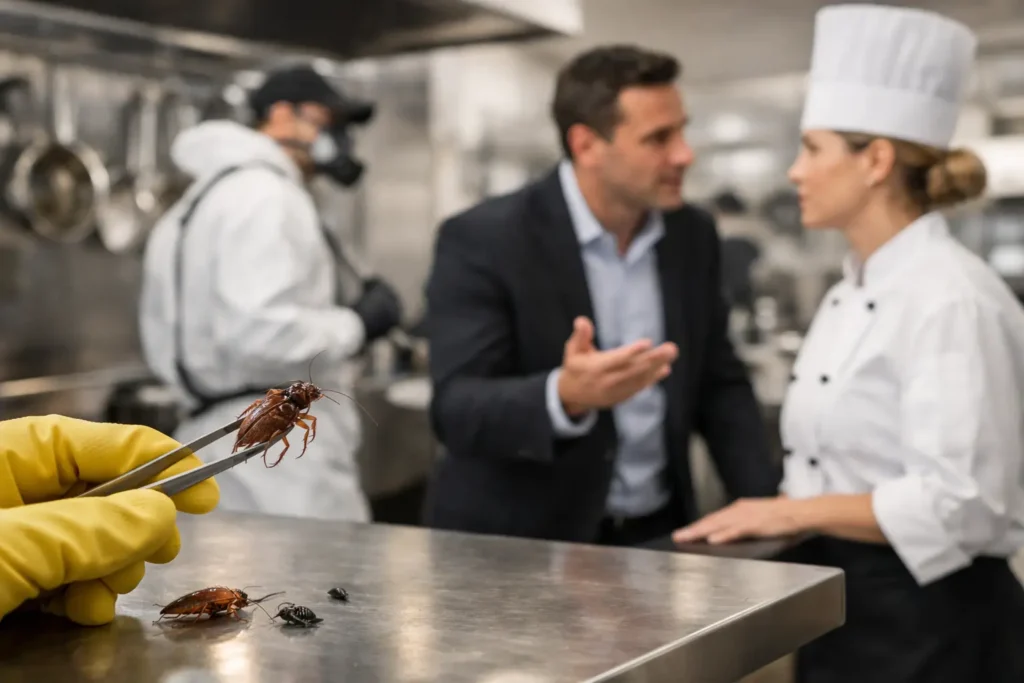
A restaurant pest incident can move from a single customer complaint or employee sighting to a serious operational problem in a matter of hours. Whether you have seen a rodent near dry storage, cockroaches behind a prep line, flies around a drain, or ants near a service area, the right first response protects your guests, your staff, your food, and your reputation.
The goal is not to panic or cover up the issue. It is to contain the risk, document what happened, correct the conditions attracting pests, and bring in professional help when the situation requires it. Fast, organized action can make a major difference for restaurants throughout Los Angeles County and Orange County.
First Steps After a Restaurant Pest Incident
Start by removing the immediate risk from service. If a pest is seen near exposed food, food-contact surfaces, clean utensils, or packaging, stop using the affected area until it can be properly inspected and sanitized. Do not assume that moving an item a few feet away solves the problem. Pests can contaminate food and surfaces through droppings, urine, body parts, and contact with unsanitary areas.
Your manager on duty should record the time, location, type of pest if known, and any food or materials that may have been affected. If appropriate, take clear photos for your internal records and pest control professional. Documentation helps identify patterns, supports corrective action, and gives you a factual record if a customer, landlord, inspector, or employee raises questions later.
Take these immediate actions before the next rush:
- Discard food that may have been contaminated or cannot be confidently protected.
- Cover, relocate, or seal unaffected food and single-use service items.
- Clean and sanitize the affected area according to your established food safety procedures.
- Inspect nearby spaces, including floor drains, wall gaps, storage racks, dumpsters, and equipment voids.
- Notify the appropriate manager, facilities contact, or property manager and schedule a pest inspection quickly.
Do not spray store-bought insecticide around food preparation areas as a quick fix. Improper products or applications can create food safety concerns, may not reach the source of the infestation, and can drive pests deeper into walls, equipment, or neighboring suites.
Protect Food, Guests, and Your Reputation
A pest sighting does not always mean an extensive infestation, but it always deserves a serious response. One mouse in a dining area may have entered through an open delivery door. It may also point to a structural entry point, a nearby nesting site, or accessible food and water. The difference becomes clear through a thorough inspection, not guesswork.
Keep staff communication practical and professional. Employees need to know who to notify, which areas to stop using, and how to protect food during cleanup. They do not need conflicting instructions or blame. A clear reporting process helps your team respond consistently when something is spotted during a busy shift.
If a guest reports seeing a pest, listen calmly, document the concern, and alert management immediately. Avoid making promises before the area has been evaluated. A courteous response, prompt cleanup, and visible corrective action are more credible than minimizing what the guest saw.
For serious activity, recurring sightings, or pests found in food storage and preparation areas, review applicable local health department requirements. Reporting and closure decisions can depend on the pest, the level of activity, the affected area, and local regulations. A licensed pest management professional can provide treatment documentation, but restaurant management remains responsible for food safety practices and regulatory compliance.
Find the Conditions That Brought Pests In
Pest control in a restaurant is not only about eliminating what is visible. Rodents, roaches, flies, and ants stay where they can find food, moisture, shelter, and easy access. If those conditions remain, a one-time treatment may provide only temporary relief.
Start with food storage. Dry goods should be kept in sealed, pest-resistant containers where practical and stored off the floor with enough space to inspect behind and beneath shelving. Check deliveries before they enter storage, especially boxes, produce crates, beverage cases, and bulk ingredients. Pests can arrive with shipments, then spread quickly through warm, busy kitchens.
Moisture is another major factor. Leaking pipes, condensation under refrigeration equipment, standing water around dish areas, and poorly maintained floor drains can support pest activity. Drain flies, cockroaches, and rodents are often drawn to these overlooked areas because they offer water and shelter with little disruption.
Exterior conditions matter, too. Overflowing dumpsters, grease buildup, open trash lids, dense landscaping against the building, and gaps around utility lines can turn the outside of a restaurant into a pest staging area. Your provider should inspect both the interior and exterior, because treating only where pests are seen often misses how they entered.
High-Risk Areas Worth Checking Daily
A strong restaurant prevention routine includes quick checks during opening and closing duties. Look beneath sinks, behind cook lines, around dish machines, inside cabinet corners, near beverage stations, and along the edges of storage rooms. Pay attention to droppings, gnaw marks, grease trails, egg cases, damaged packaging, unusual odors, and recurring insect activity.
Most restaurants do not need staff to identify every pest species. They do need staff to recognize the warning signs early. Early reporting allows treatment to begin before an issue reaches the dining room, spreads to inventory, or disrupts service.
Why Professional Treatment Should Be Customized
Restaurants have unique pest control needs. They operate long hours, receive frequent deliveries, handle food continuously, and use equipment that creates heat, moisture, and hard-to-reach harborages. A treatment plan for a restaurant should account for the layout, operating schedule, food safety procedures, pest pressure, and neighboring businesses.
For example, rodent control may require exterior exclusion work, tamper-resistant monitoring stations, interior trapping in approved locations, sanitation improvements, and follow-up inspections. Cockroach control may involve detailed crack-and-crevice treatment, targeted baiting, drain evaluation, equipment pull-outs, and monitoring. Fly control may focus on drains, waste handling, door practices, and the specific species present.
The trade-off is simple: the fastest visible treatment is not always the most reliable long-term solution. A provider who only applies a general spray may reduce activity temporarily without correcting entry points or breeding areas. Inspection-driven service takes more coordination, but it gives your restaurant a better chance of preventing repeat incidents.
Ask your pest control company for clear service records after each visit. These should identify the areas inspected, pest evidence found, treatment performed, recommendations made, and follow-up timing. Good documentation supports accountability between restaurant staff, ownership, property management, and the pest control team.
Build Prevention Into Daily Restaurant Operations
The best response to a restaurant pest incident is a better prevention program after the immediate issue is resolved. Assign responsibility for waste removal, drain maintenance, food storage checks, receiving inspections, and reporting pest evidence. These tasks do not need to slow down the kitchen. They need to be consistent.
Close doors when possible, maintain door sweeps, and repair damaged screens promptly. Seal gaps around pipes, conduits, vents, and utility penetrations. Make sure trash is removed on schedule and that dumpster areas are cleaned often enough to avoid buildup. Small maintenance issues can become major access points when they are ignored during a busy season.
Ongoing pest management is especially valuable for restaurants near shared retail spaces, older buildings, alleys, construction activity, or high-traffic commercial corridors. Pest pressure can change when a neighboring tenant moves out, a nearby property begins construction, or seasonal weather drives rodents and insects indoors. Regular monitoring catches those changes before they become an emergency.
Impressive Exterminating provides inspection-based commercial pest control designed around the pace and safety needs of Southern California businesses. A customized plan can address immediate activity while helping your team reduce the conditions that bring pests back.
A restaurant is built on details guests may never notice: a clean prep area, protected ingredients, a well-maintained back door, and a team that knows what to do when something is wrong. Treat every pest sighting as a signal to act quickly, correct the cause, and protect the standards your customers count on.