A scratching sound above the ceiling at night, chewed food packaging in the pantry, or small droppings behind the refrigerator can turn a minor concern into an urgent problem quickly. A mice versus rats infestation may look similar at first, but identifying the rodent helps determine where it is hiding, how it entered, and how quickly the problem can grow.
Both rodents contaminate food, damage wiring and insulation, and create health concerns through droppings and urine. The difference is that rats are larger, stronger, and often capable of causing more extensive property damage, while mice can squeeze through remarkably small openings and multiply quickly inside homes, apartments, restaurants, and offices.
Mice Versus Rats Infestation: The Key Differences
The most useful clues are the size and shape of droppings, the damage you see, and where activity is occurring. You may not see the rodent itself because both mice and rats are most active after dark. Fresh evidence, however, tells a clear story.
What mouse activity looks like
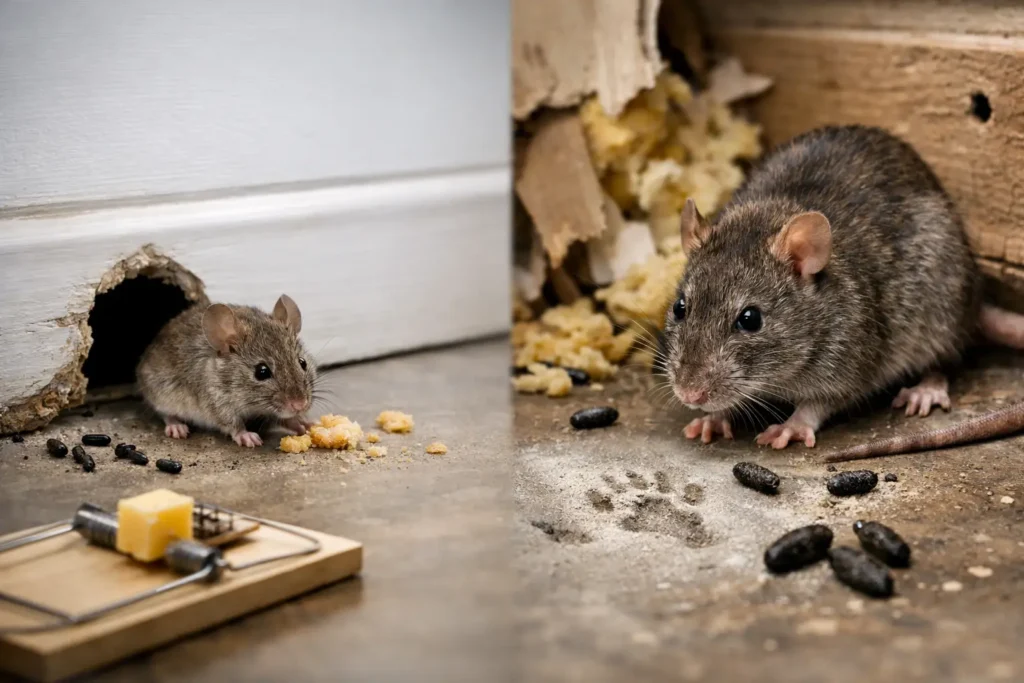
House mice are small, usually gray or brown, with pointed noses, large ears, and long tails. Their droppings are typically small, dark, and pointed at both ends, often about the size of a grain of rice. You may find them along walls, inside drawers, under sinks, in pantries, or behind appliances.
Mice can fit through gaps around one-quarter inch wide. That means a small opening around a utility line, garage door, plumbing pipe, or worn weatherstripping can be enough for entry. Once indoors, they tend to nest in quiet, warm areas such as wall voids, attics, closets, stored boxes, and kitchen cabinets.
Mouse infestations often create light scratching sounds in walls or ceilings. They may shred paper, fabric, insulation, and cardboard to build nests. Their chewing damage is usually smaller than rat damage, but it should never be ignored. Mice can chew electrical wiring, creating a potential fire hazard.
What rat activity looks like
Rats are substantially larger than mice and leave more obvious evidence. Norway rat droppings are blunt at the ends and generally larger than mouse droppings. Roof rat droppings are more elongated and pointed. Either way, fresh rat droppings deserve prompt attention because they can indicate active indoor movement.
Rats often leave greasy rub marks along baseboards, pipes, beams, and other repeated travel routes. Their bodies carry oils and dirt, so frequent contact can produce dark streaks. You may also hear louder movement in an attic, crawl space, wall, or ceiling, especially at night.
Roof rats are skilled climbers and commonly access homes through trees, utility lines, roof gaps, attic vents, and openings near eaves. Norway rats are more likely to stay lower to the ground, nesting around foundations, garages, crawl spaces, sheds, landscaping, and drainage areas. The exact hiding place matters because effective control must address the rodent’s travel path, not just the area where droppings were found.
Why the Right Identification Matters
A single trap placed in the kitchen may catch one mouse, but it will not solve an infestation if several mice are nesting behind walls. The same is true for rats. Removing one visible rat without sealing access points and addressing outdoor conditions can leave the door open for more activity.
Rats generally require more durable exclusion work because they can gnaw through weak materials and enlarge existing gaps. Mice require close attention to smaller cracks, gaps, and penetrations that are easy to overlook. Treatment placement also differs based on rodent behavior, food sources, nesting zones, and whether children, pets, tenants, or customers are present.
For property managers and business owners, proper identification also affects response time and sanitation needs. A rodent issue in a restaurant storage room, office break room, apartment kitchen, or retail space can lead to food contamination, tenant complaints, and reputational damage. Fast action protects the property and the people using it.
Signs You Have More Than One Rodent
Finding one dropping does not always mean there is a major infestation, but fresh or repeated evidence should not be treated as a one-time event. Rodents reproduce quickly when food, water, and shelter are available. A small issue can become much harder to manage after a few weeks.
Watch for several signs at once: new droppings appearing after cleaning, gnaw marks on food packages or wood, shredded nesting material, nighttime sounds, unusual pet behavior near walls or cabinets, and a stale or musky odor in enclosed areas. In an attic or crawl space, damaged insulation and visible trails through dust can point to ongoing rodent traffic.
Do not sweep or vacuum dry droppings. Wear gloves, ventilate the area, and use an appropriate disinfecting method before carefully removing the material. This reduces the chance of stirring contaminated particles into the air. If droppings are widespread or located in difficult areas, professional cleanup guidance is the safer choice.
What Causes Rodents to Move Inside
Southern California properties can experience rodent activity year-round. Cooler weather, construction nearby, landscaping changes, and easy access to food or water can all push mice and rats toward a building. A clean property can still have a rodent problem if there is an accessible entry point.
Common attractants include pet food left out overnight, unsecured trash, fallen fruit, birdseed, cluttered storage, leaking pipes, and dense vegetation touching the structure. Outdoor conditions matter as much as indoor conditions. Tree branches near a roof can give roof rats a direct route to attic openings, while gaps under garage doors and damaged vents can provide easy access for mice.
Effective Control Requires More Than Traps
Traps can be useful, but they work best as part of a complete rodent control plan. The goal is to remove current activity while preventing the next rodent from entering. Relying on a few store-bought traps can be frustrating when the nesting area is hidden or the entry point remains open.
A professional inspection should focus on the full property: the attic, crawl space, garage, kitchen, exterior walls, roofline, vents, utility penetrations, and nearby vegetation. From there, the right plan may include targeted trapping, exclusion recommendations, monitoring, sanitation guidance, and follow-up visits.
Avoid placing rodenticides where children, pets, or non-target animals could reach them. Rodent control should be handled carefully and strategically, especially in occupied homes, multifamily properties, and commercial settings. Safe, effective treatment is not about using more product. It is about using the right method in the right location and checking results.
When to Call for Professional Rodent Control
Call for help promptly if you hear regular noises in the walls or attic, find fresh droppings repeatedly, see a rat indoors, notice chewed wiring, or manage a property where tenants or customers could be affected. An inspection is especially valuable when activity is occurring in inaccessible areas or when previous DIY efforts have not worked.
For homeowners and businesses across Los Angeles County and Orange County, Impressive Exterminating provides inspection-driven rodent control designed to address the immediate problem and the conditions allowing it to continue. A customized plan can protect the building without adding unnecessary stress for your family, tenants, employees, or customers.
Fresh droppings and new chewing marks are not details to watch for later. Addressing them early gives you the best chance to stop rodent activity before a mouse or rat problem becomes a larger repair, sanitation, and safety issue.