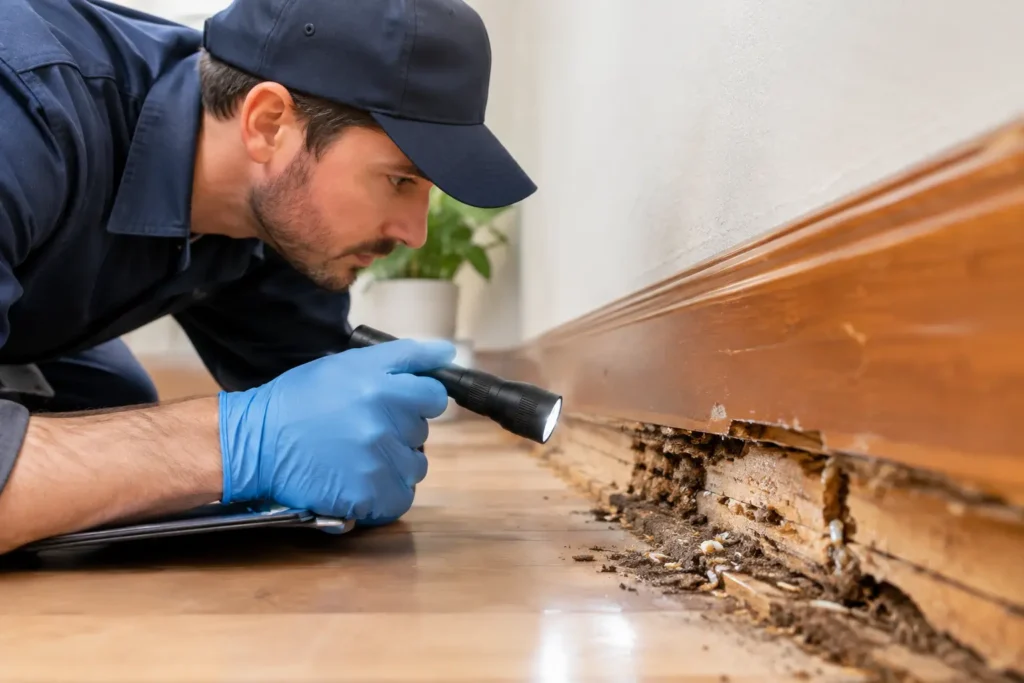
A small pile of what looks like sawdust near a window frame can mean much more than a cleanup job. In Southern California, termites can stay hidden inside walls, attics, foundations, and wood trim while causing costly damage over time. A professional termite control service identifies the species, finds the extent of activity, and recommends treatment that addresses the source instead of only the visible signs.
For homeowners, landlords, property managers, and business owners, speed matters. The sooner termite activity is inspected, the more options you may have for controlling it before repairs become more extensive.
Signs You Should Schedule a Termite Inspection
Termites are not always obvious. They feed from the inside of wood outward, so a surface can look normal even when there is damage behind it. That is why an inspection is the right first step when something seems off.
Common warning signs include hollow-sounding wood, bubbling or peeling paint, doors or windows that suddenly stick, and small piles of pellet-like droppings near baseboards, window sills, or furniture. Drywood termites often leave behind these small pellets, called frass, as they push waste out of the wood where they are feeding.
Subterranean termites leave different clues. You may see pencil-width mud tubes along a foundation, garage wall, crawl space, plumbing entry point, or exterior structure. These tubes help termites travel between the soil and a food source while staying protected from dry air.
Winged insects indoors are another reason to call. Swarmers may appear near windows, lights, or doors, often after warm weather or moisture. Flying ants can look similar, so an accurate identification is essential. A licensed professional can tell the difference and determine whether the insects are a current termite issue, evidence of an established colony, or a seasonal nuisance.
What a Termite Control Service Should Include
A good termite treatment is not a one-size-fits-all spray. The right approach depends on the termite species, where activity is found, the construction of the building, access to affected areas, and whether there is an active infestation or a prevention concern.
The process should start with a detailed inspection. A technician examines accessible interior and exterior areas, including foundations, crawl spaces, attic framing, garages, wood fencing, eaves, and areas around plumbing or utility lines. They should explain what they found in clear terms, identify conditions that may attract termites, and provide a written recommendation before treatment begins.
Treatment may involve localized work, whole-structure fumigation, soil treatment, wood treatment, or monitoring, depending on the situation. Localized treatment can be a practical choice when activity is limited and accessible. It may involve treating affected wood or targeted voids where termites are present. However, it is not always the best option for widespread drywood termite activity hidden in multiple areas of a structure.
Fumigation is often recommended when drywood termites are extensive or difficult to locate. It treats the entire structure and can eliminate termites throughout the building, but it requires preparation and temporary vacancy. For many property owners, that disruption is worthwhile when the alternative is leaving hidden colonies behind.
For subterranean termites, treatment frequently focuses on the soil around and beneath a structure. The goal is to create a protective treatment zone that interrupts termite access. Because foundations, landscaping, drainage, slab construction, and utility lines vary, the exact treatment plan should be customized to the property.
Why the Cheapest Quote Is Not Always the Best Value
It is reasonable to compare termite treatment estimates. The key is comparing what each estimate actually covers. A low price may only address one visible spot, while another proposal may include a more complete inspection, targeted treatment of multiple areas, follow-up service, and prevention recommendations.
Ask whether the estimate identifies the termite species, the treatment areas, the preparation needed, and any follow-up or warranty terms. Also ask what is excluded. Repairing termite-damaged wood, addressing hidden moisture problems, and treating inaccessible areas may be separate services. Clear answers up front help prevent surprises later.
The best value is a plan that makes sense for the actual risk at your property. A small, contained issue may not need a whole-structure treatment. On the other hand, choosing a limited treatment for widespread activity simply because it costs less can lead to recurring problems and additional expense.
Termite Prevention Between Professional Visits
No property is completely immune to termites, especially in areas with warm temperatures and wood construction. Prevention reduces the conditions that make your home or business more attractive and makes new activity easier to catch early.
Start by keeping wood-to-soil contact to a minimum. Firewood, lumber, cardboard, old stumps, and wood debris should be kept away from the structure. Wooden planters, fence posts, and landscape materials deserve regular attention when they touch the ground near the building.
Moisture management also matters. Repair dripping exterior faucets, leaking pipes, and irrigation overspray. Make sure gutters and drainage move water away from the foundation. In crawl spaces or enclosed areas, poor ventilation and damp wood can create conditions that support termite activity.
Keep an eye on exterior trim, eaves, window frames, and door frames. Cracked caulk, damaged paint, and exposed wood do not automatically mean termites are present, but they can create entry points or conceal early evidence. Regular inspections are particularly useful for rental properties, older homes, and buildings with past termite history.
Special Considerations for Rentals and Commercial Properties
For landlords and property managers, termite concerns need a quick, documented response. Tenants may report pellet piles, damaged trim, or insects near windows without knowing what they are seeing. Scheduling a professional inspection promptly protects the property, gives tenants clear information, and helps prevent a small report from becoming a larger maintenance issue.
Commercial properties have their own challenges. Restaurants, offices, retail spaces, warehouses, and multi-unit buildings may have limited access hours, customer-facing areas, or operating schedules that affect treatment planning. An experienced provider should work around those realities whenever possible while keeping the treatment effective and the process clear.
In Los Angeles County and Orange County, construction types can vary dramatically from one property to the next. A detached home with an attic, a slab-on-grade retail space, and a multi-unit apartment building each require a different inspection strategy. That is why a site-specific recommendation is more reliable than a generic quote based only on square footage.
Questions to Ask Before You Approve Treatment
Before selecting a termite company, ask what type of termites were found and how the technician confirmed it. Find out whether the recommendation treats active termites, prevents future entry, or both. You should also understand preparation requirements, expected timing, safety instructions for people and pets, and what follow-up is included.
A reliable provider will not pressure you to choose a treatment you do not understand. They should explain the trade-offs in plain language and help you decide based on the condition of your property, not fear.
Impressive Exterminating provides inspection-driven termite solutions designed around the property and the level of activity found. Whether you are dealing with suspicious pellets in a Long Beach home, mud tubes at a rental property, or visible damage at a business, prompt professional attention can protect the structure and reduce uncertainty.
If you have noticed possible termite signs, avoid disturbing the evidence or sealing the area before it is inspected. Take a clear photo if possible, keep the area accessible, and schedule an evaluation. Acting early gives you the best chance to stop termite activity before hidden damage has more time to spread.