A pencil-width mud tube near a foundation, a pile of what looks like sawdust, or a soft spot in a window frame can make any property owner worry. But termite inspection versus treatment is not usually an either-or decision. A thorough inspection tells you whether termites are active, what type may be present, how far the issue has spread, and which treatment can actually solve it.
Moving straight to treatment without understanding the infestation can waste money or leave hidden activity behind. Waiting too long after clear warning signs can allow termites to continue damaging framing, trim, flooring, and other wood components. The right next step depends on the evidence – and a professional inspection is where that evidence starts.
Termite Inspection Versus Treatment: The Key Difference
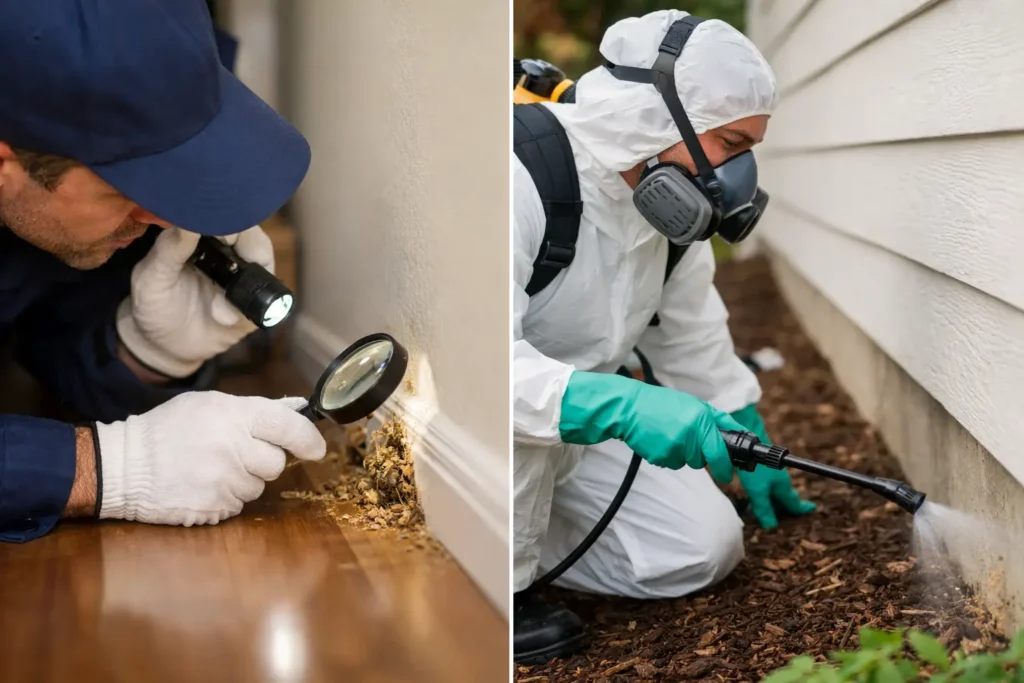
A termite inspection is the diagnostic phase. A trained technician examines accessible areas of a home, rental property, office, or commercial building for signs of termite activity, past damage, moisture conditions, and entry points. The goal is to determine whether there is an active infestation, a previous infestation, or conditions that could make future termite problems more likely.
Termite treatment is the corrective phase. It is designed to eliminate active termites, protect susceptible areas, or both. Depending on the termite species and the construction of the property, treatment may involve localized applications, soil treatments, bait systems, wood treatments, or whole-structure fumigation.
One does not replace the other. An inspection identifies the problem and guides the recommendation. Treatment addresses the confirmed risk. In some cases, the inspection finds no active termites at all. In others, it reveals that a small visible sign is connected to a larger issue behind walls, beneath flooring, in an attic, or around the foundation.
What a Professional Termite Inspection Looks For
Termites do not always announce themselves. Drywood termites can live inside wood and leave behind small pellet-like droppings. Subterranean termites often travel through protected mud tubes from the soil to the structure. Both can cause damage before a homeowner sees an obvious problem.
During an inspection, a qualified professional looks at accessible wood components, crawl spaces, attics, garages, exterior trim, foundations, fence connections, utility penetrations, and areas with plumbing leaks or poor drainage. They also look for damaged wood, discarded wings, shelter tubes, exit holes, frass, and moisture conditions that support termite activity.
The inspection should answer practical questions, not create more uncertainty. Is there active termite activity? What type of termite is involved? Is the problem isolated or widespread? Which parts of the property are affected? What treatment options fit the structure, occupancy, and severity of the issue?
For landlords and property managers, this clarity is especially valuable. It helps separate a current pest problem from old damage, supports timely maintenance decisions, and reduces the risk of allowing a hidden issue to become a larger repair expense.
When an Inspection May Be All You Need
Not every inspection leads to immediate treatment. A technician may find old termite damage with no evidence of current activity. They may also identify conditions that attract termites, such as wood-to-soil contact, leaking irrigation, standing water near the foundation, or untreated exterior wood.
In these situations, prevention may be the appropriate next move. Correcting moisture issues, moving stored lumber away from the structure, sealing accessible gaps, and scheduling periodic monitoring can reduce risk without treating for an infestation that is not present.
That said, no-active-activity findings should not be treated as a permanent all-clear. Southern California properties can face termite pressure year-round, particularly when moisture, aging wood, landscaping, or nearby structures create favorable conditions. Routine inspections help catch activity early, when solutions are often more targeted.
When Termite Treatment Is Needed
Treatment is recommended when there is evidence of active termites, fresh signs of infestation, or a high likelihood that activity is continuing in inaccessible areas. The best option depends on the termite species, the location of activity, the construction of the building, and whether the infestation appears contained.
Localized treatment can be a practical choice when activity is limited to known, accessible areas. This approach targets affected wood or specific termite entry points and may be appropriate for a smaller drywood termite infestation or a defined subterranean termite issue.
For subterranean termites, treatment may focus on creating protection around the structure or using a monitored baiting approach. The objective is to stop termites from reaching the building and to address the colony pressure that caused the problem. Soil conditions, foundation design, landscaping, and access all affect the recommended method.
Whole-structure fumigation is generally considered when drywood termites are widespread, found in multiple areas, or likely present in hidden parts of the structure. Fumigation can be highly effective for broad drywood termite infestations, but it requires preparation and temporary vacancy. It is not automatically the best answer for every termite sighting, and it does not correct moisture problems or prevent every future infestation.
A dependable provider explains the trade-offs clearly. The least disruptive option is not always the most complete option. The most extensive treatment is not always necessary. A recommendation should match the actual findings, not a one-size-fits-all sales approach.
Why Treating Without an Inspection Can Backfire
It is tempting to use an over-the-counter spray after seeing wings or pellets. The problem is that visible termites are often only a small part of the activity. Surface products may kill insects that are exposed while leaving the colony, galleries, or entry route untouched.
Treating the wrong pest is another risk. Flying ants are commonly mistaken for swarmers, and wood damage can sometimes be caused by moisture, fungi, beetles, or previous termite activity. A professional inspection helps avoid paying for a termite solution when the underlying issue is different.
There is also a safety and access consideration. Termite work can involve areas near living spaces, foundations, plumbing, electrical connections, and landscaping. Licensed professionals select the appropriate method, follow product directions, and provide instructions that account for children, pets, tenants, customers, and the use of the property.
Choosing the Right Timing for Your Property
Schedule an inspection promptly if you see mud tubes, termite wings, pellet-like droppings, bubbling paint, hollow-sounding wood, sagging floors, or unexplained wood damage. Do not wait for damage to become severe before asking for help. Early evaluation gives you more choices.
An inspection is also a smart step before buying or selling a property, after water damage or a plumbing leak, and when starting renovations that expose framing or trim. Homeowners in Los Angeles County and Orange County should also consider periodic inspections for older homes, properties with crawl spaces, or buildings near mature landscaping and irrigated areas.
For businesses and multi-unit properties, regular monitoring can protect more than the structure. A termite issue can disrupt tenants, affect customer confidence, delay repairs, and create avoidable maintenance costs. A prevention plan gives property owners a clearer record of conditions and a faster response path if signs appear.
Questions to Ask Before Approving Treatment
A trustworthy termite professional should be comfortable answering direct questions. Ask whether the termites are active, where the evidence was found, what type of termite is suspected, and why a particular treatment is recommended. Ask whether the proposed option is localized or comprehensive, what preparation is required, and what follow-up monitoring is included.
It also helps to ask what the treatment will not solve. For example, a termite treatment does not repair structural damage, eliminate a moisture source, or keep future termites away if favorable conditions remain unaddressed. Knowing those limits helps you plan the full solution instead of expecting one service to handle unrelated repairs.
At Impressive Exterminating, the focus is on inspecting first, explaining the findings clearly, and recommending safe, effective treatment based on your property’s needs. Whether you have a suspected infestation or want confidence that your home or business is protected, a timely professional inspection can replace uncertainty with a practical plan of action.
Frequently Asked Questions About Termite Inspection and Treatment
These are the most common questions homeowners search for and ask in home-buying communities and consumer forums — answered clearly so readers get a direct, accurate answer in one place.
How much does a termite inspection cost?
Termite inspection pricing varies by property size, accessibility, and location, and many pest control companies offer a complimentary or low-cost inspection, especially when the goal is to evaluate whether treatment is needed. A more detailed inspection tied to a real estate transaction, which typically includes a written report, may cost more than a routine check-up inspection.
Does homeowners insurance cover termite damage?
Typically, no. Most homeowners insurance policies treat termite damage as a preventable maintenance issue rather than a sudden, accidental event like a fire or storm, so the cost of both treatment and repair usually falls to the property owner. This is a major reason routine inspections matter — catching an infestation early keeps repair costs from growing into a much larger expense that has to be paid out of pocket.
How long does a termite inspection take?
A typical residential termite inspection takes roughly 30 minutes to an hour, depending on the size of the property, the number of accessible areas like attics and crawl spaces, and whether any additional structures need to be checked. Larger homes or commercial properties can take longer.
Can I just treat visible termites without a full inspection?
It’s possible, but it often backfires. Visible termites, droppings, or mud tubes usually represent only a small, accessible part of a larger colony, so an over-the-counter spray or spot treatment may kill exposed insects while leaving the nest, galleries, and entry route completely untouched. An inspection identifies where the colony actually is and how far it has spread before any treatment decision is made, which prevents paying for a treatment that doesn’t reach the real problem.
What’s the difference between drywood and subterranean termites?
Drywood termites live entirely inside wood, don’t need contact with soil, and leave behind small pellet-like droppings as a telltale sign. Subterranean termites nest in the soil and travel into a structure through pencil-width mud tubes that protect them from the open air. The distinction matters because it changes the recommended treatment — drywood infestations that are widespread may call for fumigation, while subterranean activity is usually addressed with soil treatment or a monitored baiting system around the structure.
Do I need a termite inspection before buying or selling a house?
Yes, this is one of the most common reasons for a termite inspection, and lenders frequently require one before finalizing a home purchase. An inspection at this stage protects both parties by documenting current conditions, distinguishing old damage from active infestation, and giving buyers and sellers accurate information to negotiate repairs or treatment before closing.
How often should I get a termite inspection if I haven’t seen any signs?
Even with no visible signs, an annual or periodic inspection is a reasonable precaution for older homes, properties with crawl spaces, homes near mature landscaping or irrigation, and anywhere in Southern California where termite pressure exists year-round. Termites can cause meaningful damage before any visible evidence appears, so routine monitoring — not just reacting to a mud tube or discarded wing — is what catches problems while they’re still small and inexpensive to address.
Is fumigation always necessary for a termite infestation?
No. Fumigation is generally reserved for widespread drywood termite infestations found in multiple areas of a structure or likely present in inaccessible spaces. A smaller, contained infestation may be addressed with localized treatment instead, which is less disruptive and doesn’t require temporary vacancy. The right approach depends on the inspection findings, not a default recommendation.
What if the inspection finds no active termites but I did see something concerning?
A no-active-activity finding often means the technician found old damage or conditions that could attract termites in the future — such as wood-to-soil contact or a moisture source — rather than a current infestation. In that case, the practical next step is usually correcting those conditions and scheduling periodic monitoring, rather than treating for termites that aren’t currently present. It’s still worth asking the technician to explain exactly what was found so you understand whether it was old damage or something worth watching.
Who typically pays for a termite inspection, the buyer or the seller?
This is negotiable and varies by transaction, but the buyer commonly covers the cost of the initial inspection as part of due diligence, while responsibility for any treatment or repair costs is usually negotiated between buyer and seller based on what the inspection finds. The purchase agreement should spell out who pays for what before escrow closes.