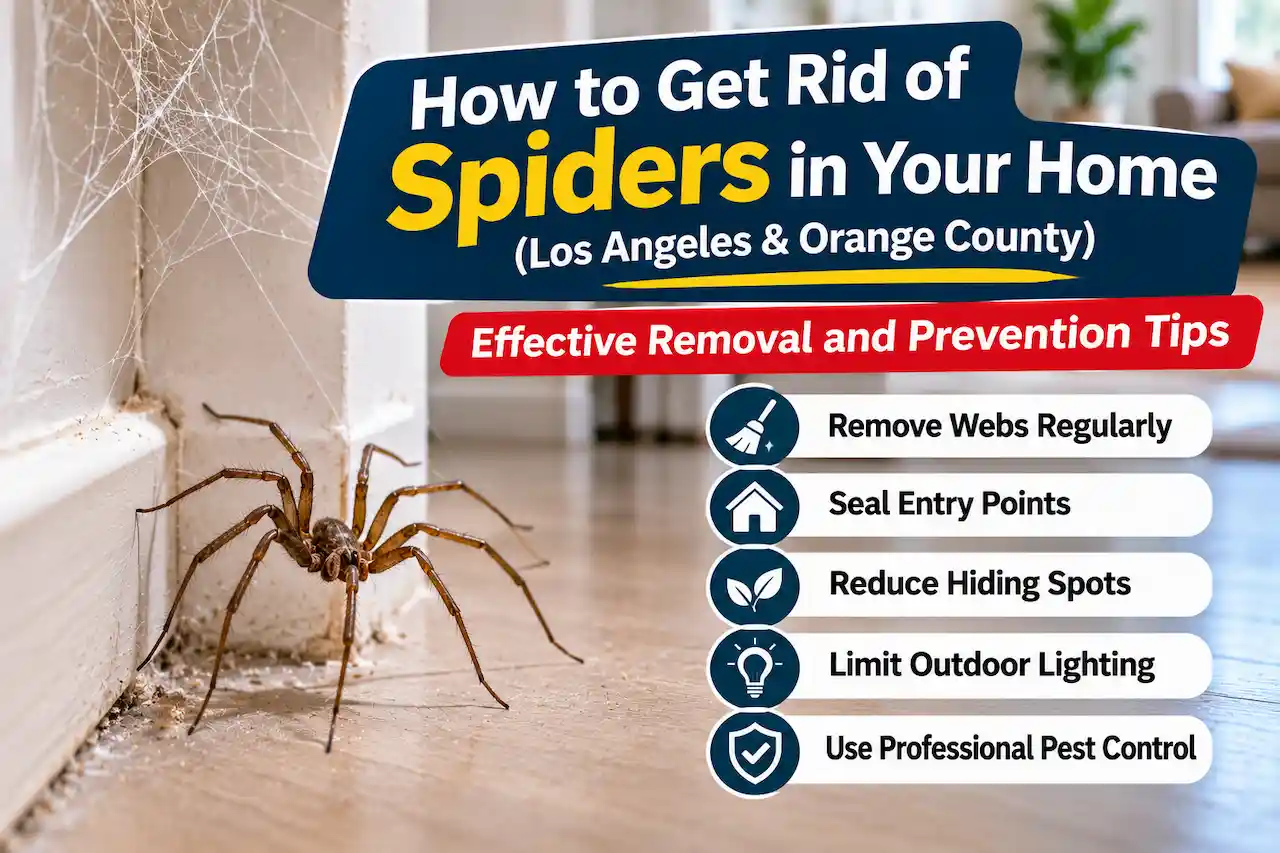
Finding a spider crawling across your bedroom wall or discovering thick webs in your garage can make you uncomfortable in your own home. In Los Angeles and Orange County, Southern California’s mild climate supports insect activity throughout much of the year, giving spiders plenty of opportunities to find food and sheltered spaces.
Spiders often appear around patios, garages, attics, sheds, and quiet indoor corners. While most household spiders are harmless and help control other insects, repeated sightings, egg sacs, or black widow activity may require closer attention.
To get rid of spiders, remove visible spiders, webs, and egg sacs, reduce clutter, seal entry points, and control the insects they feed on. Vacuuming and physical exclusion are effective first steps. When spiders repeatedly return or potentially dangerous species are present, professional spider control can help identify hiding places and provide appropriate treatment.
This guide explains how to get rid of spiders in Southern California homes, what works, what doesn’t, and when to call a professional.
Why Are There So Many Spiders in Southern California Homes?
Spiders generally enter buildings in search of prey, shelter, and suitable nesting conditions.
1. Insects Around Your Property
Spiders feed on flies, mosquitoes, moths, and other small insects.
Outdoor lights, garbage areas, and moisture problems may attract insects, creating feeding opportunities for spiders.
2. Garages, Attics, and Storage Spaces
Undisturbed areas provide sheltered locations where spiders can hide and build webs.
Garages filled with cardboard boxes, stored furniture, tools, and seasonal decorations may provide particularly suitable hiding places.
3. Openings Around Doors and Windows
Gaps beneath exterior doors, damaged window screens, and cracks around utility lines can allow spiders and other insects to enter.
4. Landscaping Near the Foundation
Dense shrubs, woodpiles, fallen leaves, and vegetation touching a building create outdoor shelter.
Spiders living around these areas may eventually enter through nearby openings.
5. Southern California’s Mild Climate
The region’s relatively mild weather allows many insects and spiders to remain active for much of the year.
Outdoor conditions and seasonal changes can influence where spiders seek shelter.
For additional prevention guidance, read How to Prevent Spider Infestations at Home.
Which Spiders Are Found Around Los Angeles and Orange County Homes?
Correct identification helps determine whether physical removal is sufficient or additional precautions are necessary.
| Spider Type | Common Characteristics | Typical Locations |
|---|---|---|
| Western black widow | Shiny dark body, often with a red hourglass underneath | Garages, sheds, woodpiles, outdoor storage |
| Brown widow | Brown or patterned body with variable markings | Patio furniture, fences, sheltered outdoor areas |
| Cellar spider | Small body and long, thin legs | Ceiling corners, garages, sheltered indoor areas |
| Wolf spider | Active ground hunter that does not build a prey-catching web | Gardens, garages, ground-level spaces |
| Orb-weaver | Builds large, circular webs | Gardens, patios, shrubs, exterior structures |
| Yellow sac spider | Pale-colored spider that makes small silk retreats | Walls, ceilings, behind objects |
Western Black Widow Spiders
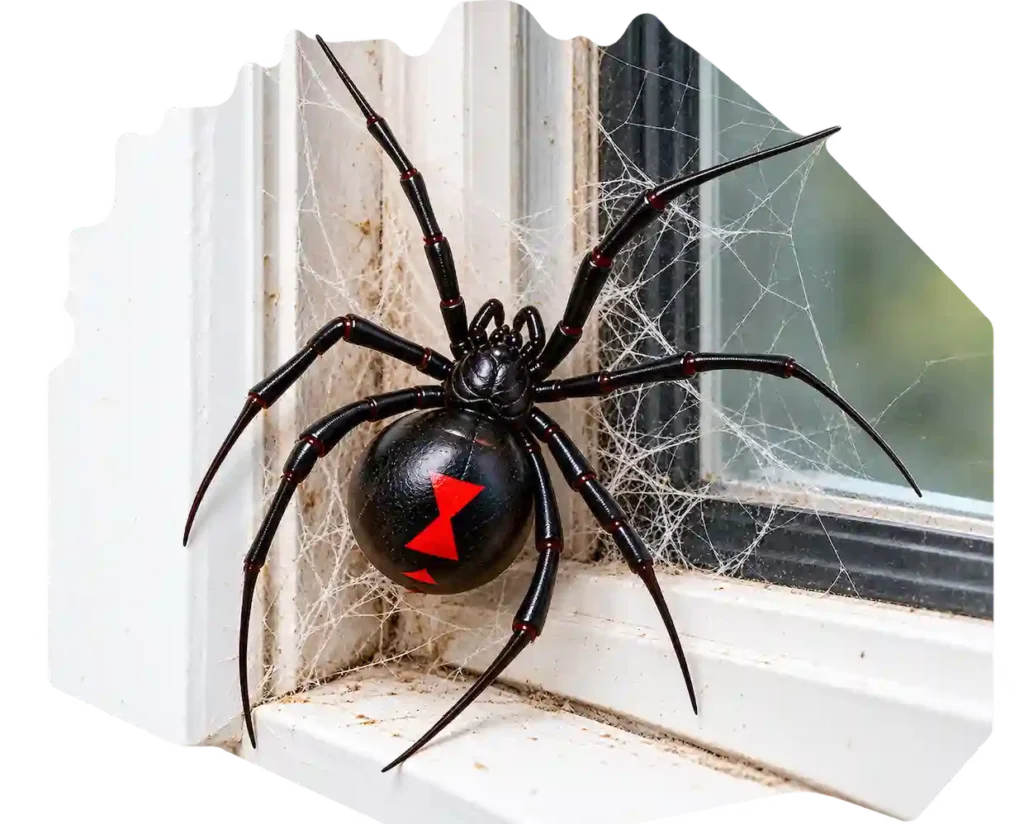
Western black widows are medically significant spiders found in California.
Adult females typically have glossy black bodies and a red or orange hourglass marking underneath the abdomen.
They commonly hide in dry, sheltered, undisturbed areas, including garages, sheds, woodpiles, and spaces beneath outdoor equipment.
Avoid touching or attempting to handle a suspected black widow.
Brown Widow Spiders
Brown widows are established in Southern California and may appear around patio furniture, fences, exterior structures, and other sheltered spaces.
Their egg sacs often have a distinctive spiky appearance.
Common House and Cellar Spiders
Many common indoor spiders are relatively harmless and help reduce populations of other insects.
They may build webs in ceiling corners, closets, garages, and storage areas.
Wolf Spiders
Wolf spiders are active hunters that generally do not build webs to capture prey.
They may enter garages or homes while searching for insects.
What About Brown Recluse Spiders?
The brown recluse is frequently mentioned in online spider-control discussions, but it does not have an established population in California.
Several local spiders are mistakenly identified as brown recluses because of their brown coloration.
Accurate identification is important before deciding whether a spider presents a significant medical concern.
Stay Safe Before Removing Spiders
Most spiders avoid contact with people, but handling unidentified spiders can increase the risk of a bite.
Before cleaning potentially infested areas:
- Wear gloves when moving stored belongings.
- Inspect shoes and clothing that have been left undisturbed.
- Avoid reaching into dark spaces without looking first.
- Keep children and pets away from suspected black widow activity.
- Do not handle unidentified spiders with bare hands.
- Seek medical advice if a potentially dangerous spider bites someone.
If someone develops severe symptoms after a suspected spider bite, seek urgent medical attention.
How to Get Rid of Spiders in Your House: 7 Steps
Step 1: Remove Visible Spiders, Webs, and Egg Sacs
Begin with regular physical removal.
Use a vacuum with a hose attachment to reach:
- Ceiling corners
- Window frames
- Behind furniture
- Baseboards
- Garage shelving
- Closet corners
- Accessible attic and storage areas
Vacuum accessible webs and egg sacs without touching unidentified spiders directly.
After cleaning, empty the vacuum contents into a sealed bag and dispose of them outdoors.
Repeated removal helps reduce existing activity and reveals areas where spiders continue returning.
Step 2: Find and Seal Entry Points
Inspect your property’s exterior for openings that allow spiders and insects to enter.
Pay attention to:
- Gaps beneath doors
- Damaged window screens
- Cracks around foundations
- Openings around plumbing and electrical lines
- Garage door seals
- Unprotected exterior vents
Use appropriate caulk, door sweeps, weatherstripping, and screen repairs.
Maintain the necessary ventilation around vents and mechanical equipment.
Sealing gaps is especially useful in garages and storage areas where spiders repeatedly appear.
Step 3: Remove Clutter From Garages and Attics
Spiders benefit from quiet spaces where they can remain undisturbed.
Reduce potential hiding places by:
- Replacing cardboard boxes with sealed storage containers
- Organizing shelving
- Keeping stored items away from walls
- Removing unnecessary furniture and materials
- Vacuuming behind appliances and storage cabinets
- Inspecting rarely used corners
Wear gloves when handling stored firewood, boxes, or outdoor equipment.
Step 4: Control the Insects Spiders Feed On
Spider problems often continue because insects remain available as food.
Reduce insect activity by:
- Keeping kitchen areas clean
- Emptying trash regularly
- Repairing leaking pipes
- Removing standing water
- Repairing window screens
- Managing outdoor lighting where practical
- Addressing existing insect infestations
For example, standing water may support mosquito breeding and contribute to other insect activity around your property.
For more information, see How to Get Rid of Mosquitoes.
Step 5: Maintain Your Yard and Outdoor Areas
Outdoor maintenance reduces sheltered spaces close to the building.
Focus on:
- Trimming shrubs touching exterior walls
- Removing leaf litter and unnecessary debris
- Storing firewood away from the house
- Keeping patios and outdoor storage organized
- Checking beneath outdoor furniture
- Removing accessible exterior webs
- Inspecting sheds and garden equipment
In Southern California, regular inspection of patio furniture and outdoor storage is particularly useful because widow spiders may occupy sheltered spaces.
Step 6: Monitor Areas With Recurring Activity
Sticky monitoring traps can help identify locations where wandering spiders remain active.
Place traps only in suitable protected areas, away from children and pets.
Potential monitoring locations include:
- Garage corners
- Behind furniture
- Along interior walls
- Closet edges
- Storage areas
Check traps regularly and look for patterns.
A monitoring trap does not eliminate the underlying conditions attracting spiders, but it can help determine where further inspection is needed.
Step 7: Use Targeted Professional Treatment When Necessary
If spiders continue appearing after physical removal, exclusion, and sanitation, consider professional inspection.
A qualified technician can identify spider species, inspect webbing and harboring areas, assess the insects attracting them, and recommend an appropriate treatment.
Professional options may include targeted treatment of suitable areas, accessible web removal, entry-point recommendations, and ongoing monitoring.
Learn more about professional Spider Control from Impressive Exterminating.
Spider Control Methods Compared
| Method | Best Use | Limitation |
|---|---|---|
| Vacuuming | Visible spiders, accessible webs and egg sacs | Does not prevent new spiders from entering |
| Sealing openings | Reducing indoor access | Requires proper inspection and maintenance |
| Removing clutter | Eliminating hiding places | Must be maintained |
| Insect control | Reducing spider food sources | May take ongoing prevention |
| Sticky monitoring traps | Identifying activity areas | Not a complete control method |
| Targeted professional treatment | Recurring or difficult-to-manage activity | Depends on species and property conditions |
A combination of physical removal, exclusion, and prey reduction usually provides a more useful long-term approach than relying on a single spray.
How Long Does It Take to Get Rid of Spiders?
The timeline depends on the spider species, amount of activity, and condition of the property.
| Stage | What to Expect |
|---|---|
| Initial cleaning | Visible webs and accessible spiders can be removed |
| Entry-point inspection | Gaps and damaged screens can be identified |
| Exclusion work | Appropriate openings are repaired |
| Ongoing monitoring | Repeated activity is checked over the following weeks |
| Professional follow-up | Additional action is based on inspection findings |
A property with ongoing insect activity or outdoor hiding places may require continued maintenance.
What Doesn’t Work for Long-Term Spider Control?
Peppermint Oil and Essential Oils
Peppermint oil and other essential oils are often promoted as spider repellents.
However, evidence for dependable long-term control in homes is limited.
Vinegar and Homemade Sprays
Homemade sprays may contact individual spiders but do not reliably address hidden spiders, egg sacs, or entry points.
Randomly Spraying Pesticides
Spraying visible spiders without identifying their hiding places may produce temporary results.
Pesticides should only be used when appropriate and according to label instructions.
Ignoring Other Insects
Removing spiders without addressing their food sources can allow new spiders to settle in the same locations.
Leaving Storage Areas Untouched
Undisturbed boxes, sheds, furniture, and clutter continue providing shelter even after visible webs are removed.
Common Spider Control Mistakes
- Removing webs only once. Repeated inspection is needed to identify returning activity.
- Ignoring black widow hiding places. Garages, outdoor furniture, and woodpiles deserve attention.
- Leaving door gaps unsealed. New spiders can continue entering.
- Overlooking insect activity. A steady food supply can attract new spiders.
- Using unverified home remedies. Repellents do not replace exclusion and sanitation.
- Handling unidentified spiders. Direct contact increases the risk of bites.
- Applying pesticides incorrectly. Using products outside their labeled instructions can create unnecessary hazards.
Getting Rid of Spiders in Garages, Attics, Bedrooms, and Patios
Different parts of a home require slightly different approaches.
Spiders in the Garage
Remove clutter, inspect stored belongings, vacuum webs, and check door seals.
Pay particular attention to sheltered corners where widow spiders may hide.
Spiders in the Attic
Inspect accessible areas for webs, damaged screens, and openings around vents.
Avoid entering unsafe attic spaces or disturbing suspected dangerous spiders.
Spiders in Bedrooms and Closets
Vacuum corners, organize storage, inspect window screens, and avoid leaving unused clothing or bedding piled on floors.
Spiders Around Patios
Check beneath outdoor furniture, planters, equipment, and stored items.
Remove accessible webs and keep vegetation from touching the building.
Spider Control for Renters, Landlords, and Businesses
Spider activity is not limited to single-family homes.
Renters: Notify your landlord or property manager when recurring spider activity affects the living space, particularly when potentially dangerous spiders are present.
Landlords: Inspect vacant units, storage rooms, shared garages, and exterior maintenance areas.
Businesses: Monitor warehouses, stockrooms, utility spaces, outdoor seating areas, and storage locations.
Regular inspections and maintenance can reduce pest complaints and help identify conditions that attract spiders.
When Should You Call a Spider Exterminator in Los Angeles or Orange County?
Occasional house spiders can often be managed through cleaning and exclusion.
Professional assistance is appropriate when:
- Spiders repeatedly appear in several rooms.
- Webs and egg sacs return after cleaning.
- You identify suspected black widow spiders.
- Spiders occupy inaccessible storage or utility areas.
- Other insects continue attracting spiders.
- DIY prevention has not reduced activity.
What a Professional Spider Control Visit May Include
At Impressive Exterminating, the spider control process is designed around the property’s conditions.
Inspect: Locate spider activity, webs, hiding places, and entry points.
Diagnose: Identify relevant species and conditions supporting activity.
Protect: Apply appropriate targeted treatments and recommend exclusion or web removal.
Monitor: Check areas where activity continues.
Report: Explain findings and prevention recommendations.
Follow Up: Reassess concerns and provide additional attention as appropriate to the service agreement.
Learn more about Spider Control Services or explore General Pest Control.
Frequently Asked Questions
1. How do I get rid of spiders in my Los Angeles home?
Start by removing visible spiders and webs, reducing clutter, repairing entry points, and controlling insects that attract spiders. For recurring activity or suspected black widows, arrange a professional inspection.
2. Are black widow spiders common in Southern California?
Western black widows occur throughout California and may be found in garages, sheds, woodpiles, and sheltered outdoor spaces. Avoid handling suspected black widows directly.
3. What is the fastest way to get rid of spiders in a garage?
Vacuum accessible webs and egg sacs, organize storage, check door seals, and inspect sheltered corners. If potentially dangerous spiders are present, keep your distance and seek professional assistance.
4. Does peppermint oil keep spiders away?
Peppermint oil is a popular home remedy, but it is not a proven long-term solution for spider infestations. Physical exclusion, cleaning, and reducing prey insects are more dependable.
5. When should I call a professional spider exterminator in Orange County?
Consider professional help when spider activity continues despite prevention, webs repeatedly return, potentially dangerous species are present, or spiders occupy difficult-to-access locations.
Conclusion: Remove Webs, Seal Gaps, and Reduce Spider Activity
Getting rid of spiders requires more than removing the ones you can see.
Regular vacuuming, reducing clutter, repairing entry points, maintaining outdoor spaces, and controlling prey insects can help make your property less attractive to spiders.
If recurring activity continues or potentially dangerous species appear, a professional inspection can help identify the source and recommend an appropriate treatment.
Impressive Exterminating provides spider control services for homeowners and businesses throughout Los Angeles County and Orange County.
Schedule Your Free Spider Inspection
Contact Impressive Exterminating or call (562) 246-9044.
Spider Control in Los Angeles and Orange County
We help homeowners, renters, landlords, and businesses across Los Angeles County and Orange County, including Long Beach, Bellflower, Cerritos, Palos Verdes, and Anaheim.
Related Services: Spider Control · General Pest Control
Related Reading: How to Prevent Spider Infestations · How to Get Rid of Mosquitoes · Pest Prevention That Protects Your Property
Sources: UC IPM: Spiders · UC IPM: Widow Spiders · UC IPM: Brown Recluse Spiders