
Finding a large cluster of bees near your front door, hearing buzzing inside your walls, or noticing insects entering the same roof opening can be concerning. Homeowners in Long Beach, Bellflower, Cerritos, Torrance, Anaheim, and nearby Southern California communities may encounter bee swarms around gardens, patios, exterior walls, and rooflines.
But not every group of bees represents an infestation. Some bees are simply collecting nectar, while others may be searching for a new nesting location. The correct response depends on whether you are dealing with visiting bees, a temporary swarm, or an established colony.
To get rid of bees safely, keep people and pets away, identify where the bees are gathering, and determine whether they have established a colony. Avoid spraying bees, disturbing a swarm, or blocking active hive entrances. A qualified professional can assess the activity and determine whether removal, relocation, or another treatment is appropriate.
This guide explains how to get rid of bees, how to recognize common species, which methods to avoid, and when homeowners across Los Angeles County and Orange County should request professional help.
Key Takeaways
- Honey bees, bumble bees, carpenter bees, and wasps require different approaches.
- A temporary honey bee swarm may leave naturally, but an established hive inside a structure needs professional evaluation.
- Spraying or disturbing a colony can increase the risk of stings.
- Some accessible honey bee colonies may be relocated when conditions allow.
- Honeycomb and honey may need to be removed after a structural hive is addressed.
- Sealing suitable entry points after removal helps reduce future nesting.
- Professional inspection is recommended when bees repeatedly enter walls, roofs, or chimneys.
What Are the Signs of a Bee Colony Around Your Home?
Seeing bees around flowering plants does not automatically mean a colony is established on your property.
However, certain activity patterns deserve closer attention.
Look for:
- Bees repeatedly entering and leaving the same wall opening.
- Large clusters of bees around trees, fences, or roof eaves.
- Buzzing sounds inside walls, ceilings, or chimneys.
- Honey-like odors near suspected nesting spaces.
- Wax, honey staining, or other evidence near structural openings.
- Round holes in exposed wood that may indicate carpenter bee nesting.
For homes with accessible patios, gardens, garages, and sheltered exterior walls, regular observation can help identify activity before a colony becomes established.
Do not approach a suspected hive to inspect it closely.
How to Identify Different Types of Bees in Southern California
Correct identification is essential because not every bee or stinging insect requires the same treatment.
| Insect | Appearance | Common Behavior |
|---|---|---|
| Honey bees | Golden-brown, somewhat fuzzy bodies | Form colonies and build wax comb |
| Africanized honey bees | Visually similar to European honey bees | May respond more defensively to colony disturbances |
| Bumble bees | Large, round, fuzzy bodies | Nest in protected ground or cavity locations |
| Carpenter bees | Large bodies, often with shiny abdomens | Bore nesting tunnels into exposed wood |
| Yellowjackets | Smooth yellow-and-black bodies | Build nests and may aggressively defend them |
Honey Bees
Honey bees live in organized colonies and build wax comb to raise young and store honey.
They may establish hives inside wall cavities, chimneys, attics, hollow trees, and other sheltered locations.
Africanized Honey Bees
Africanized honey bees are established in Southern California.
They look very similar to European honey bees, making visual identification unreliable.
Because colonies can respond defensively when disturbed, any unmanaged hive should be approached cautiously and evaluated professionally.
Bumble Bees
Bumble bees are generally larger and fuzzier than honey bees.
They often use sheltered ground cavities and other protected nesting locations.
A nest away from frequently used spaces may not need intervention.
Carpenter Bees
Carpenter bees excavate nesting tunnels in exposed wood.
They may affect wooden fences, decks, eaves, and other exterior structures.
Their nesting behavior differs from honey bees, so treatment and prevention must address the wood rather than a large honeycomb colony.
Bees vs Wasps
Yellowjackets and other wasps are frequently mistaken for bees.
They have different nesting habits and may require different control methods.
If you suspect wasps rather than bees, professional identification can help prevent inappropriate treatment.
Why Are Bees Gathering Around Southern California Homes?
Bee activity around residential properties is often connected to food, water, sheltered spaces, or swarming behavior.
1. A Temporary Honey Bee Swarm
Honey bee colonies sometimes divide, with a queen and a group of workers leaving to establish a new colony.
The swarm may temporarily gather on a branch, fence, mailbox, or exterior wall while scout bees search for a nesting site.
A resting swarm may leave within hours or a few days.
However, homeowners should not attempt to move or disturb it.
2. Openings in Walls and Rooflines
Gaps around roof eaves, damaged soffits, vents, and exterior siding may provide access to sheltered cavities.
A steady stream of bees entering one opening can indicate that a colony is establishing itself.
3. Flowers, Water, and Outdoor Food
Bees may visit gardens, birdbaths, swimming pool edges, outdoor faucets, or flowering landscaping.
These visits are often normal foraging activity rather than evidence of a nearby hive.
4. Protected Spaces Around Buildings
Chimneys, wall voids, utility enclosures, and hollow trees can provide nesting opportunities.
In residential areas such as Long Beach, Bellflower, Anaheim, and Irvine, regular exterior maintenance helps homeowners notice vulnerable openings before they attract colonies.
Stay Safe Before Attempting Bee Removal
Bee colonies may sting when they feel threatened, particularly when defending a nest.
Before taking action:
- Keep children and pets away from swarms or suspected hives.
- Avoid approaching a colony with lawn equipment.
- Do not strike, shake, or spray a swarm.
- Avoid blocking active hive entrances.
- Never use gasoline, fire, or improvised smoke to remove bees.
- Do not attempt to open a wall containing an active hive.
If someone experiences breathing difficulties, throat swelling, faintness, or other symptoms of a severe allergic reaction following a sting, seek emergency medical assistance immediately.
How to Get Rid of Bees: 7 Safe Steps
Step 1: Identify Where the Bees Are Gathering
Start by observing the insects from a safe distance.
Are they resting together on a tree branch? Are they repeatedly entering a gap beneath the roof? Are they visiting flowers without concentrating in one location?
These observations help distinguish normal foraging from a swarm or established colony.
Do not approach or disturb the insects to collect additional information.
Step 2: Determine Whether You Have a Swarm or Hive
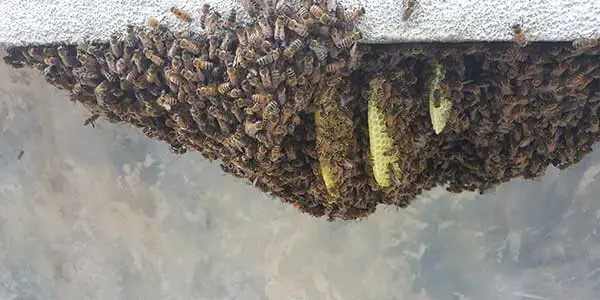
A swarm is often a temporary group of bees resting while searching for a new nesting location.
An established hive contains comb and may have regular traffic entering and leaving a sheltered space.
The distinction matters because a temporary swarm may require collection or monitoring, while a structural hive can require more extensive removal.
Step 3: Avoid DIY Sprays and Household Remedies
Household insecticides may kill exposed bees without addressing the colony inside a structure.
Spraying can also provoke defensive behavior and increase the risk of multiple stings.
Avoid using vinegar, boiling water, smoke, gasoline, or improvised chemical mixtures.
The safest approach is to isolate the area and arrange qualified assistance when necessary.
Step 4: Request a Professional Bee Inspection
A professional inspection can determine:
- The insect species involved.
- Whether the activity represents a temporary swarm or established colony.
- The location and accessibility of the hive.
- Whether live relocation is appropriate.
- Whether structural access will be required.
- Whether honeycomb and honey removal are necessary.
- Which entry points should be repaired afterward.
Homeowners experiencing recurring bee activity can request assistance through Impressive Exterminating’s Bee Control Services.
Step 5: Choose the Appropriate Removal Method
The right removal method depends on colony location, accessibility, species, and safety.
Swarm collection: A temporary swarm may be collected by a qualified beekeeper or experienced removal specialist.
Live relocation: Some accessible, non-defensive honey bee colonies can be removed and relocated.
Structural hive removal: Colonies inside wall cavities, attics, and chimneys may require professional access and removal of nesting materials.
Alternative treatment: Difficult-to-access or defensive colonies may require another professionally selected approach.
A qualified professional should explain the available options and their implications before treatment begins.
Step 6: Remove Honeycomb and Residual Materials
When honey bees establish a colony inside a building, removing the adult bees alone may not resolve the problem.
Remaining wax comb, honey, and other materials can attract secondary pests and create odors or staining.
Professional structural hive removal may include opening the cavity, removing the colony and nesting materials, cleaning the affected area, and arranging necessary repairs.
Step 7: Seal Entry Points and Monitor Activity
After the colony and nesting materials have been addressed, inspect the structure for openings that could allow another colony to enter.
Common areas include:
- Roof eaves and soffits
- Gaps around siding
- Utility penetrations
- Damaged exterior panels
- Chimney openings
- Protected structural cavities
Repair suitable openings only after confirming that active bees are no longer using them.
Continue monitoring previously affected locations for new activity.
Bee Removal Methods Compared
| Method | Best Situation | Important Consideration |
|---|---|---|
| Swarm collection | Temporary honey bee swarm | Relocation may be possible |
| Live hive relocation | Accessible, non-defensive colony | Requires qualified handling |
| Structural hive removal | Established colony in a wall or attic | Honeycomb and honey cleanup may be needed |
| Alternative professional treatment | Inaccessible or defensive colony | Requires a site-specific safety assessment |
| Entry-point sealing | After removal is complete | Helps reduce future nesting opportunities |
Not every method is appropriate for every colony.
Professional identification should guide the decision.
How Long Does Bee Removal Take?
Bee removal timelines depend on the species, colony size, nesting location, and accessibility.
| Situation | General Expectation |
|---|---|
| Visiting bees | Usually no removal necessary |
| Temporary swarm | May move on naturally or be collected during a visit |
| Accessible colony | Timing depends on location and removal method |
| Colony inside a wall | May require structural opening and cleanup |
| Post-removal repairs | Depends on the extent of necessary sealing and restoration |
A professional inspection is needed to determine the actual scope of work.
What Doesn’t Work for Getting Rid of Bees?
Spraying Visible Bees
Killing visible insects does not necessarily reach the queen, developing bees, or hive inside a building.
Sealing an Active Hive Entrance
Blocking an active entrance can trap bees inside a structure and cause them to search for alternative exits.
Using Smoke or Fire
Improvised smoke and fire create unnecessary hazards and do not replace professional removal.
Relying on Essential Oils
Household scents are not dependable methods for removing established honey bee colonies.
Leaving Honeycomb Inside the Structure
Wax comb and honey left behind may cause secondary problems even after the adult bees are removed.
Common Bee Removal Mistakes
- Confusing bees with wasps. Different insects require different responses.
- Approaching a colony too closely. Disturbance can provoke defensive behavior.
- Spraying before identification. Visible insects may be treated while the hive remains intact.
- Sealing active entrances. Bees may seek other routes into occupied rooms.
- Removing only adult bees. Nesting materials may remain inside the structure.
- Ignoring repeated roofline activity. Regular traffic into one opening can indicate a colony.
- Skipping structural repairs. Previously used cavities may attract future swarms.
Bee Swarms in Gardens, Roofs, Walls and Patios
Bees in the Garden
Bees visiting flowering plants are generally performing normal pollination activity.
If a large cluster gathers on a tree branch, keep your distance and contact a specialist when the swarm poses a safety concern.
Bees Inside a Wall
Repeated movement through one wall opening may indicate an established colony.
Do not seal the hole or attempt to open the wall yourself.
Bees Around Roof Eaves
Roofline gaps and soffits can provide sheltered access points.
Persistent activity should be assessed before any repairs are made.
Bees Around Patios and Entrances
A swarm near a frequently used doorway, patio, or children’s play area may require prompt professional attention.
Keep people and pets away until the situation has been assessed.
Bee Control for Renters, Landlords, and Businesses
Renters: Report swarms or suspected hives to the landlord or property manager, particularly when bees are entering structural openings.
Landlords: Address repeated bee activity around shared entrances, rooflines, walls, and common outdoor areas.
Businesses: A swarm near a customer entrance, outdoor seating area, or walkway may create a safety concern requiring professional evaluation.
For property-management considerations, read Landlord Pest Responsibilities in California.
When Should You Call a Bee Removal Professional?
Consider professional assistance when:
- Bees repeatedly enter the same wall or roof opening.
- A large swarm settles near a doorway or walkway.
- You hear buzzing inside a wall or ceiling.
- Honey or wax appears near a suspected nesting cavity.
- Carpenter bees repeatedly bore into exterior wooden structures.
- Someone living or working on the property has a severe bee-sting allergy.
- The colony’s location or species is uncertain.
What a Professional Bee Control Visit May Include
Impressive Exterminating’s bee control approach focuses on identifying the problem and choosing a suitable solution.
Inspect: Identify bee activity, hive locations, access points, and risk factors.
Diagnose: Determine the species and whether the insects are swarming or established.
Plan: Evaluate relocation and other appropriate removal options.
Remove: Address the colony using a method appropriate to the site.
Clean: Remove honeycomb and honey from structural cavities when necessary.
Prevent: Recommend repairs and sealing of suitable entry points.
Follow Up: Monitor relevant areas for recurring activity as appropriate.
Learn more about professional Bee Control.
Frequently Asked Questions
1. How do I get rid of bees around my Long Beach home?
Identify whether bees are foraging, swarming, or entering an established hive. Keep people and pets away from concentrated activity. If bees repeatedly enter a wall or roof opening, arrange professional inspection instead of attempting DIY removal.
2. Can a bee swarm leave on its own in Southern California?
Yes. A temporary honey bee swarm may leave once scout bees locate a suitable nesting site. However, there is no guaranteed timeline, and swarms near busy entrances should be evaluated for safety.
3. Can honey bees be relocated instead of killed?
In some cases, yes. Accessible, non-defensive honey bee colonies may be suitable for live removal and relocation. Feasibility depends on the colony’s location, species, and condition.
4. What should I do if bees are entering my roof in Anaheim or Bellflower?
Keep your distance and avoid blocking the opening. Repeated bee traffic into the same roof or soffit gap may indicate an established colony. Arrange an inspection to determine whether removal and structural cleanup are needed.
5. When should I call a bee removal professional in Orange County?
Contact a qualified professional when bees repeatedly enter a building, a swarm settles near a frequently used space, buzzing is heard inside walls, or the species and nesting location are uncertain.
Conclusion: Identify the Bees, Avoid DIY Removal, and Protect Your Home
Getting rid of bees safely requires understanding whether the insects are simply visiting your property, temporarily swarming, or maintaining an established colony.
Avoid spraying bees, disturbing swarms, or sealing active entrances. When removal is needed, professional identification and an appropriate treatment plan can help protect occupants while considering relocation where practical.
Homeowners throughout Los Angeles County and Orange County can reduce future nesting opportunities by maintaining exterior structures and repairing suitable openings after any active colony has been addressed.
If bees continue gathering near your roof, walls, patio, or exterior entrances, professional inspection can help determine the next step.
Schedule Your Free Bee Inspection
Contact Impressive Exterminating or call (562) 246-9044.
Bee Control in Los Angeles and Orange County
We help homeowners, renters, landlords, and businesses across Los Angeles County and Orange County, including Long Beach, Bellflower, Cerritos, Palos Verdes, and Anaheim.
Our wider service coverage also includes communities such as Torrance, Downey, Pasadena, Irvine, Santa Ana, Huntington Beach, and Costa Mesa.
Related Services: Bee Control · General Pest Control · Contact Us
Related Reading: Why Are Bees Gathering Around Your House? · How to Get Rid of Wasp Nests Safely · Pest Prevention That Protects Your Property