
Have you noticed itchy mosquito bites around your ankles, feet, or lower legs even when you’re outside in the middle of the day? You’re not imagining it. Many Southern California residents are dealing with aggressive daytime mosquitoes that behave differently from the mosquitoes people traditionally associate with evenings and nighttime.
These pests are commonly called ankle biter mosquitoes in Southern California because they frequently target people’s lower legs. In many parts of Southern California, the problem is associated with invasive Aedes mosquitoes, particularly Aedes aegypti.
Unlike many native mosquitoes that are most active around sunrise and sunset, these invasive mosquitoes can bite throughout daylight hours. They can also breed in surprisingly small amounts of standing water around residential properties.
Understanding why these mosquitoes are biting you, where they hide, and how they reproduce can help you protect your family and reduce mosquito activity around your property.
What Are Ankle Biter Mosquitoes?
Ankle biter mosquitoes are a common name for invasive Aedes mosquitoes, especially Aedes aegypti, also known as the yellow fever mosquito.
Another related species is Aedes albopictus, commonly called the Asian tiger mosquito.
Both species are known for aggressive daytime biting and their preference for living close to people.
Unlike larger mosquitoes that may be easier to notice, these mosquitoes are relatively small and can approach people without being immediately noticed.
Common characteristics include:
- Small, dark-colored bodies.
- Distinctive white markings on their bodies and legs.
- Frequent bites around ankles, feet, and lower legs.
- Activity during daylight hours.
- Breeding in small containers that collect water.
- A tendency to remain close to residential properties.
Although their appearance can help identify them, not every small mosquito is an Aedes mosquito. A professional or local mosquito-control agency can help confirm the species.
Why Are You Getting Bitten by Mosquitoes During the Day?
If you thought mosquitoes only came out at night, invasive Aedes mosquitoes explain why you’re experiencing bites during the afternoon.
There are several reasons for this behavior.
1. Aedes Mosquitoes Are Active During Daylight
Many familiar mosquito species are most active around dawn and dusk. However, Aedes aegypti and Aedes albopictus have different feeding patterns.
Female mosquitoes need blood to develop their eggs. They actively search for human hosts during daylight, particularly during the hours following sunrise and before sunset.
This means you can get bitten while gardening, walking your dog, relaxing on your patio, or playing with your children outside.
2. They Frequently Target Your Ankles and Lower Legs
One reason people call them ankle biters is their tendency to approach and bite around the lower body.
Your ankles and feet are often exposed when wearing shorts, sandals, or low-cut socks.
These mosquitoes can also approach from behind, making their bites difficult to notice immediately.
However, ankle bites alone cannot confirm which mosquito species is responsible.
3. They Hide in Shaded Areas Around Your Home
Adult mosquitoes often rest in cool, humid and protected locations during the day.
Common hiding places include:
- Dense shrubs and bushes.
- Tall grass and ground cover.
- Shaded garden beds.
- Areas underneath outdoor furniture.
- Spaces beneath decks and porches.
- Overgrown vegetation near patios.
When someone walks through these areas, mosquitoes can quickly approach and bite.
4. They Can Enter Your Home
Aedes mosquitoes are comfortable living around people and can enter homes through open doors, damaged window screens, and other openings.
You may notice bites even when spending most of your time indoors.
Check window screens, door seals, and other possible entry points if mosquitoes frequently appear inside your home.
Aedes Aegypti vs Asian Tiger Mosquito: What’s the Difference?
Two invasive mosquito species are particularly important when discussing daytime mosquitoes in California.
| Feature | Aedes aegypti | Aedes albopictus |
| Common name | Yellow fever mosquito | Asian tiger mosquito |
| Appearance | Dark body with white markings | Dark body with a distinct white stripe and white leg markings |
| Biting behavior | Aggressive daytime biter | Aggressive daytime biter |
| Preferred habitat | Residential areas near people | Residential and vegetated areas |
| Breeding locations | Small water-holding containers | Small water-holding containers |
Both species can bite people during daylight and potentially transmit certain viruses.
According to California Department of Public Health detection records, Aedes aegypti has been detected in Los Angeles and Orange County communities. Aedes albopictus has also been detected in parts of Los Angeles County.
The presence of these mosquitoes does not mean every bite carries disease, but persistent activity should not be ignored.
Where Do Ankle Biter Mosquitoes Breed Around Your Property?
One of the biggest reasons ankle biter mosquitoes are difficult to control is that they don’t need a pond, lake, or large pool to reproduce.
Even small containers holding water can provide suitable breeding conditions.
Check these commonly overlooked locations:
1. Plant Saucers: Water underneath flowerpots can remain for days and create breeding opportunities.
2. Birdbaths: Standing water that is not regularly maintained can attract egg-laying mosquitoes.
3. Pet Water Bowls: Outdoor bowls should be refreshed and cleaned regularly.
4. Clogged Gutters: Trapped rainwater can provide a hidden breeding location.
5. Buckets and Containers: Forgotten buckets, toys, and gardening equipment can collect enough water for mosquito development.
6. Irrigation Problems: Leaking sprinklers and poorly drained landscaping can create persistent water accumulation.
7. Neighboring Properties: Mosquitoes may enter your yard from nearby breeding locations, even when your own property looks clean.
For more prevention advice, read our guide on Mosquito Control After Rain: Protect Your Home from Hidden Breeding Spots.
How to Stop Ankle Biter Mosquitoes From Biting You
Getting rid of ankle biter mosquitoes requires more than using occasional bug spray. You need to reduce breeding opportunities, limit adult mosquito activity, and protect yourself from bites.
Here are practical steps homeowners can follow.
Remove Standing Water Every Week
Walk around your property and empty unnecessary containers holding water. Pay particular attention to flowerpot saucers, buckets, outdoor toys, and birdbaths.
Scrub container walls when appropriate because Aedes eggs can remain attached above the waterline and survive dry conditions.
Keep Your Yard Clean and Trimmed
Reduce dense vegetation around patios, walkways, and outdoor seating areas. Trim overgrown shrubs, remove unnecessary yard clutter, and maintain shaded areas where adult mosquitoes may rest.
Protect Your Skin
Use EPA-registered mosquito repellents containing ingredients such as DEET, picaridin, IR3535, or oil of lemon eucalyptus, following the product label. Wear longer socks, closed shoes, and lightweight long pants when spending time in mosquito-heavy areas.
Repair Window and Door Screens

Check your screens for small holes, damaged frames, or gaps. Keeping doors closed and repairing screens can help prevent mosquitoes from entering your home.
Use Outdoor Fans
Fans can provide additional protection around patios and outdoor seating areas because mosquitoes are relatively weak flyers. However, fans do not eliminate breeding sites or solve a larger mosquito infestation.
For additional prevention methods, see our guide on How to Get Rid of Mosquitoes in Your Yard.
Are Ankle Biter Mosquitoes Dangerous?
Ankle biter mosquitoes are more than an outdoor nuisance. Certain invasive Aedes species can transmit viruses such as:
- Dengue.
- Zika.
- Chikungunya.
- Yellow fever.
However, the presence of these mosquito species does not automatically mean that they are carrying viruses.
In California, West Nile virus is another important mosquito-borne disease concern, primarily associated with Culex mosquitoes rather than the invasive Aedes species discussed above. Most mosquito bites cause temporary itching, redness, and swelling. Some people experience stronger allergic reactions.
Avoid scratching bites, use a cold compress to reduce discomfort, and seek medical advice if you experience severe swelling, signs of infection, fever, or other concerning symptoms after a mosquito bite.
When Should You Consider Professional Mosquito Control?
DIY prevention can help reduce mosquito activity, but it may not completely solve the problem.
Consider professional mosquito control when:
- You continue getting bitten during the day despite removing standing water.
- Mosquitoes are repeatedly appearing around your patio or garden.
- You notice mosquitoes resting in dense vegetation.
- Your property has difficult-to-access breeding locations.
- Neighbors or nearby properties may be contributing to the problem.
- Your family or tenants are struggling to enjoy outdoor spaces.
At Impressive Exterminating Pest Control, we help homeowners and businesses across Los Angeles County and Orange County address mosquito problems through property inspections and targeted treatments.
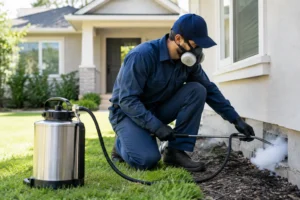
Our mosquito-control process includes identifying breeding locations, inspecting mosquito resting areas, applying appropriate treatments to targeted outdoor areas, and recommending prevention measures. Depending on your property’s conditions, we offer one-time and recurring mosquito-control services.
Learn more about our Professional Mosquito Control Services.
Our team can inspect your property, identify contributing conditions, and recommend an appropriate treatment approach.
Frequently Asked Questions About Ankle Biter Mosquitoes
1. Why am I getting bitten by mosquitoes during the day?
You may be encountering invasive Aedes mosquitoes, which actively seek human hosts during daylight hours. Unlike many native mosquitoes, they don’t rely primarily on nighttime or dusk activity.
2. Why do mosquitoes keep biting my ankles?
Aedes mosquitoes commonly bite around ankles and lower legs. Exposed skin, outdoor activity, and nearby shaded resting areas can increase your exposure. However, bite location alone cannot identify the species.
3. What do ankle biter mosquitoes look like?
They are generally small, dark mosquitoes with distinctive white markings on their bodies and legs. Aedes aegypti and Aedes albopictus have different marking patterns.
4. Are Aedes aegypti mosquitoes found in Los Angeles?
Yes. California Department of Public Health records confirm Aedes aegypti detections in multiple Los Angeles County communities, including Los Angeles, Long Beach, Alhambra, and Pasadena.
5. Are Asian tiger mosquitoes found in Orange County?
The Asian tiger mosquito, Aedes albopictus, has been detected in California, including parts of Los Angeles County. However, the CDPH detection list updated May 1, 2026, did not identify it in the listed Orange County communities. Aedes aegypti has been detected throughout listed Orange County communities.
6. Can ankle biter mosquitoes breed in small amounts of water?
Yes. These mosquitoes can lay eggs in small water-holding containers, including plant saucers, buckets, birdbaths, and other outdoor objects. Some eggs can survive dry conditions and hatch when water returns.
7. Do ankle biter mosquitoes bite indoors?
Yes. Aedes mosquitoes can enter homes through open doors, damaged screens, and other openings. They may bite people indoors as well as outdoors.
8. How do I get rid of ankle biter mosquitoes in my backyard?
Remove standing water, scrub water-holding containers, maintain vegetation, repair irrigation leaks, and protect exposed skin with appropriate repellents. If mosquitoes continue appearing, consider a professional inspection and targeted mosquito treatment.
9. Does mosquito spraying eliminate ankle biter mosquitoes permanently?
No. Spraying can reduce adult mosquito populations, but it does not guarantee permanent elimination. New mosquitoes can develop from untreated breeding sources or enter from nearby properties. Effective control combines targeted treatment with ongoing breeding-site reduction.
10. When should I call a mosquito exterminator?
Consider professional help when daytime bites continue despite regular yard maintenance, mosquitoes repeatedly gather around outdoor living spaces, or hidden breeding locations are difficult to identify.
Protect Your Home From Daytime Mosquitoes
Repeated ankle bites can make even a short afternoon outside uncomfortable. If you’re experiencing persistent daytime mosquito activity, identifying the species and addressing nearby breeding conditions are important first steps.
Don’t let ankle biter mosquitoes take over your backyard, patio, or outdoor living spaces.
Impressive Exterminating Pest Control provides professional mosquito-control solutions throughout Los Angeles County and Orange County.
Contact our team to schedule a free inspection and find out how we can help reduce mosquito activity around your property.
Call +1 (562) 246-9044 or request a free mosquito-control inspection.