Rain can make your garden look healthier, refill your outdoor water features, and cool down your property. Unfortunately, it can also create the conditions mosquitoes need to reproduce.
You might empty the obvious buckets, check your birdbath, and still find yourself dealing with mosquitoes a few days later. The reason could be a hidden water collection point you haven’t noticed.
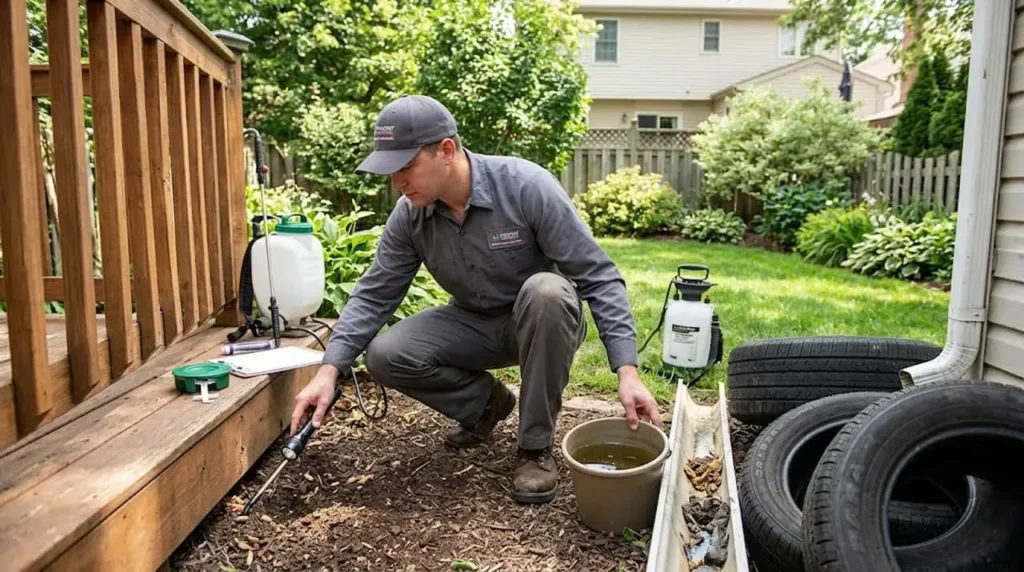
Across Southern California, mosquitoes can breed in surprisingly small amounts of standing water. A partially blocked gutter, a flowerpot saucer, a folded tarp, or an outdoor drain that doesn’t empty properly may provide a suitable breeding site.
Effective mosquito control after rain starts with finding and removing the water sources that allow mosquitoes to reproduce. Spraying adult mosquitoes without addressing these sources may provide only temporary relief.
For homeowners in Los Angeles County and Orange County, a simple post-rain inspection can help reduce mosquito activity around patios, gardens, entrances, and other outdoor spaces.
In this guide, we’ll explain where mosquitoes breed after rainfall, how to identify overlooked breeding grounds, what you can do immediately, and when professional mosquito control may be worthwhile.
Why Does Mosquito Activity Increase After Rain?
Rainfall can leave behind temporary pools of water in places that normally remain dry. When these pools persist, they may provide mosquitoes with suitable conditions for laying eggs and developing through their aquatic life stages.
However, rainfall does not automatically cause every mosquito population to increase. The outcome depends on the mosquito species, temperature, drainage, available breeding sites, and surrounding environmental conditions.
Southern California’s relatively mild climate can allow mosquito activity to continue beyond the traditional summer months, particularly where irrigation and persistent water sources are present.
Several factors can contribute to post-rain mosquito problems.
1. Rain Creates New Breeding Sites
Water collects in objects and depressions that homeowners may overlook during routine yard maintenance.
These include:
- Plant saucers and unused flowerpots
- Children’s outdoor toys
- Folded tarps and plastic covers
- Low spots in lawns and landscaping
- Clogged gutters and downspouts
- Containers stored behind sheds
Even small collections of water can become potential mosquito breeding grounds if they remain undisturbed long enough.
2. Warm Weather Supports Mosquito Development
Rainfall combined with warm temperatures can create favorable conditions for mosquito development.
The time required for mosquitoes to develop varies by species and environmental conditions. Some mosquitoes can complete their aquatic development in approximately a week under favorable conditions, while others take longer.
This is why it is worth checking your property soon after rain rather than waiting until adult mosquitoes become a noticeable problem.
3. Drainage Problems Keep Water Around
A puddle that disappears within a short period may present less of a concern than a low spot that retains water for several days.
Blocked drainage channels, uneven landscaping, leaking irrigation systems, and poorly positioned downspouts can allow water to accumulate repeatedly.
If the same area stays wet after every rainfall, investigate the underlying drainage problem rather than treating each puddle as an isolated issue.
4. Mosquitoes May Rest in Nearby Vegetation
Not every mosquito you encounter in your yard was bred there.
Adult mosquitoes can enter from neighboring properties or nearby breeding areas. Many species rest in shaded, sheltered locations, including dense vegetation and areas beneath outdoor structures.
Consequently, eliminating standing water on your property is essential, but it may not completely eliminate mosquito activity.
9 Hidden Mosquito Breeding Grounds Homeowners Often Miss After Rain
Walking around your yard and checking the obvious containers is a good start. However, some of the most overlooked mosquito breeding grounds are built into everyday household features.
Use the following checklist after rainfall.
1. Clogged Gutters and Downspouts
Gutters are easy to overlook because they are above eye level.
Leaves, twigs, roofing debris, and other material can block water flow. Rainwater may then remain trapped in sections of the gutter or accumulate around a blocked downspout.
These areas can become potential mosquito breeding sites if the water remains long enough.
What homeowners should do:
- Check gutters for visible blockages from a safe location.
- Look for overflowing gutters during rainfall.
- Inspect downspout outlets for obstructions.
- Arrange professional gutter cleaning when the roofline is difficult or dangerous to access.
Avoid climbing onto a wet roof or unstable ladder after rain.
2. Flowerpot Saucers and Decorative Planters
Planters often collect more water than homeowners realize.
A pot may drain correctly while its saucer remains full for several days. Decorative pots without adequate drainage can also retain rainwater.
What homeowners should do:
Empty excess water from plant saucers regularly, remove unnecessary standing water, and check decorative containers after rainfall.
If a plant requires a water reservoir, maintain it according to the manufacturer’s or horticultural guidance and prevent mosquito access where appropriate.
3. Tarps, Pool Covers, and Outdoor Furniture Covers
Tarps and flexible covers can sag under the weight of rainwater.
Even when a cover appears tightly secured, small folds can form pockets where water accumulates. Outdoor furniture covers, grill covers, and equipment covers can create similar problems.
What homeowners should do:
- Remove accumulated water from accessible covers.
- Adjust covers so water drains rather than pools.
- Repair or replace damaged covers.
- Secure loose material before the next rainfall.
If water repeatedly collects on a pool cover, check the manufacturer’s instructions for safe drainage and maintenance.
4. Children’s Toys and Outdoor Play Equipment
Buckets, toy trucks, plastic slides, inflatable toys, and outdoor play equipment may hold water after a storm.
These objects are easy to overlook, particularly when stored behind furniture, near fences, or underneath trees.
What homeowners should do:
Turn over empty toys, drain water from hollow equipment, and store unused items under a dry, protected area.
Inspect play areas after rain and before children use the equipment again.
5. Low Spots in Lawns and Landscaping
Not all mosquito breeding grounds are containers.
Uneven lawns, compacted soil, shallow depressions, and poorly graded garden beds can allow water to remain on the ground.
If the same puddle forms after every storm, investigate whether drainage improvements are needed.
What homeowners should do:
Observe where water collects and how long it takes to disappear. Check for blocked drainage outlets, irrigation leaks, and areas where landscaping directs water toward depressions.
Persistent pooling may require professional drainage advice rather than repeated surface treatment.
6. Outdoor Drains and Drainage Channels
Outdoor drains can collect leaves, sediment, and debris that restrict water flow.
Some drainage structures also contain sections where water remains even when the surrounding surface appears dry.
What homeowners should do:
Inspect accessible drain openings for visible debris and make sure water flows away after rainfall.
If a drain remains blocked or water is trapped in an inaccessible chamber, arrange appropriate drainage maintenance.
Do not pour insecticides, bleach, or other household chemicals into storm drains. These substances may contaminate waterways and are not a substitute for identifying the actual mosquito source.
7. Buckets, Wheelbarrows, and Stored Containers
Unused containers can quietly collect water in garages, side yards, gardens, and storage areas.
Wheelbarrows are particularly easy to overlook because rainwater can accumulate in the tray when they are left outdoors.
What homeowners should do:
Store buckets upside down, empty wheelbarrows, and cover water-storage containers securely.
Check containers behind sheds and along side passages, where they may remain undisturbed between storms.
8. Birdbaths, Fountains, and Decorative Water Features
Birdbaths and ornamental water features require regular maintenance.
Water that remains stagnant may provide suitable mosquito breeding conditions, particularly when the feature is neglected or circulation equipment stops working.
What homeowners should do:
- Empty and scrub birdbaths regularly.
- Refresh water according to the needs of the birds and the feature.
- Maintain pumps and circulation systems.
- Remove debris that blocks water movement.
Do not assume every water feature is a breeding site. Properly maintained features may be less suitable for some mosquito species, although stagnant pockets around the edges or in disconnected sections can still create problems.
9. Irrigation Leaks and Air-Conditioning Condensate
Not all standing water comes from rainfall itself.
Leaking irrigation lines, malfunctioning sprinklers, and air-conditioning condensate discharge can create persistent wet areas around a property.
After rain, these sources may become harder to distinguish from ordinary stormwater.
What homeowners should do:
Run your irrigation system when appropriate and check for broken sprinkler heads, leaking connections, and areas that remain unexpectedly wet.
Make sure condensate drains discharge correctly and do not create persistent pools.
Repairing these problems can help reduce mosquito breeding opportunities while also preventing water waste and moisture-related property damage.
A Simple 10-Minute Post-Rain Mosquito Inspection Checklist
You don’t need specialized equipment to begin identifying many common mosquito breeding sites.
After rainfall, walk around your property and use this checklist.
| Area to Inspect | What to Look For | Recommended Action |
| Gutters | Blockages and retained water | Clear safely or arrange cleaning |
| Plant pots | Full saucers and water-filled containers | Empty excess water |
| Outdoor covers | Water trapped in folds | Drain and adjust covers |
| Children’s toys | Rainwater inside hollow objects | Empty and store appropriately |
| Lawn and garden | Persistent puddles | Investigate drainage |
| Outdoor drains | Debris and slow drainage | Clear accessible obstructions safely |
| Buckets and wheelbarrows | Accumulated rainwater | Empty and store upside down |
| Birdbaths and fountains | Stagnant water and poor circulation | Clean and maintain regularly |
| Irrigation systems | Leaks and overwatering | Repair damaged components |
| Condensate outlets | Pools near discharge points | Correct drainage problems |
Important: Repeat the inspection after significant rainfall and whenever you notice increased mosquito activity. A single inspection may not reveal every source, especially when water collects in concealed or inaccessible spaces.
How to Remove Standing Water Without Creating Other Problems
Standing water pest control begins with source reduction: eliminating or managing water that mosquitoes need to reproduce.
However, the correct approach depends on the location and purpose of the water.
Empty Unnecessary Containers
Remove water from buckets, toys, plant saucers, and other objects that do not need to hold it.
If practical, scrub container walls to remove mosquito eggs that may remain attached above the waterline. Some mosquito eggs can survive dry conditions, so simply emptying a container may not always eliminate every egg.
Improve Drainage
Repair leaking irrigation systems and clear accessible drainage obstructions.
Where pooling repeatedly occurs in lawns or garden beds, investigate the cause instead of assuming that the water will disappear on its own.
Avoid redirecting runoff toward neighboring properties or public walkways.
Maintain Water That Cannot Be Emptied
Some water sources, such as ornamental ponds, rain barrels, and certain drainage structures, cannot simply be drained every time it rains.
Keep water-storage containers covered with tight-fitting lids or appropriate screening. Maintain water features according to their design and intended use.
Where standing water cannot be removed, an appropriate mosquito larvicide may be an option. Choose a product specifically labeled for the intended water source and follow all label instructions, including precautions for pets, wildlife, fish, and other non-target organisms.
For complex or inaccessible water sources, consult a qualified pest management professional or your local mosquito control district.
Avoid Relying on Outdoor Sprays Alone
Adult mosquito sprays may reduce the number of mosquitoes in a treated area, but they do not necessarily eliminate larvae developing in standing water.
If the breeding sources remain, new mosquitoes may emerge after treatment.
A more effective approach combines water management, habitat maintenance, personal bite prevention, and targeted professional treatment when needed.
Why Do Mosquitoes Keep Coming Back After You Remove Standing Water?
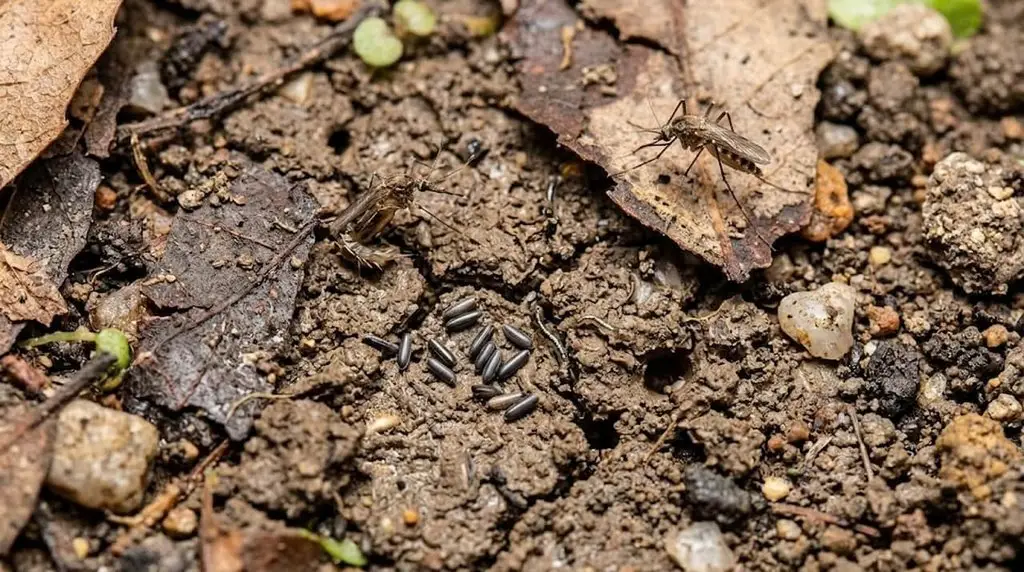
Finding and removing visible standing water is an important step, but it may not resolve every mosquito problem.
There are several possible reasons.
Breeding Sites May Be Hidden
Water may remain in clogged gutters, drainage structures, inaccessible containers, or concealed sections of outdoor equipment.
A property can look clean while still containing a small number of productive breeding sites.
Mosquitoes May Be Coming From Nearby Properties
Adult mosquitoes can move between yards.
Even if you eliminate the breeding sources on your property, mosquitoes may enter from neighboring gardens, neglected water features, or other nearby locations.
New Rainfall May Create More Breeding Opportunities
A successful inspection only reflects conditions at that time.
Another storm can refill containers, create puddles, and introduce new water collection points.
Repeated inspections are particularly useful when rainfall occurs frequently.
Adult Mosquitoes May Already Be Present
Removing standing water does not instantly eliminate mosquitoes that have already emerged.
Adults may continue resting in shaded vegetation or moving through the yard until they die or are controlled.
This is why mosquito management often requires both source reduction and measures aimed at existing adult mosquitoes.
For more guidance, read Professional Versus DIY Mosquito Control: Which Works?.
Are Mosquitoes After Rain a Health Concern?
Mosquito bites are often irritating, but some mosquito species can transmit pathogens that cause illness.
In California, West Nile virus is an important mosquito-borne disease concern. Not every mosquito carries a pathogen, and the presence of mosquitoes does not automatically mean that a property has an infected population.
Nevertheless, reducing mosquito exposure is a sensible precaution.
Homeowners can take several steps:
- Remove standing water where possible.
- Use an EPA-registered insect repellent according to its label.
- Wear long sleeves and pants when appropriate.
- Repair torn window and door screens.
- Keep doors closed when screens are not available.
- Follow public health guidance during periods of increased mosquito-borne disease activity.
Children, older adults, and people with certain health conditions may need additional precautions based on advice from their healthcare professionals.
If you develop concerning symptoms after a mosquito bite, seek medical advice rather than assuming the cause.
When Is Professional Standing Water Pest Control Worth It?
Many small water sources can be handled through routine home maintenance.
However, professional help may be worthwhile when mosquito activity continues despite repeated inspections or when breeding locations are difficult to identify.
Consider arranging an inspection if:
- Mosquitoes remain abundant after you remove obvious standing water.
- Your yard contains persistent drainage problems.
- Water collects in inaccessible or difficult-to-maintain areas.
- Mosquitoes regularly interfere with outdoor dining or family activities.
- You manage rental properties or commercial outdoor spaces that need consistent maintenance.
- You want a professional assessment of breeding sites and mosquito resting areas.
Professional mosquito control should not rely on spraying alone.
A thorough approach includes identifying breeding sources, assessing shaded resting locations, recommending practical property changes, and selecting treatment methods suited to the site.
How Impressive Exterminating Helps With Mosquito Control
Impressive Exterminating Pest Control provides pest management services for homes and businesses across Los Angeles County and Orange County, California.
Its mosquito control service focuses on inspecting properties, identifying breeding and resting areas, and applying appropriate treatment based on the property’s conditions.
The company’s mosquito control process includes:
Property Inspection: Identifying standing water, shaded vegetation, and areas with mosquito activity.
Targeted Treatment: Treating appropriate outdoor resting areas to reduce adult mosquito activity.
Breeding-Site Reduction: Identifying water sources that homeowners can remove, cover, maintain, or manage.
Ongoing Protection: Recommending follow-up service based on property conditions and seasonal mosquito activity.
Learn more about the available options through the company’s Mosquito Control Services page.
If you have already removed obvious standing water but mosquitoes continue returning, a professional inspection can help identify overlooked sources and determine whether targeted treatment is appropriate.
You can also explore General Pest Control Services for broader pest management needs.
For homeowners seeking more general mosquito prevention guidance, the company’s article on How to Get Rid of Mosquitoes provides additional information about mosquito activity and control.
To discuss a mosquito problem at your property, visit the company’s Contact Us page.
Frequently Asked Questions About Mosquito Control After Rain
1. How soon after rain should I check for mosquito breeding grounds?
Inspect your property as soon as it is safe to do so after rainfall. Removing unnecessary standing water early can prevent it from remaining available as a breeding site. Repeat the inspection over the following days, especially if the weather remains warm or additional rain occurs.
2. What are the most commonly overlooked mosquito breeding grounds?
Commonly overlooked sites include clogged gutters, plant saucers, folded tarps, outdoor toys, wheelbarrows, low spots in lawns, blocked drains, and neglected water features. Irrigation leaks and air-conditioning condensate can also create persistent water sources.
3. Can mosquitoes breed in a small amount of standing water?
Yes. Some mosquito species can use very small collections of water for breeding. The exact amount needed depends on the species and the characteristics of the water source. A large pond is not necessary for a mosquito problem to develop.
4. Does all standing water attract mosquitoes?
Not all standing water will necessarily produce mosquitoes. Breeding suitability depends on the species, water conditions, accessibility, and other environmental factors. However, water that remains undisturbed in containers or poorly drained areas should be checked and managed.
5. Why are mosquitoes still biting me after I emptied every container?
Mosquitoes may be entering from nearby properties, resting in shaded areas, or emerging from breeding sites you haven’t found. Water may also accumulate again after subsequent rainfall. Inspect drainage structures, gutters, vegetation, and concealed containers.
6. How often should I inspect my yard for standing water?
A weekly inspection is a useful starting point during periods of mosquito activity. Check again after significant rainfall, irrigation problems, or changes in outdoor water use. Properties with persistent mosquito issues may require more frequent monitoring.
7. Can mosquitoes breed in plant saucers and flowerpots?
Yes. Saucers and decorative containers can hold water long enough to provide breeding opportunities. Empty excess water, clean containers regularly, and avoid leaving unnecessary water-filled objects outdoors.
8. Should I use bleach to kill mosquito larvae in standing water?
No. Do not use bleach as an improvised mosquito treatment. It can harm plants and aquatic organisms, contaminate water, and create other safety risks. Empty unnecessary water, correct drainage problems, and use only products specifically labeled for the intended mosquito control application.
9. Does professional mosquito control eliminate every mosquito?
No treatment can guarantee that every mosquito will disappear permanently. Mosquitoes can enter from neighboring properties, and new breeding sites may develop after rain. Professional control can help reduce activity when combined with source reduction and appropriate ongoing maintenance.
10. Is standing water pest control enough to solve a mosquito infestation?
Source reduction is one of the most important parts of mosquito management, but it may not be sufficient on its own. Depending on the situation, effective control may also require targeted treatment of adult mosquitoes, habitat management, personal protection, and follow-up inspections.
11. Are mosquitoes in Southern California active year-round?
Mosquito activity varies with local temperatures, rainfall, species, and available water. Southern California’s mild climate can support mosquito activity during much of the year, although activity levels fluctuate with environmental conditions.
12. When should I call a mosquito control professional?
Consider professional help when mosquitoes persist despite repeated water removal, when breeding locations are difficult to access, or when mosquito activity regularly disrupts your use of outdoor spaces. A professional inspection can help identify contributing conditions and determine the most appropriate next steps.