A mouse can slip through an opening about the width of a pencil. Young rats need only a slightly larger gap. That is why learning how to seal rodent entryways is less about finding one obvious hole and more about inspecting the entire exterior of a home, office, rental property, or restaurant with a careful eye.
In Los Angeles County and Orange County, rodents often move indoors when food, water, and shelter are easier to find inside than outside. A gap around a pipe, damaged vent screen, loose garage seal, or opening beneath siding can become a regular route into the building. Sealing those routes is one of the most effective ways to prevent a repeat infestation, but timing and materials matter.
First, Make Sure Rodents Are Not Still Inside
The most common mistake is sealing every visible hole immediately after spotting droppings or hearing activity in the walls. If mice or rats are still inside, a complete seal can trap them in wall voids, ceilings, crawl spaces, or attics. That can lead to stronger odors, damage from desperate chewing, and new exit holes in unexpected places.
Start by looking for current activity. Fresh droppings are usually dark and soft-looking, while older droppings become dry and gray. Other signs include scratching after dark, rub marks along walls, chewed food packaging, gnawing around openings, and greasy tracks near utility lines or attic access points.
If activity is recent or ongoing, focus first on trapping, monitoring, and identifying the rodents’ main travel routes. For a larger infestation, a property with inaccessible areas, or a commercial setting where sanitation is critical, professional rodent control is the safer route. A trained technician can determine whether rodents are still active before exclusion work is completed.
How to Seal Rodent Entryways: Start Outside
A thorough exterior inspection should cover the building from ground level to the roofline. Rodents do not always enter at ground level. Roof rats are excellent climbers and may use trees, utility lines, fences, vines, and stacked materials as pathways to upper-level gaps.
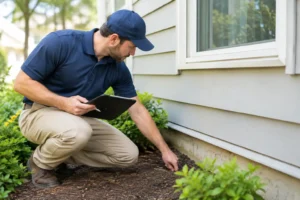
Walk slowly around the property in daylight. Pay close attention to where different building materials meet, including stucco and foundation, siding and trim, roof edges and fascia boards, or masonry and utility penetrations. Use a flashlight to inspect shaded areas behind shrubs, beneath decks, and around air-conditioning equipment.
The highest-priority areas usually include:
- Gaps around plumbing, gas, cable, and electrical lines entering the structure
- Openings around attic vents, crawl-space vents, dryer vents, and exhaust vents
- Damaged weatherstripping on garage doors, exterior doors, and loading doors
- Cracks in the foundation, loose siding, damaged soffits, and openings at rooflines
- Gaps beneath doors, broken window screens, and uncapped chimney openings
Do not overlook garages, sheds, storage rooms, and attached utility spaces. These areas often provide rodents with cover and a direct path into the main structure.
Check the Roofline and Overhead Access
For two-story homes and commercial buildings, upper access points deserve special attention. Look for lifted roof tiles, damaged eaves, gaps behind fascia boards, and torn screens over attic vents. Trim tree branches back so they do not touch or hang directly over the roof. Keeping branches several feet away reduces the easy bridges that rats use to reach elevated entry points.
Working on a roof carries real fall risk. If you cannot inspect or repair it safely from the ground or a stable ladder position, schedule an inspection rather than taking chances.
Use Materials Rodents Cannot Easily Chew Through
Foam alone is not a reliable rodent exclusion material. It may fill a gap temporarily, but mice and rats can chew through many expanding foams quickly. Use foam only as a backing or finishing material when it is protected by a tougher barrier.
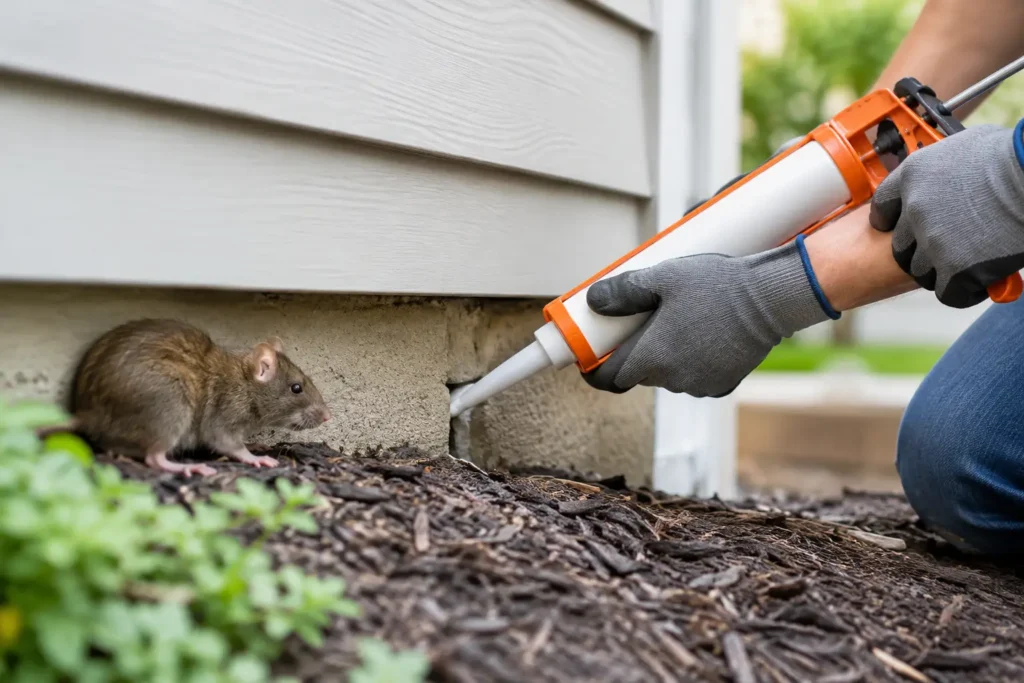
For small holes around pipes and cables, pack the opening tightly with copper mesh or stainless-steel mesh, then seal around it with a high-quality exterior-grade caulk. Copper mesh resists rust and is harder for rodents to pull apart than ordinary steel wool.
For larger openings, use galvanized hardware cloth or sheet metal. Hardware cloth with a quarter-inch mesh is commonly used for vents and crawl-space openings because it allows airflow while blocking rodent access. Secure it firmly with screws and washers rather than relying on adhesive alone. For gaps along the base of a structure, metal flashing can provide a durable barrier when installed correctly.
Door sweeps and garage-door bottom seals are also essential. Choose heavy-duty products that sit flush against the threshold or concrete. If daylight is visible below an exterior door, a rodent may be able to exploit that gap.
Repair the Conditions That Keep Openings Open
Exclusion is not only about plugging holes. The repair has to hold up to weather, movement, and normal use. A seal around a pipe may crack if the pipe shifts. A screen can fail again if it is not properly fastened. A garage seal will wear out if the door is misaligned.
Check for water damage, rotting wood, loose vents, cracked stucco, and failing mortar. These are not cosmetic problems when rodents are present. They create soft, accessible materials that rats and mice can enlarge with their teeth.
For rental homes and multi-unit properties, document gaps and repairs by unit and common area. Rodents may travel through shared walls, utility chases, laundry rooms, trash enclosures, and crawl spaces. Sealing one apartment while leaving a nearby utility opening untreated may simply shift the activity next door.
Reduce Food, Water, and Cover Around the Property
A sealed building is much harder for rodents to enter, but prevention works best when the property is less attractive from the start. Keep trash lids closed, clean spills promptly, and avoid leaving pet food outdoors overnight. Store dry goods in hard-sided containers, especially in garages, pantries, and stock rooms.
Outside, remove clutter that creates hiding areas. Wood piles, cardboard, dense ground cover, and stored equipment should be kept off the ground when possible and away from the structure. Repair dripping faucets, leaking irrigation, and standing-water problems. Rodents need water, and a small leak near a wall can make an otherwise unappealing area worth revisiting.
For restaurants, offices, and retail spaces, daily cleanup is especially important around break rooms, dumpsters, delivery areas, and employee entrances. A single recurring food source can undermine otherwise excellent exclusion work.
Avoid These Common Sealing Mistakes
Do not use poison as a substitute for exclusion. Rodenticides may be appropriate in certain controlled situations, but they do not repair entry points. They can also create odor problems if rodents die inside inaccessible walls or ceilings. An exclusion-first plan is generally the better long-term solution.
Avoid covering a required ventilation opening with solid material. Attics, crawl spaces, dryers, and certain appliances need proper airflow. The correct approach is to use a secure rodent-resistant screen or approved vent cover that preserves the function of the opening.
Also, do not assume one repair solves the problem. Rodents often use several routes. After sealing, continue monitoring for new droppings, gnaw marks, or noises for at least several weeks. Fresh evidence may point to an overlooked opening rather than a failed repair.
When Professional Rodent Exclusion Makes Sense
DIY sealing can work well for a small, clearly visible gap around a pipe or beneath a door. It becomes more difficult when activity is in an attic, crawl space, wall void, roofline, or commercial building. It is also wise to call for help if you have repeatedly sealed holes and rodents keep returning.
A professional inspection can identify hidden entryways, determine whether rats or mice remain inside, and recommend durable repairs based on the building’s construction. At Impressive Exterminating, rodent service is built around targeted treatment, exclusion recommendations, and long-term prevention so the problem is addressed beyond the first sighting.
A properly sealed property gives rodents fewer options before they become a costly, stressful problem. If you are seeing fresh signs of activity or cannot safely reach the likely entry points, schedule an inspection early and protect the spaces that matter most.