A bed bug problem can move fast from one suspicious bite to a stressful, property-wide concern. When choosing heat versus chemical bedbug treatment, the right answer depends on the size of the infestation, where bed bugs are hiding, the condition of the property, and how quickly you need results. Both options can be effective when performed correctly by licensed professionals. They work differently, require different preparation, and may be better suited to different situations.
For homeowners, landlords, hotel operators, and business owners, the goal is not simply to kill the bed bugs you can see. It is to address eggs, hidden insects, and the conditions that allow the infestation to continue. A professional inspection is the best place to start because it identifies the extent of the problem before a treatment plan is selected.
How Heat Treatment Works
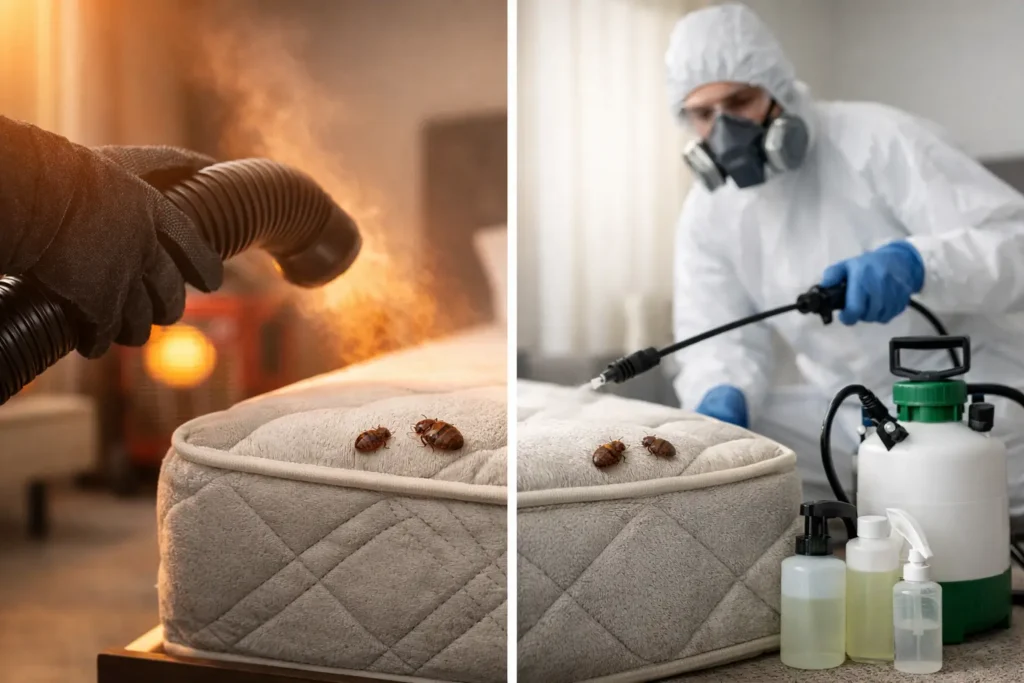
Professional bed bug heat treatment raises the temperature inside the affected room or structure to a level that is lethal to bed bugs at every life stage. Specialized heaters, fans, sensors, and monitoring equipment distribute controlled heat throughout the treatment area. Technicians monitor temperatures in difficult places such as furniture, wall voids, closets, and mattress seams to make sure the required heat reaches bed bug hiding spots.
Heat is popular because it can eliminate adult bed bugs, nymphs, and eggs in one treatment day when the infestation is contained and the procedure is completed properly. Unlike a surface spray, heat can penetrate many areas where bed bugs hide, including upholstered furniture, box springs, cracks, and cluttered storage areas.
That speed can make a real difference. A family preparing for guests, a property manager turning over a rental, or a business concerned about disruption may prefer a solution that does not require weeks of repeated treatment visits. After the property has cooled and the technician confirms it is safe to reenter, occupants can often return the same day.
The strengths of heat
Heat treatment does not leave a residual pesticide behind. This can be appealing to households with children or pets and to businesses that want to minimize chemical use. It also avoids the resistance issue that can reduce the performance of certain insecticides. Bed bugs cannot build resistance to a properly delivered lethal temperature.
Heat can be especially effective for moderate to heavy infestations concentrated in a bedroom, apartment unit, hotel room, or other defined area. It is also a strong option when there is concern that eggs may be present, since eggs can be difficult to eliminate with a single chemical application.
The limits of heat
Heat treatment requires careful preparation. Some belongings must be removed or protected because they can be damaged by high temperatures. Aerosol cans, candles, certain cosmetics, medications, plants, vinyl items, and heat-sensitive electronics may need special handling. A professional team will provide a preparation checklist specific to the property.
Another consideration is that heat has little to no lasting residual effect. If bed bugs are brought back into the home after treatment through luggage, used furniture, neighboring units, or visitors’ belongings, a new infestation can begin. In multi-unit properties, treating one unit without investigating adjoining spaces may leave an opportunity for bed bugs to move back in.
Heat may also be less practical for a large building with widespread activity across many rooms or units. In those cases, a targeted plan that combines methods may provide better value and stronger long-term control.
How Chemical Bed Bug Treatment Works
Chemical bed bug treatment uses EPA-registered products applied strategically to bed bug harborages and travel routes. Depending on the treatment plan, a licensed technician may use residual insecticides, dust formulations, or other professional products designed for cracks, crevices, furniture frames, baseboards, and other known hiding locations.
The goal is precision, not blanket spraying. Bed bugs spend most of their time tucked into narrow, protected spaces, so successful treatment depends on finding those spaces and applying the right product according to label directions. Professional treatment may also include detailed inspection, vacuuming, mattress encasements, monitoring devices, and recommendations for laundering and reducing clutter.
The strengths of chemical treatment
Chemical treatment often has a lower upfront cost than whole-room heat treatment, particularly when the infestation is limited or when only a few rooms need service. It can be a practical choice for homeowners who need a cost-conscious solution and for property managers responsible for multiple units.
Residual products can continue working after the technician leaves. That ongoing activity is valuable because bed bugs may emerge from hidden areas over time or hatch after the initial service. Follow-up visits allow the technician to inspect progress, treat newly active areas, and confirm that control is moving in the right direction.
Chemical treatment can also be more adaptable in buildings where heat is not feasible. Certain construction materials, delicate contents, limited electrical capacity, or a large treatment footprint can make a heat-only approach difficult. A customized chemical program can target the affected locations without heating an entire structure.
The limits of chemical treatment
Chemical treatment usually takes more time than heat treatment. Bed bugs may need to contact treated surfaces, and eggs may hatch between service visits. Many infestations require two or more treatments spaced apart to interrupt the life cycle. This is not a sign that the service failed. It is often part of a careful, science-based process.
Preparation and cooperation are also essential. Residents may need to wash and dry bedding, bag clean items, avoid moving untreated belongings between rooms, and follow reentry instructions. Skipping these steps can spread bed bugs or reduce the treatment’s effectiveness.
Safety should never be an afterthought. Store-bought foggers and over-the-counter sprays are frequently misused, may drive bed bugs deeper into walls or neighboring rooms, and can create unnecessary exposure risks. Professional products should be selected and applied by trained technicians who understand label requirements, pest behavior, and the needs of the property.
Heat Versus Chemical Bedbug Treatment: Key Differences
The biggest difference is speed versus residual protection. Heat can provide rapid, whole-room control in a single day and is highly effective against eggs when temperatures are properly maintained. Chemical treatment typically works over multiple visits, but it leaves targeted residual protection that can catch bed bugs as they emerge or travel through treated areas.
The best choice also depends on the infestation’s location. If activity is isolated to one or two rooms and a fast resolution is the priority, heat may be an excellent fit. If bed bugs have spread through a multi-unit property, if there are ongoing concerns about reintroduction, or if cost needs to be spread over a treatment plan, chemical service may make more sense.
Preparation differs as well. Heat requires removing or protecting heat-sensitive items. Chemical service requires detailed access to harborages and consistent follow-through between visits. Neither treatment is completely hands-off, but clear instructions from a professional can make preparation manageable.
When a Combined Approach Is the Better Answer
The choice is not always heat or chemicals. In challenging infestations, an integrated approach may offer the strongest protection. Heat can quickly reduce the active population in the most affected rooms, while targeted residual treatment and monitoring help protect against survivors, missed areas, or reintroduction.
This approach is particularly useful in apartments, condos, hotels, and other properties with shared walls. Bed bugs can move through wall voids, utility openings, hallways, laundry areas, and belongings. Treating the visible problem without monitoring adjacent risks can lead to repeat activity and frustrated tenants.
A qualified bed bug technician should assess where people are being bitten, inspect beds and furniture, look for spotting and shed skins, and consider whether nearby rooms or units need evaluation. The treatment plan should be based on evidence, not guesswork.
Choosing a Safe, Effective Bed Bug Service
Ask whether the provider performs a thorough inspection, explains the treatment method clearly, provides written preparation instructions, and includes follow-up or monitoring when needed. You should also know what areas will be treated, how long the service will take, when the space can be safely reentered, and what you can do to prevent bed bugs from returning.
For Southern California property owners, fast response matters, but so does a plan that fits the property. Impressive Exterminating helps customers across Los Angeles County and Orange County evaluate bed bug activity and choose targeted, professional treatment options based on the actual infestation.
If you are seeing bites, dark spotting on bedding, small insects near mattress seams, or signs in more than one room, do not wait for the problem to grow. Schedule a professional inspection, follow the preparation guidance closely, and give the treatment plan the time and access it needs to protect your home, tenants, or customers.